General
Life
Accessibility Options


General

General Products
Simple & Transparent! Policies that match all your insurance needs.
 Car Insurance
 Two Wheeler Insurance
 Commercial Vehicle Insurance
 Health Insurance
 Home Insurance
 Travel Insurance
 Business Insurance
Car Insurance
Two Wheeler Insurance
Commercial Vehicle Insurance
Health Insurance
Travel Insurance
Business Insurance
Car Insurance
Two Wheeler Insurance
Commercial Vehicle Insurance
Health Insurance
Travel Insurance



Scan to download

Life

Life Products
Digit Life is here! To help you save & secure your loved ones' future in the most simplified way.
 Term Life
 Savings Plan
 Retirement and Pension Plans
 Group Life Products
 Product Documents
Term Life
Savings Plan
Group Life Products
Product Documents
Term Life
Savings Plan
Group Life Products

Scan to download

Claims

Claims
We'll be there! Whenever and however you'll need us.
 Customer Support
 Motor Claims
Health Claims
Motor Claims
Health Claims
 Marine Insurance
 Grievance Redressal
Customer Support
Motor Claims
Health Claims
Marine Insurance
Grievance Redressal
Grievance Redressal
Customer Support
Motor Claims
Health Claims
Marine Insurance
Grievance Redressal

Scan to download
 General
 Life
General
Life
Life
General
Life
Renewals
Resources

Resources
All the more reasons to feel the Digit simplicity in your life!
Exclusive Features
 Transparency Report
Others
Exclusive Features
Transparency Report
Transparency Report
Others
Exclusive Features
Transparency Report

Scan to download


Our WhatsApp number cannot be used for calls. This is a chat only number.

 Grey Scale
 Readable Text
 Reset
Reset




8 Crore+ Customers

Affordable Premium


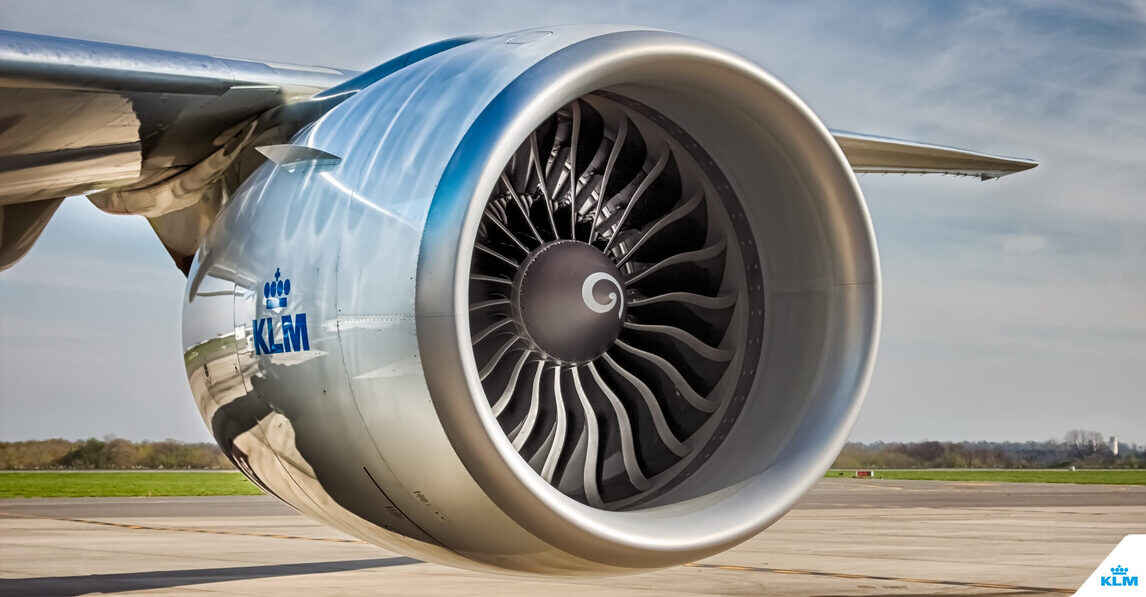
The need for an aircraft with greater power and solidity arose during the Second World War. However, in terms of fuel efficiency, the planes consumed an immense amount of fuel and lacked high-speed manoeuvrability.
What they needed was an engine that could produce more thrust and consume less fuel. The theory of jet propulsion eventually solved this dilemma by using two engines concurrently with individual compressors and turbines.
A comprehensive description of jet engines and their functioning has been discussed below.
Jet engines are high-powered apparatuses that allow air to be squeezed into the engine, which then combines with the fuel to get it ignited. The explosion of hot exhaust gases produces enormous thrust that propels the aircraft forwards.
The most primitive versions of jet aircraft could reach speeds up to 482 kmph. However, many countries exploited the success of jet engines by manufacturing spy planes like the Lockheed SR-71, which could reach 3530 kmph by flying at an altitude of 26,000m.
Turbofan is the most common type of jet engine now that is used in commercial and military aircraft alike. However, more powerful jet engines like a ramjet do not require compressors because the extremely high speeds automatically compress air entering the engines, although inoperative when the aircraft is at rest.
The working principle of a jet engine involves the conversion of the fuel’s chemical energy into kinetic energy that drives the aircraft forward.
The jet plane works on the principle of thrust with or without propellers while allowing cold air to enter, ignite, and exit at high temperatures. Jet engines typically have three crucial components – compressor, combustion chamber, and exhaust nozzle.
While the compressor increases the air pressure and temperature of the air intake, a combustion chamber ignites the air-fuel mixture and releases heat energy. The exhaust nozzle powers the plane by increasing the speed of exhaust gases.
The following steps describe how a jet plane works:
Step 1: First, fans situated at the frontal part of a jet engine suck cold air, forcing it through the inlet, thus, slowing the moving aircraft.
Step 2: The compressor squeezes the air from the fans, raising its pressure and temperature.
Step 3: A fuel tank maintains a continuous supply of liquid fuel (usually kerosene) to the engine.
Step 4: The liquid fuel mixes with the compressed air in the combustion chamber and ignites. This reaction produces hot exhaust gases and significantly increases the temperature. The burning mixture attains a temperature of approximately 900 °C.
Step 5: The exhaust gases flow through a set of turbine blades, causing the blades to spin. As the turbine gains rotational energy, the gases lose the same amount of energy; accordingly, the gas cools down moderately and loses pressure.
Step 6: The turbine blades transmit power through an axle running along the length of the engine. Additionally, the compressor and fan are connected to this axle. Hence, the compressor and fan spin in tandem with the turbine blades.
Step 7: An exhaust nozzle oozes the hot exhaust gases and helps the aircraft reach up to 2100kmph. Afterburners in high-performance military jets squirt fuel into the exhaust jet, producing an additional boost to push the plane forward.
Speeds reached by the most efficient turbojet engines almost equal the speed of exhaust gases. Depending on the engine’s power and positioning of propellers, there are five different types of jet engines.
Following are the differences between jet and turboprop engines.
|
Jet Engines |
Turboprop Engines |
|
Jet engines have fans inside the engine case but no propellers to suck cold air. |
It contains a propeller that maintains an incredible power-to-weight ratio. |
|
Jet engines are not fuel-efficient for short distances despite their terrific acceleration and top speeds. |
Turboprop engines are light and have high fuel capacity. They can therefore fly longer distances, albeit at lower speeds. |
|
Jet engine aircrafts require longer runways for take-offs and landings. However, they are quieter and perfect for city airports. |
Aircraft with turboprop engines can make quicker take-offs and landings even in tight spaces. However, they are noisy and most suited for military operations. |