General
Life
Accessibility Options


General
General Products
Simple & Transparent! Policies that match all your insurance needs.
 Car Insurance
 Two Wheeler Insurance
 Commercial Vehicle Insurance
 Health Insurance
 Home Insurance
 Travel Insurance
 Business Insurance
Car Insurance
Two Wheeler Insurance
Commercial Vehicle Insurance
Health Insurance
Travel Insurance
Business Insurance
Car Insurance
Two Wheeler Insurance
Commercial Vehicle Insurance
Health Insurance
Travel Insurance


Scan to download
Life

Life Products
Digit Life is here! To help you save & secure your loved ones' future in the most simplified way.
 Term Life
 Savings Plan
 Retirement and Pension Plans
 Group Life Products
 Product Documents
Term Life
Savings Plan
Retirement and Pension Plans
Group Life Products
Product Documents
Term Life
Savings Plan
Retirement and Pension Plans
Group Life Products
Scan to download
Claims

Claims
We'll be there! Whenever and however you'll need us.
 Customer Support
 Motor Claims
Health Claims
Motor Claims
Health Claims
 Marine Insurance
 Grievance Redressal
Customer Support
Motor Claims
Health Claims
Marine Insurance
Grievance Redressal
Grievance Redressal
Customer Support
Motor Claims
Health Claims
Marine Insurance
Grievance Redressal
Scan to download
 General
 Life
General
Life
Life
General
Life
Renewals
Resources
Resources
All the more reasons to feel the Digit simplicity in your life!
Exclusive Features
 Transparency Report
Others
Exclusive Features
Transparency Report
Transparency Report
Others
Exclusive Features
Transparency Report
Scan to download


Our WhatsApp number cannot be used for calls. This is a chat only number.

 Grey Scale
 Readable Text
 Reset
Reset


Buy Cashless Health Insurance Online

9000+
Cashless Hospitals

3.8 Crore+
Lives Insured

8 Lacs+
Claims Settled
I agree to the Terms & Conditions

Get Exclusive Porting Benefits
Check Prices

Buy Health Insurance, Up to 20% Discount
Port Existing Policy
9000+
Cashless Hospitals
3.8 Crore+
Lives Insured
8 Lacs+
Claims Settled
Cashless health insurance is a type of claim facility where your insurance company directly pays the hospital for your treatment, so you don’t have to arrange the full amount instantly.
If you need hospitalisation (whether planned or in an emergency), you can raise a claim under your health insurance plan to cover the expenses either through cashless or reimbursmenet (You pay the bills upfront and later get reimbursed by the insurer).
However, the cashless facility is available only at hospitals that are part of your insurer’s network (tie-up hospitals). When you get admitted, the hospital coordinates with the insurer to get a pre-approval for the treatment cost. Once approved, the insurer settles the covered expenses directly with the hospital and you only pay for non-covered costs such as deductibles, exclusions, copay, or any amount beyong sum insured.
For example: If you or a family member is ill and needs to be admitted for treatment, with cashless medical insurance you get treatment in your nearest network hospital and get proper treatment without worrying about the payment.
Cashless health insurance is important because it reduces immediate financial stress during hospitalisation and ensures you can focus on treatment instead of arranging funds at the last minute.

Get Timely Treatment Without Immediate Large Funds
According to The Actuary India, any small treatment can be 50K to 2 Lakhs. With cashless health insurance and claim process, you can avoid treatment delays when you don’t have instant access to such amounts.

Large Hospital Network
With cashless insurance, you get access to numerous hospitals included in the insurance network. This implies that you have choices and can select the healthcare facility that best suits your requirements.

Reduces Financial Stress During Emergencies
Instead of arranging money at short notice through savings, loans, or family support, the insurer directly handles approved expenses, letting you focus on treatment and recovery.

Simplifies the Claim Process During Critical Situations
In emergencies, managing paperwork and reimbursements can be overwhelming. Cashless claims shift most of the coordination to the hospital and insurer.

Less Uncertainty
Cashless medical insurance claims require approval before treatment, which ensures that your health insurer approves your claim. Hence, there's less uncertainty involving rejection of a health claim in the cashless process.

Simple Online Paperless Process
The key to cashless health insurance is going digital and eliminating the burden of completing paperwork and monitoring expenses. It's efficient, quick, and simple.
A cashless claim works through coordination between the hospital and your insurer, where the hospital requests approval, and the insurer directly settles eligible treatment costs. Here is how it works:
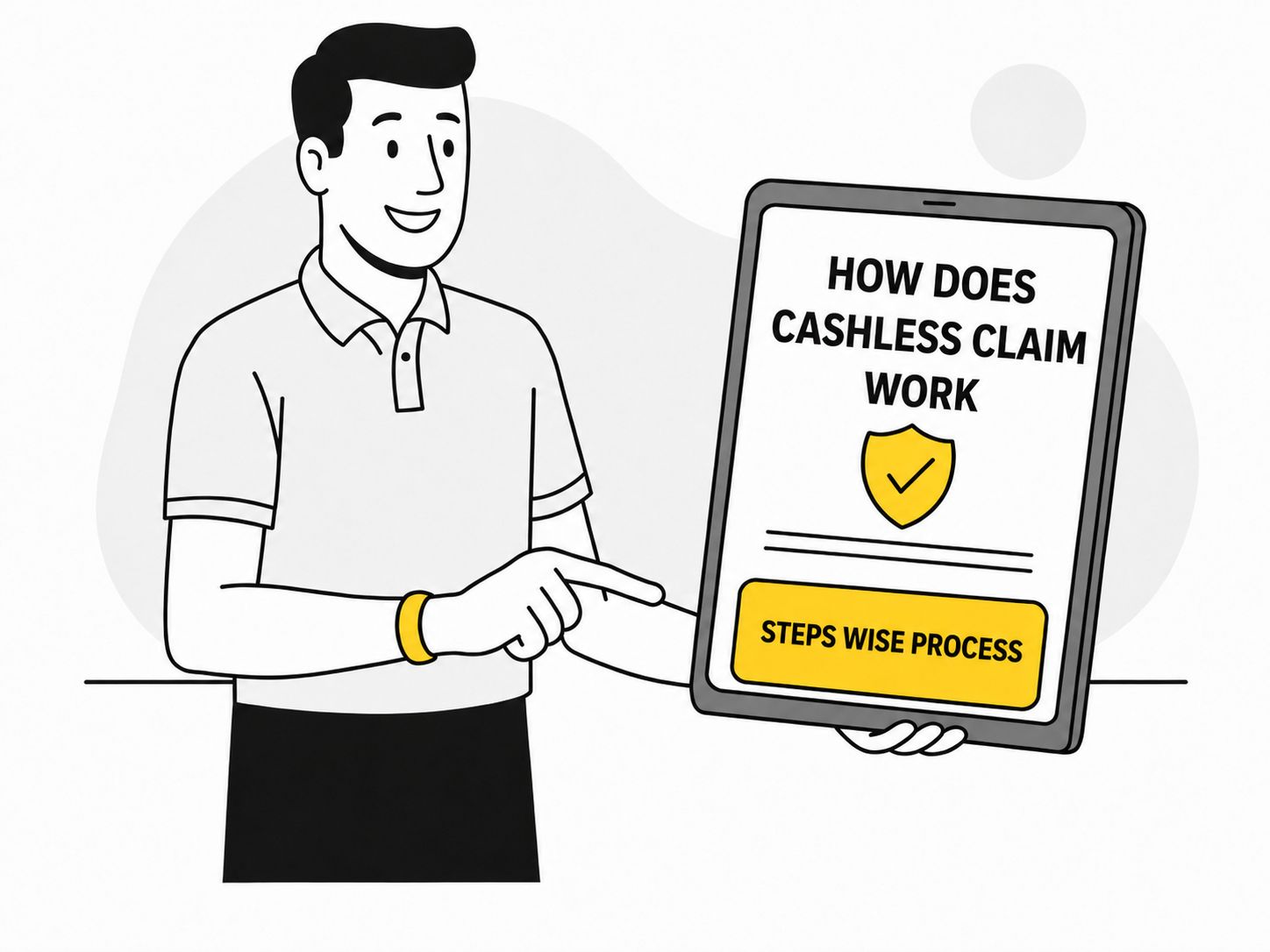
Step 1: Visit a Network Hospital
If you plan to undergo surgery or treatment, choose a hospital that is part of your insurer’s network for cashless claims.
Step 2: Share Policy Details
Provide your health insurance policy number/health E-card and ID proof for KYC at the hospital help desk/TPA desk.
Step 3: Pre-authorisation Request & Approval
The hospital sends your treatment details and estimated cost to the insurer for approval. The insurance company checks the details and gives final approval. As per IRDAI guidelines, insurers are expected to approve cashless treatment within 1 hour, and discharge approval is expected within 3 hours of hospital request.
Step 4: Your Insurance Pays the Bill
Depending on your policy, the hospital and insurer will cover the cost of the treatment.
Cashless claims work only at network hospitals because the insurer already has an agreement with the hospital. Under the wider “cashless everywhere” industry initiative, cashless treatment may also be possible at some non-network hospitals, subject to insurer approval, hospital cooperation, claim admissibility, and required timelines.
If the hospital is not in the insurer’s network or cashless approval is not available, you may need to pay first and file a reimbursement claim later. Always check on the insurer website for the Network hospital before going for treatment.
Cashless treatment can be used when your hospital and insurer are able to coordinate directly for bill settlement. However, when and how you can use it depends on the situation and the hospital type:
Note: The table is for guidance purposes only. Cashless treatment availability may vary based on the insurer’s approval, hospital policies, and specific case details.
Coverages
Double Wallet Plan
Infinity Wallet Plan
Worldwide Treatment Plan
Important Features
This covers for all hospitalisation expenses including due to an Illness, Accident, Critical Illness or even pandemics like Covid 19. It can be used to cover for multiple hospitalisations, as long as the total expenses are up to your sum insured.
You need to wait for a defined period from the first day of your policy to get covered for treatment related to any non-accidental illness. This is the Initial Waiting period.
Exclusive Wellness Benefits like Home Healthcare, Tele consultations, Yoga and Mindfullness and many more available on our App.
We provide a back-up Sum Insured which is 100% of your Sum Insured amount. How does Sum Insured Back Up work? Suppose your policy Sum Insured is Rs. 5 lac. You make a claim of Rs.50,000. Digit automatically triggers the wallet benefit. So you now have 4.5lac + 5 lac Sum Insured available for the year. However, one single claim, cannot be more than the base Sum Insured as in the above case, 5 lac. .
 Digit Special
No claims in the Policy year? You get a bonus -an additional amount in your total sum-insured for staying healthy & claim free!
Different categories of rooms have different rents. Just like how hotel rooms have tarrifs. Digit plans give you the benefit of having no room rent cap, as long as it is below your Sum Insured..
Health insurance covers medical expenses only for hospitalisations exceeding 24 hours. Day care procedures refer to medical treatments undertaken in a hospital, requiring less than 24 hours due to technological advancement such as cataract, dialysis etc.
Digit Special
Get a world class treatment with the Worldwide Coverage! If your doctor identifies an illness during your health examination in India and you wish to get a treatment abroad, then we’re there for you.You’re covered!
We pay for your health check-up expenses upto the amount mentioned in your Plan. No restrictions on the kind of tests! Be it ECG or Thyroid Profile. Make sure you go through your policy schedule to check the claim limit.
There may be emergency life-threatening health conditions which may require immediate transportation to hospital. We absolutely understand this and reimburse for expenses incurred for your transportation to a hospital in airplane or helicopter.
Digit Special
Co-Payment means a cost sharing requirement under a Health Insurance Policy that provides that the Policyholder/Insured will bear a specified percentage of the admissible claims amount. It does not reduce the Sum Insured. This percentage depends on various factors like age, or sometimes also on your treatment city called zone based copayment. In our plans, there is no age based or zone based Co payment involved.
Get reimbursed for the expenses of road ambulance, in case you are hospitalised.
This cover is for all expenses before and after hospitalisation such as for diagnosis, tests and recovery.
Other Features
The disease or condition that you are already suffering with and have disclosed to us before taking the policy and has been accepted by us has a waiting period as per plan opted and mentioned in your Policy Schedule.
This is the amount of time you need to wait for, until you can make a claim for a specific illness. At Digit it is 1-3 years and starts from the day of policy activation. For the full list of exclusions, read Standard Exclusions (Excl02) of your policy wordings.
If You sustain an Accidental Bodily Injury during the Policy Period, which is the sole and direct cause of Your Death within twelve (12) months from the date of accident, then We will pay 100% of the Sum Insured as mentioned in Policy Schedule against this cover and as per plan opted.
Digit Special
Your organ donor gets covered in your policy. We also take care the pre and post hospitalisation expenses of the donor. Organ donating is one of the kindest deeds ever and we thought to ourselves, why not be a part of it!
Hospitals can go out of beds, or the patient’s condition may be rough to get admitted in a hospital. Don’t panic! We cover you for the medical expenses even if you get treatment at home.
Obesity may be the root cause of so many health issues. We absolutely understand this, and cover for Bariatric Surgery when it is medically necessary and advised by your doctor. However, we DONOT cover if hospitalisation for this treatment is for cosmetic reasons.
If due to a trauma, a member has to be hospitalised for a psychiatric treatment, it will be covered under this benefit, upto INR 1,00,000. However, OPD consultations are not covered under this. The waiting period for Psychiatric Illness Cover is same as Specific Illness waiting period.
Before, during & after hospitalisation, there are many other medical aids & expenditures such as walking aids, crepe bandages, belts, etc.,which need your pocket’s attention.This cover takes care of these expenses that are otherwise excluded from the policy.

Pre-Natal & Post-Natal Expenses
Pre-natal and post-natal medical expenses are not covered, unless they lead to hospitalisation.

PED Before Waiting Period
In case of a pre-existing disease, unless the waiting period is over, the claim for that disease or illness cannot be made.
Hospitalisation without Doctor’s Recommendation
Any condition you get hospitalised for that doesn’t match the doctor’s prescription is not covered.
Enhance your cashless health insurance policy with add-ons at Digit. These add-ons are subject to underwriting approval and your eligibility at the time of purchase or renewal. Here’s a list of add-ons available that provide additional layers of protection beyond the basic coverage of your policy:
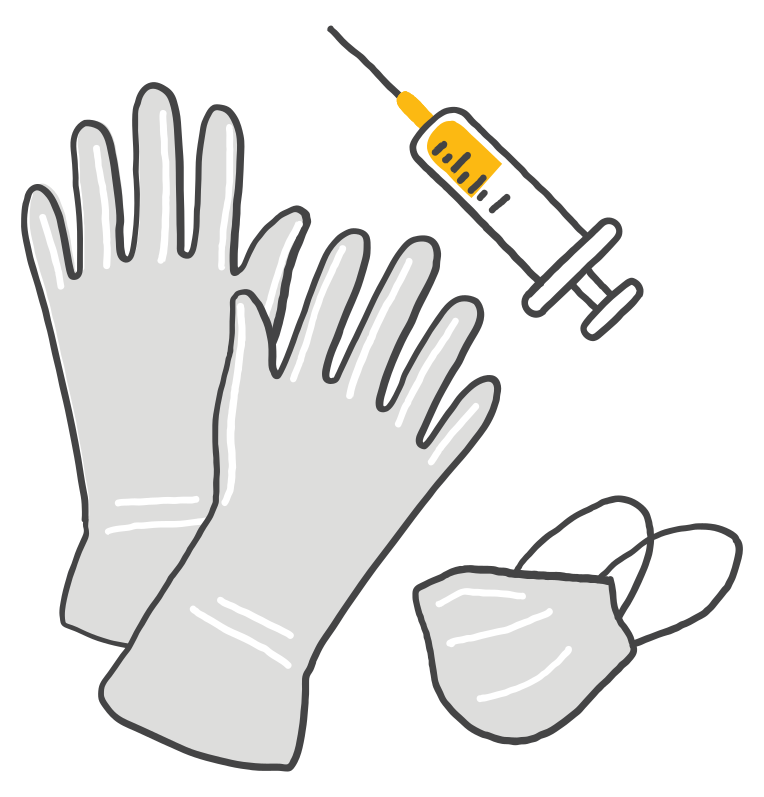
Consumable Cover
Pay 10% extra premium and we will also cover your non-medical expenses once your base claim is approved. This is best suited for people who want to minimise out-of-pocket expenses on items like gloves, syringes, and other non-medical costs.
Pre-existing Disease/Specific Disease/Initial Waiting Period Modification
You can reduce your pre-existing disease waiting period to up to 2 years. This is best suited for individuals with existing health conditions who want quick coverage for treatment.

Network Hospital Discount
Opt for treatment at one of our network hospitals and receive a 10% discount on your premium with this add-on cover. However, co-payment will be applicable if you get hospitalised in a non-network hospital. This is best suited for people who are comfortable using network hospitals and want to reduce their premium cost.
Your health insurance plan with Digit extends several exclusive benefits that enhance your coverage. Here are the key benefits:
* These add-ons are subject to underwriting approval and your eligibility at the time of purchase or renewal


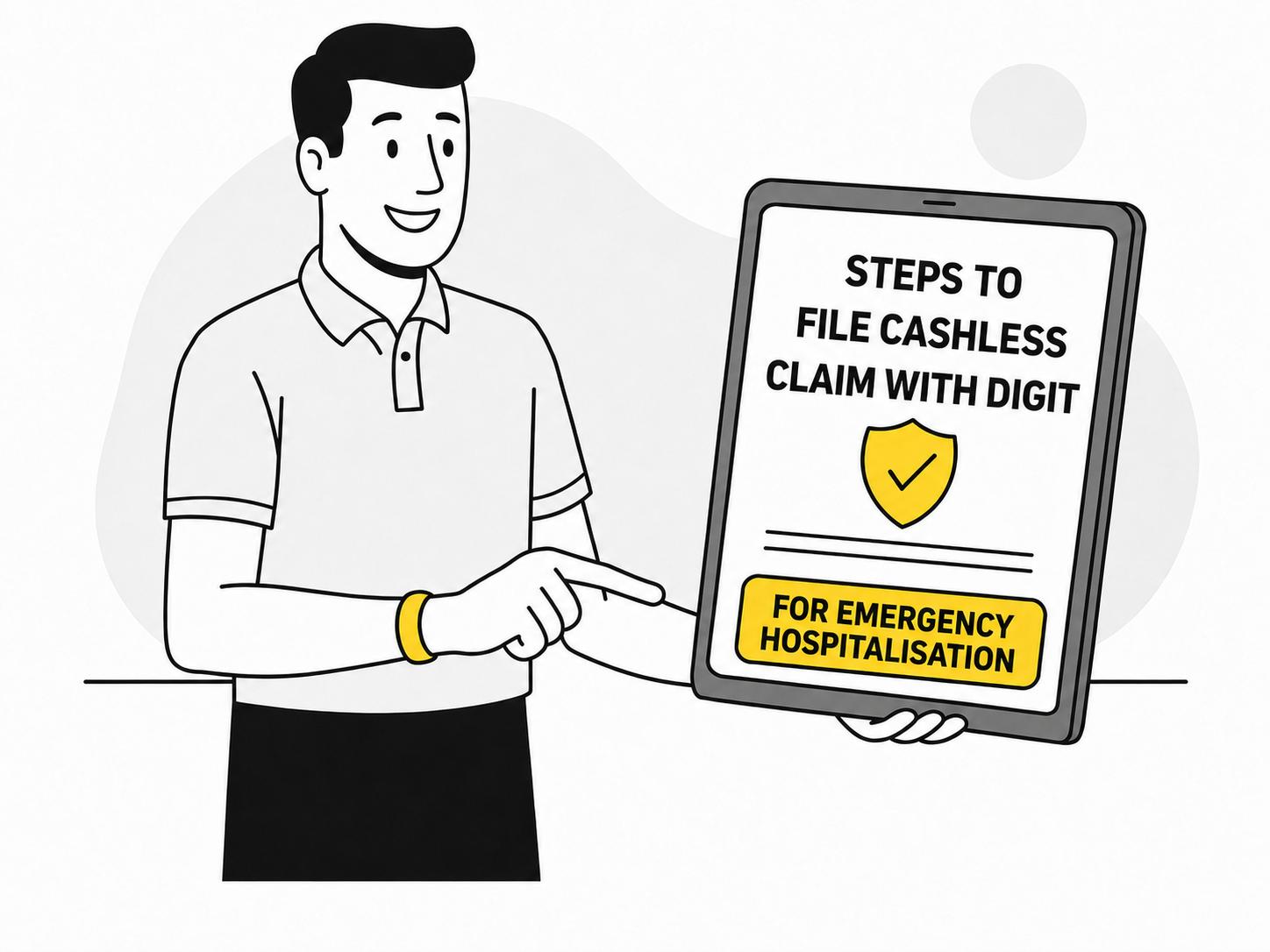
Filing a cashless claim with Digit involves coordinating with a network hospital, where the hospital requests approval from Digit and the eligible treatment costs are directly settled.
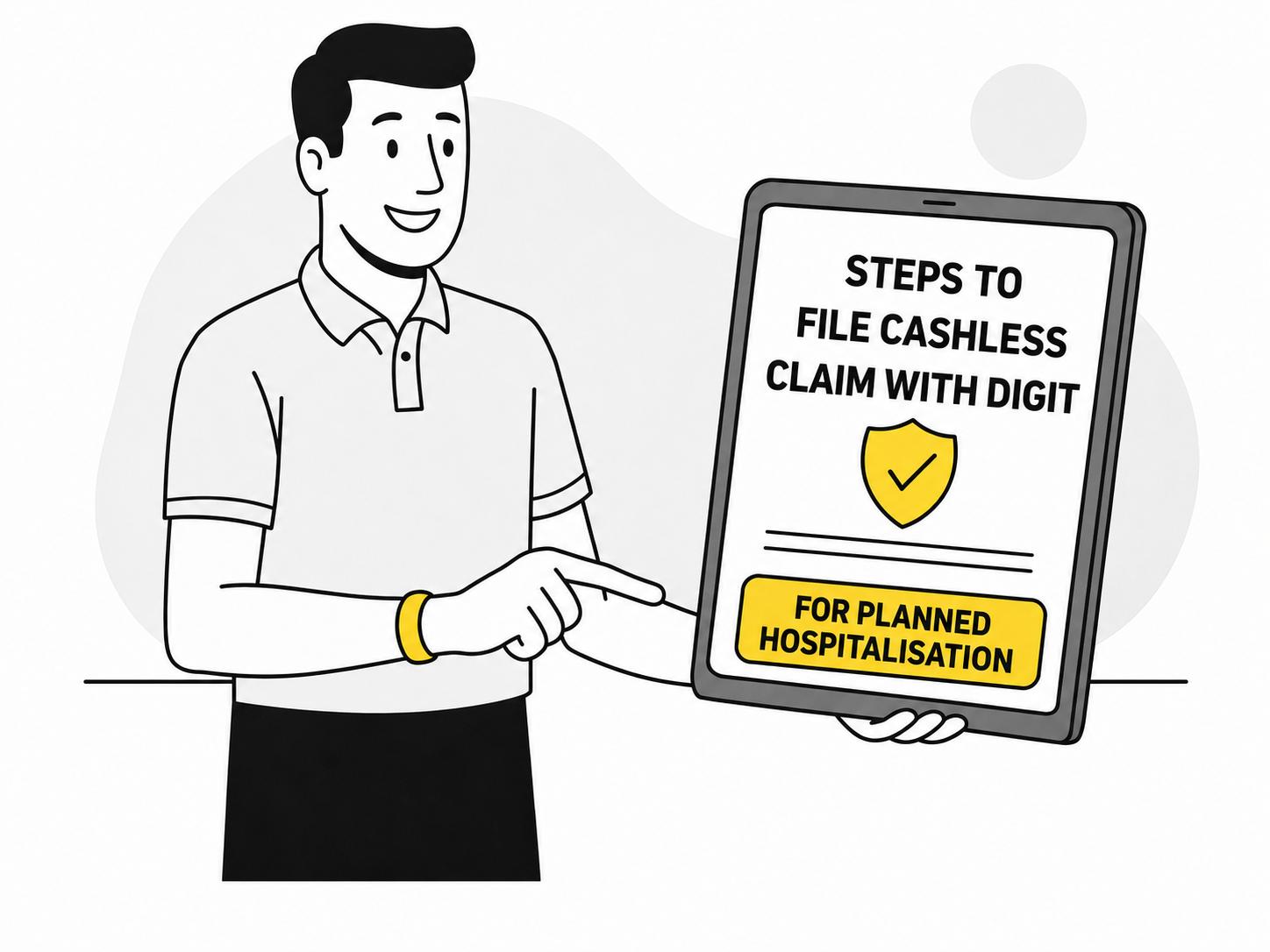
Step 1: Choose a Digit Network Hospital
When you need to make a claim, select any of Digit’s 9000+ network hospitals.
Step 2: Inform Digit & Share Document at Hospital
Inform Digit at least 48 – 72 hours before admission to your chosen hospital. At the time of admission, provide your health e-card and KYC documents to the hospital and get a pre-authorisation form.
Step 3: Submit Pre-authorisation Request
Fill and sign the form, and ensure the hospital submits it to the Third-Party Administrator (TPA), who coordinates between the hospital and Digit.
Step 4: Claim Review & Approval
Digit reviews your request by checking coverage, policy terms, and medical necessity, and communicates the approval to the hospital. Once approved, your treatment will start and Digit directly settles the hospital bill.

Note: You can contact Digit at 7709996079 for guidance on the cashless claim process and required steps.
You must have a few important documents when visiting a cashless hospital in India. With no upfront fees, this procedure makes your hospital stay easy and hassle-free. The documents include:

Claim Documents

KYC Document
Get Cashless Treatment at 9000+ Hospitals across India

If there are no network hospitals nearby, you can still get treated at any hospital and later claim the expenses through the reimbursement process. Here's how to submit a claim for reimbursement:
There are two types of processes you can opt for during claims in health insurance. A cashless claim or a reimbursement claim. Here’s a quick table to help you understand the key differences between the two:
In simple terms, in a cashless claim, the insurance company pays the medical bill directly to the hospital and in reimbursement claim, you pay the medical bill to the hospital and later the insurer pays you.
Both cashless and reimbursement claims serve the same purpose, but the better option depends on your situation, hospital choice, and financial preparedness.

While cashless health insurance reduces upfront financial burden, claims can still be rejected if policy conditions or approval requirements are not met. Here are the most common reasons for cashless claim rejections.
Read More
Read Less
Even though cashless claims are designed to be simple, small mistakes during the process can lead to delays, partial approvals, or even rejection:
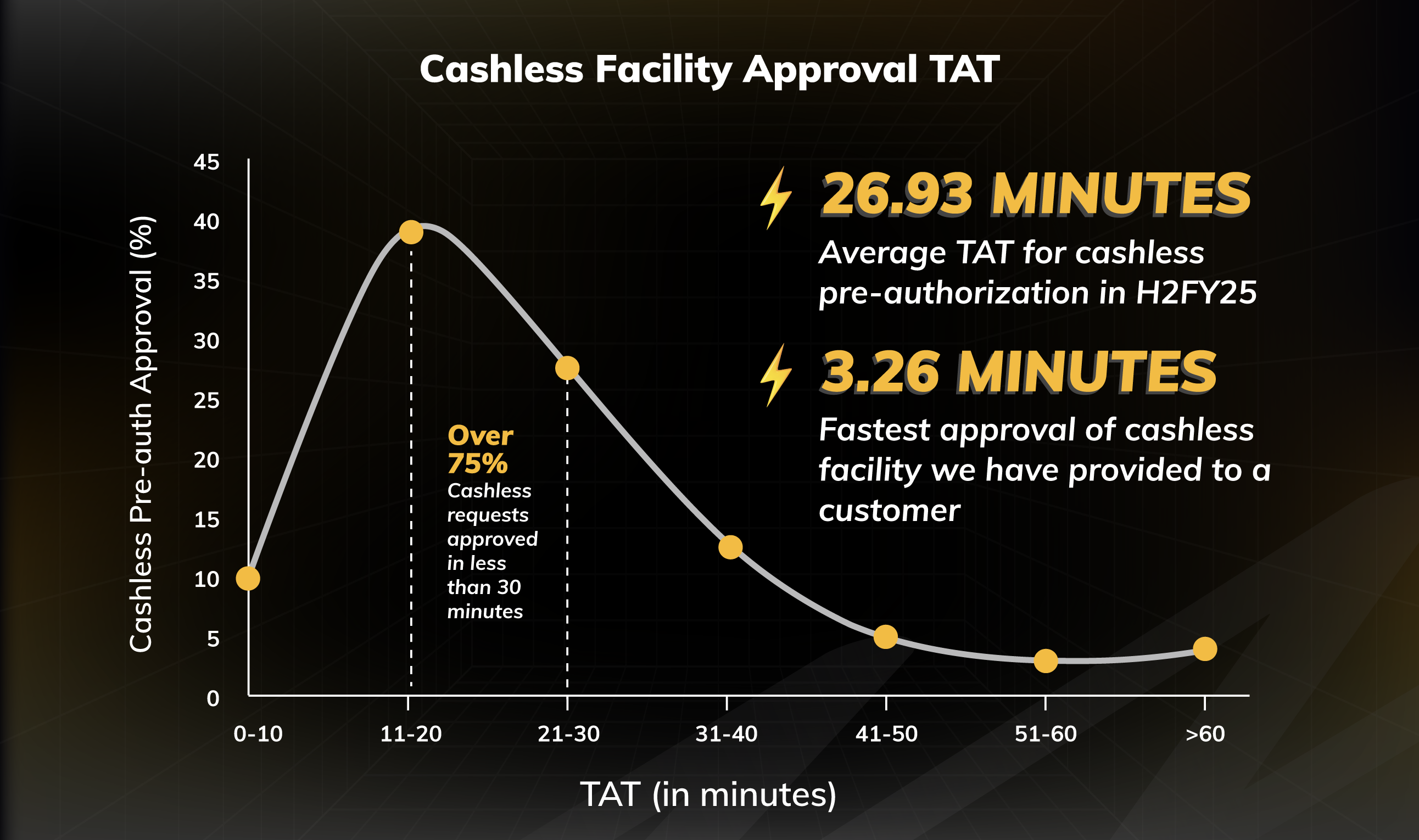
75% of Cashless Health Claims Approved in Just 30 Minutes at Digit
At Digit, in the second half of FY25, the average turnaround time (TAT) for pre-authorisation of health insurance cashless claims was a speedy 26.93 minutes. Even better? Over 75% of requests were approved within 30 minutes, making the process feel almost instantaneous.
Of course, some requests, around 3.3% took a little longer (over 60 minutes), mainly because they needed extra info or clarification from hospitals or customers.
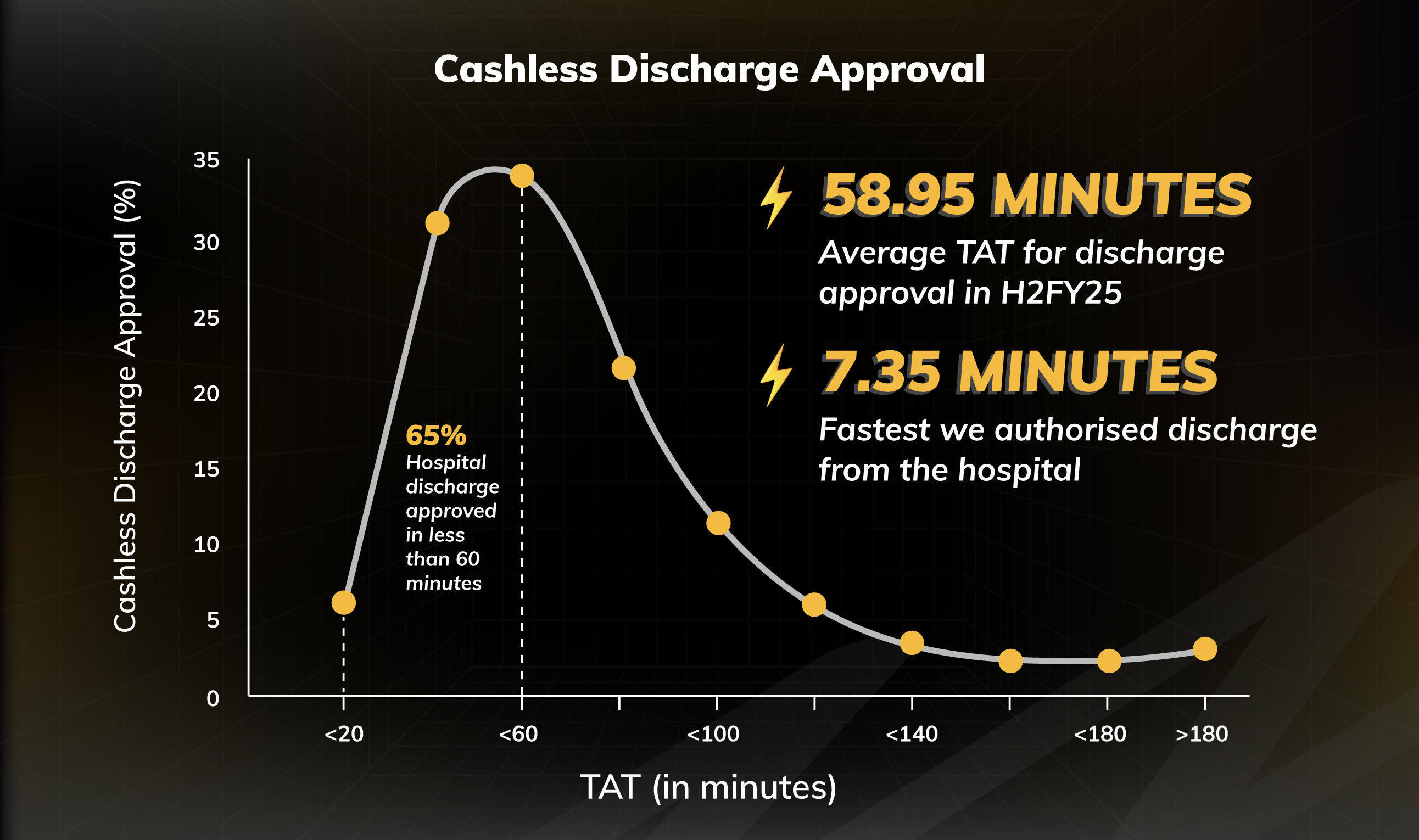
65% Cashless Discharge Approved in Just 60 Minutes at Digit
At Digit, in the second half of FY 2024-25, the average turnaround time (TAT) for hospital discharge approval in our health insurance was 58.95 minutes. Notably, 65% of discharge requests were completed within 60 minutes, ensuring patients aren’t left waiting once their treatment is finished.
While only 1.3% of cases extended beyond three hours, typically due to complex queries or pending clarifications.
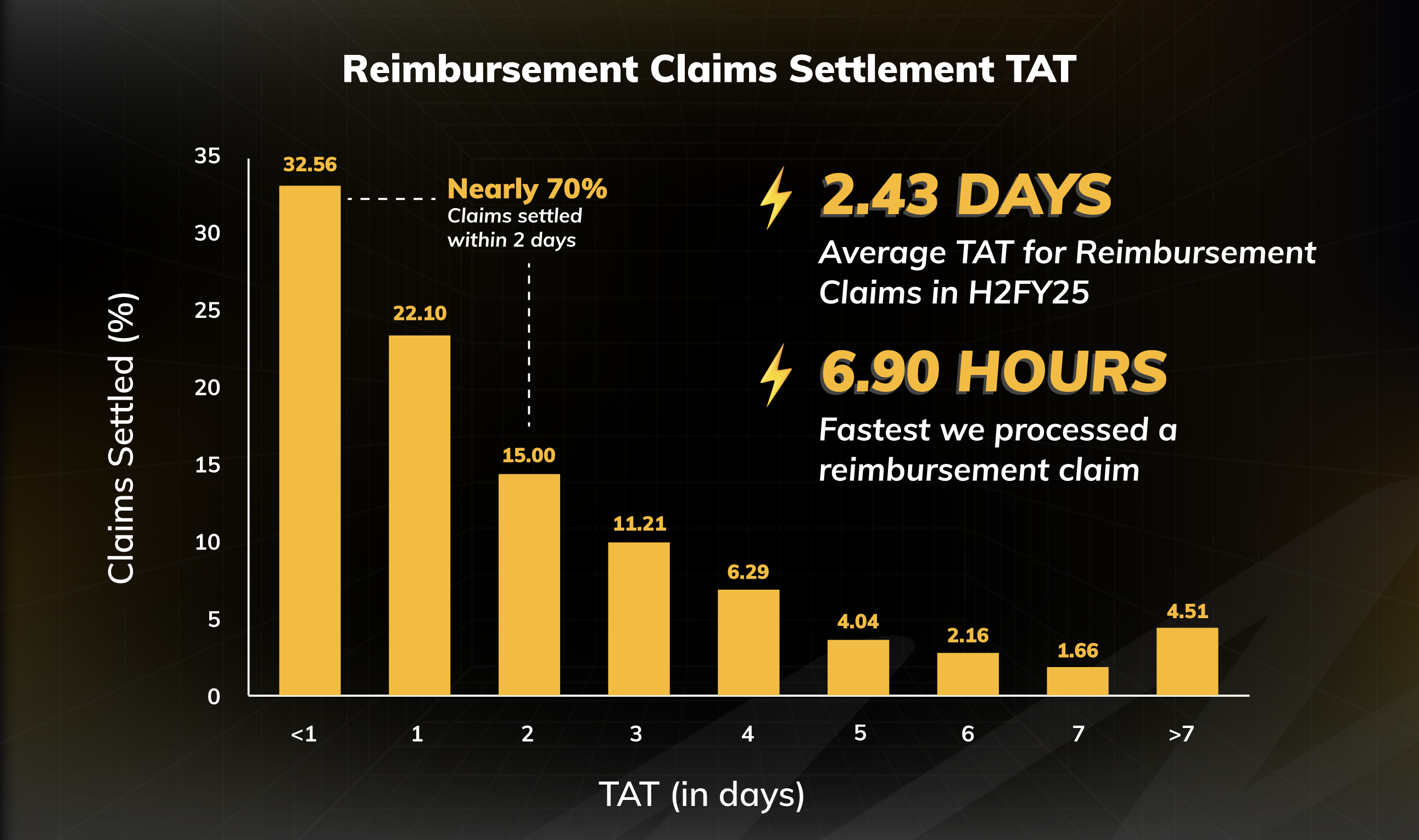
Almost 70% of Reimbursement Claims Settled in Just 2 Days
Not every hospital is part of a cashless network, and that’s where reimbursement claims come into play. Once all documents are submitted, the average turnaround time for processing a reimbursement claim at Digit in FY 2024-25 was just 2.43 days.
Nearly 70% of claims were settled within two days, providing quick relief to policyholders who initially had to pay out of pocket. While about 4.5% of claims took over a week to settle, usually due to missing documents or follow-up queries, the process is largely smooth and customer-centric.
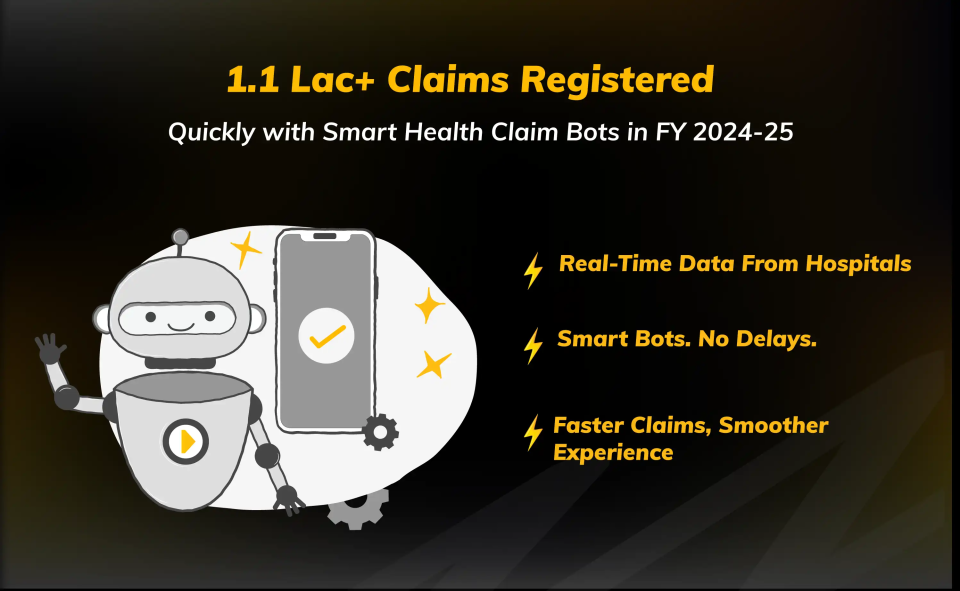
1.1 Lakh+ Claims Registered Quickly with Smart Health Claim Bots in FY 2024-25
At the heart of smooth insurance experiences lies something you never see!! 😁
At Digit, our Health Claims Bots and Bulk Policy Issuance are quietly reshaping the way claims get processed. These smart systems fetch real-time data directly from the partner, eliminating manual uploads, reducing errors, and speeding up approvals for claims. In FY 2025 alone, they registered over 1.1 lakh claims, cutting down processing time.
No breaks and no delays. Fewer forms and faster care! ☺️
The data below is for all the products as given in the table below:
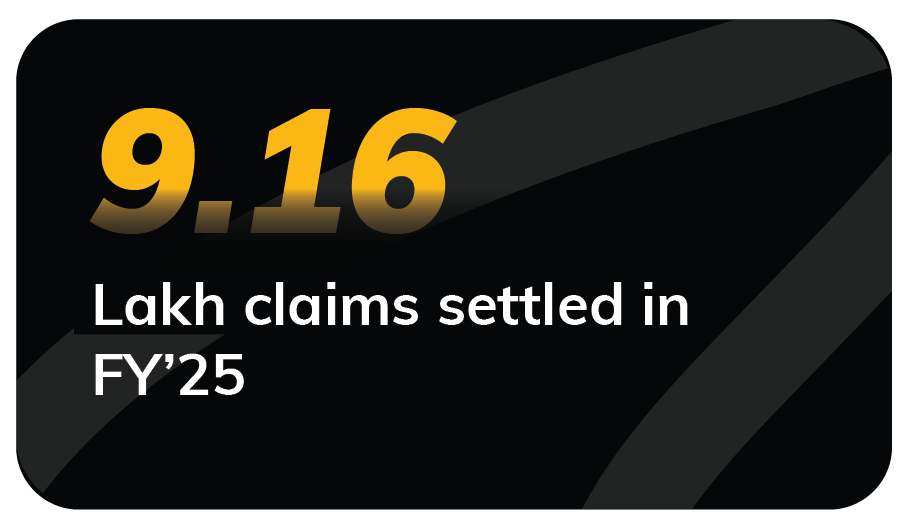
9.16 Lakh Claims Settled
Digit settled 9.16 lakh claims in FY 2024–25. Of the total, 2,18,082 were health-related claims, including travel and personal accident, each one settled with care, not delay. Behind each of those claims was an unexpected moment, an accident, an illness, a trip gone wrong, and every time, we showed up.
Because when life takes a sudden turn, your insurance should move forward, not hold you back.
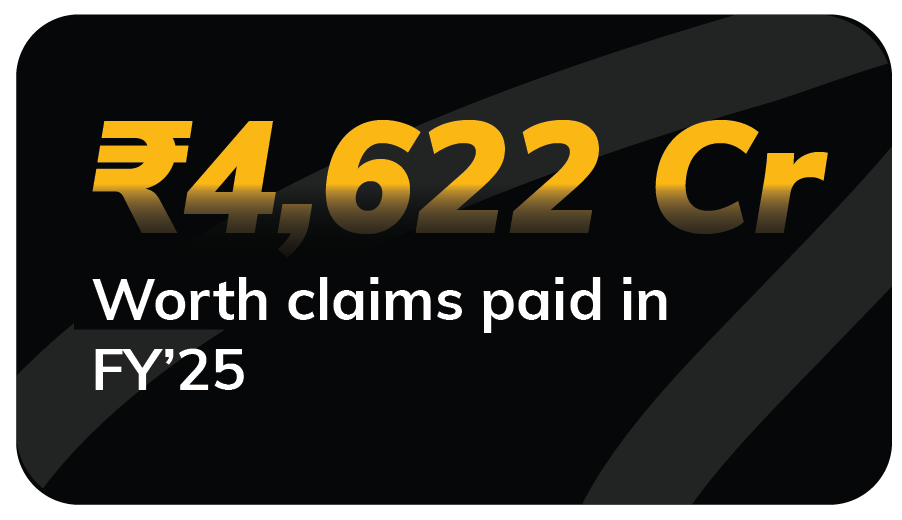
₹4,622 Crore Paid in Claims
At Digit, protection isn’t a promise; it’s an action. In FY 2024–25, we settled claims worth ₹4,622 crore, stepping in when our customers needed us most. Out of the total, ₹1,374 crore was paid towards health insurance claims alone, proof that when it comes to care, we are always there.
Quick settlements, zero confusion, and absolute peace of mind.
The General Insurance Council (GIC) started the 'Cashless Everywhere' program to recreate the Indian health insurance market. By altering the traditional methods of filing health insurance claims, this program gives policyholders greater ease and versatility.
In the past, policyholders who wanted cashless treatment had to choose a network hospital. If they sought medical attention outside of these networks, they had to pay the full hospital fee before filing a reimbursement claim. However, the Cashless Everywhere Hospitals campaign lifted these limitations, enabling policyholders to get cashless care at hospitals, independent of network ties.
This is how Everywhere Cashless works:
Before opting for cashless hospitalisation, a few quick checks can help you avoid delays, rejections, or last-minute out-of-pocket payments:
To sum up, cashless health insurance allows you to receive treatment at network hospitals without paying the full bill upfront, as your insurer directly settles approved expenses with the hospital. This makes it especially useful during emergencies or high-cost treatments where arranging immediate funds can be difficult. The process is faster and more convenient than reimbursement claims, but they are limited to network hospitals and require timely approval.
One of the primary reasons people buy health insurance is because of the benefit of cashless claims. To choose the best cashless medical insurance, always look for features such as: