
General
Life
Accessibility Options


General

General Products
Simple & Transparent! Policies that match all your insurance needs.
 Car Insurance
 Two Wheeler Insurance
 Commercial Vehicle Insurance
 Health Insurance
 Home Insurance
 Travel Insurance
 Business Insurance
Car Insurance
Two Wheeler Insurance
Commercial Vehicle Insurance
Health Insurance
Travel Insurance
Business Insurance
Car Insurance
Two Wheeler Insurance
Commercial Vehicle Insurance
Health Insurance
Travel Insurance



Scan to download

Life

Life Products
Digit Life is here! To help you save & secure your loved ones' future in the most simplified way.
 Term Life
 Savings Plan
 Retirement and Pension Plans
 Group Life Products
 Product Documents
Term Life
Savings Plan
Retirement and Pension Plans
Group Life Products
Product Documents
Term Life
Savings Plan
Retirement and Pension Plans
Group Life Products

Scan to download

Claims

Claims
We'll be there! Whenever and however you'll need us.
 Customer Support
 Motor Claims
Health Claims
Motor Claims
Health Claims
 Marine Insurance
 Grievance Redressal
Customer Support
Motor Claims
Health Claims
Marine Insurance
Grievance Redressal
Grievance Redressal
Customer Support
Motor Claims
Health Claims
Marine Insurance
Grievance Redressal
Scan to download
 General
 Life
General
Life
Life
General
Life
Renewals
Resources

Resources
All the more reasons to feel the Digit simplicity in your life!
Exclusive Features
 Transparency Report
Others
Exclusive Features
Transparency Report
Transparency Report
Others
Exclusive Features
Transparency Report
Scan to download


Our WhatsApp number cannot be used for calls. This is a chat only number.

 Grey Scale
 Readable Text
 Reset
Reset



Buy Travel Insurance Online

24X7
Missed Call Facility

Affordable
Premium

1-Day Adventure
Activities Covered
Trip Type


Popular Countries

Select Number of Travellers
I agree to the Terms & Conditions

Check Price

Travel Insurance
Trip Type
24X7
Missed Call Facility
Affordable
Premium
1-Day Adventure
Activities Covered
| Schengen visa fact | Details |
| Who needs it? | Indian passport holders visiting Schengen countries |
| Maximum stay | Up to 90 days in any 180-day period |
| Adult visa fee | €90 |
| Child visa fee | €45 for ages 6 to below 12 |
| Travel insurance | Mandatory |
| Minimum insurance cover | €30,000 |
| Appointment route | VFS/BLS/GVC/embassy, depending on country |
| Processing time | Usually around 15 calendar days |
| Best time to apply | As early as possible once travel plan is ready |
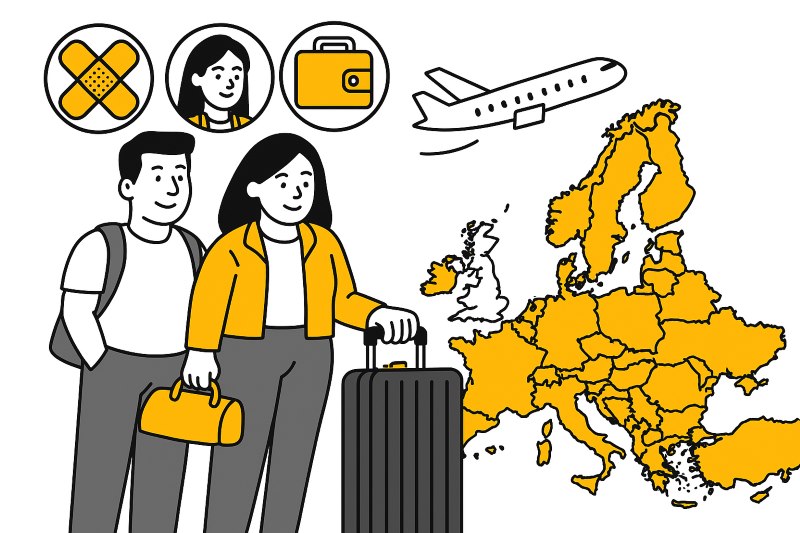
A group of 29 countries that form the Schengen area. Out of these 29 countries, 23 make up the European Union Member State, and the remaining 4 non-European Union countries are major members of European Free Trade Association (EFTA). These 4 non-EU countries are Iceland, Liechtenstein, Norway and Switzerland.
The list of Schengen countries are:
Schengen visas are available in different types depending on your purpose of travel, duration of stay, and how you plan to enter and move within the Schengen Area.
Note: The visa fees mentioned in this table are indicative for adult applicants and INR conversion depends on monthly exchange rate updates by embassies/VFS. For accurate and updated fee details, always check with the official embassy or visa application centre before applying.
Follow these simple steps to apply for a Schengen visa from India, from choosing the right country to tracking your application.
Select the country or countries you want to visit within the Schengen area and make sure to determine the country you will visit first.
How to Decide Which Schengen Country to Apply To?
The country you apply to depends on your travel plan, specifically where you will spend the most time or enter first during your trip. Here’s how you should decide which Schengen country to apply to:
| Your Trip Plan | Where to Apply |
| Visiting one Schengen country | Apply to that country |
| Visiting multiple countries | Apply to the country where you will stay the longest |
| Equal stay across countries | Apply to the first Schengen country you enter |
| Business + tourism trip | Apply based on your main purpose of travel |
| Not sure about your itinerary | Finalise your route before booking your appointment |
To start your Schengen visa application, head to the official website of the application centre such as VFS Global or the embassy or consulate website.
Once you land on the right website, check if you need a visa and the required visa type by providing your nationality, age, main destination of stay, country of submission of application, etc. in the designated section.
If a visa is required, you must select the type of Schengen visa you need based on your purpose of visit (e.g., tourism, business, study). Then fill out the application form for your visa online through:
Download and print the form after filling it correctly. Make sure all details match your documents.
List of Schengen Visa Application Centres & Embassies
Here are the important links to the Schengen countries’ VFS Global websites, consulates and embassies in India and their address and contact information.
Please note that VFS Global does not process visa applications for Greece, Spain, and Slovakia directly from India. If any of these countries are on your travel itinerary, you can choose another Schengen country as your first port of entry and then proceed to any of these countries.
However, if you intend to visit only one of these countries and wish to enter directly, you must apply for the visa through the respective websites for Greece, Spain, or Slovakia as mentioned below:
| Schengen Countries | Visa Application Centre Links | Address and Contact Details of Schengen Consulates | Official Site to the Embassies/Consulates |
| Greece | GVC World | Greece Consulate in India | Link |
| Spain | BLS International | Spain Consulate in India | Link |
| Slovakia | BLS International | Slovakia Embassy and Consulate in India | Link |
Prepare all documents exactly as per the checklist of the Schengen country you are applying to. Make sure all documents are complete, accurate, and consistent, as even small errors or missing details can lead to delays or rejection.
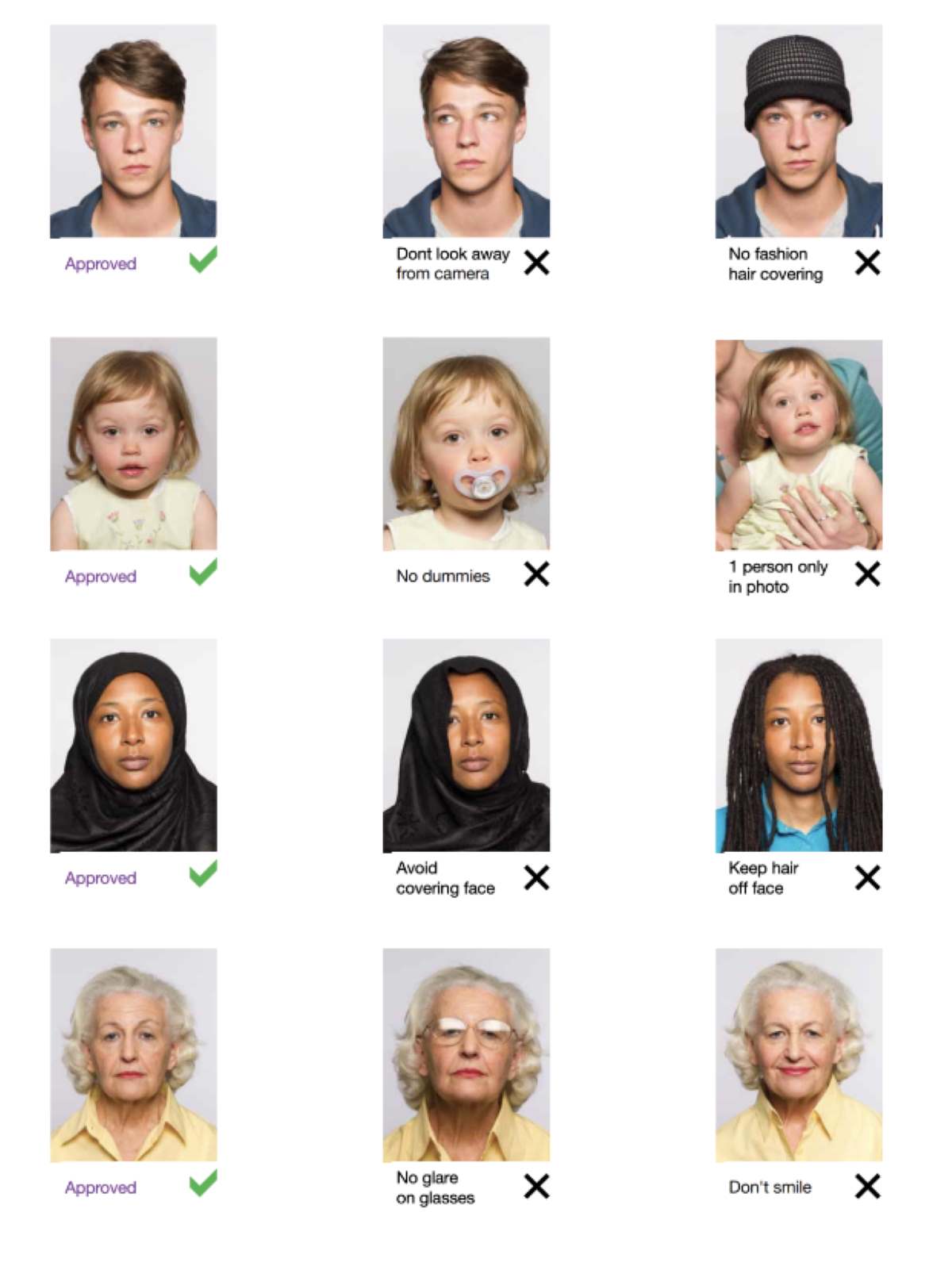
For Schengen visa applications, ensure your photos meet these requirements:
You can refer to this source for clarity in all the necessary photo requirements.
1. Travel Medical Insurance
Covers a minimum of €30,000 per individual for medical emergencies throughout your stay in the Schengen area.
2. Proof of Accommodation
Hotel reservations, rental property agreements, or a host's invitation letter (if staying with family/friends).
3. Proof of Sufficient Funds
Bank statements fetched 4 to 5 days before the appointment date and salary slips for the last 3 months, income tax returns, or sponsorship documents showing you can support yourself financially during the trip.
4. Proof of Employment Status for Employed Person
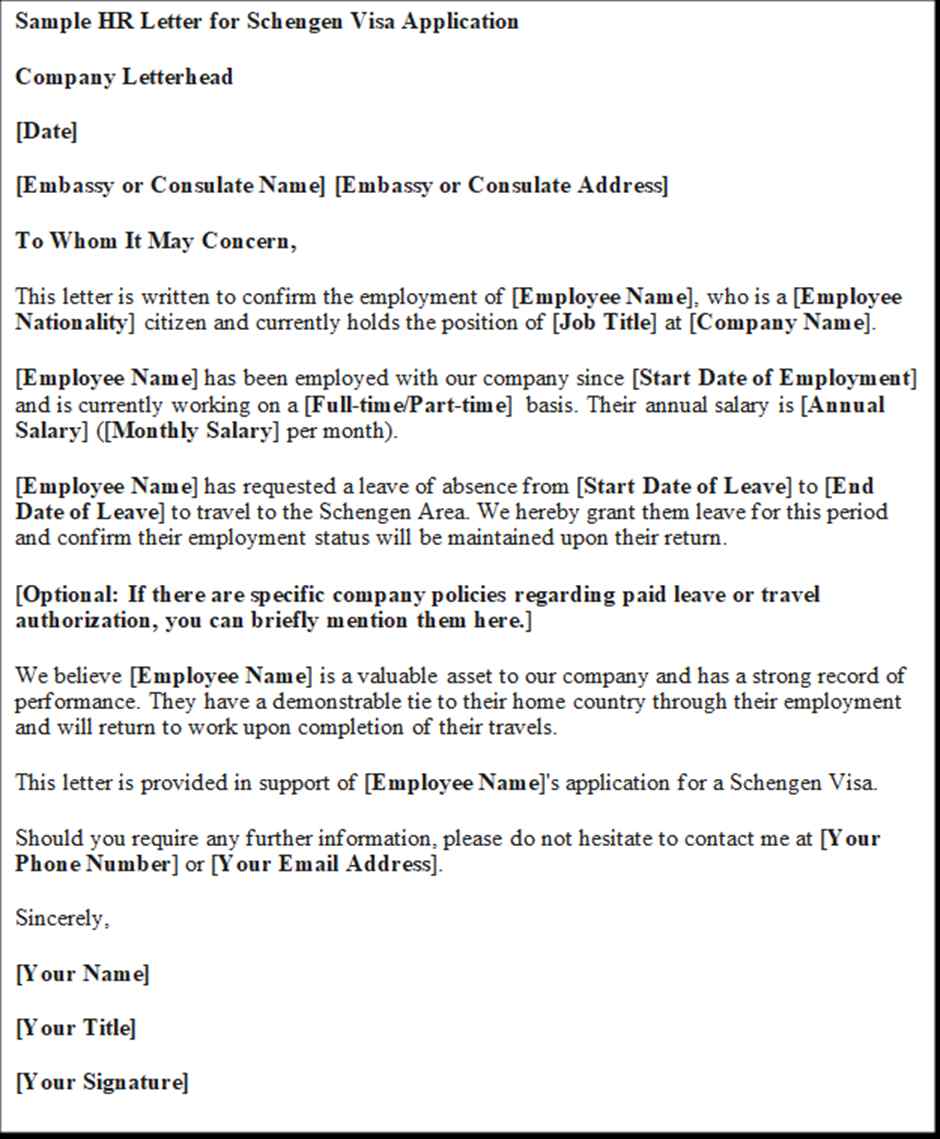
An HR letter from your employer confirming your position, salary, and leave approval. Your HR letter must include the below details:
Personal details like full name and passport number of you and your host
Here’s a sample HR letter for Schengen visa application for Indians
5. Flight Itinerary / Travel Plan
Round trip flight bookings, details of transportation within the Schengen area.
6. For Business
An official business letter from a company in a Schengen state, as well as from the employer stating the purpose of the visit, must be presented.
7. Cover Letter
A detailed letter explaining the purpose of your trip, your itinerary, and dates of travel. Below are the points must be present in your cover letter:
Here’s a sample cover letter for the Schengen visa application from India.
Before booking your appointment, purchase international travel insurance that meets Schengen visa requirements. The policy must have a minimum coverage of €30,000, be valid across all Schengen countries, and cover the entire duration of your trip. It’s important to check that all details on the policy match your application documents.
Yes, it is mandatory to have travel insurance for a Schengen visa. This is because, as part of the Schengen visa requirements, every tourist must have medical coverage of up to €30,000. Visa requirements for the 29 countries are practically identical, so owning travel insurance will help process your Schengen Visa in a smooth manner.
Before submitting your visa application, make sure your travel insurance meets Schengen compliance requirements. A non-compliant policy is one of the easiest reasons for visa rejection, even if everything else is correct.
Your policy should:
Many applicants treat insurance as a formality, but small mistakes can delay or reject your visa. Avoid these common issues:
Once your documents are ready, you need to schedule your visa appointment through the official visa processing partner for your chosen country. Most Schengen countries use VFS Global, while some use BLS International (for Spain and Slovakia) or GVC (for Greece), and a few may route bookings directly through embassy or consulate portals. Book your slot well in advance, as appointment availability can be limited, especially during peak travel seasons.
After completing your application form and preparing all required documents, the next step is to book a visa appointment for document verification and biometric submission. Always book your appointment through the official visa application centre or embassy website of your selected country to avoid errors or fraud.
Book Appointment Through VFS Global
To book your appointment at a VFS Global centre:
Important: Book separate appointments for each applicant, including family members
Book Appointment Through Other Visa Centres
For certain countries, appointments are handled through alternative providers such as BLS International for Spain, Slovakia and GVC World for Greece.
To book your appointment, you will need to:
Carry all required documents in an organised file to avoid delays or rejection. Here’s what you should bring:
Important Tip: Arrive 15–20 minutes early for your appointment and arrange your documents in the same order as the country-specific checklist.
On the day of your appointment, you will need to pay the visa fee and applicable service charges at the visa centre during your appointment. You will also be required to provide biometric data, including fingerprints and photographs.
| Schengen Visa Category | Fee in INR | Fee in EUR |
| Adult | ₹10098 | €90 |
| Children between 6-12 years of age | ₹5049 | €45 |
| Children younger than 6 years of age | Free | Free |
*The applicable visa fee in ₹ (Indian Rupees) is as per the current exchange rate as of 13 May 2026. It is subject to change without notice. (source)
Important Note:
Yes, applicants for a Schengen visa must provide biometric data, which includes fingerprints and a digital photograph during their Schengen visa application process.
Individuals between the ages of 12 and 17 need to submit biometric data for a Schengen visa application, with a parent or legal guardian's consent and presence during fingerprint collection. However, there are some exemptions:
Note: Under the new Entry/Exit System (EES), biometric verification is also required at Schengen borders like facial image and fingerprints on your first entry which replaces traditional passport stamps.
The Entry/Exit System (EES) is a digital border control system introduced by the European Union for non-EU travellers, including Indians visiting the Schengen Area. It is not a visa, and travellers are not required to apply for it separately.
Instead, it operates automatically at border checkpoints by recording your entry and exit details along with biometric data such as facial images and fingerprints, typically during your first visit.
EES helps authorities track compliance with the 90 days in 180 days rule and automatically flags overstays.
After submission, you can track your visa application online using the reference number provided by the visa centre. This allows you to monitor the progress and know when your passport is ready for collection.
Schengen visa processing usually takes around 15 calendar days from the time your application is received by the embassy or consulate. However, it can take longer—up to 30 days or more, during peak travel seasons, if documents are incomplete, or if additional verification is required.
To avoid delays, apply well in advance and do not wait until the last minute, as appointment availability at visa centres can often be a bigger bottleneck than the processing time itself.
Throughout the processing stage, you can monitor the progress of your Schengen visa application by utilising the online portal or contacting VFS Global.
Upon receiving notification, visit the VFS centre to collect your passport containing the visa decision. You can get your passport delivered to your home or workplace using their premium services. Once you receive your passport:
Schengen visa rejections usually happen due to documentation gaps or weak financial/travel proof, not because of eligibility. Here are the key reasons why Schengen visa is rejected and what to check before applying to avoid rejection.
| Rejection Risk | What to Check Before Applying |
| Wrong embassy selected | Apply through the country where you will stay the longest (main destination) or first entry if equal stay |
| Incomplete or incorrect documents | Ensure all documents are updated, consistent, and match your application details |
| Weak financial proof | Show sufficient and stable funds with clear bank statements and income proof |
| Incomplete or invalid insurance | Ensure at least €30,000 coverage, valid across all Schengen countries, for full travel dates |
| Inconsistent itinerary | Match your flights, hotel bookings, and leave dates with your declared travel plan |
| Unclear travel purpose | Clearly explain your trip plan, duration, and intent in your cover letter |
| Weak proof of return to India | Provide strong ties such as job, business, or family commitments |
| Previous visa violations | Disclose past refusals or overstays and ensure compliance with rules |
| Suspicious or dummy bookings | Avoid fake or unpaid bookings; provide verifiable travel reservations |

A Schengen visa rejection is not final, you can still take corrective steps.
If your visa is rejected:
Here’s a simple timeline to help you decide when to start your Schengen visa application and stay on track.
The Schengen visa process may seem complex at first, but it becomes manageable when broken into clear steps. By preparing your documents carefully, choosing the right application route, and avoiding common mistakes, you can complete your application smoothly and improve your chances of approval.
Visa Guides for popular destinations from India
Latest News
Read More




