General
Life
Accessibility Options


General

General Products
Simple & Transparent! Policies that match all your insurance needs.
 Car Insurance
 Two Wheeler Insurance
 Commercial Vehicle Insurance
 Health Insurance
 Home Insurance
 Travel Insurance
 Business Insurance
Car Insurance
Two Wheeler Insurance
Commercial Vehicle Insurance
Health Insurance
Travel Insurance
Business Insurance
Car Insurance
Two Wheeler Insurance
Commercial Vehicle Insurance
Health Insurance
Travel Insurance



Scan to download

Life

Life Products
Digit Life is here! To help you save & secure your loved ones' future in the most simplified way.
 Term Life
 Savings Plan
 Retirement and Pension Plans
 Group Life Products
 Product Documents
Term Life
Savings Plan
Retirement and Pension Plans
Group Life Products
Product Documents
Term Life
Savings Plan
Retirement and Pension Plans
Group Life Products

Scan to download

Claims

Claims
We'll be there! Whenever and however you'll need us.
 Customer Support
 Motor Claims
Health Claims
Motor Claims
Health Claims
 Marine Insurance
 Grievance Redressal
Customer Support
Motor Claims
Health Claims
Marine Insurance
Grievance Redressal
Grievance Redressal
Customer Support
Motor Claims
Health Claims
Marine Insurance
Grievance Redressal

Scan to download
 General
 Life
General
Life
Life
General
Life
Renewals
Resources

Resources
All the more reasons to feel the Digit simplicity in your life!
Exclusive Features
 Transparency Report
Others
Exclusive Features
Transparency Report
Transparency Report
Others
Exclusive Features
Transparency Report
Scan to download


Our WhatsApp number cannot be used for calls. This is a chat only number.

 Grey Scale
 Readable Text
 Reset
Reset





value

Managing your carbohydrate intake is essential for maintaining a healthy lifestyle, whether your goal is weight loss, muscle gain, or controlling blood sugar levels. A Carbohydrate Calculator helps you determine the exact amount of carbs your body needs based on factors like age, gender, activity level, and health goals.
By using this tool, you can make informed dietary choices, balance your macronutrients, and stay on track with your fitness or wellness plan.
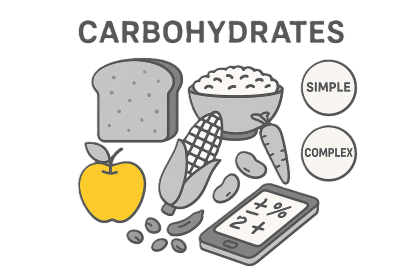
Carbohydrates are important body-building nutrients present in foods as sugar molecules. When they enter your body, they turn into glucose, get burned, and give you the energy to work.
According to nutrition guidelines, carbohydrates should make up about 45% to 65% of your total daily calorie intake. So, for someone following a 2,000-calorie diet, this means roughly 900 to 1,300 calories should come from carbohydrates.
Foods that are rich in carbohydrates are:
Read more
Read less
A Carbohydrate Calculator is an online tool designed to help you determine the ideal amount of carbohydrates your body needs each day. It uses factors such as your age, gender, weight, height, activity level, and health goals to calculate a personalised carb intake.
Carbohydrates are the body’s main source of energy but consuming too much or too little can affect your health and fitness progress. This carbs intake calculator ensures you strike the right balance, whether you’re aiming for weight loss, muscle gain, or managing conditions like diabetes.
An online carbs calculator is a great, convenient tool for easily measuring daily carbs intake. Follow these steps to get your personalised carbohydrate intake:
Step 1
Provide your age, gender, weight, height, and activity level.
Step 2
Choose your goal, from losing or maintaining weight, or gaining muscle, and selecting your daily activity level.
Step 3
The calculator will instantly show you the ideal amount of carbohydrates you should consume each day.
A daily carbs calculator works by using scientific formulas to estimate the amount of carbohydrates your body needs daily. It considers several key factors to provide a personalised recommendation:
Let’s take an example to better understand the daily carb requirements.
Pritam, a 30-year-old professional who is 5’8” tall and weighs 70 kg. He wants to maintain his current weight and follows a sedentary lifestyle because most of his day is spent working at a desk. To figure out how many carbohydrates he should consume daily, Pritam needs to use a carbohydrate intake calculator.
Generally, for someone like Pritam, the result will come to around 225 to 250 grams of carbohydrates per day, which means his diet should include healthy carb sources like whole grains, fruits, vegetables, and legumes.
What does this mean? By knowing this, Pritam can plan his meals better, choosing whole grains, fruits, and vegetables as his primary carb sources instead of processed foods.
Carbohydrates are the body’s primary source of energy, but consuming too much or too little can lead to health issues. Here is the importance of calculating your carbohydrate intake:

A carbohydrates intake calculator is useful for anyone who wants to manage their diet more effectively. Here are some groups who can benefit the most:
Using a carb calculator for food offers several advantages for anyone looking to improve their diet and health. Here are the key benefits:
Read More
Read Less
In general, good carbs are healthier carbs that are sourced from beans, whole grains, vegetables, and fruits. On the other hand, bad carbs are processed, simple carbohydrates that contain added sugars and refined grains.

The amount of carbohydrates you need each day depends on your age, gender, activity level, and overall health goals. However, you should know your body's requirements to track daily carb intake. A minimum of 55% carbohydrate intake is recommended for an adult. Your carb intake should not rise to 65%. Carb intake percentage is measured in calories, where 4 kcal is equivalent to 1g.
For example, if your daily intake is 2,000 calories, then 900 to 1,300 calories should come from carbohydrates. Proteins and fats fulfill the rest of the amount.
Carbohydrates are present in a wide variety of foods, but the amount can vary significantly depending on the type of food. Knowing the carbohydrate content of common foods helps you plan balanced meals and stay within your daily carb limit. Here are some examples:
Calculating your carbohydrate intake is important, but many people make errors that can affect their health goals. Here are some common mistakes to watch out for:
Carbs are the body’s main source of energy, but consuming too much or too little can impact your weight, blood sugar, and overall health. Hence, a carb calculator takes the guesswork out of the process by providing personalised recommendations based on your age, weight, height, activity level, and health goals.
Start using a carbohydrate calculator today and take the first step toward a healthier, more balanced lifestyle!
Other Useful Calculators to Maintain a Good Health
The general formula is:
Carb grams per day = (Total daily calories × Carb percentage)/4
Since 1 gram of carbohydrate provides 4 calories, dividing 4 gives you the grams.