General
Life
Accessibility Options


General
General Products
Simple & Transparent! Policies that match all your insurance needs.
 Car Insurance
 Two Wheeler Insurance
 Commercial Vehicle Insurance
 Health Insurance
 Home Insurance
 Travel Insurance
 Business Insurance
Car Insurance
Two Wheeler Insurance
Commercial Vehicle Insurance
Health Insurance
Travel Insurance
Business Insurance
Car Insurance
Two Wheeler Insurance
Commercial Vehicle Insurance
Health Insurance
Travel Insurance
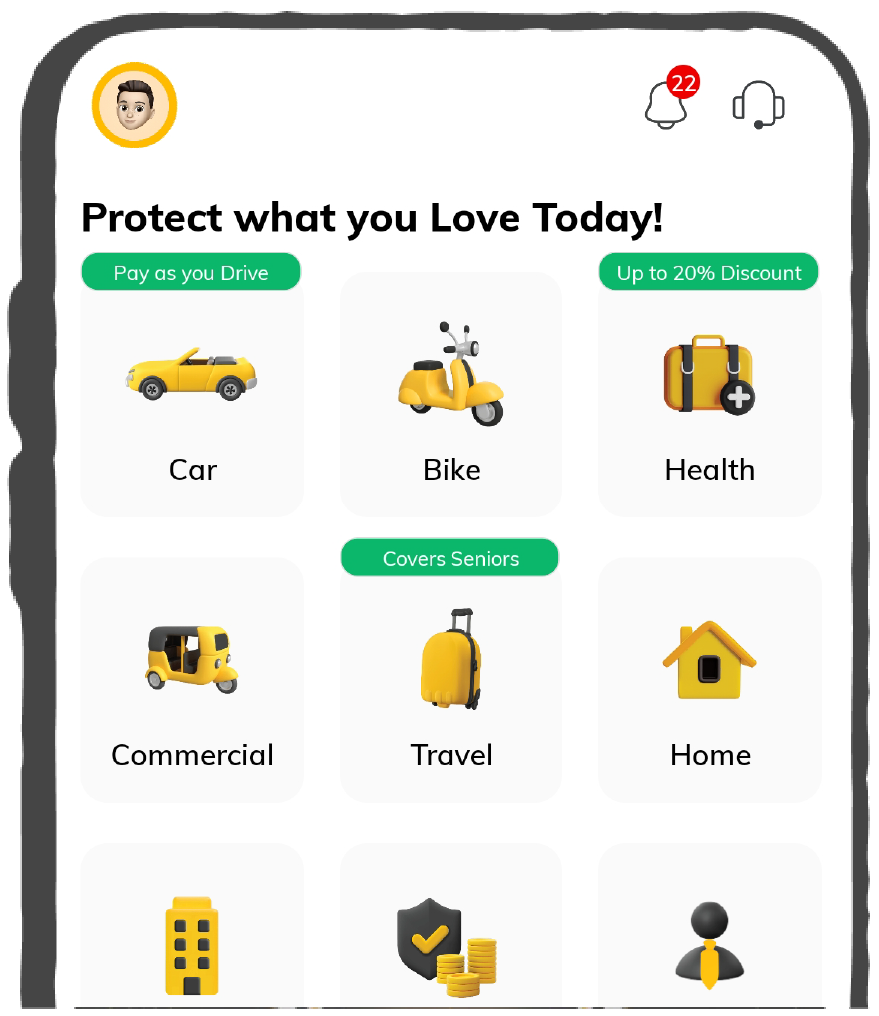


Scan to download

Life

Life Products
Digit Life is here! To help you save & secure your loved ones' future in the most simplified way.
 Term Life
 Savings Plan
 Retirement and Pension Plans
 Group Life Products
 Product Documents
Term Life
Savings Plan
Retirement and Pension Plans
Group Life Products
Product Documents
Term Life
Savings Plan
Retirement and Pension Plans
Group Life Products
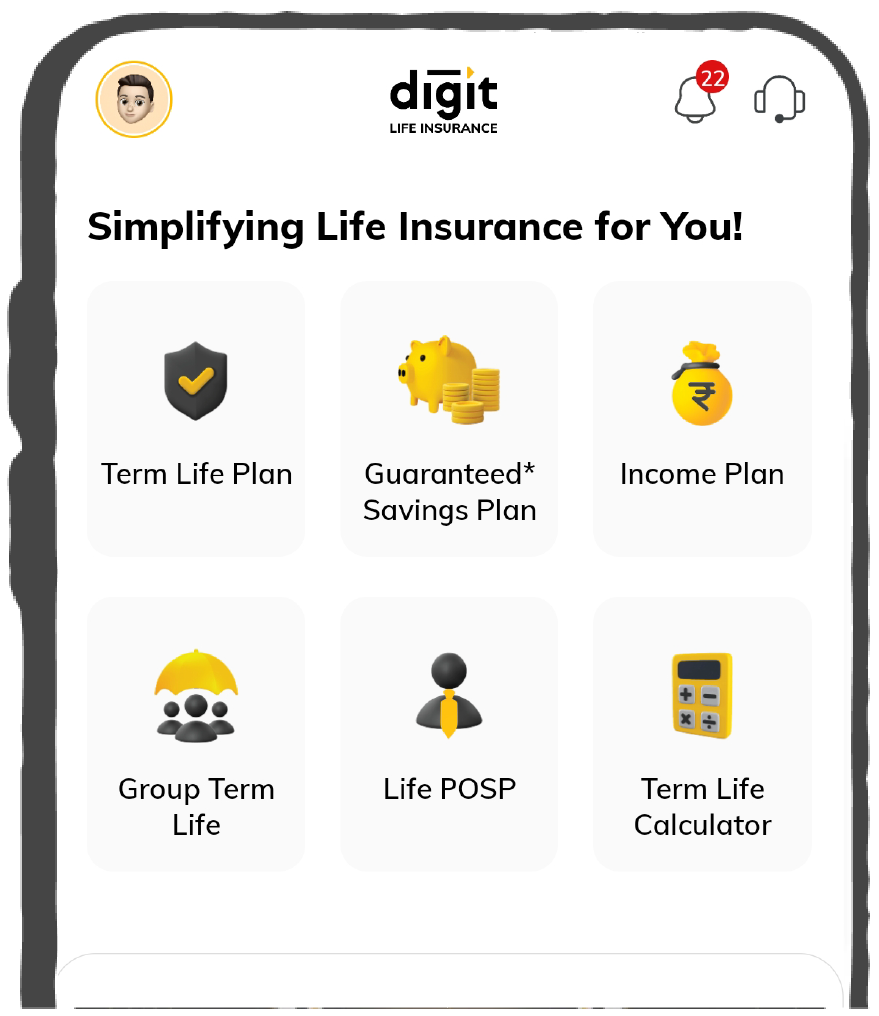
Scan to download

Claims
Claims
We'll be there! Whenever and however you'll need us.
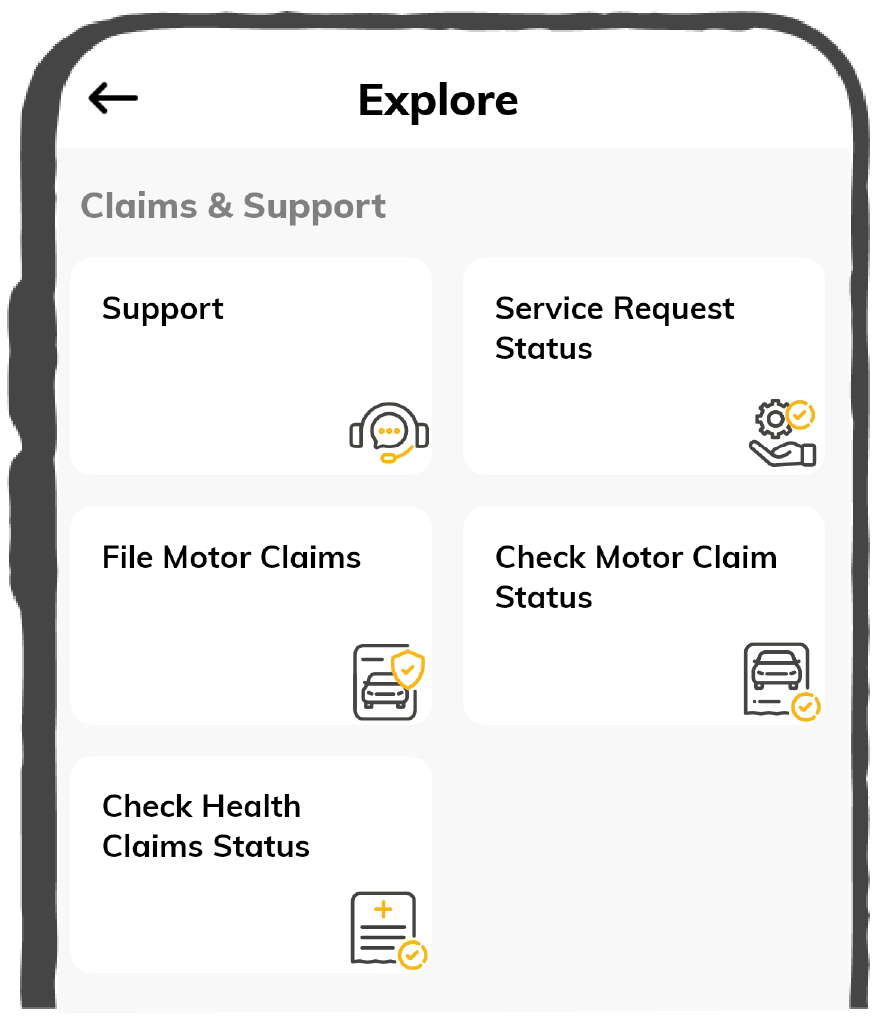
 Customer Support
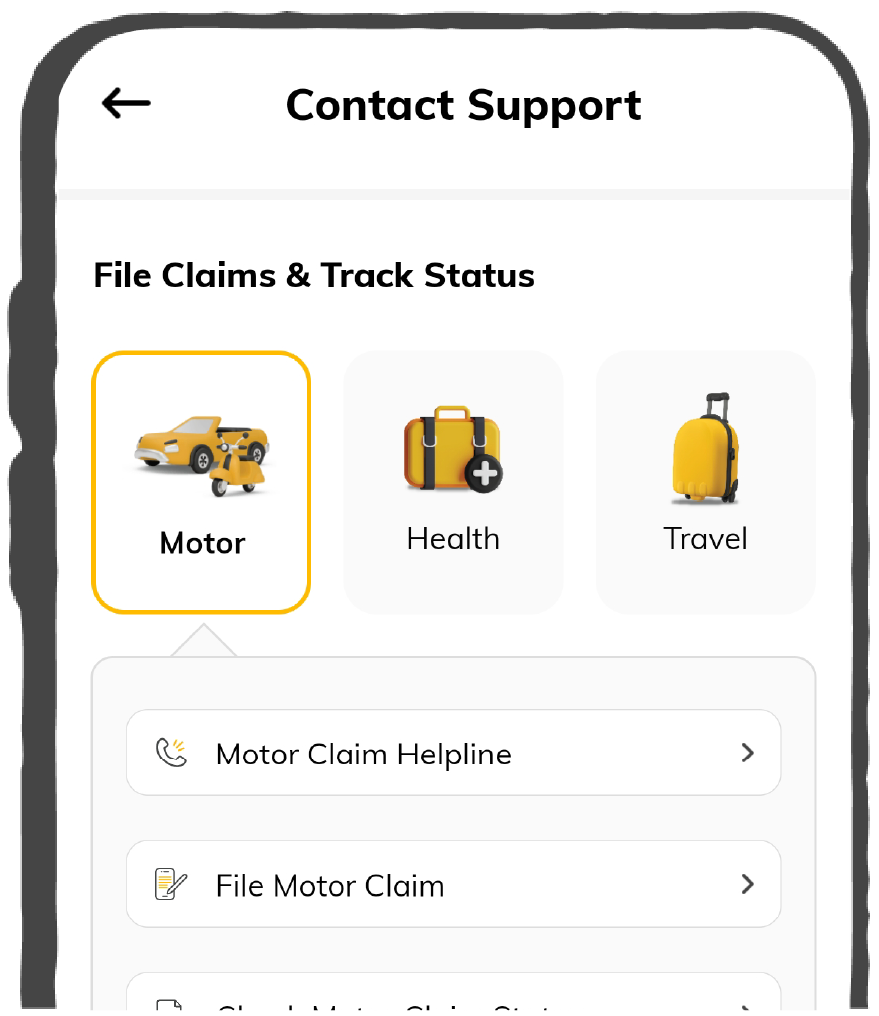
 Motor Claims
Health Claims
Motor Claims
Health Claims
 Marine Insurance
 Grievance Redressal
Customer Support
Motor Claims
Health Claims
Marine Insurance
Grievance Redressal
Grievance Redressal
Customer Support
Motor Claims
Health Claims
Marine Insurance
Grievance Redressal
Scan to download
 General
 Life
General
Life
Life
General
Life
Renewals
Resources
Resources
All the more reasons to feel the Digit simplicity in your life!
Exclusive Features
 Transparency Report
Others
Exclusive Features
Transparency Report
Transparency Report
Others
Exclusive Features
Transparency Report
Scan to download


Our WhatsApp number cannot be used for calls. This is a chat only number.

 Grey Scale
 Readable Text
 Reset
Reset




10000+
Cashless Garages
1600 Crore+
Paid-in Claims

7 Crore+
Policies Sold
I agree to the Terms & Conditions

Buy Online for Huge Savings

Check Price
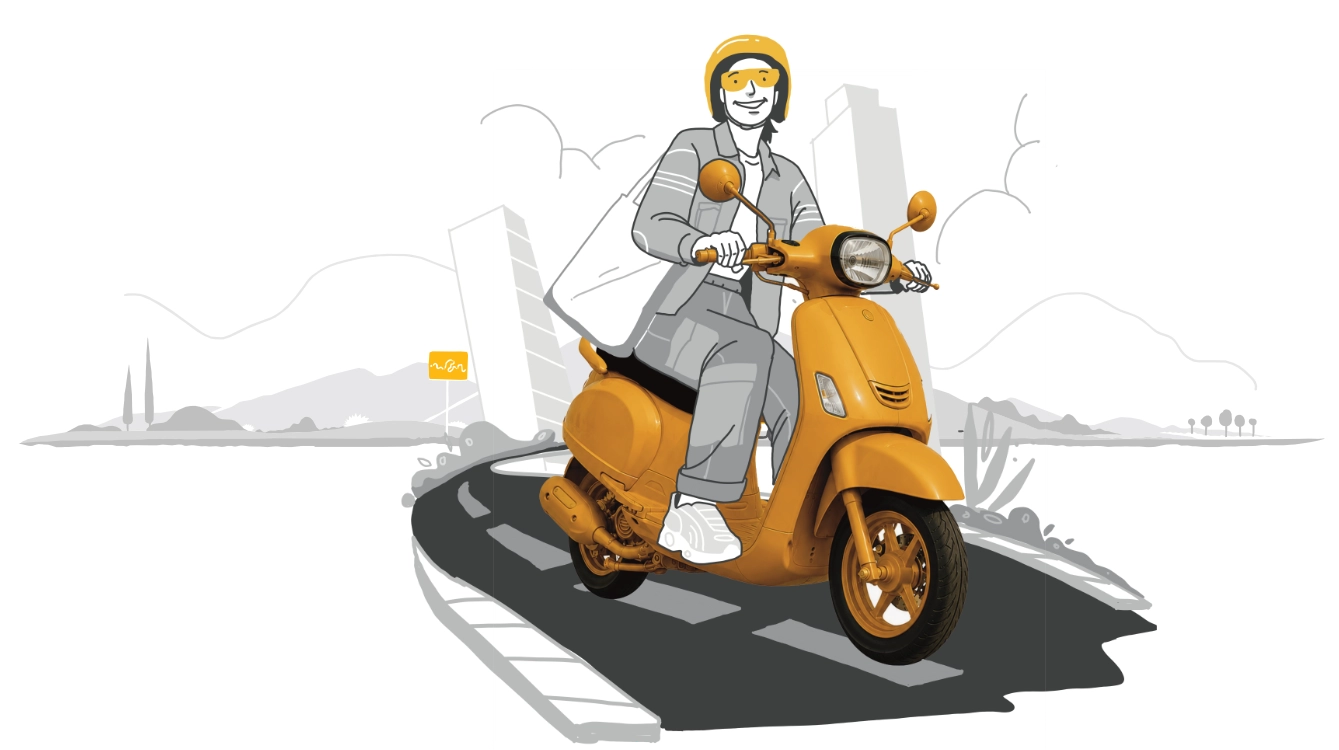
Bike insurance Online, starting ₹752
Choosing the right bike insurance in India affects more than legal compliance. It determines who pays after an accident, how claims are settled, and how much you may still have to pay out of pocket. The difference between comprehensive and third-party bike insurance becomes most visible at claim time, not at purchase.
Here is a simpler breakdown of the difference between third-party and comprehensive two-wheeler insurance to help you understand the limits and benefits of each:
If your bike is new, used daily, or costly to repair, comprehensive bike insurance is the better choice since it covers both third‑party liability and damage to your own bike.
If your bike is old, rarely used, or you only want legal compliance, third‑party bike insurance may be sufficient.
In most practical cases, comprehensive insurance offers better financial protection against unexpected repair costs and losses.
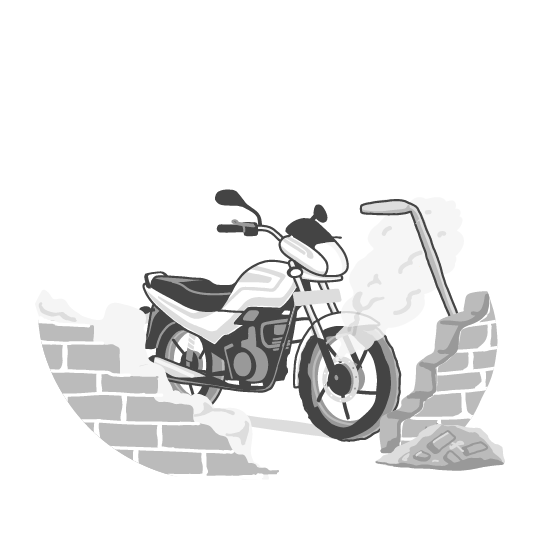
Example 1: Third‑Party Bike Insurance
Suppose you meet with an accident and your bike needs repairs worth ₹40,000. Since third‑party insurance does not cover damage to your own car, the insurer does not pay anything for these repairs.
Bike repair cost after an accident: ₹40,000
Own bike damage covered: No
Insurance payout for your bike: ₹0
You pay: ₹40,000 from your pocket
What this shows:
Third‑party bike insurance helps only with legal liabilities towards others. Any damage to your own bike, even a costly one, is entirely your responsibility.
Read More
Read Less

Complete Protection for Your Bike
It covers damage to your bike caused by accidents, fire, vandalism, theft, and natural calamities like floods, storms, or earthquakes, helping you avoid heavy repair or replacement costs.

Third‑Party Liability Cover
Along with protecting your bike, it also covers legal liabilities if your bike causes injury, death, or property damage to a third party.

Personal Accident Cover
Comes with mandatory owner rider personal accident cover, providing financial support in case of accidental death or permanent/partial disability.

Theft Protection
If your bike is stolen, the policy compensates you for the loss. With add‑ons like Return to Invoice, you can recover the invoice value and road tax.

Customisable IDV
You can choose your bike’s Insured Declared Value (IDV) based on its current market value, allowing better control over premium and payout.

No Claim Bonus (NCB) Savings
Every claim free year earns you a discount on renewal premiums—up to 50% over time.

Useful Add‑ons for Extra Cover
Enhance protection with add‑ons like Zero Depreciation, Engine Protection, Roadside Assistance, and more.

Cashless Repairs & Peace of Mind
Access a wide network of cashless garages and enjoy peace of mind knowing major repair expenses won’t hit your pocket unexpectedly.

It does not cover normal wear and tear or ageing of your bike over time.
Claim payouts are reduced due to depreciation on parts like plastic, rubber, fibre, and metal based on the bike’s age.
Mechanical or electrical breakdowns and regular maintenance-related issues are not covered under standard policies.
Coverage usually excludes tyres and tubes unless they’re damaged along with the bike in the same accident.
Premiums are higher than third-party insurance because the policy offers wider protection.
Claims can be rejected if the bike is ridden without a valid license, under alcohol influence, or used illegally.
Damage caused by negligence, or unlawful activities is not covered.
Key protections like zero depreciation, engine cover, or roadside assistance are add‑on dependent and increase the premium.

Drunk Driving
Damage is done by a person driving under the influence of drugs or alcohol.

No Valid Licence
Damage is done by a person driving without a valid license or has a learner’s license but no valid license holder on the vehicle.

Consequential Damage
Consequential damage does not occur as a direct result of the accident. Unless covered for in an add-on, such damages can’t be covered.
Contributory Negligence
Any contributory negligence, like damage due to driving the bike in a flood can pose a risk, which is not recommended as per the manufacturer’s driving manual, will not be covered!

Add-Ons not Bought
Some situations are covered in add-ons bought along with the policy. In case the add-ons are not bought, the corresponding situations will not be covered.
Covers for Third-Party Liabilities
One of the main third-party insurance for two-wheeler benefits is to protect you from any third-party related losses and damages, and it provides for just that.

Covers You in the Eyes of Law
As per the Motor Vehicle Act, you will at least need a Third-Party Policy to be able to ride legally on the road in India. If you don’t have one, you could be held liable to pay a hefty traffic fine!
Protects Your Pocket from Fines
The cost of buying at least a minimum insurance such as a Third-Party Bike Insurance is cheaper than the traffic penalties that can dent your pocket! So, as mentioned above, having at least third-party bike insurance will protect your pocket from the same.

It doesn’t provide coverage to your bike’s own damages or losses; whether it occurs due to an accident, collision, fire or even a natural calamity.
You can’t customize your bike insurance policy with add-ons or covers.
You can’t customize your IDV in the case of a third-party bike insurance
It doesn’t compensate for the theft of your bike.
Though it may help you comply with the law, a third-party bike insurance policy does not provide enhanced coverage when compared to a comprehensive car insurance plan.
Own Damages
In the case of a Third party bike insurance policy, damages to own vehicle won’t be covered.
Drunk Riding or without a Licence
Your bike insurance won’t cover for you in situations where you were riding drunk or without a valid two-wheeler licence.
Add-ons not Bought
Some situations are covered in add-ons. If you haven’t bought those two wheeler add-ons, the corresponding situations will not be covered.
Driving without a valid Driving Licence holder
If you hold a learner’s licence and were riding your two-wheeler without a valid licence-holder on the pillion seat- then your claim in those situations won’t be covered.
Buy Third‑Party Bike Insurance if your priority is legal compliance at the lowest cost:
You ride occasionally or only for short local trips
Your bike is old with low resale or repair value
You are comfortable paying for repairs out of pocket
You want to meet the legal requirement under the Motor Vehicles Act and keep premiums minimal
Buy Comprehensive Bike Insurance if you want broader financial protection:
You own a new, high‑value, or premium bike
You commute daily or ride in traffic‑heavy areas
Your bike is parked on the street or in shared parking, increasing theft risk
You want cover for accidents, theft, fire, floods, or natural calamities
You want to reduce out‑of‑pocket repair expenses after an accident
You need add‑ons like zero depreciation, engine protection, or roadside assistance
Third‑party bike insurance may be enough if your bike is very old, has low resale value, or is used only occasionally for short distances. In such cases, paying a higher premium for own‑damage cover may not be cost‑effective, especially if you are comfortable handling repair or replacement costs yourself and mainly want to meet the legal requirement.

Upgrading from third-party to comprehensive bike insurance gives you wider protection and better financial security.

If You Own a New or High Value Bike

If You Use Your Bike Frequently
If You Live in High‑Risk or Congested Areas
Choose comprehensive bike insurance if you answer “YES” to 3 or more of these:
Is your bike under 5 years old?
Is your bike financed or purchased on loan?
Would a ₹30,000–₹50,000 repair bill strains your budget?
Do you live in an area that’s flood prone, accident-prone, or theft‑prone?
Do you ride daily for office, college, or regular commute?
Do you want add‑ons like zero depreciation, engine protection, roadside assistance, or return to invoice?
How to read this:
If most answers are NO, third-party bike insurance may be enough for legal compliance.
If most answers are YES, comprehensive bike insurance offers far better financial protection and peace of mind.
Your bike insurance not only comes with a super easy claim process, but also with the option to choose a cashless settlement

Cashless Repairs
10,000+ Cashless Network Garages for you to choose from across India

Smartphone-Enabled Self Inspection
Quick and paperless claims through Smartphone enabled processes that make you go "That's it?"

Super-Fast Claims
Quick and hassle-free claim process that's digital and paperless

Customize Your Vehicle IDV
With us, you can customize your vehicle IDV as per your choice!

24*7 Support
24*7 call facility even on National Holidays
Complimentary Wellness Benefits
Get exclusive wellness benefits on the Digit App offered by top-rated health and wellness partners.

Here are some important things you should consider before buying a two-wheeler insurance policy:
Read More
Read Less
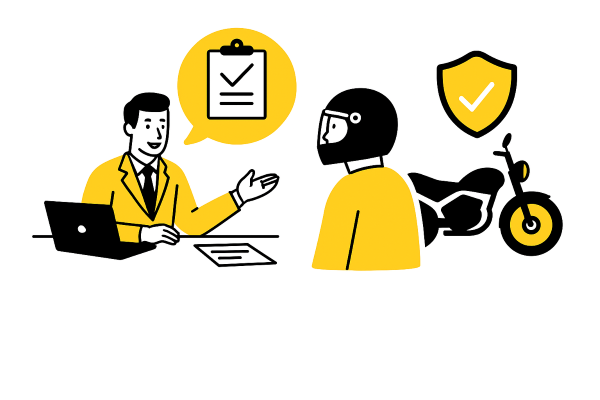
With comprehensive insurance, own‑damage claims are handled directly by the insurer. A surveyor assesses repair costs; depreciation is applied as per policy terms, and repairs are approved or reimbursed. If repair costs exceed a defined threshold (usually around 75% of the IDV), the bike may be declared a total loss, and compensation is paid to the IDV.
With third-party insurance, claims follow a legal process. Compensation amounts are decided by the Motor Accident Claims Tribunal (MACT) based on evidence, liability, and injury severity. This process exists to protect accident victims but often involves longer timelines and limited control for the rider.



Content Writer
Storyteller at heart, Manasvi brings 4 years of content and marketing experience to Digit. Whether it's writing SEO-optimised articles or a researched and insightful blog, she strives to transform ideas into creating impactful and engaging content.

Product Head - Motor
Mayur specializes in motor insurance and is responsible for overseeing the development and management of motor insurance products. With expertise in product strategy and market analysis, he focuses on developing customer-centric insurance solutions.