General
Life
Accessibility Options


General

General Products
Simple & Transparent! Policies that match all your insurance needs.
 Car Insurance
 Two Wheeler Insurance
 Commercial Vehicle Insurance
 Health Insurance
 Home Insurance
 Travel Insurance
 Business Insurance
Car Insurance
Two Wheeler Insurance
Commercial Vehicle Insurance
Health Insurance
Travel Insurance
Business Insurance
Car Insurance
Two Wheeler Insurance
Commercial Vehicle Insurance
Health Insurance
Travel Insurance


Scan to download

Life

Life Products
Digit Life is here! To help you save & secure your loved ones' future in the most simplified way.
 Term Life
 Savings Plan
 Retirement and Pension Plans
 Group Life Products
 Product Documents
Term Life
Savings Plan
Retirement and Pension Plans
Group Life Products
Product Documents
Term Life
Savings Plan
Retirement and Pension Plans
Group Life Products
Scan to download

Claims
Claims
We'll be there! Whenever and however you'll need us.
 Customer Support
 Motor Claims
Health Claims
Motor Claims
Health Claims
 Marine Insurance
 Grievance Redressal
Customer Support
Motor Claims
Health Claims
Marine Insurance
Grievance Redressal
Grievance Redressal
Customer Support
Motor Claims
Health Claims
Marine Insurance
Grievance Redressal
Scan to download
 General
 Life
General
Life
Life
General
Life
Renewals
Resources

Resources
All the more reasons to feel the Digit simplicity in your life!
Exclusive Features
 Transparency Report
Others
Exclusive Features
Transparency Report
Transparency Report
Others
Exclusive Features
Transparency Report
Scan to download


Our WhatsApp number cannot be used for calls. This is a chat only number.

 Grey Scale
 Readable Text
 Reset
Reset



Comprehensive vs Third-Party Insurance

10000+
Cashless Garages

5100 Crore+
Paid-in Claims

1.5 Crore+
Policies Sold
I agree to the Terms & Conditions

Buy Online for Huge Savings
Check Price
Car insurance Online, Up to 90% Discount
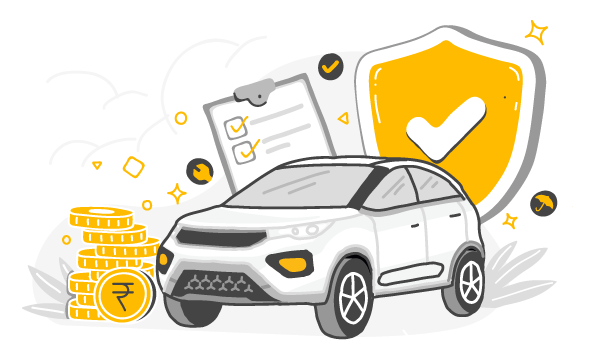
Comprehensive car insurance provides complete protection by combining mandatory third‑party liability cover with own‑damage cover for your car. It covers damage or loss due to accidents, theft, fire, natural calamities, riots, or vandalism.
You can also enhance the policy with optional add‑ons like zero depreciation, engine protection, return‑to‑invoice, or roadside assistance for broader coverage.

Third‑party and comprehensive car insurance differ mainly in what they protect and how much risk they leave you with. Here’s a clear side‑by‑side comparison to help you decide.
So, which car insurance type is better for you?
If your car is new or expensive, comprehensive insurance offers safer financial protection. If your car is old, rarely used, or low‑value, third‑party insurance may be sufficient for legal compliance.
Example 1: Third‑Party Car Insurance
Suppose you meet with an accident and your car needs repairs worth ₹60,000. Since third‑party insurance does not cover damage to your own car, the insurer does not pay anything for these repairs.
What this means:
Third‑party insurance protects you only from legal and financial liabilities towards others. Any damage to your own car, no matter how expensive, is your responsibility alone.
Example 2: Comprehensive Car Insurance
Now consider the same accident with a ₹60,000 repair bill, but you have comprehensive insurance. Because own‑damage cover is included, the insurer bears most of the repair cost, subject to policy terms.
What this means:
Comprehensive insurance significantly reduces the financial shock of an accident by absorbing most of the repair expense, making ownership stress‑free especially for newer or expensive cars.

Protection Against Own Damage
Covers repair or replacement costs for your car due to accidents, fire, collisions, or other unforeseen damage.

Covers Third‑Party Liabilities
Along with own‑damage cover, it also protects you against legal and financial liabilities arising from damage to third‑party property or injury.

Flexible IDV Selection
You can choose an appropriate Insured Declared Value (IDV) based on your car’s market value, which impacts both premium and claim payout.

Option to Add Extra Coverage
Allows add‑ons like zero depreciation, engine protection, roadside assistance, return‑to‑invoice, and consumables cover to enhance protection.

Better Long‑Term Value
Though the premium is higher than third‑party insurance, broader coverage helps reduce major out‑of‑pocket expenses over time.

Protection During Natural Disasters
Covers damage caused by floods, cyclones, earthquakes, and other natural calamities.

Theft Coverage
Provides compensation if your car is stolen, based on the applicable IDV.
However, there are certain limitations too, such as:
Comprehensive car insurance does not cover damage caused due to normal aging and the wear and tear of your car.
It cannot protect your four-wheeler from the depreciation of the value of the car over time.
Damage to vehicle parts made up of fiber or rubber are not fully covered in the insurance.
The policy does not cover damages and losses caused due to a nuclear attack or war.
Even though comprehensive car insurance offers wide protection, certain situations are explicitly excluded from coverage. Here are the key exclusions you should know:
1. Claims While Driving Under the Influence of Alcohol or Drugs
If an accident occurs while you are driving under the influence of alcohol or intoxicating substances, the claim will be rejected even under a comprehensive policy. This is a legal exclusion and applies across insurers.
2. Driving Without a Valid Driving Licence
Any claim arising when the driver does not hold a valid and effective driving license is not payable. This includes expired, cancelled, or invalid licenses.
3. Learner’s License Without a Qualified Driver
If you are driving with a learner’s license, a duly licensed permanent license holder must be seated in the front passenger seat. If this condition is not met, the claim will not be covered.
4. Consequential Damages (Unless Specifically Covered)
Consequential damages refer to secondary damage that occurs after the accident for example, engine damage due to driving a flooded car post‑incident. These are not covered by default and are payable only if a relevant add‑on (such as engine protection) is purchased.
5. Damage Due to Contributory Negligence
Losses caused by avoidable or reckless behaviour are excluded. For instance, deliberately driving through water‑logged roads despite warnings, or ignoring manufacturer guidelines, may lead to claim rejection due to contributory negligence.
6. Benefits of Add‑ons That Were Not Purchased
If a specific add‑on (such as zero depreciation, engine protection, or roadside assistance) was not included at the time of policy purchase, you cannot claim benefits under that add‑on later even if the loss would otherwise qualify.
1. Mandatory Legal Compliance in India
Third‑party car insurance is legally required under the Motor Vehicles Act, 1988 to drive on Indian roads. Driving without it can lead to hefty fines, licence suspension, or even imprisonment, depending on the offence.
2. Covers Third‑Party Injuries, Death, and Disability
Third‑party insurance covers injury, disability, and death of third parties of a third party due to an accident involving your car. These claims are often high‑value and legally complex, and the insurer handles them on your behalf.
3. Covers Damage to Third‑Party Property
It covers damage caused to another person’s vehicle or property. Third‑party property damage costs are covered to the limits specified by IRDAI.
4. Protects You from Large Legal Liabilities
Third‑party insurance reduces your personal legal and financial liability as accidents can result in court‑awarded compensation running into lakhs or crores. Third‑party insurance shields you from personally paying these amounts by transferring the legal and financial liability to the insurer.
5. Affordable and Budget‑Friendly Coverage
Third‑party car insurance has lower premiums than comprehensive insurance and this makes it the most affordable car insurance option, with premiums regulated by IRDAI. It is significantly cheaper than comprehensive plans, making it ideal if legal compliance is your primary need.
6. Peace of Mind Against Unexpected Lawsuits
Accidents involving third parties can lead to long legal battles.Third‑party insurance offers peace of mind by ensuring that legal claims, compensation, and settlements are handled by the insurer.
Now, let’s look at some disadvantages of third-party liability insurance:
You do not have the flexibility to buy add-ons with a third-party plan, hence, you cannot enhance the coverage of your plan.
It does not provide coverage against the damage caused to your vehicle and covers only third-party liabilities.
Having only a third-party policy might allow you to comply with the law, but it does not provide enhanced coverage when compared to a comprehensive car insurance plan.
Third‑party car insurance is designed only to cover legal liabilities towards others. It does not protect your own vehicle, personal injuries, or losses arising from policy violations. Here are the key exclusions that you must know.
1. Own Damage to Your Car
Third‑party insurance does not insure your car against physical damage. Any damage to your own vehicle whether caused by an accident, fire, flood, earthquake, or other natural calamities is excluded. Repairs and replacement costs must be paid out of pocket.
2. Theft or Total Loss of the Vehicle
Loss of the insured vehicle itself is not part of third‑party coverage. If your car is stolen or declared a total loss due to severe damage, a third‑party policy will not provide any compensation. Theft cover is only available under comprehensive insurance.
3. Loss of Personal Belongings
Items kept inside the car are not protected under this policy. Personal belongings such as mobile phones, laptops, cash, or valuables stolen from the vehicle are not covered, regardless of where or how the car was parked.
4. Injury to the Driver or Passengers
Third‑party insurance protects others, not the occupants of your car. Medical expenses, injury, or death of the driver or passengers travelling in the insured vehicle are excluded unless a separate Personal Accident cover is purchased.
5. Drunk Driving or Driving Under the Influence
Claims are not honored if traffic laws are violated. If an accident occurs while the driver is under the influence of alcohol or drugs, the insurer can legally reject third‑party claims due to breach of policy conditions.
6. Driving Without a Valid Driving License
A valid license is a basic requirement for claim eligibility. Third‑party claims may be denied if the driver holds an expired, fake, suspended, or invalid driving license at the time of the accident.
8. Commercial Use of a Private Car
Policy coverage depends on how the vehicle is used. If a privately insured car is used for commercial activities such as ride‑hailing or deliveries, any third‑party claim can be denied due to misuse of the vehicle.
9. Wear and Tear or Mechanical Breakdown
Insurance does not apply to age‑related or maintenance issues. Damage caused due to regular wear and tear, tyre ageing, mechanical or electrical failures, or lack of servicing is excluded, as these are not accidental events.
10. Add‑ons and Optional Covers
Third‑party insurance offers no scope for customisation. Optional covers such as zero depreciation, engine protection, roadside assistance, or consumables cover cannot be added to a third‑party policy and require a comprehensive plan.
Buy Third‑Party Car Insurance if your priority is legal compliance at the lowest cost:
You drive rarely or keep the car mostly unused
Your car is very old with low resale or repair value
You are highly budget‑conscious and can bear repair costs yourself
You only want to meet mandatory legal requirements
Buy Comprehensive Car Insurance if you want full financial protection for your car and liabilities:
You own a new, high‑value, or financed car
You drive daily, especially in traffic‑heavy or accident‑prone areas
You live in a flood‑prone or high‑risk location
You want cover for accidents, theft, fire, and natural calamities
You want peace of mind during repairs and fewer out‑of‑pocket expenses
You need add‑ons like zero depreciation, engine protection, or roadside assistance
Most car owners should buy comprehensive insurance for all‑round protection. Third‑party insurance makes sense only when the car is old, rarely driven, and not worth protecting beyond legal compliance.

Upgrading from a third-party car insurance policy to a comprehensive car insurance policy comes with a few benefits, depending on your needs, such as:
1. To Cover for Your Own Damages
Get covered for your own car’s damages and losses that could arise due to unforeseen circumstances such as accidents, collisions, monsoon floods, fire, etc.
2. To Cover for Third-Party Liabilities too
Also get covered for all third-party related liabilities such as if you hit and damage someone’s vehicle, injure a third-party person or damage someone’s property.
3. To Customize your Policy for Better Coverage
Customize your car insurance further by opting for different add-ons and covers that would give your car better coverage.
For example: Opting for breakdown assistance/roadside assistance in your policy gives you the benefit of asking for help for matters both big and small. Similarly, opting for a zero-depreciation cover ensures your insurer doesn’t deduct your car’s chargeable depreciation during claims.
4. You can Customize your IDV
Under our comprehensive car insurance policy, you also have the option to customize your car’s IDV. The increasing or decreasing IDV also affects the premium; however, if you go for a higher IDV remember that the payout will also be higher.
5. Personal Accident Cover Included
Owner-driver personal accident cover is mandatory unless the owner-driver already has a valid standalone personal accident cover. It is usually offered along with motor policies but is separate from own-damage car insurance protection.
Choose comprehensive if you answer “yes” to 3 or more:
Is your car under 5 years old?
Is your car financed?
Would a ₹50,000 repair bill strain your budget?
Do you live in a flood-prone or theft-prone area?
Do you drive daily?
Do you want add-ons like zero dep or engine protect?
We treat our customers like VIPs, know how…

Cashless Repairs
9000+ Cashless Network Garages for you to choose from across India

Smartphone-enabled Self Inspection
Just click the damages on your phone and you are done

Super-Fast claims
Quick and hassle-free claim process that's digital and paperless

Customize your Vehicle IDV
With us, you can customize your vehicle IDV as per your choice!

24*7 Support
24*7 call facility even on National Holidays
The right car insurance depends on how often you drive, where you drive, and how much financial risk you’re willing to take. If you’re deciding between third‑party and comprehensive insurance, these key factors will help you choose clearly.
1. Assess How You Use Your Car
Frequent city driving, traffic exposure, or flood‑prone locations increase risk. In such cases, comprehensive insurance offers stronger protection for your car. If your usage is minimal and compliance is the priority, third‑party insurance may be enough.
2. Factor in Your Car’s Age and Value
New or high‑value cars benefit from comprehensive cover because repair and replacement costs are high. For older cars with low resale value, third‑party insurance is often more cost‑effective.
3. Pick the Right Coverage Type
Third‑party insurance covers only damage to others and is legally mandatory. Comprehensive insurance covers both third‑party liability and damage to your own car. A standalone own‑damage policy works if you already have valid third‑party cover.
4. Don’t Choose Based on Premium Alone
Lower premiums usually mean lower protection. While third‑party insurance is cheaper, it offers no cover for your car. Comprehensive insurance costs more but provides broader financial security.
5. Balance Budget With Risk
If comprehensive cover fits your budget, it can significantly reduce out‑of‑pocket expenses during repairs or theft. If not, third‑party insurance still keeps you legally protected.
6. Check Claim Reliability
A strong claim settlement track record matters during emergencies. At Digit, genuine claims are processed smoothly, making this an important factor when choosing comprehensive insurance.
7. Ensure the Right IDV
The Insured Declared Value determines your payout in total loss or theft. Avoid undervaluing your car just to save on premium, as it reduces claim compensation.
8. Choose Add‑ons That Match Your Risk
Opt for add‑ons only if they solve real problems—zero depreciation for new cars, engine protection in flood‑prone areas, or roadside assistance for frequent travellers.
9. Use Your NCB to Save
If you’re a safe driver, the No Claim Bonus earned each year can make comprehensive insurance increasingly affordable over time.
Quick Decision Guide
If you want only legal compliance, choose third‑party insurance. If you want complete financial protection, choose comprehensive insurance. If you already have third‑party insurance and want own‑damage cover, choose a standalone own‑damage policy.