General
Life
Accessibility Options


General

General Products
Simple & Transparent! Policies that match all your insurance needs.
 Car Insurance
 Two Wheeler Insurance
 Commercial Vehicle Insurance
 Health Insurance
 Home Insurance
 Travel Insurance
 Business Insurance
Car Insurance
Two Wheeler Insurance
Commercial Vehicle Insurance
Health Insurance
Travel Insurance
Business Insurance
Car Insurance
Two Wheeler Insurance
Commercial Vehicle Insurance
Health Insurance
Travel Insurance


Scan to download

Life

Life Products
Digit Life is here! To help you save & secure your loved ones' future in the most simplified way.
 Term Life
 Savings Plan
 Retirement and Pension Plans
 Group Life Products
 Product Documents
Term Life
Savings Plan
Retirement and Pension Plans
Group Life Products
Product Documents
Term Life
Savings Plan
Retirement and Pension Plans
Group Life Products
Scan to download

Claims
Claims
We'll be there! Whenever and however you'll need us.
 Customer Support
 Motor Claims
Health Claims
Motor Claims
Health Claims
 Marine Insurance
 Grievance Redressal
Customer Support
Motor Claims
Health Claims
Marine Insurance
Grievance Redressal
Grievance Redressal
Customer Support
Motor Claims
Health Claims
Marine Insurance
Grievance Redressal
Scan to download
 General
 Life
General
Life
Life
General
Life
Renewals
Resources
Resources
All the more reasons to feel the Digit simplicity in your life!
Exclusive Features
 Transparency Report
Others
Exclusive Features
Transparency Report
Transparency Report
Others
Exclusive Features
Transparency Report
Scan to download


Our WhatsApp number cannot be used for calls. This is a chat only number.

 Grey Scale
 Readable Text
 Reset
Reset



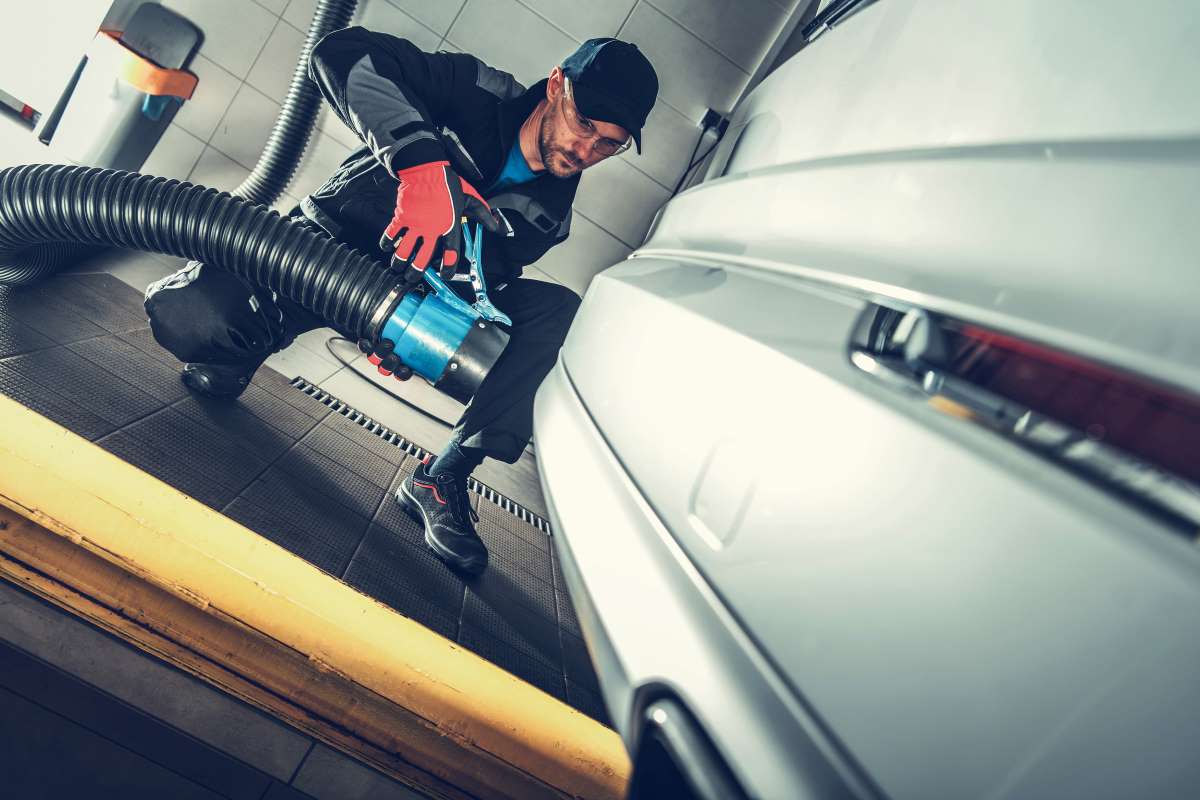
A Pollution Under Control (PUC) Certificate is an official document issued after a vehicle successfully passes an emission test at an authorised PUC testing centre. It certifies that the vehicle's exhaust emissions are within the pollution limits prescribed by the Government of India.
The certificate includes details such as the vehicle registration number, emission test readings, date of testing, and certificate validity.

Table of Contents

Yes, as per the Motor Vehicles Act, a valid PUC Certificate is a mandatory document for all vehicles powered by an Internal Combustion Engine (ICE) in India and must be carried along with the vehicle's Registration Certificate (RC), driving licence, and motor insurance policy while driving. Driving without a valid PUC Certificate may result in penalties and fines as per applicable traffic regulations.
A Pollution Under Control (PUC) Certificate is a document required for vehicles plying on Indian roads. It certifies that your vehicle's emissions are within the permissible limits prescribed by the government and that it is not contributing excessive air pollution.
The primary objective of the PUC Certificate is to monitor and reduce vehicular emissions, help improve air quality, and minimise the harmful effects of pollution on public health and the environment. Carrying a valid PUC Certificate also helps ensure compliance with motor vehicle regulations and can help you avoid penalties for non-compliance.
A valid Pollution Under Control (PUC) Certificate is an important document that demonstrates your vehicle complies with the prescribed emission norms and is legally fit to be driven on Indian roads. When renewing your motor insurance policy, insurers may require details of a valid PUC Certificate as part of the renewal process. Maintaining an active PUC Certificate helps ensure compliance with applicable regulations and can help avoid delays or complications during policy renewal.
Therefore, keeping your PUC Certificate updated is important not only for meeting legal requirements but also for ensuring uninterrupted motor insurance coverage and hassle-free vehicle ownership.
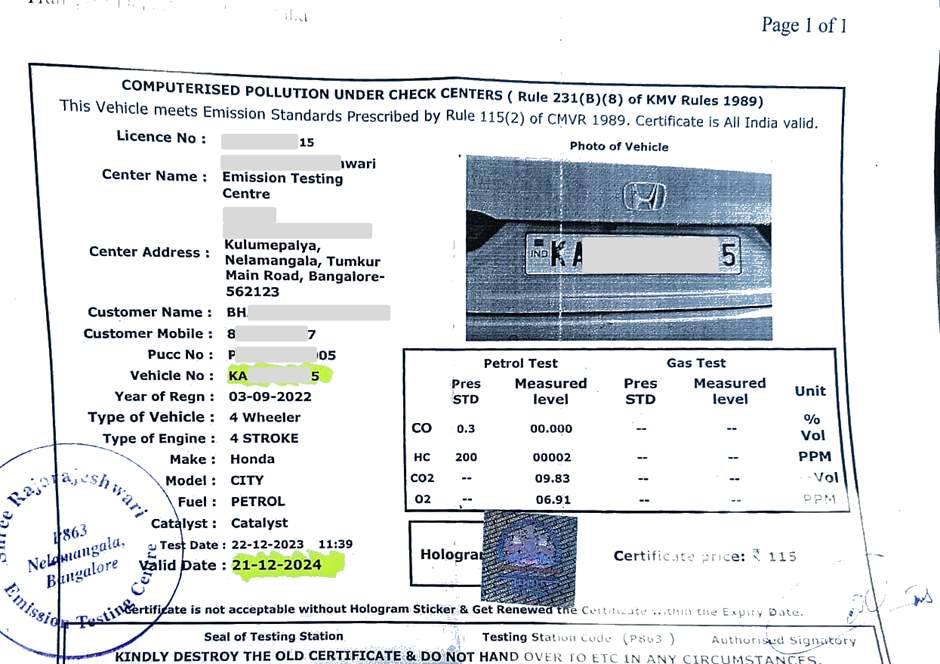
A Pollution Under Control (PUC) certificate for a vehicle typically comes in a standard format, which includes key information regarding the vehicle's emissions. While the exact certificate design can vary slightly depending on the issuing authority, the above is 1 example of what a PUC certificate looks like:
A Pollution Under Control (PUC) Certificate is mandatory for all vehicles powered by an Internal Combustion Engine (ICE), including petrol, diesel, CNG, and LPG vehicles. However, fully electric vehicles (EVs) do not require a PUC Certificate as they do not produce tailpipe emissions.
Note: Any vehicle that runs on petrol, diesel, CNG, or LPG must have a valid PUC Certificate. Pure electric vehicles are exempt from this requirement because they do not emit exhaust pollutants.

My PUC Certificate has expired. What should I do? - Get your vehicle tested at an authorised PUC centre and obtain a renewed certificate as soon as possible.
The process of obtaining a PUC Certificate depends on whether your vehicle is new or whether you are renewing an expired certificate. For new vehicles, the initial PUC Certificate is generally provided by the dealer at the time of purchase.
If your PUC Certificate has expired, you must take your vehicle to an authorised PUC testing centre for a fresh emission test. Once the vehicle passes the test and the applicable fee is paid, a new PUC Certificate will be issued. If your PUC Certificate is still valid, you can download a copy online through the VAHAN portal or other authorised government platforms.
Follow these steps to obtain or renew a PUC Certificate:
Note: If your vehicle's emissions exceed the permissible limits, you may need to get it serviced or repaired and undergo the emission test again before a valid PUC Certificate can be issued.
The cost of renewing a PUC Certificate varies depending on factors such as the vehicle type, fuel type, and the authorised testing centre. In most cases, the fee ranges between ₹60 and ₹200. Generally, PUC testing charges for two-wheelers are lower than those for four-wheelers.
Similarly, the fees may vary slightly for petrol, diesel, CNG, and LPG vehicles. Since PUC testing charges can differ across cities and testing centres, it is advisable to check the applicable fee at your nearest authorised PUC centre before getting your vehicle tested.
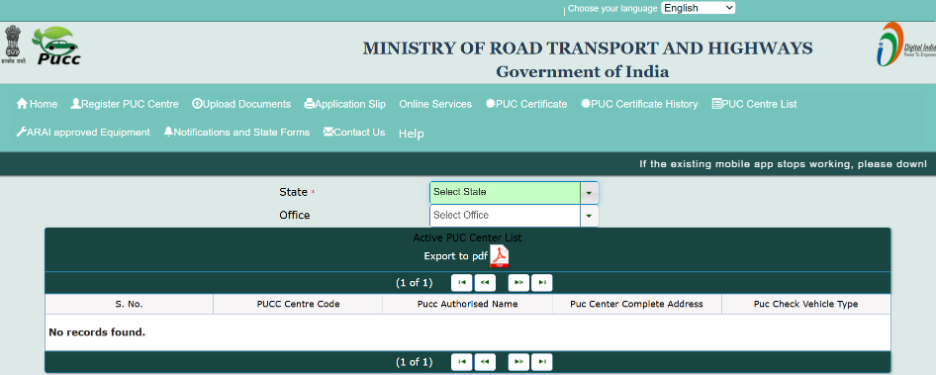
You can easily find authorised PUC centres online through the Parivahan PUC Centre Locator.
Steps to Find a Nearby PUC Centre:
A PUC Certificate contains important information about the vehicle, the emission test conducted, and the certificate's validity. The details typically included are:
I'm buying a used vehicle. How do I check if its PUC is valid? - Check the vehicle's PUC status and validity online using the registration number before purchase.
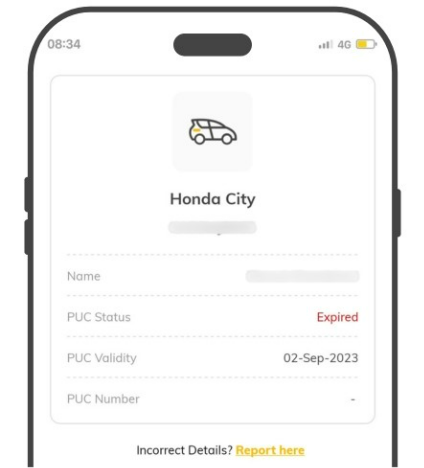
You can also check your PUC Certificate status through the VAHAN PUC portal:
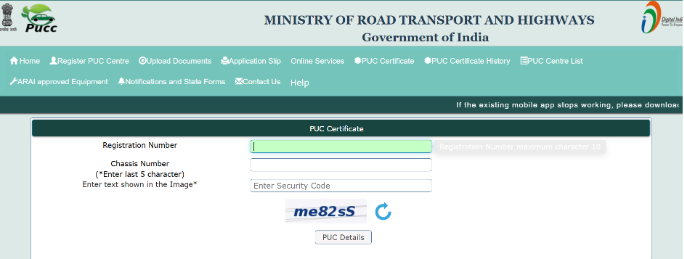
If you have a hard copy of your PUC Certificate, you can find the validity period printed on it. The certificate clearly mentions the date of issue and expiry date.
The validity of a Pollution Under Control (PUC) Certificate depends on the vehicle type and whether it is being issued for the first time or renewed after an emission test.
Note: The validity period mentioned on the PUC Certificate is determined by the authorised testing centre based on the applicable emission norms and the vehicle's emission test results.
I lost my PUC Certificate. Can I get another copy? - Yes. You can download a duplicate copy online using your vehicle registration number.
If your Pollution Under Control (PUC) Certificate is still valid, you can easily download a duplicate copy online. However, if the certificate has expired, you will need to take your vehicle to an authorised PUC testing centre and complete a fresh emission test to obtain a new certificate.
You can download your PUC Certificate through the Parivahan PUC Portal:
Steps to Download a PUC Certificate Online:
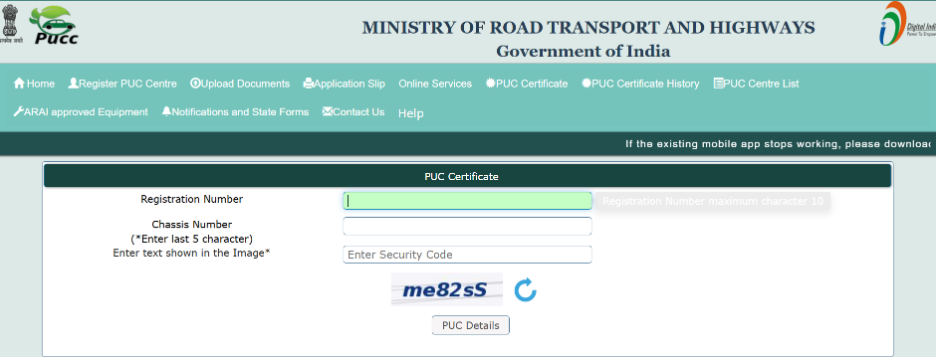
To obtain or renew a Pollution Under Control (PUC) Certificate, a vehicle's emissions must remain within the limits prescribed by the applicable emission norms. These limits vary depending on the vehicle type, fuel type, and emission standard.
Permissible Emission Limits for New Vehicles:
Permissible Emission Limits for Older Vehicles:
Note: During a PUC test, a vehicle's exhaust emissions are measured and compared against the applicable limits. Vehicles that exceed the prescribed limits may fail the test and need repairs or servicing before a valid PUC Certificate can be issued.
If your Pollution Under Control (PUC) Certificate expires, your vehicle is no longer compliant with the prescribed emission regulations and you may face penalties for driving without a valid certificate. Driving with an expired or missing PUC Certificate can result in:
Additionally, if your vehicle fails the emission test during renewal because its emissions exceed the permissible limits, you may need to get the vehicle repaired or serviced and retested before obtaining a valid certificate.
The penalty for driving without a valid PUC Certificate can vary depending on the state and the applicable enforcement rules.
A valid Pollution Under Control (PUC) Certificate does more than help you comply with legal requirements. It also supports vehicle maintenance, environmental responsibility, and hassle-free ownership.
1. Helps You Stay Compliant with the Law
A PUC Certificate is a mandatory document for most vehicles in India. Maintaining a valid certificate helps you comply with vehicle emission regulations and avoid penalties for driving without one.
2. Contributes to Cleaner Air
Regular emission testing ensures that your vehicle's emissions remain within the prescribed limits, helping reduce air pollution and its impact on public health and the environment.
3. Helps Identify Vehicle Issues Early
A PUC test can reveal unusually high emission levels that may indicate issues with the engine, fuel system, or exhaust components. Identifying these problems early can help prevent costly repairs.
4. Supports Better Fuel Efficiency
Excessive emissions can be a sign of inefficient fuel combustion. Addressing such issues promptly can help improve your vehicle's fuel efficiency and overall performance.
5. Assists with Motor Insurance Renewal
A valid PUC Certificate may be required during motor insurance renewal. Keeping it updated can help ensure a smoother renewal process and demonstrate compliance with applicable regulations.
6. Encourages Responsible Vehicle Ownership
Regular PUC checks help ensure that your vehicle continues to meet emission standards, promoting safer and more environmentally responsible vehicle usage.
A vehicle may fail a Pollution Under Control (PUC) test if its emissions exceed the permissible limits prescribed for its category. This is often caused by engine, fuel system, or exhaust system issues that increase carbon monoxide (CO) or hydrocarbon (HC) emissions.
If your vehicle fails the PUC test:
Protect What Matters - Explore Insurance Plans & PUC-Related Resources