General
Life
Accessibility Options


General

General Products
Simple & Transparent! Policies that match all your insurance needs.
 Car Insurance
 Two Wheeler Insurance
 Commercial Vehicle Insurance
 Health Insurance
 Home Insurance
 Travel Insurance
 Business Insurance
Car Insurance
Two Wheeler Insurance
Commercial Vehicle Insurance
Health Insurance
Travel Insurance
Business Insurance
Car Insurance
Two Wheeler Insurance
Commercial Vehicle Insurance
Health Insurance
Travel Insurance


Scan to download

Life

Life Products
Digit Life is here! To help you save & secure your loved ones' future in the most simplified way.
 Term Life
 Savings Plan
 Retirement and Pension Plans
 Group Life Products
 Product Documents
Term Life
Savings Plan
Retirement and Pension Plans
Group Life Products
Product Documents
Term Life
Savings Plan
Retirement and Pension Plans
Group Life Products
Scan to download

Claims
Claims
We'll be there! Whenever and however you'll need us.
 Customer Support
 Motor Claims
Health Claims
Motor Claims
Health Claims
 Marine Insurance
 Grievance Redressal
Customer Support
Motor Claims
Health Claims
Marine Insurance
Grievance Redressal
Grievance Redressal
Customer Support
Motor Claims
Health Claims
Marine Insurance
Grievance Redressal
Scan to download
 General
 Life
General
Life
Life
General
Life
Renewals
Resources
Resources
All the more reasons to feel the Digit simplicity in your life!
Exclusive Features
 Transparency Report
Others
Exclusive Features
Transparency Report
Transparency Report
Others
Exclusive Features
Transparency Report
Scan to download


Our WhatsApp number cannot be used for calls. This is a chat only number.

 Grey Scale
 Readable Text
 Reset
Reset



Buy/Renew Own Damage Car Insurance

10000+
Cashless Garages

5100 Crore+
Paid-in Claims

1.5 Crore+
Policies Sold
I agree to the Terms & Conditions

Buy Online for Huge Savings
Check Price
Car insurance Online, Up to 90% Discount
10000+
Cashless Garages
5100 Crore+
Paid-in Claims
1.5 Crore+
Policies Sold
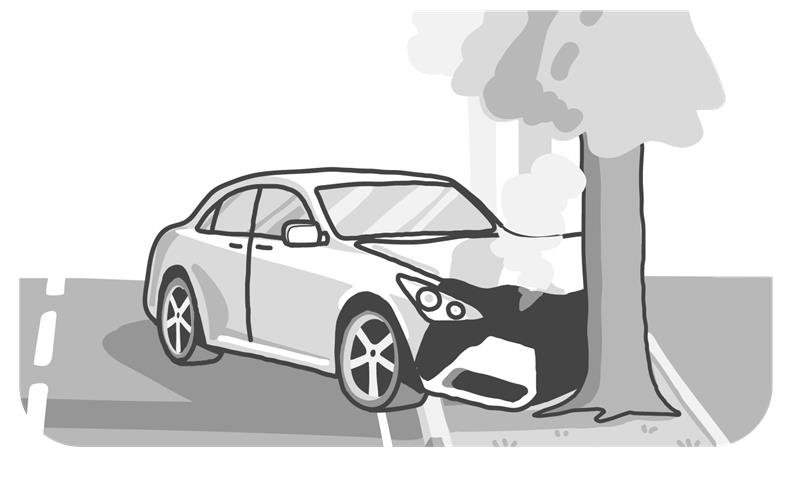
Standalone Own Damage (OD) car insurance is the part of a motor insurance policy that covers the cost of repairing, replacing, or compensating for damage to your own vehicle, subject to policy terms, depreciation, deductibles, and exclusions.
It does not cover third‑party liabilities, including injury, death, or property damage caused to others. Those liabilities are covered under a separate Third‑Party (TP) insurance policy, which is mandatory under Indian law.
This policy gives you the flexibility to protect your car without having to commit to a long‑term comprehensive policy from the insurer.
Let’s understand this with an example.
Suppose you’ve recently bought a new Toyota Etios. At the dealership itself, you’re sold a three‑year bundled third‑party insurance policy, which is mandatory for new cars.
About a year later, you realise that while third‑party insurance covers legal liabilities, it doesn’t protect your own car against damage, theft, or losses. You want coverage for your vehicle too, but without waiting for the policy expiry or switching to a full comprehensive plan.
In this situation, you can simply buy a Standalone Own Damage (OD) policy for your private car. It covers damages to your vehicle independently of your existing third‑party policy. You can also enhance this cover with add‑ons to protect yourself against specific expenses that aren’t covered under the basic Standalone OD policy.
While Third‑Party Car Insurance is mandatory under the Motor Vehicles Act, it only covers injury, death, or property damage caused to others. It does not cover any damage or loss to your own car. This is where Standalone Own Damage (OD) car insurance becomes essential. Here’s why buying a Standalone OD policy makes sense:
1. Protects You from High Repair and Replacement Costs
Even a minor accident can result in repair bills running into thousands of rupees. A Standalone OD policy ensures these repair costs are covered by the insurer. If your car is stolen or damaged beyond repair (total loss), the insurer compensates you up to the Insured Declared Value (IDV), helping you avoid a major financial setback.
2. Covers Damages Beyond Your Control
A Standalone OD policy protects your car against risks that you cannot prevent, including natural calamities such as floods, cyclones, earthquakes, landslides, and storms, man‑made incidents like riots, vandalism, strikes, or malicious acts and fire‑related damages, including accidental fire, lightning, or self‑ignition. These events are not covered under third‑party insurance but can cause significant financial loss.
3. Lets You Enhance Coverage with Useful Add‑Ons
Standalone OD car insurance is highly customisable. You can strengthen your protection by adding covers such as Zero Depreciation Cover, which reduces deductions on replaced car parts, Engine Protection Cover, especially useful in cases of water ingress or oil leakage and Return to Invoice Cover, which reimburses the original invoice value (including road tax and registration) in case of theft or total loss These add‑ons are not available with basic third‑party insurance.
4. Offers Cost Flexibility
As per IRDAI guidelines, Own Damage and Third‑Party covers can be purchased separately. This means you don’t need to upgrade to a full comprehensive policy and you can keep your existing multi‑year third‑party policy. This gives you greater control over costs and coverage.
5. Rewards Safe Driving with No Claim Bonus (NCB)
No Claim Bonus applies only to the Own Damage (OD) portion of your car insurance, not the third‑party cover. If you don’t make any own‑damage claims during the policy year, you earn an NCB discount on your OD premium at renewal. This discount increases progressively with consecutive claim‑free years, and can go up to 50%. Importantly, third‑party claims do not affect your NCB, and the bonus is transferable when you change insurers or even when you buy a Standalone OD policy separately.

In simple terms, Standalone Own Damage Car Insurance ensures that your car is protected, your repair expenses are covered, and you’re not forced into an expensive bundled policy while still rewarding you for safe driving.
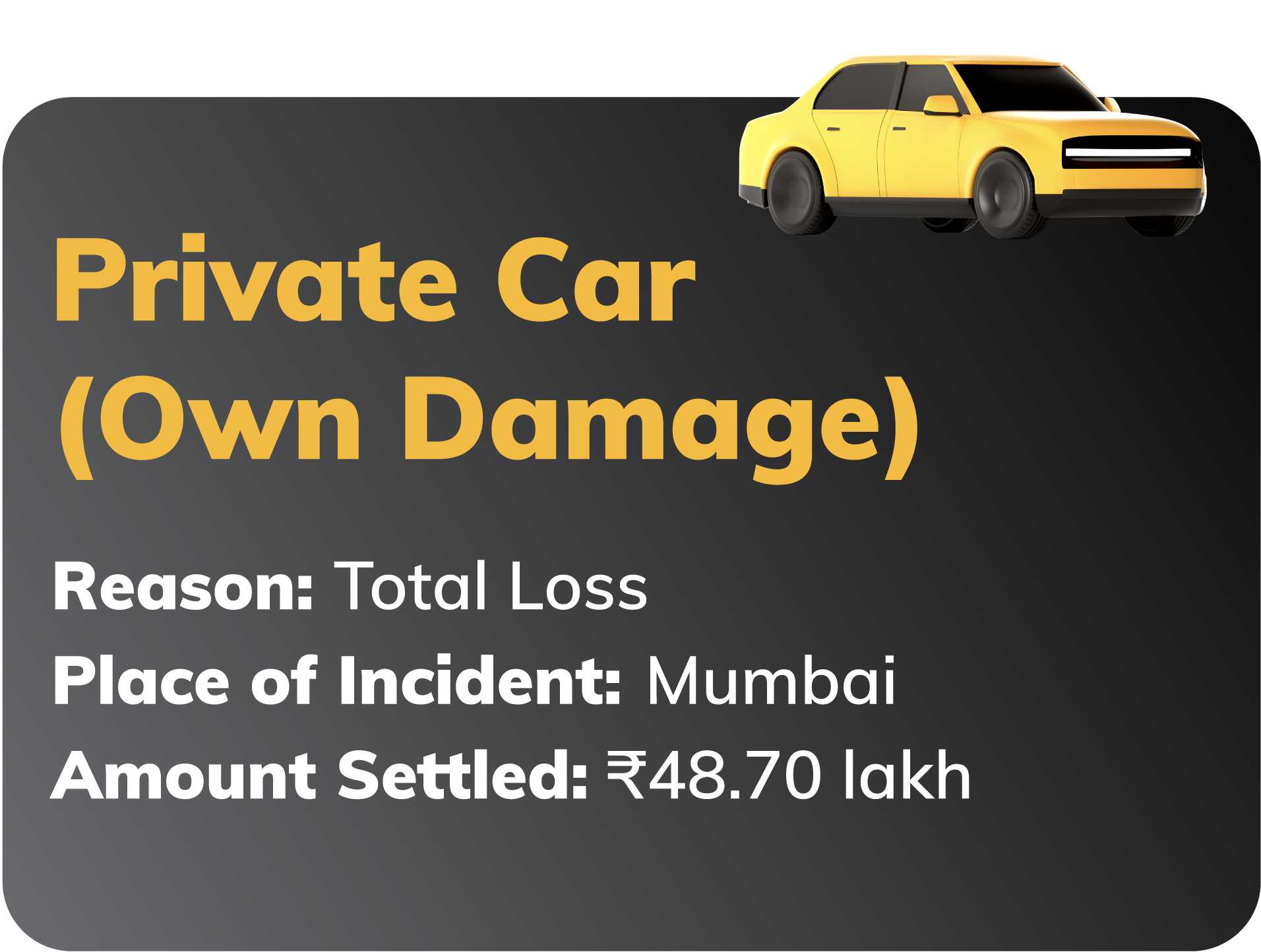
In a recent case from Mumbai, one of our policyholders experienced a total loss after their private car sustained severe damage. Fortunately, the vehicle was insured, and we processed a claim payout of ₹48.70 lakh. This case highlights the importance of having dependable insurance coverage to stay prepared for life’s unexpected turns.
This case highlights how OD insurance protects against financial shocks beyond third‑party liabilities.

Damages to your car in an accident
Covers for the damages caused to your car in case of an accident or collision.

Theft of your car
Will compensate for you in case your car is unfortunately stolen.

Losses caused to your car in a fire
In case there’s a fire and your car is damaged due to the same. Your own damage cover will cover for it.

Damages to your car due to a natural calamity
No one can stop nature’s many furies but in case your car is damaged due to it, we will be your one-stop for damage control.
While Own Damage insurance for cars is great for your car’s protection, here are a few exceptions.

Third-Party Liabilities
This is a standalone Own Damage Cover policy. Therefore, your third-party liabilities won’t be included in this. Your third-party car insurance or comprehensive car insurance will instead take care of the same.

Driving Drunk
This goes against the law, therefore claims won’t be covered if you were driving under the influence of alcohol.

Driving without a Licence
As a standard rule, no car insurance can accept claims if the said person is driving illegally. Therefore, claims can only be made if you were rightly driving with a valid driver’s licence.

Add-Ons Not Bought
This is pretty obvious, isn’t it? If you haven't bought specific add-ons, you won’t be able to benefit from them. For example, without opting for a tyre protect cover- your tyre will only be protected during accidents and not beyond that.

Consequential Damages
Consequential damages refer to damages that take place after an accident. Unfortunately, those won’t be covered unless the damage has happened during the accident itself.

Contributory Negligence
In simple terms, this means your car won’t be covered if you’ve done something you weren’t supposed to do. For example; if your city was already flooded and you still took your car out.
Driving without a Licence Holder
As per the law, if you only have a learner’s licence, you need to have someone with a permanent driver’s licence beside you. If that’s not the case, your car won’t be covered.
Add-ons which you can buy with your car OD insurance policy at Digit are:

Zero Depreciation Cover
Ideal for cars less than 5 years old, zero depreciation cover allows you to nullify the depreciation charged on your car and its parts and gives you the full value of repairs, costs and replacements during a claim.

Return to Invoice Cover
In case of theft or damages beyond repair, return to invoice add-on gives you the benefit of getting back the complete amount of your car's invoice value, including the cost of registering a new vehicle and its road tax respectively.

Tyre Protect Cover
Generally, tyre damage isn't covered in standard insurance unless the damage takes place during an accident. That's why this tyre protect add-on gives you the benefit of safeguarding and covering tyre damage such as tyre bursts, bulges or cuts during all other situations possible.

Breakdown Assistance
We all need a little help sometimes! Our Breakdown Assistance Add-On gives you the benefit of getting help whenever required, i.e. assistance during car breakdowns at any time you'd like. The best part? It doesn't even count as a claim!

Consumable Cover
A consumable cover gives your car an additional layer of protection. It covers the cost for all your car's nitty-gritties, such as the engine oils, screws, nuts and bolts, grease, etc. in a situation of an accident.

Engine and Gear-box Protection Cover
Do you know that the cost of replacing your engine is approximately 40% of its cost? In a standard car insurance policy, only damage caused during an accident is covered. However, with Engine and Gear-box Protection add-on, you can specifically also cover for the life of your car (the engine and gearbox!) for any consequential damage caused post the accident. This could happen due to water regression, leakage of lubricating oil, and undercarriage damage.

Key and Lock Protect Cover
The price of replacing or fixing the lockset of the vehicle is quite high. If you avail Key and Lock Protect add-on cover, you can get compensated by the insurer for the cost incurred.

Daily Conveyance Benefit
The benefit of having this Daily Conveyance Benefit add-on cover is that you can get a fixed amount for your daily commute, if the vehicle is in the garage for a long duration of time.

Loss of Personal Belongings
In case, if you or your immediate family lose some personal belongings while travelling in the insured vehicle, Loss of Personal Belongings add-on cover can be beneficial. It ensures that you are compensated for the loss of valuables.

Pay As You Drive (PAYD) Cover
If you opt for this add-on cover, you declare and agree that you will run the vehicle for a maximum number of kilometres as per the plan opted for. The Pay As You Drive Cover ensures that you are eligible for a discount on the premium of Own Damage cover of the base policy.

EV Shield Add-on cover
The EV Shield add-on cover is available for EV or Hybrid Vehicles (petrol/diesel + electric) and compensates you in case of loss or consequential damage to your vehicle. This includes loss or damage to the electrical panel for the vehicle charging point, vehicle charger including charging cable, and roadside assistance services related to EV’s battery issues.
Third-Party
Comprehensive
Own Damage
|
Damages/Losses to own car due to an accident |
×
|
✔
|
✔
|
|
Damages/Losses to own car in case of fire |
×
|
✔
|
✔
|
|
Damages/Losses to own car in case of a natural calamity |
×
|
✔
|
✔
|
|
Damages to Third-Party Vehicle |
✔
|
✔
|
×
|
|
Damages to Third-Party Property |
✔
|
✔
|
×
|
|
Personal Accident Cover |
✔
|
✔
|
×
|
|
Injuries/Death of a Third-Party Person |
✔
|
✔
|
×
|
|
Theft of your car |
×
|
✔
|
✔
|
|
Customize your IDV |
×
|
✔
|
✔
|
|
Extra protection with customized add-ons |
×
|
✔
|
✔
|

Get cashless repairs at 10000+ garages across India
Your OD premium is calculated based on a few key components, as explained below.
OD Premium Formula: IDV × Insurer‑defined premium rate + Add‑on covers chosen – Applicable discounts (such as No Claim Bonus).
Below is an example of Own Damage Car Insurance Premium structure for better understanding.
In an Own Damage cover, your car premium is calculated depending on various factors, which are discussed below:

IDV
One of the main factors that determines the OD premium in your car insurance is the Insured Declared Value of your car, which is the current market value of your car. The higher the IDV, the higher the premium.

No Claim Bonus
If you’ve had an Own Damage cover earlier and have made no claims in the previous policy terms, you will be rewarded with a discount under NCB in car insurance that will reduce your OD premium.

Make, Model and cc of Car
The type of your car too matters in calculating your OD premium. The more high-end your car is, the higher would be its OD premium too. Similarly, your car’s cc or your engine’s cubic capacity also directly affects your car insurance own damage premium.

Age of the Car
Cars tend to lose their value over time. Therefore, the age of your car is crucial in determining your OD premium. The older your car, the lower your OD premium.

Location of the Car
The RTO location of your car or the city where you drive it also influences the Standalone Own Damage premium. Driving in a metropolitan city with higher traffic and accident rate will fetch you a higher premium.

Add-ons Opted
Every add-on cover comes with a price. Therefore, the number and type of add-ons you opt for will directly affect your OD premium as well.

Own Damage (OD) claims directly impact your No Claim Bonus (NCB). While OD insurance protects your car, claiming every minor repair may cost you more in lost NCB than the repair itself. This is why it’s important to weigh the repair cost vs. NCB loss before filing a claim.
A Simple Rule of Thumb
This context helps users understand that OD insurance is not about claiming everything, but about using claims strategically to balance protection and long‑term savings.
A standalone OD policy works best when third‑party coverage is already in place and add‑ons are selected based on actual risk exposure rather than price alone. Reviewing these checks carefully helps prevent unexpected claim deductions and coverage gaps during renewal or repairs.



Content Writer
Storyteller at heart, Manasvi brings 4 years of content and marketing experience to Digit. Whether it's writing SEO-optimised articles or a researched and insightful blog, she strives to transform ideas into creating impactful and engaging content.


Product Head - Motor
Mayur specializes in motor insurance and is responsible for overseeing the development and management of motor insurance products. With expertise in product strategy and market analysis, he focuses on developing customer-centric insurance solutions.