
General
Life
Accessibility Options


General

General Products
Simple & Transparent! Policies that match all your insurance needs.
 Car Insurance
 Two Wheeler Insurance
 Commercial Vehicle Insurance
 Health Insurance
 Home Insurance
 Travel Insurance
 Business Insurance
Car Insurance
Two Wheeler Insurance
Commercial Vehicle Insurance
Health Insurance
Travel Insurance
Business Insurance
Car Insurance
Two Wheeler Insurance
Commercial Vehicle Insurance
Health Insurance
Travel Insurance



Scan to download

Life

Life Products
Digit Life is here! To help you save & secure your loved ones' future in the most simplified way.
 Term Life
 Savings Plan
 Retirement and Pension Plans
 Group Life Products
 Product Documents
Term Life
Savings Plan
Retirement and Pension Plans
Group Life Products
Product Documents
Term Life
Savings Plan
Retirement and Pension Plans
Group Life Products

Scan to download

Claims

Claims
We'll be there! Whenever and however you'll need us.
 Customer Support
 Motor Claims
Health Claims
Motor Claims
Health Claims
 Marine Insurance
 Grievance Redressal
Customer Support
Motor Claims
Health Claims
Marine Insurance
Grievance Redressal
Grievance Redressal
Customer Support
Motor Claims
Health Claims
Marine Insurance
Grievance Redressal

Scan to download
 General
 Life
General
Life
Life
General
Life
Renewals
Resources

Resources
All the more reasons to feel the Digit simplicity in your life!
Exclusive Features
 Transparency Report
Others
Exclusive Features
Transparency Report
Transparency Report
Others
Exclusive Features
Transparency Report

Scan to download


Our WhatsApp number cannot be used for calls. This is a chat only number.

 Grey Scale
 Readable Text
 Reset
Reset




10000+ Cashless Garages
1.5 Cr+ Policies Sold


Check Price

Car insurance Online, Up to 90% Discount
It's a Brand New Car
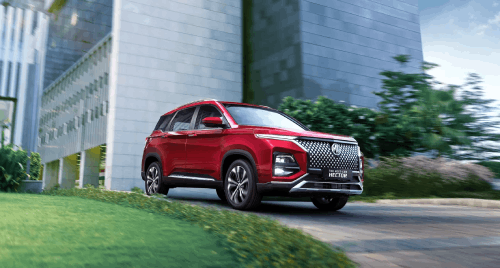
A car with a combination of two power-generative systems is generally known as a hybrid car. A conventional petrol or diesel engine and an electric motor – these two engines combine to power a hybrid car.
Individuals planning to get their hands on the best hybrid car in India, must have complete clarity about what a hybrid car is, how it works, features, disadvantages, and sub-categories.
Read on to learn more about this four-wheeler type!

In a hybrid car, the system saves energy via regenerative braking. As a result, the amount of fuel used is less due to its dual-operating mechanism, making the vehicle more fuel efficient.
The operating mode can be changed and shifted while driving the hybrid vehicle, meaning the car can alter between a gas engine and an electric motor. This helps enhance the car's performance.
Furthermore, it comes with a dual battery pack consisting of a 12-volt conventional battery pack and a high-voltage battery pack. Usually, deceleration in a conventional car turns kinetic energy into heat.
Now that you know the meaning of hybrid cars, it is time to understand their working in detail.
Following is a brief overview of the top 5 mechanisms to help you understand how a hybrid car works:
The car is moved initially with the help of an electric motor, which draws on the hybrid battery for power.
When cruising at high speeds, both the electric motor and petrol engine can work together or independently.
During heavy acceleration and high speeds, the power provided to the car comes from the petrol engine.
When slowing down and braking, kinetic energy turns into electric energy to replenish the battery pack. Also, the car’s electric motor goes into reverse mode upon applying brakes, causing its wheels to slow down.
Both the petrol and electric motors shut down when the vehicle comes to a stop. However, its battery keeps working, allowing vehicle systems, such as light, air conditioning, and radio, to run.
When looking for petrol hybrid cars, following the above mechanisms, you might come across numerous SUVs.
If in a dilemma, go for hybrid SUVs such as MG Hector and Mahindra Scorpio to experience the ultimate thrill with optimum performance.
Here is a detailed discourse on the different types of hybrid cars available in the market:
Mild hybrid is one of the newest innovations in hybrid technology. The mild hybrid system provides a slight boost to the vehicle's gasoline engine, usually when the car is accelerated from a dead stop.
These engines are not required to be plugged in and are found in 48-volt electric systems since they acquire energy from the combined power of a gasoline engine and regenerative braking.
Some common mild hybrid systems are eAssist, eTorque and EQ Boost.
Full hybrids sport both electrical components and a gasoline engine. However, the electric component in hybrid cars can handle more workload than that in a mild hybrid.
There are two types of full hybrid cars, generally known as parallel and series hybrids.
a. Parallel Hybrids:
Parallel hybrids use both the electric motor and engine to propel the wheels. Also, transmission can be automatic, manual, and continuously variable or CVT.
Here, the main factors that determine how a parallel hybrid will accelerate, sound, and feel are the gasoline engine's transmission type and size.
b. Series Hybrids:
Here, the driving experience is more like an electric car since an electric motor is the sole source of power.
The gasoline engine is present in this mode only to charge its battery. Also, the electric generator is driven by the combustion engine instead of the driving wheels, resulting in a smoother and more powerful acceleration.
An example of a series hybrid car is the BMW i3, which also comes under electric hybrid cars.
You must have come across the term “plug-in” when researching what a hybrid car is.
Like an electric car, a plug-in hybrid vehicle also contains a larger battery pack that needs to be charged via an external source that offers an all-electric drive for approximately 15 to 55 miles. The car reverts back to a conventional parallel hybrid after running out of all the electric energy.
A few Examples of plug-in hybrid cars are BYD F3DM, Toyota Prius, and BMW i8.
Once you have a detailed understanding of hybrid car types, read about their features and benefits.
Following is a list of the beneficial features of hybrid cars:
Incorporating a secondary electric motor provides a considerable number of benefits to the vehicle, including "idle-off."
It means that the car is operational even when the main engine is turned off. As a result, features like air-conditioning, radio and others are operated via batteries.
This feature in hybrid car technology allows the car to alter from an electric motor to the main engine when more power is required. This is more common when travelling uphill.
A significant hybrid car benefit is its potential to downsize the primary engine, leading to better fuel economy.
Many hybrid cars use electric motors during start-up and initial stages of acceleration till they reach higher speeds. After this, they use gasoline engines to enhance fuel efficiency.
This is one of the best features found in hybrid cars. Regenerative braking allows kinetic energy to convert into electric energy that recharges the battery unit.
The engine in reverse mode is run by a forward movement of the vehicle's wheels. This helps reduce the car's speed and recharge at the same time.
Full-electric cars are on the rise right now, which completely run on electric motors. Companies like Tesla Motors are very promising in this field, and their cars allow lower emissions of harmful gases.
However, we shall continue with our discussion on what a hybrid car is as the next best option for fully electric cars.
|
Component |
Function |
|
Battery |
Provides electricity to start a car and its accessories. |
|
DC/DC Converter |
Converts higher-voltage DC power from a battery pack to lower-voltage DC power to run vehicle accessories. |
|
Electric Generator |
Helps generate energy from the wheels during acceleration and deceleration, which gets stored in a battery pack. |
|
Electric Traction Motor |
The motor drives vehicle wheels via power from a traction battery pack. |
|
Exhaust System |
It acts as a medium to release exhaust gases from an engine through a tailpipe. |
|
Fuel Filler |
It is a nozzle that gets attached to the receptacle of a vehicle, which allows in filling a tank. |
|
Fuel Tank |
It stores the gasoline on board which might be useful later on. |
|
Internal Combustion Engine |
Fuel is inoculated into either manifold or combustion chamber. After this, it combines with air and ignites by sparks to form a spark plug. |
|
Power Electronics Controller |
It manages the flow of this electrical energy, which the traction battery develops, hence controlling the speed and torque of the electric traction motor. |
|
Thermal System |
This system helps maintain an optimal temperature of the engine, electric motor, power electronics and other components. |
|
Traction Battery Pack |
This facilitates the storage of electricity that electric traction motors use. |
|
Transmission |
It helps to dispatch mechanical power from an electric motor to operate the wheels. |
|
Hybrid Cars in India |
On-road Price in Delhi |
|
BMW XM |
₹3.00 crore onwards |
|
Land Rover Defender |
₹1.61 crore onwards |
|
Mercedes-Benz GLE |
₹1.14 crore onwards |
|
Lexus ES |
₹73.10 Lakhs onwards |
|
Toyota Camry |
₹52.83 Lakhs onwards |
|
Toyota Innova Hycross |
₹29.40 Lakhs onwards |
|
Maruti Suzuki Invicto |
₹29 Lakhs onwards |
|
Honda City Hybrid eHEV |
₹21.70 Lakhs onwards |
|
Toyota Urban Cruiser Hyryder |
₹12.68 Lakhs onwards |
|
Maruti Suzuki Grand Vitara |
₹12.39 Lakhs onwards |
In conclusion, it is safe to say that a hybrid car is worth buying, given its numerous features and benefits. Individuals must take all the above information into consideration before proceeding with a hybrid car purchase.
Also, it is advisable to protect your hybrid electric vehicle with a third-party insurance policy, as it is mandated by law. It will cover any damage or losses your vehicle could cause to a third-party person or property in any unforeseen mishap.





