General
Life
Accessibility Options


General

General Products
Simple & Transparent! Policies that match all your insurance needs.
 Car Insurance
 Two Wheeler Insurance
 Commercial Vehicle Insurance
 Health Insurance
 Home Insurance
 Travel Insurance
 Business Insurance
Car Insurance
Two Wheeler Insurance
Commercial Vehicle Insurance
Health Insurance
Travel Insurance
Business Insurance
Car Insurance
Two Wheeler Insurance
Commercial Vehicle Insurance
Health Insurance
Travel Insurance



Scan to download

Life

Life Products
Digit Life is here! To help you save & secure your loved ones' future in the most simplified way.
 Term Life
 Savings Plan
 Retirement and Pension Plans
 Group Life Products
 Product Documents
Term Life
Savings Plan
Retirement and Pension Plans
Group Life Products
Product Documents
Term Life
Savings Plan
Retirement and Pension Plans
Group Life Products

Scan to download

Claims

Claims
We'll be there! Whenever and however you'll need us.
 Customer Support
 Motor Claims
Health Claims
Motor Claims
Health Claims
 Marine Insurance
 Grievance Redressal
Customer Support
Motor Claims
Health Claims
Marine Insurance
Grievance Redressal
Grievance Redressal
Customer Support
Motor Claims
Health Claims
Marine Insurance
Grievance Redressal

Scan to download
 General
 Life
General
Life
Life
General
Life
Renewals
Resources

Resources
All the more reasons to feel the Digit simplicity in your life!
Exclusive Features
 Transparency Report
Others
Exclusive Features
Transparency Report
Transparency Report
Others
Exclusive Features
Transparency Report

Scan to download


Our WhatsApp number cannot be used for calls. This is a chat only number.

 Grey Scale
 Readable Text
 Reset
Reset



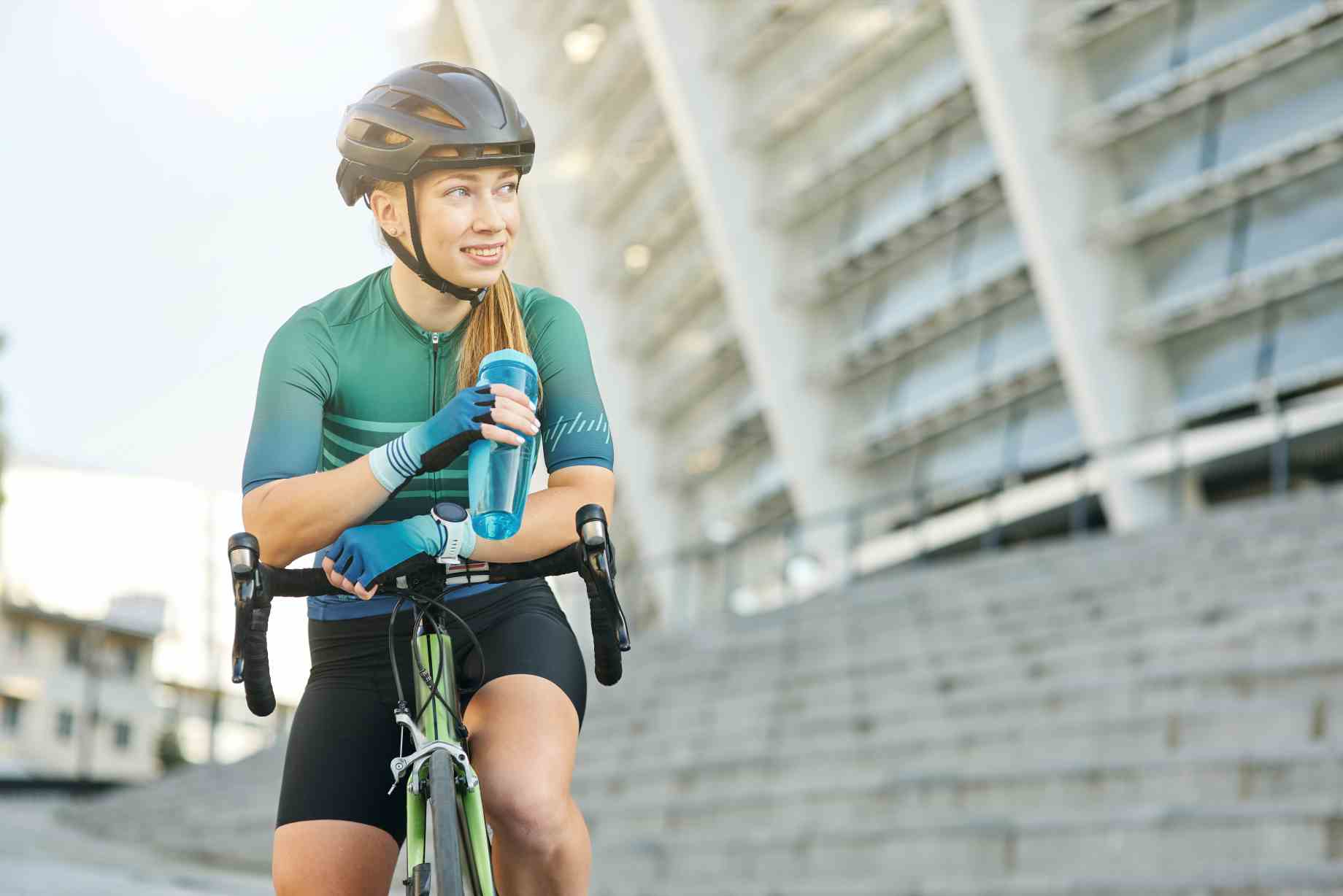
Weight loss is a significant part of cycling, a vivid, adaptable exercise. Additionally, it is an enjoyable activity and one of the best ways to burn calories and improve cardiac health. Cycling raises metabolism by engaging major muscle groups that are critical in managing weight.
Cycling’s advantages go beyond just losing weight, including general fitness and well-being. Due to its low-impact nature, it is ideal for different fitness levels; hence, it is the preferred choice for many who desire long-term solutions to overweight.

Table of Contents

Besides being a recreational activity, cycling is an excellent cardio workout that helps one shed weight and lose belly fat. That said, you should cycle at a certain speed to reap the benefits of belly fat loss.
So, to learn more about queries such as ‘Does cycling reduce belly fat?’ and ‘How much cycling reduces belly fat?’, continue reading!
For instance, regular cycling reduces the level of body fat through vigorous aerobic activity that targets several types of fats:
This refers to the layer of fat found directly beneath the skin. Most individuals seeking weight reduction worry about subcutaneous fat accumulation in areas such as thighs, hips and abdomen. Thus, this type of fat accumulates in these areas frequently. Energy expenditure rises with regular cycling, leading to decreased fat depots that contribute to leanness.
Found deeper within the abdomen, visceral fat surrounds vital organs like the liver, pancreas, and intestines. Excess visceral fat is linked to health risks such as heart disease, diabetes, and metabolic syndrome. High-intensity cycling, which involves sustained effort and higher calorie burn, is particularly effective in reducing visceral fat, lowering associated health risks and improving overall metabolic health.
Located within the muscles, intramuscular fat is used as an energy reserve. While some intramuscular fat is normal, excess amounts can indicate poor fitness levels and metabolic inefficiency. Cycling enhances muscle activity and increases the utilisation of this fat for energy, leading to improved muscle tone and efficiency and contributing to overall weight loss and fitness.

Cycling is an excellent, low-impact aerobic exercise. It boosts an individual’s metabolism, thereby helping him/her to speed up weight loss and become fitter. Be it indoor cycling for weight loss or outdoors on the streets. There are several benefits of cycling for weight loss, which are listed below:
As per a report by Harvard Health, cycling at a moderate speed of around 12 miles per hour can burn roughly 7 calories every minute for someone weighing about 155 pounds. This sums up to approximately 210 calories in half an hour. Moreover, these figures can show you how much weight loss is possible by cycling.
Helps You Shed Pounds
A study by the American Journal of Sports Medicine found that cycling helps people lose weight faster than walking.
While cycling consistently, the first noticeable difference is that the rider’s glutes, calves, quads, and hamstrings become firmer as a result of pedalling. Moreover, one’s core muscles get activated while he/she rides a bicycle. As core muscles are present in the abdominal area, this exercise tones one’s belly, making cycling good for weight loss in the stomach.
As the gradual conversion of fat to muscles takes place in the body, there is an increase in an individual’s resting metabolism rate. As a result, he/she can effectively burn calories even when the body is completely at rest.
Cycling also involves lung and heart functions, thereby helping them grow stronger.
Therefore, like other aerobic exercises, cycling can protect an individual from high blood pressure, stroke, heart disease, lung issues, and other serious health conditions.
Activities like walking or running can lead to soreness in areas such as the lower back, knees, and hips for obese and older individuals. On the other hand, cycling allows one to reap the advantages of physical activity without excessive strain on one’s body.
Cycling allows individuals to step outside their homes and soak up the sunshine. In this manner, they can get their daily dose of vitamin D, which is vital for boosting one’s metabolism.
Cycling regularly can lead to significant improvements in mental health. This activity promotes the release of endorphins and other feel-good hormones that reduce stress and anxiety. Cycling in nature or on a stationary bike offers a mental escape and boosts overall well-being, making the weight loss journey more enjoyable.
Regular cycling strengthens the heart and improves cardiovascular endurance. This enhancement increases the heart’s efficiency in pumping blood and oxygen throughout the body. By cycling consistently, individuals can improve their heart health and contribute to long-term fitness.
While primarily known for its aerobic benefits, cycling also builds muscle strength and endurance, particularly in the lower body. The repetitive motion of pedalling works on various muscle groups, including the glutes, calves, quads, and hamstrings. This muscle engagement leads to increased muscle mass, which boosts metabolism and facilitates greater fat burning even during rest periods.
Cycling is a joint-friendly exercise that enhances mobility and flexibility, particularly in the hip and knee joints. Unlike high-impact activities like running, cycling provides a range of motion that helps to lubricate joints and improve overall flexibility without putting excessive stress on them. This makes it a suitable exercise for individuals with joint concerns or those recovering from injuries.
Here is the list of body parts you must know that are exercised, targeted, toned, and used while cycling:
Body Part |
Description |
| Foot | Engages ankle dorsiflexion and plantar flexors, crucial for the pedal stroke and stability. |
| Arms | Works the triceps and biceps, providing support and maintaining balance while cycling. |
| Shoulders | Utilises the deltoids to stabilise the upper body, especially when handling the handlebars. |
| Calf | Activates the gastrocnemius and soleus muscles, contributing to the pedalling motion and endurance. |
| Buttocks | Targets the gluteus minimus, gluteus maximus, and gluteus medius, enhancing propulsion and power during cycling. |
| Thigh | The quadriceps and hamstrings are essential for effective leg pedalling and muscle toning. |

We will now illustrate four ways to cycle for weight loss with faster results. Here, take a look:
Simply stated, endurance training refers to pushing for a bit more, even when it feels like it has been enough. It is essentially a kind of training that helps you sustain a workout for an extended period. Research shows that endurance training helps burn fat, which aids weight loss.
HIIT can be an excellent way to lose weight and reduce fat. This type of training features short intervals of intense exercise alternated by spans of low-intensity exercise. In terms of cycling, this would look like the following:
Cycling as fast as possible against high resistance for half a minute to 1 minute
Easy cycling with low resistance for 2 to 3 minutes
Repeating this for the next 20 minutes to half an hour
In addition to helping individuals lose fat and improve their fitness levels, this training can help them burn a higher number of calories in a shorter time.
Pedalling in a leisurely manner is never enough to help with losing weight. However, by raising the intensity of the activity, there is a possibility of significant progress towards losing weight.
Generally, the faster one cycles, the more calories one burns. This is because the body uses a greater amount of energy to cycle at a fast pace. And, the more calories burned, the more weight one sheds.
Cycling steadily and moderately would burn around 300 calories in an hour, but the calorie burn will be greater with increased intensity.
Cross-training involves alternating between activities to mix up a variety of workouts. This can prove to be a good option for those unwilling to stay stuck in one activity. For instance, one can cycle and head to the gym to lift weights simultaneously.
As for how much cycling helps in weight loss, the ACE, or American Council on Exercise, states that cycling at a moderately intense level for a minimum of 30 minutes is necessary to lose weight. Cycling for a longer period would burn more calories.
Cycling is possible daily, especially if an individual does it for commuting or at a low intensity. That said, when experiencing any issues, it is advised to take a break. In this case, one might rest for at least a day each week.
Moreover, this break is all the more important for those who cycle at high-intensity levels or experience soreness in certain areas of their body.
On average, a person weighing 70 kg can burn approximately 260 to 420 calories per hour while cycling moderately. When cycling vigorously, this calorie expenditure can increase to around 630 to 930 calories per hour. The number of calories burned during cycling depends on various factors, including the intensity of the activity, the cyclist's weight, and the exercise duration.
Additionally, incorporating intervals of high-intensity cycling can further boost calorie burn. Regular cycling helps enhance metabolism, contributing to more effective calorie consumption and aiding weight loss.
The time of the day for cycling is unrelated to the amount of fat burned. The effect of cycling takes place on the human body at all times of the day, be it in the mornings or evenings. So, for your query, “Can cycling reduce belly fat?” rest assured that fat will get burned up whether you go riding during the morning or evening.
In addition, if you want to lose weight through cycling, you must have a properly planned schedule. If you wish to go riding in the mornings, consider doing so before breakfast. Studies have shown that cycling on an empty stomach helps burn fat around 20 times quicker and more effectively.

Parameter |
Indoor Cycling | Outdoor Cycling |
| Fitness | According to a study by ACE, the American Council on Exercise, the maximum heart rate stays about 75% to 90% in a typical indoor cycling session. This heart rate is apt for getting a good cardiovascular response. However, one must keep in mind that the hamstring muscles are primarily used in an indoor cycle. | While riding an outdoor cycle, a rider uses his/her hamstrings, quadriceps, shins, glutes, and calves more than while riding an indoor cycle. However, the rider should work hard to engage these muscles while cycling, which makes them stronger and burns a substantial number of calories. |
| Level of Difficulty: | In indoor cycling, one rides a stationary cycle, which can quickly become monotonous. The muscles used in this type of cycling are the same, which can make indoor cycling more difficult than outdoor cycling. | This type of cycling can be easier in terms of effort than the indoor type. However, if one is willing to take it to the next level, some technical skills would be required, making it difficult. |
| Convenience: | Indoor cycling is significantly convenient—one simply needs to get on the stationary cycle and pedal the equipment. | Outdoor cycling is logistically messier than its indoor counterpart. One must deal with many aspects when cycling outdoors, like harsh climatic conditions and traffic. |
Any type of indoor or outdoor cycling will give you a decent workout. Therefore, deciding on your preferred form of cycling is completely up to you.
You can opt for indoor cycling if you do not want to deal with harsh and unpredictable environmental conditions. On the other hand, if you want to exercise outside the comfort of your home, you can choose outdoor cycling.
Along with the answer to the query, “Does cycling reduce belly fat?” it is important to know the things which you should avoid during cycling:
Riding hands-free is not recommended under any circumstances, even if an individual is an exceptional cyclist. Besides, doing so might lead you to lose control and experience accidents that can be otherwise avoided.
When learning how cycling reduces belly fat, you should note that keeping objects hanging from the cycle might be dangerous as they might get caught in the wheels while riding.
While riding, you need to look in several directions to gauge the traffic. Riding a cycle wearing a hoodie would cause hindrance in this process, which might lead to an accident.
Adopting specific techniques is crucial to maximising the benefits of cycling for weight loss and fitness. These techniques enhance performance, increase calorie burn, and promote safe and efficient cycling.
Incorporating cycling into your workout routine can be a rewarding way to enhance cardiovascular fitness, promote weight loss, and improve overall health. Here are some simple steps to seamlessly integrate cycling into your exercise regimen:
On that note, we have reached the conclusion of the article on ‘Does cycling reduce belly fat?’ Including this question, you now know how much cycling is good for weight loss. Additionally, if you are willing to ride a bicycle for weight loss, keep in mind the things to avoid, as mentioned above, and stay safe!