General
Life
Accessibility Options


General

General Products
Simple & Transparent! Policies that match all your insurance needs.
 Car Insurance
 Two Wheeler Insurance
 Commercial Vehicle Insurance
 Health Insurance
 Home Insurance
 Travel Insurance
 Business Insurance
Car Insurance
Two Wheeler Insurance
Commercial Vehicle Insurance
Health Insurance
Travel Insurance
Business Insurance
Car Insurance
Two Wheeler Insurance
Commercial Vehicle Insurance
Health Insurance
Travel Insurance



Scan to download

Life

Life Products
Digit Life is here! To help you save & secure your loved ones' future in the most simplified way.
 Term Life
 Savings Plan
 Retirement and Pension Plans
 Group Life Products
 Product Documents
Term Life
Savings Plan
Retirement and Pension Plans
Group Life Products
Product Documents
Term Life
Savings Plan
Retirement and Pension Plans
Group Life Products

Scan to download

Claims

Claims
We'll be there! Whenever and however you'll need us.
 Customer Support
 Motor Claims
Health Claims
Motor Claims
Health Claims
 Marine Insurance
 Grievance Redressal
Customer Support
Motor Claims
Health Claims
Marine Insurance
Grievance Redressal
Grievance Redressal
Customer Support
Motor Claims
Health Claims
Marine Insurance
Grievance Redressal
Scan to download
 General
 Life
General
Life
Life
General
Life
Renewals
Resources

Resources
All the more reasons to feel the Digit simplicity in your life!
Exclusive Features
 Transparency Report
Others
Exclusive Features
Transparency Report
Transparency Report
Others
Exclusive Features
Transparency Report
Scan to download


Our WhatsApp number cannot be used for calls. This is a chat only number.

 Grey Scale
 Readable Text
 Reset
Reset



9000+ Cashless Hospitals

Up to 20% Discount


Check Prices
Buy Health Insurance, Up to 20% Discount
Port Existing Policy
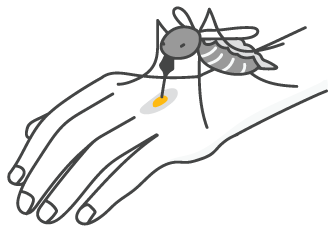
Dengue cases rise every year across India, and the illness can affect your family’s health as well as your pocket1. Many people only think of dengue as a seasonal fever, but the real picture is much deeper. Hospital stays, ICU risks, rising treatment costs, and age‑wise exposure all play a role in how prepared your family should be.
Based on Go Digit General Insurance (Digit), actual health claims data, for the Calendar year 2025, here are the top 23 insights you must know about how much treatment can actually cost, how long the treatment can take, and what you can do to stay protected.

Disclaimer: The insights & data below are derived from external sources (as mentioned in references) and Go Digit General Insurance Limited (“Digit”) internal health insurance claims data for the Calendar year 2025, along with aggregated historical trends. The information is provided for general informational purposes only and may vary based on policy terms, treatment location, individual medical condition, and other relevant factors. This content does not constitute medical or financial advice.
External Data Sources & References:
Dengue continues to place a significant health burden across India, and real-world data helps us understand its true impact. These 23 factual insights bring together patterns from demographics, symptoms, treatment behaviours, recovery timelines, and healthcare costs to give a factual and data-backed view of dengue treatment in India.
Dengue cases showed a steady rise over the decades, which may have been influenced by seasonal patterns, weather conditions, and mosquito breeding during those years. However, the number of dengue cases started declining rapidly in 2024 and again in 2025, possibly due to greater awareness, preventive measures, and improved mosquito control in many areas2.
According to Digit data insights, dengue cases tend to rise during the late monsoon and early post-monsoon months, with the highest numbers usually seen in August and September, followed by October and November.
During this period, heavy rains leave behind stagnant water, which becomes the perfect breeding ground for Aedes mosquitoes. At the same time, warm temperatures and high humidity help mosquitoes survive longer and multiply faster. Hence, you must be extra cautious during the monsoon season.
Certain states in India tend to report more dengue cases each year, largely because their weather and monsoon patterns create ideal conditions for mosquito breeding2. Digit’s data reflects a similar trend as well, showing higher case numbers in states like Maharashtra, Telangana, Gujarat, Karnataka, and Tamil Nadu.
If you live in or are travelling to these states, taking extra precautions against mosquito bites can significantly reduce your risk of dengue.
Dengue was once considered largely an urban disease, mainly because mosquitoes thrived in densely populated cities with water storage containers. However, recently rural regions have started reporting higher dengue cases than urban areas3.
Rural regions are experiencing high dengue cases mainly due to factors such as poor waste management, stagnant water in fields and containers, and changing climate conditions.
Dengue is spread by the bite of an infected Aedes mosquito, especially Aedes aegypti, which is most active during the daytime4. The dengue virus does not spread directly from one person to another.
Instead, an Aedes mosquito becomes infected when it bites a person who already has dengue. Once inside the mosquito, the virus multiplies for about a week. After this, the mosquito becomes capable of transmitting dengue to every person it bites for the rest of its lifespan. Hence, using mosquito repellents, window screens, and eliminating stagnant water is the key to be safe during this interval.
Young adults between 18 and 40 years account for the highest number of dengue cases based on Digit’s claims data. This may be linked to higher outdoor exposure through daily activities such as commuting, work, and travel, which can increase the likelihood of mosquito bites.
Digit states that, children below 15 and senior adults above 60 often need a bit more care during the dengue season. Their immune systems are either still developing or gradually becoming less responsive with age, making them naturally more sensitive to infections.
There is nothing to be worried about, visit a paediatrician for kids or your family’s general physician at earliest for timely treatment.
Severe dengue cases that require hospital care are seen more often in men than in women. In fact, according to Digit data, around 60 - 65% of dengue-related hospitalisations occur among male patients, while about 35 - 40% involve female patients.
This difference may be linked to factors such as higher outdoor exposure, work environments, travel, and lifestyle patterns, which can increase the chances of mosquito bites among men in many regions4.
Dengue during pregnancy can be riskier because the infection increases the chances of severe dehydration, bleeding, and pre‑term birth, especially if the mother’s platelet count drops.
In rare cases, dengue can be passed from mother to baby around the time of delivery. However, there’s no need to panic, consulting with your gynaecologist and going for frequent checkups can help you recover faster5.
Patients with comorbidities such as diabetes, hypertension, heart disease, kidney issues, or weakened immunity are at higher risk of faster recovery, organ complications, and hospitalisation.
According to Digit data, people with existing heart diseases face the highest rate of complications among all comorbidity groups, as their bodies struggle more with fluid shifts, inflammation, and sudden drops in blood pressure during the critical phase of dengue. These makes early testing, careful monitoring, and timely consultation with physician or cardiologist is important. This highlights the importance of early testing, regular monitoring, and consulting a physician or cardiologist on time.
Most dengue symptoms show up within a few days of a mosquito bite and can feel more intense than a normal viral fever. Symptoms like high fever (>104° F), severe headaches, pain behind the eyes, joint pain, vomiting, or a skin rash are early clues that you should get tested promptly4.
However, in children dengue may start with a similar symptom but you may also observe nausea, poor appetite, rashes, irritability along with high fever. These are early warning signs that dengue may be developing and the sooner you get tested, the safer you are.
Platelet count in dengue drops because the virus affects the bone marrow (the part of the body that produces platelets) and destroys existing platelets faster than they can be replaced.
Normally, platelet levels stay between 1.5 to 4 lakh/µL, but during dengue they can fall quickly, which might increase the chance of internal bleeding.
Dengue progresses through three key stages that determine how the body responds to the infection7:
Dengue can lead to serious complications when the infection enters its critical phase, causing plasma leakage, a sharp drop in platelets, internal bleeding, liver inflammation, and in severe cases, Dengue Hemorrhagic Fever (DHF) or Dengue Shock Syndrome (DSS), where blood pressure falls to dangerously low levels.
To confirm dengue at any stage, doctors generally rely on specific tests such as:
However, there is generally no specific antiviral treatment for dengue, which makes supportive care extremely important. Doctors usually recommend pain relief medicines, adequate hydration, plenty of rest, nutritious meal and regular monitoring of symptoms for early recovery.
Digit data states that most people who are admitted for dengue begin to feel significantly better within just 4 to 5 days of hospital care. Proper hydration, monitoring, and timely medical support helps patients recover smoothly and return to their routine soon after.
Digit data states that, “While many dengue patients recover with timely treatment, some cases, generally 1 in 10 cases, may require intensive medical care under a doctor’s supervision.” It means that for every 10 people affected, at least one could land in a situation where their health can decline rapidly and they may experience low platelet counts, internal bleeding or extreme dehydration.
Because of these risks, doctors may move patients to the Intensive Care Unit (ICU) where they can receive thorough monitoring and advanced medical support.
Digit data reveals that over the past few years, the cost of dengue treatment has gradually increased from 2021 to 2025. Also, dengue treatment cost for severe cases can go up to ₹1.5 lakh during the monsoon season.
This rise can be linked to factors such as higher hospital charges, increased diagnostic testing, advanced treatment methods, and overall medical inflation.
According to Digit data, the cost of dengue treatment averages around ₹50,000 to ₹55,000. However, in some cases, the cost can increase if a patient requires more intensive care or specialised treatment.
Several factors can influence the total treatment cost. These include the city you live in (Tier 1, 2 or 3), severity of dengue (mild vs. severe), length of hospital stay, type of hospital (private or government), need for ICU care, platelet transfusions, diagnostic tests, and the overall treatment required during recovery.
The cost of dengue treatment tends to be higher in major metropolitan cities. As per Digit data, the treatment in Tier 1 cities is more expensive than in Tier 2 cities. Tier 1 cities include Bengaluru, New Delhi, Mumbai, Pune, Hyderabad, etc.
This difference is often due to higher hospital charges, advanced medical infrastructure, specialist consultation fees, and the overall cost of healthcare services in large cities. And that’s why preparing in advance is so important. Having a health insurance or emergency saving in Tier 1 cities is essential.
The cost burden of dengue treatment tends to be higher in large metropolitan cities where healthcare services, hospital infrastructure, and treatment costs are generally higher. Digit data states, among all the major Tier 1 cities, Hyderabad records the highest overall dengue treatment expenses, followed by Pune and Bengaluru.
This could be influenced by factors such as higher hospitalisation rates, advanced treatment facilities, specialist care, and higher healthcare costs in major urban centres.
Dengue continues to be one of the most common illnesses that leads to hospital visits during certain seasons. In fact, nearly 1 out of every 5 infectious disease health insurance claims at Digit is related to dengue, showing how widespread and impactful the disease can be during peak months.
This shows how quickly dengue can spread during favourable conditions such as the monsoon and post-monsoon season, when mosquito breeding increases significantly. This also highlights why having health insurance is important, as it can help manage the financial burden of sudden hospitalisation during peak dengue seasons.
Preventing dengue is mostly about reducing mosquito bites. Simple steps like keeping your surroundings clean, removing stagnant water, insecticide fogging, and using mosquito protection can dramatically lower your chances of infection.
Also, using repellents, wearing covered clothing, and keeping windows and doors screened also help create a strong barrier of protection.

Protecting your family from dengue starts with a few simple habits that can greatly reduce the risk of mosquito bites and breeding around your home. Here are some prevention methods and financial guidance you must consider for protecting your family from Dengue:
Read More
Read Less
As we understand dengue continues to place a significant medical and financial burden on Indian families, with hospitalisations peaking during the monsoon and treatment costs rising steadily each year.
Most patients recover early, yet many still require ICU support and repeat care, especially in tier 1 cities. These data‑backed insights highlight the need for awareness, timely care, and basic prevention that can make a big difference during dengue season.