General
Life
Accessibility Options


General

General Products
Simple & Transparent! Policies that match all your insurance needs.
 Car Insurance
 Two Wheeler Insurance
 Commercial Vehicle Insurance
 Health Insurance
 Home Insurance
 Travel Insurance
 Business Insurance
Car Insurance
Two Wheeler Insurance
Commercial Vehicle Insurance
Health Insurance
Travel Insurance
Business Insurance
Car Insurance
Two Wheeler Insurance
Commercial Vehicle Insurance
Health Insurance
Travel Insurance


Scan to download

Life

Life Products
Digit Life is here! To help you save & secure your loved ones' future in the most simplified way.
 Term Life
 Savings Plan
 Retirement and Pension Plans
 Group Life Products
 Product Documents
Term Life
Savings Plan
Retirement and Pension Plans
Group Life Products
Product Documents
Term Life
Savings Plan
Retirement and Pension Plans
Group Life Products
Scan to download

Claims

Claims
We'll be there! Whenever and however you'll need us.
 Customer Support
 Motor Claims
Health Claims
Motor Claims
Health Claims
 Marine Insurance
 Grievance Redressal
Customer Support
Motor Claims
Health Claims
Marine Insurance
Grievance Redressal
Grievance Redressal
Customer Support
Motor Claims
Health Claims
Marine Insurance
Grievance Redressal
Scan to download
 General
 Life
General
Life
Life
General
Life
Renewals
Resources
Resources
All the more reasons to feel the Digit simplicity in your life!
Exclusive Features
 Transparency Report
Others
Exclusive Features
Transparency Report
Transparency Report
Others
Exclusive Features
Transparency Report
Scan to download


Our WhatsApp number cannot be used for calls. This is a chat only number.

 Grey Scale
 Readable Text
 Reset
Reset



Check Credit Score for FREE
Instant in 2 Mins. No Impact on Credit Score
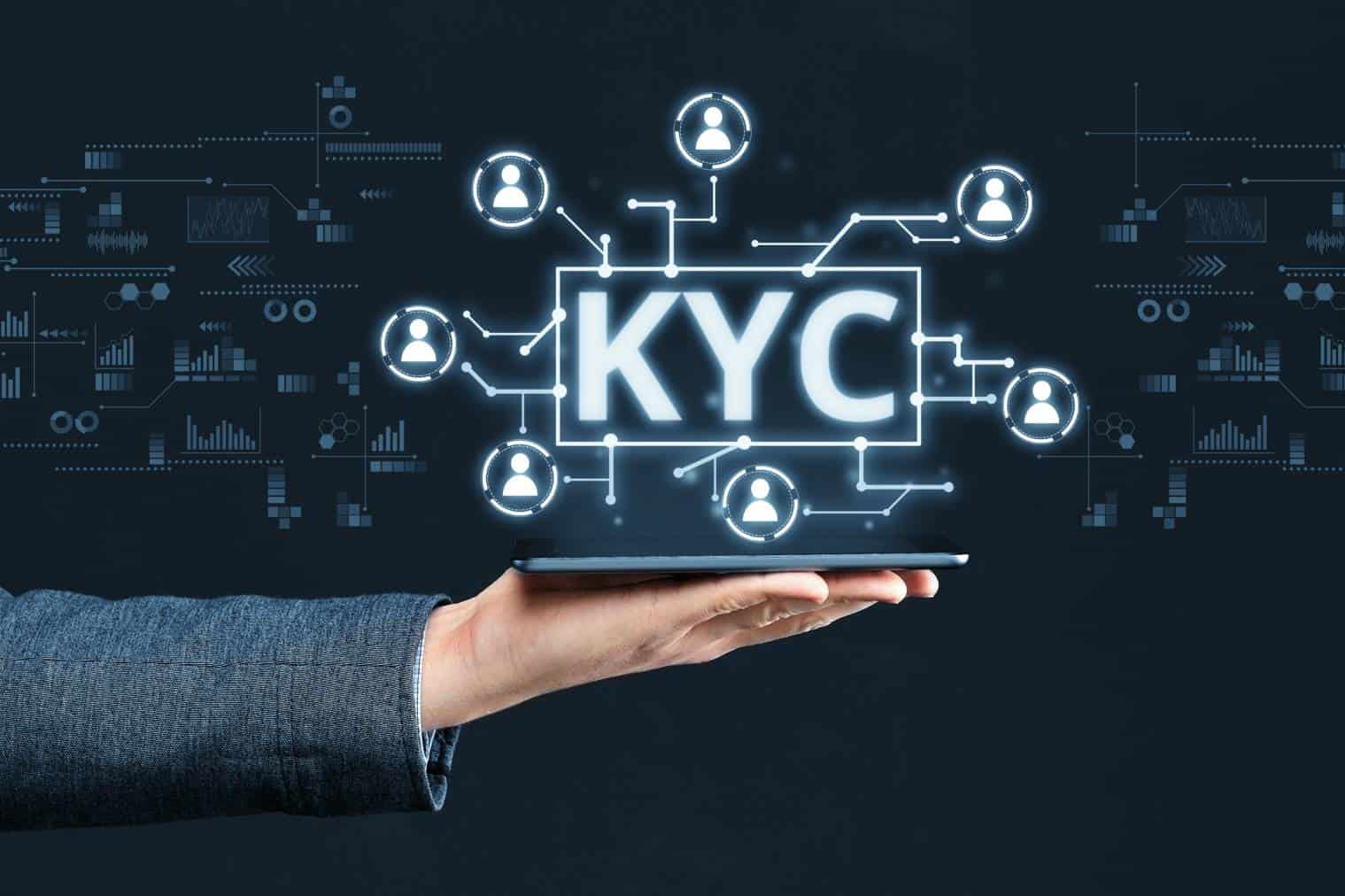
KYC (Know Your Customer) practices are relevant in relationships between companies and their customers, particularly when it comes to onboarding new users. Knowledge of an individual's identity is important for banks and other financial institutions that provide financial services. It also helps protect against identity fraud, which can occur when an impostor assumes someone else's identity to obtain goods or services.
KYC is the process businesses use to verify the identity of their clients to maintain compliance with current laws, legal requirements and regulations. The extensive usage of the internet, as well as new technologies, makes it a high priority to establish standards that help financial as well as other institutions fight online fraud.
Further, the KYC procedure responds to a global and legal imperative by financial institutions and companies by ensuring that customers are who they claim to be before allowing them access to their services or onboarding new customers. Additionally, the KYC process also provides info on the nature of employment and also the business carried out by the customer that further helps in verifying an individual's or company's authenticity.
Until 2004, Indian financial institutions were not required to verify customers' identities and addresses before taking out a loan or making a deposit. However, in 2004 the Reserve Bank of India introduced the first mandatory KYC (know your customer) verification process for all banks. Two types of KYC verification processes exist, one that requires only details about an individual's address and another that requires both an individual's address and identity details. Whichever method you choose depends on which one is most convenient for you. Both are as follows:
This process can be completed online using a mobile device, making it easy for customers with broadband or internet access. If you want to invest in a mutual fund with Aadhaar-based KYC (Know Your Customer), the opportunity is limited to $50,000 per year.
To invest more in mutual funds, customers will have to undergo an in-person verification process. Customers can choose to visit a KYC kiosk and authenticate their identity using Aadhaar biometrics or call the KYC registration agency to have an executive come to their home/office for this verification.
Upon knowing the types and importance, let us move on to eligibility requirements.
The offline KYC (Know-Your-Customer) process is not restricted by any eligibility criteria, provided you provide documentation to the KRA office. However, to be eligible for eKYC provisions, you must have an Aadhaar number. This number is shared with financial institutions by the UIDAI (Unique Identification Authority of India) when you authorise it by providing explicit consent.
The Know Your Customer or Know Your Client (KYC) verification process is used in the investment and financial services industries to ensure that companies have sufficient information about their clients, their risk profiles, and financial position.
Further, there are 3 KYC verification processes which are as follows:
The steps for the digital process are as follows –
Step 1: Visit the official website of the KYC Registration Agency (KRA).
Step 2: Create an account with your details.
Step 3: Enter your Aadhaar details with your registered mobile number.
Step 4: Verify by entering the received OTP.
Step 5: Upload a self-attested copy of the Aadhaar card.
Step 6: Accept the terms and conditions of the declaration.
The steps for offline verification are as follows -
Step 1: Download a KYC form.
Step 2: Fill in the details along with your Aadhaar or PAN details.
Step 3: Visit the nearest KRA (KYC Registration Agency) office.
Step 4: Attach address and ID proof, then submit the form.
Step 5: If required, furnish your biometrics.
Step 6: After the generation of an application number, collect it and monitor the status online.
Note – The offline verification process can take up to 7 days. Due to minimal in-person interactions, online processes are faster and can even be done in less than 24 hours.
The biometric process starts online and ends with an in-person verification, as it requires the visit of authorised personnel to complete the process. The steps for the same are as follows –
Step 1: Visit the official website of KRA.
Step 2: Create an account with your personal details.
Step 3: Input the registered mobile number along with the Aadhaar number.
Step 4: Choose the online option of biometric authentication.
Step 5: An authorised representative will pay a visit to the as per the mentioned address on the form.
Step 6: Provide your biometric verification.
Step 7: Present the original documents as per requirement.
Step 8: Wait for the KYC approval.
The basic documents required for KYC are proof of identity and proof of address. The requisite documents are as follows -
Apart from the process and other things, a question might pop up ultimately, what are the advantages of KYC. Read on to know further.
The Know-Your-Customer (KYC) regulation connects financial bodies with the authorities to ensure that the legal status of the entity is verified. Banks are able to monitor the activities of customers and cross-check their addresses with the operating addresses of their beneficial owners and authorised signatories. Apart from that, other advantages of KYC are as follows:
The Know Your Customer (KYC) process is one of the most important parts of any banking or investment process. As mentioned earlier, it is mandatory for many institutions to complete this check before they allow you to open an account with them.
The KYC process can take several forms depending on the institution you're dealing with and how much risk they perceive you pose. Customers who fall into the medium-risk category must carry out this procedure every eight years, while customers in the low-risk category must have it done every ten years.
Nonetheless, KYC verification helps an individual as well as an institution to maintain a healthy relationship and can easily curb fraudulent cases in the financial sector.