Digit App

Accessibility Options

arrow
Grey Scale
Readable Text
Reset
hamburger
×
Digit General Insurance Logo
Powered By Digit
general-insurance

IDV Calculator for Car Insurance

An IDV calculator estimates your car’s Insured Declared Value (IDV), the maximum amount payable by the insurer in case of theft or total loss under the own‑damage section of your policy. Read more... IDV is derived from the manufacturer’s listed selling price after age‑based depreciation as per IRDAI norms, agreed at policy issuance, and fixed for the policy term. Choosing the right IDV affects both insurance premium and claim protection. Read less

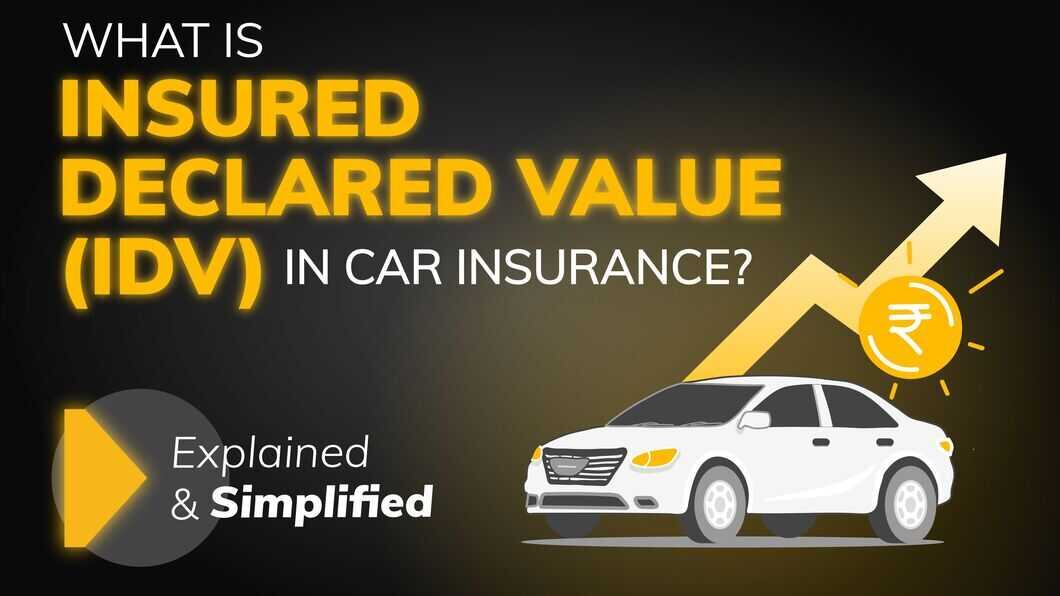
Insured Declared Value (IDV) in Car Insurance

usp icon

9000+

Cashless Garages

usp icon

2900 Crore+

Paid-in Claims

usp icon

1.2 Cr+

Policies Sold

false
Up to 90% Off with PAYD Add-On
This is a {{carWheelerCtrl.localStorageValues.product}} reg no, please enter a private car reg no.

I agree to the Terms & Conditions

Buy Online for Huge Savings

Digit Exclusive

Claim your Offer

Up to 90% Discount

Save big with Digit - Claim up to 90% discount on new car insurance premium.

I agree to the Terms & Conditions

true
car

Check Price

arrow
×
car

Car insurance Online, Up to 90% Discount

This is a {{carWheelerCtrl.localStorageValues.product}} reg no, please enter a private car reg no.
usp icon

9000+

Cashless Garages

usp icon

2900 Crore+

Paid-in Claims

usp icon

1.2 Cr+

Policies Sold

What is an IDV Calculator for Car & Why Do You Need it?

idv calculator

What is a Car IDV Calculator?

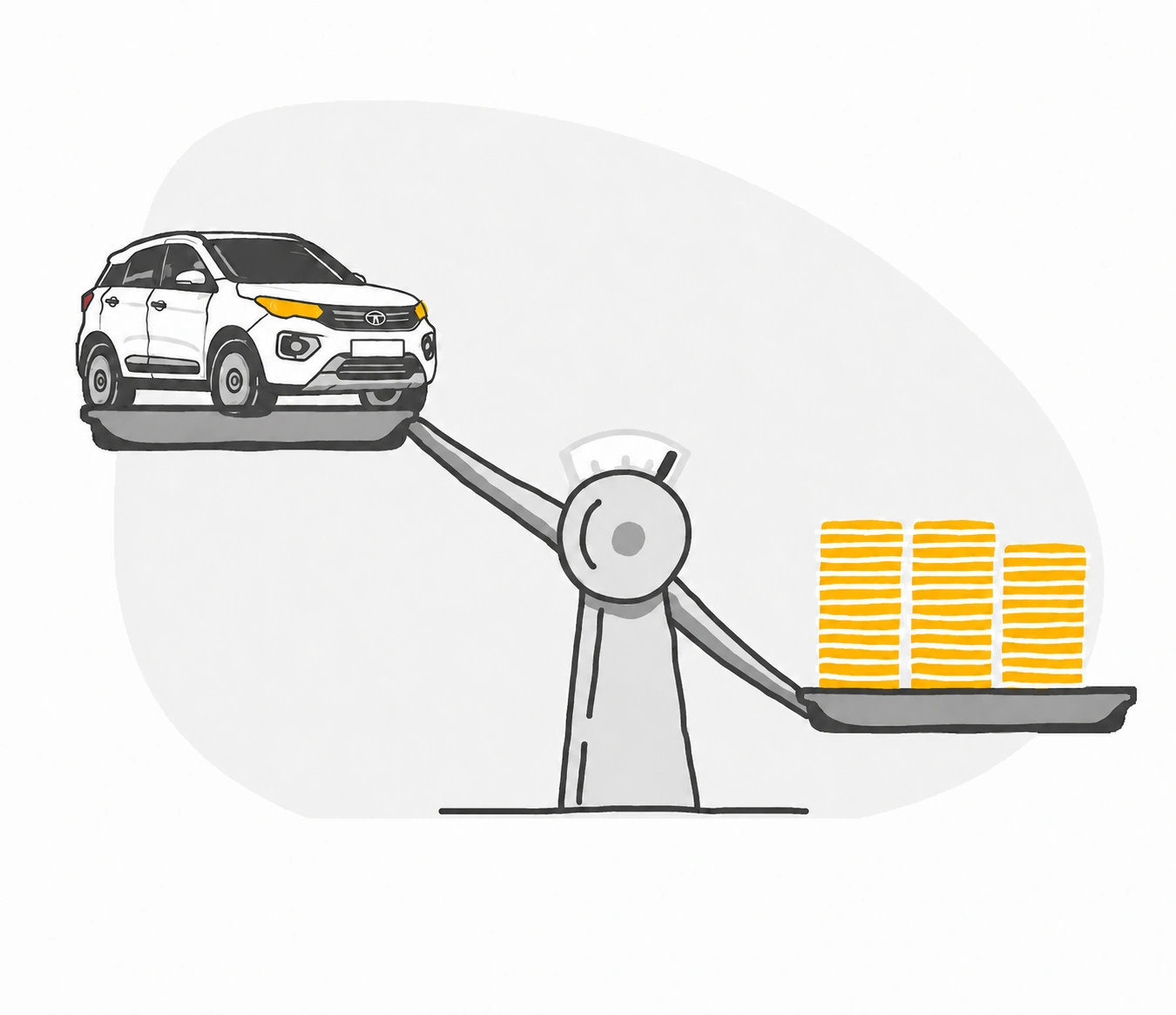
IDV (Insured Declared Value) is the maximum sum assured agreed between the policyholder and insurer for a car under the own‑damage section of a motor insurance policy. It represents the maximum claim amount payable if the vehicle is stolen or declared a total loss. IDV is calculated using the manufacturer’s listed selling price of the vehicle after applying standard age‑based depreciation prescribed under Indian motor insurance guidelines. It is not the same as resale value and does not change during the policy period.

Explain It Like I'm Five!

We’re making insurance so simple that even a 5‑year‑old can understand it.

Imagine you have a cool toy car. One day, you think about selling it to your uncle. 
Your uncle looks at the toy carefully — what it’s made of, how old it is, and how much you’ve played with it. Since it’s not brand new anymore, he says, “I’ll give you ₹200 for it.”

That ₹200 is your toy car’s IDV.

Now, think of your real car the same way. 
If it gets stolen or badly damaged, IDV is the amount the insurer uses to decide how much money you’ll get, based on your car’s current value — not the price you bought it for.

So, IDV = your car’s today value.

how to calculate idv of car

How is the IDV of a Car Calculated?

The IDV of a car is calculated by reducing depreciation from the manufacturer’s listed selling price.

Formula:

Basic formula

IDV = Manufacturer’s listed selling price − Depreciation 

If you have non‑factory‑fitted accessories:

IDV = (Vehicle value − Depreciation) + (Accessories value − Accessories depreciation) 

Accessories must be declared separately to be insured.

What Factors Help Determine IDV Value for Cars?

Age of the Car

Since the IDV represents the market value of your car, the age of your car is extremely important to help determine the right IDV. The older your car is, the lesser will be its IDV and vice versa.

Manufacturer Make and Model of the Vehicle

The make and model of your car is directly related to your IDV. For example; For instance, a Toyota Fortuner will have a higher IDV than a Maruti Swift due to differences in vehicle segment, features, and market value.

City Registration Details

Your car registration details are available on your registration certificate. Also, the city where your car is registered has an impact on its insured declared value. The IDV of your car in a metro city may be less than its IDV in a tier-II city.

Standard Depreciation (As per Indian Motor Tariff)

Your car’s value depreciates from the moment you drive it out of the showroom– and the percentage of its depreciation increases with each year. This too ultimately affects your IDV.

Manufacturer’s Selling Price

The manufacturer’s selling price also determines the IDV of a car. The selling price includes the accessories installed by the manufacturer and all other components. Generally, the higher the selling price, the higher the IDV.

Fuel Type

Whether your car runs on petrol, diesel, CNG, or is electric can influence its IDV because fuel type affects market value and demand.

how does IDV calculator estimate value

How Does an IDV Calculator Estimate This Value?

An IDV calculator automatically applies age‑based depreciation, considers make, model, variant, fuel type, and registration year and also shows how IDV changes premium in real time. It does not inspect vehicle condition, factor accident history or mileage and predict resale value. The calculator output is indicative. Final IDV is confirmed at policy issuance.
check car idv online

How to Check IDV Online Using Digit’s IDV Calculator?

  • Enter Your Car Details: Provide basic information such as the make, model, variant, and year of manufacture.

  • Fill in Registration Information: Add your car’s registration year and location, as IDV can vary slightly by region.

  • Calculator Applies Depreciation: The tool automatically applies the standard depreciation rate based on your car’s age.

  • IDV (Insured Declared Value) Is Calculated: The calculator determines the current market value of your car after depreciation.

  • View Maximum Claim Value: The displayed IDV tells you the highest amount you can claim in case of total loss or theft.

role of depreciation in idv calculation

What is the Role of Depreciation in IDV Calculation?

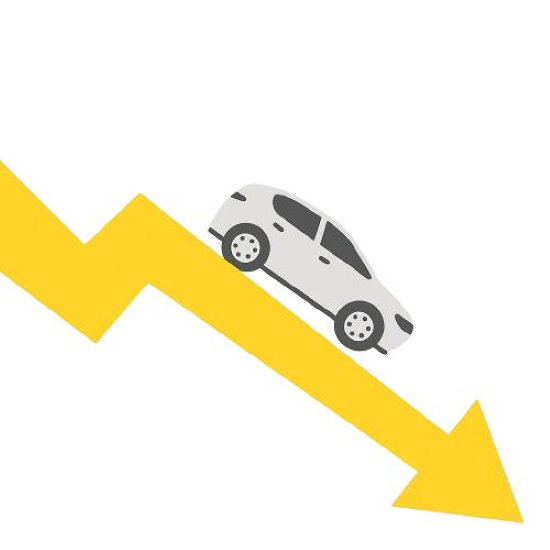
Depreciation is an important factor that helps calculate IDV in car insurance. The higher the depreciation on your car parts, the lower its IDV.  This is because as the car gets older, the depreciation on car value increases, and it loses its market value or IDV value for car over time.

So, in case of theft or total damage to your car, you will receive a lower claim amount from the insurer.

What are the Standard Depreciation Rate for Cars Used in IDV?

Depreciation is calculated based on the car depreciation rate, given in the table below:

Age of the Car Depreciation Rate  
6 months and below   5%  
6 months to 1 year   15%  
1 year to 2 years   20%  
2 years to 3 years   30%  
3 years to 4 years   40%  
4 years to 5 years   50%  
Above 5 years   IDV is mutually decided by the insurance provider and policyholder 

Suppose your car’s ex‑showroom price is ₹1000000.

  • If the car is less than 6 months old, a depreciation rate of 5% applies. 
    This means the IDV becomes ₹950000.
  • When the car is older than 6 months but less than 1 year, depreciation increases and the IDV reduces to ₹850000.
  • If the car is 1–2 years old, the IDV drops further to ₹800000.
  • For a 2–3‑year‑old car, the IDV becomes ₹700000.
  • By the time the car reaches its 5th year, depreciation can go up to 50%, bringing the IDVdown to ₹500000.

What This Means for You?

Your IDV broadly reflects your car’s market value at that point in time. While it gives a fair estimate, the actual resale price may be higher or lower depending on how well the car has been maintained. A well‑kept car in good condition can often fetch more than its IDV, whereas a poorly maintained one may not.

In short, depreciation lowers your IDV year after year but good care can still protect your car’s real‑world value.


What are the Benefits of Using an IDV Calculator?

Using an IDV (Insured Declared Value) calculator makes it much easier to understand your car’s worth and choose the right insurance coverage. It removes the guesswork and gives you clearer, more confident decision‑making. Here’s how it helps:

Helps You Avoid Over or Under‑Insuring

Picking the wrong IDV can cause problems later, either smaller claim payouts or unnecessary extra premium. With the calculator, you can choose an IDV that strikes the ideal balance between cost and coverage.

Helps You Find the Right Premium

Your IDV directly affects your insurance premium. The calculator shows you in real time how a higher or lower IDV changes your premium amount.

Tells You the Maximum Claim Amount

IDV is the highest amount you can receive if your car is stolen or declared a total loss. The calculator gives you a clear idea of this payout, so you know exactly what to expect during big claims.

Makes Renewals Smooth and Accurate

Your car’s market value changes over time. Using the calculator during renewal ensures your coverage reflects its current value, not last year’s estimate.

Useful Beyond Insurance

An IDV calculator can also help if you’re checking your car’s resale value or planning to sell your vehicle. It gives you a quick, realistic picture of your car’s worth in the market.

How Does IDV Affect Your Car Insurance Premium?

Here’s an example using a popular car like Maruti Swift to show how IDV affects premium and claim payout:

Car Details Value
Car Model   Maruti Swift VXi  
Original Price   ₹7,00,000  
Age   3 years  
Depreciation (30%)   ₹2,10,000  
IDV  ₹4,90,000 

Impact on Premium & Claim:

IDV (₹) Premium (₹) Scenario Claim Payout (₹)
4,00,000  ₹8,500   Low IDV chosen to save premium   Max payout for total loss = ₹4,00,000  
4,90,000  ₹10,500   Recommended IDV (market value)   Max payout for total loss = ₹4,90,000  
5,50,000  ₹12,000   High IDV chosen for extra coverage   Max payout for total loss = ₹5,50,000  

Choosing too low IDV can leave you underinsured and choosing too high IDV increases premium unnecessarily and may lead to disputes.

how idv Is applied

How IDV Is Applied During an Actual Claim?

IDV becomes relevant only in specific claim scenarios, primarily theft or total loss.

Theft Claims: Once required documents (FIR, non‑traceable report, RC, keys) are verified, the insurer settles the claim up to the full IDV, subject to deductibles.

Total Loss Claims: If repair costs exceed 75% of the IDV, the car is declared a total loss. Settlement is based on the agreed IDV and depreciation is not applied again.

Partial Damage Claims: Repair costs are paid as per policy terms, but total payout cannot exceed IDV.
things to keep in mind

Things to Keep in Mind While Calculating the IDV of a Car

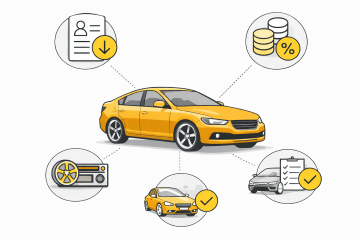
Here are a few things that can help you set the right and accurate IDV for your car.

  • Apply depreciation as per IRDAI guidelines

  • Declare and insure additional accessories separately

  • Avoid selecting the minimum IDV solely to reduce premium 

  • Avoid overstating IDV beyond realistic market value

  • Review IDV at every renewal

  • Use the formula: IDV = Manufacturer’s Price – Depreciation + Accessories Value.

How to Choose the Right IDV for your Car?

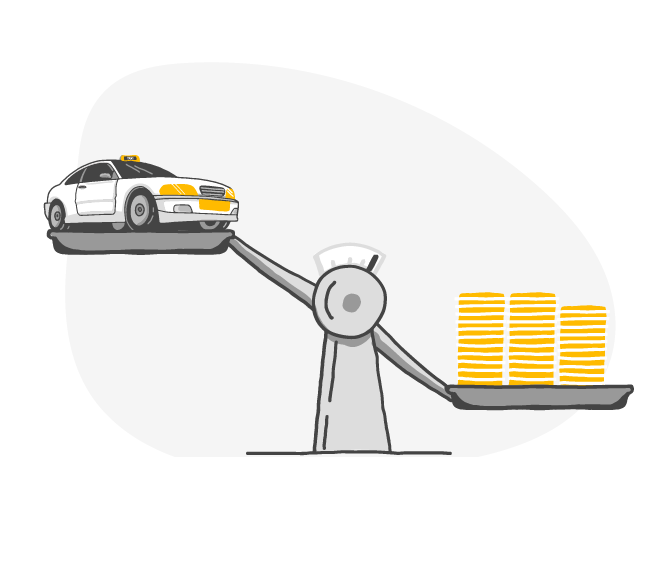
Choosing the right IDV is crucial to ensure adequate coverage without paying an unnecessarily high premium. Here’s how to decide whether a higher IDV or lower IDV suits you:
img

You own a new or luxury car

Expensive cars and their spare parts cost more to repair or replace, so a higher IDV ensures your coverage matches these costs.

You want better protection against depreciation

A higher IDV reduces the impact of depreciation on your claim amount, ensuring compensation closer to the car’s actual market value in case of theft or total loss.

img

You own an older standard car (5+ years)

Older cars have lower market value and cheaper spare parts, so a lower IDV prevents you from paying a premium that exceeds the car’s worth.

You plan to sell the car soon

A lower IDV helps save premiums while maintaining basic coverage, making sense if you don’t intend to keep the car for long.

when should you reevaluate your car idv

When Should You Reevaluate Your Car’s IDV?

Reevaluating IDV is especially important at renewal, when switching insurers, or when the car moves into a new depreciation bracket. Regular reassessment with an IDV calculator ensures your coverage remains aligned with the car’s depreciated value and prevents overpayment or underinsurance.

Why Choosing the Right IDV Matters?

Choosing the correct Insured Declared Value (IDV) is important because it directly affects both your maximum claim payout and your insurance premium. IDV represents your car’s current market value, and setting it realistically ensures balanced financial protection.
Maximum Claim Payout

IDV is the highest amount an insurer will pay in case of total loss or theft. If the IDV is set lower than the car’s actual market value, you may receive less than what’s needed to replace your vehicle.

Premium Amount

Insurance premiums are directly linked to the chosen IDV.

Higher IDV: Results in a higher premium, without increasing claim benefits beyond the car’s real value

Lower IDV: Reduces the premium but increases the risk of being underinsured during a major claim

Accurate Vehicle Valuation

As cars depreciate over time, the IDV should reflect this reduction in value. A properly adjusted IDV ensures the insured value aligns with the car’s age, condition, and market worth.

Financial Protection and Peace of Mind

A correctly chosen IDV protects you from major financial loss in case of theft or severe damage, while also helping avoid unnecessary premium payments.

why idv reduces

Why IDV Reduces Every Year Even When You Want Higher Coverage?

Another frequent point of confusion is why IDV reduces at every renewal, even when policyholders are willing to pay a higher premium to maintain coverage. This reduction is driven by IRDAI‑prescribed depreciation guidelines, which apply uniformly across insurers. Depreciation starts at 5% within the first six months, increases to 15% within the first year, and can reach 50% by the fifth year of the vehicle.

After five years, IDV is no longer fixed by a standard depreciation table and instead becomes a mutually agreed value between the insurer and the policyholder. At this stage, factors such as vehicle condition, model viability, and spare‑parts availability influence the agreed IDV range.

digital insurers offer idv flexibility

Do Digital Insurers Offer IDV Flexibility?

Many car owners look for flexibility when choosing their car’s IDV during purchase or renewal. Digital‑first insurers are designed to make this process simpler and more transparent for customers.

It’s important to note that no insurer can set IDV arbitrarily. All IDVs must stay within realistic market values as permitted by IRDAI. The difference lies in how clearly these options are presented and how much control the customer has while making the choice.

At Digit, customers can customise their IDV within the approved range during purchase or renewal, helping them strike the right balance between premium affordability and adequate coverage, without confusion or guesswork

FAQs about IDV Calculator

Does IDV affect my car insurance premium?

up-arrow

Yes. IDV directly impacts your premium because it represents the maximum amount the insurer may pay in a total loss or theft claim. A higher IDV increases the insurer’s risk, which raises the premium, while a lower IDV reduces both risk and premium.

Yes. IDV directly impacts your premium because it represents the maximum amount the insurer may pay in a total loss or theft claim. A higher IDV increases the insurer’s risk, which raises the premium, while a lower IDV reduces both risk and premium.

How much does changing IDV actually change the premium?

up-arrow

Even a 5–10% change in IDV can make a noticeable difference in premium, especially for newer cars. However, the savings from lowering IDV should always be weighed against the potential reduction in claim payout.

Even a 5–10% change in IDV can make a noticeable difference in premium, especially for newer cars. However, the savings from lowering IDV should always be weighed against the potential reduction in claim payout.

Should I choose a higher or lower IDV for my car?

up-arrow

You should choose an IDV that closely matches your car’s current market value. Choosing too low can reduce claim settlement, while choosing too high increases premium without providing proportional benefit.

You should choose an IDV that closely matches your car’s current market value. Choosing too low can reduce claim settlement, while choosing too high increases premium without providing proportional benefit.

When does choosing a higher IDV make sense?

up-arrow

A higher IDV is suitable for newer cars, cars in excellent condition, or vehicles where repair and replacement costs are expected to be high. It offers better financial protection in case of total loss or theft.

A higher IDV is suitable for newer cars, cars in excellent condition, or vehicles where repair and replacement costs are expected to be high. It offers better financial protection in case of total loss or theft.

Is it risky to select the minimum allowed IDV?

up-arrow

Yes. While the minimum IDV lowers your premium, it can significantly reduce the payout during a major claim, which may leave you paying out of pocket.

Yes. While the minimum IDV lowers your premium, it can significantly reduce the payout during a major claim, which may leave you paying out of pocket.

What happens if I declare a very low IDV?

up-arrow

Declaring a low IDV may reduce your premium, but it also limits the maximum claim amount. In theft or total loss cases, this often leads to compensation that is insufficient to replace the car.

Declaring a low IDV may reduce your premium, but it also limits the maximum claim amount. In theft or total loss cases, this often leads to compensation that is insufficient to replace the car.

Can I change my IDV while buying or renewing my policy?

up-arrow

Yes. Insurers allow you to customise IDV within an approved range at the time of purchase or renewal, based on your car’s age and depreciation.

Yes. Insurers allow you to customise IDV within an approved range at the time of purchase or renewal, based on your car’s age and depreciation.

Does IDV change every year even if I don’t use my car much?

up-arrow

Yes. IDV reduces annually due to age‑based depreciation, regardless of how frequently or carefully the car is used.

Yes. IDV reduces annually due to age‑based depreciation, regardless of how frequently or carefully the car is used.

Why does my IDV reduce even though my car is well maintained?

up-arrow

IDV is calculated using standard depreciation rules based on age, not on maintenance, servicing, or visual condition of the car.

IDV is calculated using standard depreciation rules based on age, not on maintenance, servicing, or visual condition of the car.

Is the IDV of my car the same as its resale value?

up-arrow

No. IDV is the insured market value used for claims, while resale value depends on demand, negotiation, condition, and market trends.

No. IDV is the insured market value used for claims, while resale value depends on demand, negotiation, condition, and market trends.

Will I get the full IDV amount if my car is stolen?

up-arrow

Yes. In case of theft, once verification and documentation are completed, the insurer pays the full IDV mentioned in the policy.

Yes. In case of theft, once verification and documentation are completed, the insurer pays the full IDV mentioned in the policy.

Is IDV the maximum amount I can receive from insurance?

up-arrow

Yes. IDV is the upper limit for payout in total loss or theft claims, regardless of actual market or resale value at that time.

Yes. IDV is the upper limit for payout in total loss or theft claims, regardless of actual market or resale value at that time.

What happens if repair costs exceed the IDV?

up-arrow

If repair costs exceed 75% of the IDV, the claim is treated as a total loss and settled based on the IDV.

If repair costs exceed 75% of the IDV, the claim is treated as a total loss and settled based on the IDV.

Should I reassess IDV every time I renew?

up-arrow

Yes. Reviewing IDV at renewal ensures you neither overpay for insurance nor under‑insure your car.

Yes. Reviewing IDV at renewal ensures you neither overpay for insurance nor under‑insure your car.

Does accident history affect the ideal IDV?

up-arrow

Yes. A car with prior major damage may have a lower realistic market value, which should be reflected in IDV.

Yes. A car with prior major damage may have a lower realistic market value, which should be reflected in IDV.

Is IDV relevant for second‑hand cars?

up-arrow

Yes. IDV is especially important for used cars because market value varies widely based on age and condition.

Yes. IDV is especially important for used cars because market value varies widely based on age and condition.

What’s worse: over‑insuring or under‑insuring?

up-arrow

Under‑insuring is worse because it directly reduces the amount you receive during a major claim.

Under‑insuring is worse because it directly reduces the amount you receive during a major claim.

Can I dispute IDV during claim settlement?

up-arrow

You can raise concerns, but settlements generally follow the IDV agreed upon at policy purchase.

You can raise concerns, but settlements generally follow the IDV agreed upon at policy purchase.

How accurate are online IDV calculators?

up-arrow

Most calculators are reliable as they follow standard depreciation rules and market pricing.

Most calculators are reliable as they follow standard depreciation rules and market pricing.
Manasvi Gupta

Written By

Manasvi Gupta

mayur-black-white-test

Reviewed by:

Mayur Kacholiya