General
Life
Accessibility Options


General

General Products
Simple & Transparent! Policies that match all your insurance needs.
 Car Insurance
 Two Wheeler Insurance
 Commercial Vehicle Insurance
 Health Insurance
 Home Insurance
 Travel Insurance
 Business Insurance
Car Insurance
Two Wheeler Insurance
Commercial Vehicle Insurance
Health Insurance
Travel Insurance
Business Insurance
Car Insurance
Two Wheeler Insurance
Commercial Vehicle Insurance
Health Insurance
Travel Insurance


Scan to download

Life

Life Products
Digit Life is here! To help you save & secure your loved ones' future in the most simplified way.
 Term Life
 Savings Plan
 Retirement and Pension Plans
 Group Life Products
 Product Documents
Term Life
Savings Plan
Retirement and Pension Plans
Group Life Products
Product Documents
Term Life
Savings Plan
Retirement and Pension Plans
Group Life Products

Scan to download

Claims

Claims
We'll be there! Whenever and however you'll need us.
 Customer Support
 Motor Claims
Health Claims
Motor Claims
Health Claims
 Marine Insurance
 Grievance Redressal
Customer Support
Motor Claims
Health Claims
Marine Insurance
Grievance Redressal
Grievance Redressal
Customer Support
Motor Claims
Health Claims
Marine Insurance
Grievance Redressal
Scan to download
 General
 Life
General
Life
Life
General
Life
Renewals
Resources
Resources
All the more reasons to feel the Digit simplicity in your life!
Exclusive Features
 Transparency Report
Others
Exclusive Features
Transparency Report
Transparency Report
Others
Exclusive Features
Transparency Report
Scan to download


Our WhatsApp number cannot be used for calls. This is a chat only number.

 Grey Scale
 Readable Text
 Reset
Reset



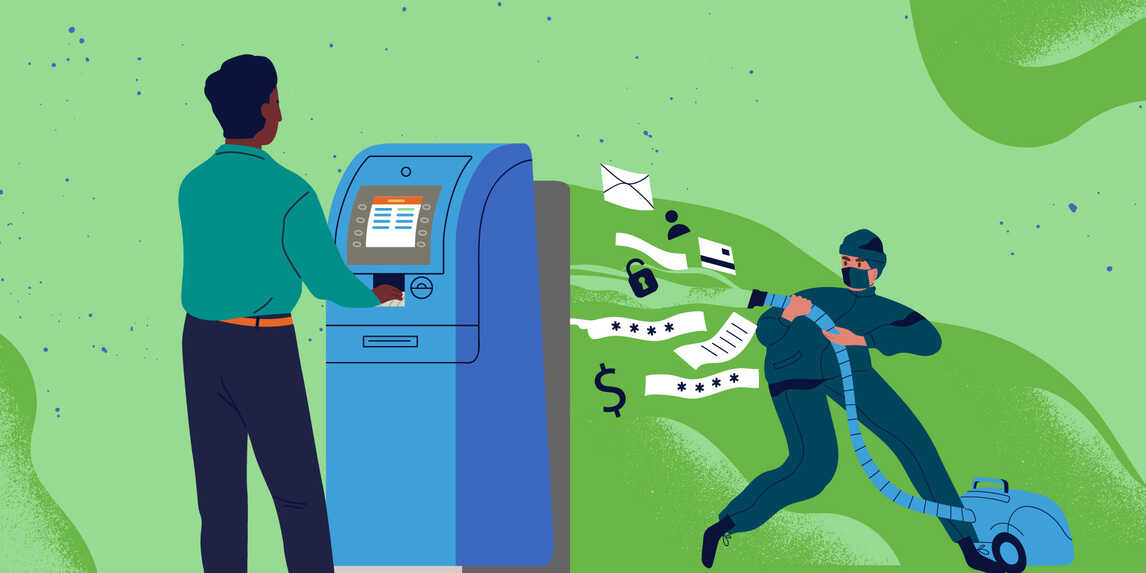
In this fast-paced world, we have everything at our fingertips. We can make any financial transaction with just a few clicks and swaps. Technologies have indeed made our lives much easier, but it has some loopholes too. As of now, it is also feasible for scammers to fraud us.
Several types of credit card fraud happen almost every day in India. However, it can be prevented if you stay cautious while handling any monetary transactions. To know more about them, continue with this blog.

Table of Contents

Credit card fraud is defined as the unauthorised use of someone else's credit card information to make purchases or withdraw funds without the cardholder's permission.
These may include unauthorised transactions, where a fraudster gains access to card details and makes purchases without the owner's consent. Moreover, it involves stealing card information using a device, often at ATMs or point-of-sale terminals.
You are wrong if you think hacking is the only way of scamming an individual! There are many ways one can get trapped in fraudulent activities. Here are some of the examples;
In this type of scam, your credit card details are stolen with the help of a device called a skimmer. When your card gets swiped through a skimmer, it stores all the data from your card. This information can then be duplicated on another card.
Thus, scammers use your credit card information to make monetary transactions. So, the next time you use credit cards, ensure you do not swipe through any machine that looks suspicious. You can also use chip-based credit cards; these are much more secure than those with a magnetic strip.
Quite often, people casually discard bills or documents which contain their credit card details. Anyone can collect them to retrieve their bank details and use them for scamming. This process is known as dumpster diving.
Hackers can use such documents with sensitive information for malpractices. Therefore, the next time you have any such documents to discard, either shred them or scratch those details. Following certain precautionary steps can prevent you from getting trapped in such types of credit card scams in India.
Phishing involves persuasion. Suppose you receive an email that looks convincing as it is from a well-known bank or financial organisation. Your general reaction would be to click and check what it is about. Once you click on the link, it will redirect to a strange website where you are asked to put your personal information.
Most people fall into these traps. You must always remember banks do not generally send emails requesting your details. If you ever receive any such email or SMS, make sure to inform your credit card issuer so that you do not get into the trap. In addition, you must be very observant while replying to any such email or SMS.
Hackers mostly use keystroke logging through certain software to find your credit card details. This can happen if you click on a link redirecting you to download malware, and you unknowingly do that. If any such software gets installed in your system, it will record every key that you press. Hence your ids and passwords are recorded as well.
To avoid any such situation, make sure not to click on any suspicious links. You can also use a virtual keyboard while feeding personal information like passwords and id details. Lastly, you must have reliable antivirus software to protect your system.
Cybercriminals can call any mobile operator and pretend to be a credit card holder requesting a duplicate SIM card. In addition, they would ask the operator to deactivate the original cardholder’s number. So, now the scammer can create new IDs, receive OTPs and execute online transactions.
If you ever receive a warning regarding a duplicate sim request or feel your number has been blocked. Immediately inform your mobile service operator and report about this. If you remain cautious and let the service provider know at the time, you will be able to prevent such scams.
When identity theft happens, someone tries to impersonate you by using stolen documents to get a credit card under your name. If any criminal successfully completes this task, he will have a valid card to perform all kinds of monetary scams.
To avoid this kind of situation, you must keep track of whenever your IDs and other documents are used. In addition, if you have multiple copies of the same document and want to discard them, shred them before dumping them.
One of the most common types of credit card fraud in India must be hacking. It is probably the oldest method of performing fraudulent activities. With the advancement of technology, hackers are also developing their skills. They can hack any of your devices and steal all your personal information.
Similarly, hackers can steal data from those firms with whom you have performed transactions. Thus, they can breach data for scams.
Although it is unpredictable to notice when you are hacked, so you need to be very careful while performing online transactions. If any website seems suspicious, do not provide your details. You also must not click on every link you get. These hackers can break into your online space and get the required data for conducting scams.
If you regularly follow your monthly credit card statements and credit reports, it is possible to detect any scam at its early stage.
However, if the situation has already worsened, you might need the help of professionals.
Suppose you have detected that you are a victim of a certain type of credit card scam. Your next step would be to report the incident.
Here is a step-by-step guide that will help you complete the general procedure.
Step 1: Call your credit card company and let them know about the incident
Step 2: Meanwhile, reset your PINs and passwords
Step 3: File a General Diary at your nearest police station
Step 4: Keep an eye on your credit card statements
Step 5: Monitor your e-commerce websites for any unauthorised purchase
Situations like this are very difficult, but losing your temper is not the solution. As you have to perform a series of procedures to report the incident. Here are some things to remember when reporting a scam.
Being a victim of any kind of credit card scam is very common these days. Hence it is necessary to keep yourself updated with the process of reporting such crimes.
As you have completed this piece here, you are now familiar with the types of credit card fraud, the process of detecting them and other related information. If you stay careful and observant, you can easily dodge fraudulent situations like these.
The process of reporting scams can differ in different banks. The next section lists down the process followed by certain popular banks.
You can also directly let the Reserve Bank of India know about the type of credit card fraud you are a victim of. Just give a missed call to 14440.
Type BLOCK followed by the last four digits of your credit card, and send this SMS to 5676791. You can also call the customer service number of SBI and report the same, which is (prefix local STD code) 39 02 02 02 or 1860 180 1290.
Call 1860 419 5555, Axis Bank’s credit card customer support and report the incident. You can also visit the nearest branch to report the same.
You can report any such scams by calling 1800 425 7600 (toll-free) or +91-022 - 4042 6013 (non-toll-free). Additionally, you can also write to idbicards@idbi.co.in to let them know about such fraud.
Step 1: Log in to your HDFC net banking portal.
Step 2: Click on the tab marked “Card”.
Step 3: Click “Request” below the credit cards section.
Step 4: Select “Credit Card hotlisting” and put the details of your card.
You must also call on their toll-free number, 18002586161, to report if any fraudulent activities are noted.
Step 1: Log in to the IndusNet portal or its app.
Step 2: Select “Service Request”.
Step 3: Click on “Credit Card Requests”.
Step 4: Select “Credit Card Blocking Request”.
Step 5: Click on the card you want to block.
Step 6: Click on “Submit”.
Step 1: Log in to the bank’s website.
Step 2: Click on “Credit Card”.
Step 3: Select the card you want to report.
Step 4: Click on “Account Statement”.
Step 5: Choose “Dispute”.
Step 6: Select the fraudulent transaction.
You can call the toll-free number 18001802345 or 0120– 4616200 to list your credit card fraud. Another way is to simply send them an email with all the details at creditcardpnb@pnb.co.in.
In case you are unable to do any of these processes, try sending the bank an SMS (HOT>space>card number) to 5607040 from your registered mobile number.
Type <BLOCK> and send an SMS to 092310 00001 or 092895 92895 to block your credit card.
Hotlist your credit card number by calling customer support on this toll-free number 1800 220 088. If you cannot reach this number, try their landline number (022) 40426005/40426006. You can also report theft or scam via an email to headoffice.cpdcreditcard@bankofindia.co.in and request to block your card.
Step 1: Log in to the bank’s website or mobile app.
Step 2: Select ‘Report a lost/stolen credit card’ from the ‘Requests’ option.
Step 3: Now, choose ‘block credit card.’
There is nothing to be afraid of. Here are some of the tips that you should follow to steer clear of credit card fraud.
The primary step is to keep your card in a safe place so that it is not easily accessible to others. After swiping your credit card, always check if the magnetic strip or back of the card is hampered in any way.
Most banks send an alert SMS after every online transaction. Another way of tracking your transactions is by installing your bank’s app. It helps you check your account balance and other details whenever needed.
To prevent different types of credit card fraud, one basic thing you should do is review your billing statements. This will allow you to note if any unknown or unauthorised transaction has been reported.
Another easy step that can prevent credit card scams is by shredding your billing statements. Credit card statements generally contain the full credit card number, so when you want to discard them, ensure shredding the document.
While signing credit card receipts, ensure the amount is verified. If you notice any blank spaces, make sure to cross-check with your bank regarding this.
Your credit card details are very sensitive, so always beware of phishing. You must never share your card number, CVV or PIN through any text messages. Keep it memorised and also keep changing it after an interval.
Scammers can mimic a bank or business’ logo that requires personal information. So, it is better to always double-check the website or merchant prior to purchasing. If you feel there is any discrepancy, do not complete your payment details.
Suppose your wallet was lost or stolen, and it contained your credit card. Your first step in regard to this is to report and block your card as soon as possible. You must always keep the customer service number of your credit card company in your contacts so that you can immediately report the incident.
Avoid using a birthdate, anniversary date, or contact number as your credit card PIN or password. As most website suggests, you must combine the following to create a responsible password -
Contactless cards are embedded with an RFID chip that allows smoother transactions. However, any fraudster can scan the RFID data while standing beside you. This is why it is recommended to invest in an RFID blocking wallet so that your cards become more difficult for scammers.
Identity thieves can steal your personal information to open new lines of credit (personal, business, invoice financing, etc.), create new credit cards, or obtain false IDs in your name. Unlike credit card fraud, there's no liability limit for identity theft. This means you could end up bearing the full financial burden of the damage caused by an identity thief.
Here is a more detailed look into the key differences between credit card fraud and identity theft:
As you have completed this piece here, you are now familiar with the types of credit card fraud, the process of detecting them and other related information. If you stay careful and observant, you can easily dodge fraudulent situations like these.