
General
Life
Accessibility Options


General

General Products
Simple & Transparent! Policies that match all your insurance needs.
 Car Insurance
 Two Wheeler Insurance
 Commercial Vehicle Insurance
 Health Insurance
 Home Insurance
 Travel Insurance
 Business Insurance
Car Insurance
Two Wheeler Insurance
Commercial Vehicle Insurance
Health Insurance
Travel Insurance
Business Insurance
Car Insurance
Two Wheeler Insurance
Commercial Vehicle Insurance
Health Insurance
Travel Insurance



Scan to download

Life

Life Products
Digit Life is here! To help you save & secure your loved ones' future in the most simplified way.
 Term Life
 Savings Plan
 Retirement and Pension Plans
 Group Life Products
 Product Documents
Term Life
Savings Plan
Retirement and Pension Plans
Group Life Products
Product Documents
Term Life
Savings Plan
Retirement and Pension Plans
Group Life Products

Scan to download

Claims

Claims
We'll be there! Whenever and however you'll need us.
 Customer Support
 Motor Claims
Health Claims
Motor Claims
Health Claims
 Marine Insurance
 Grievance Redressal
Customer Support
Motor Claims
Health Claims
Marine Insurance
Grievance Redressal
Grievance Redressal
Customer Support
Motor Claims
Health Claims
Marine Insurance
Grievance Redressal

Scan to download
 General
 Life
General
Life
Life
General
Life
Renewals
Resources

Resources
All the more reasons to feel the Digit simplicity in your life!
Exclusive Features
 Transparency Report
Others
Exclusive Features
Transparency Report
Transparency Report
Others
Exclusive Features
Transparency Report

Scan to download


Our WhatsApp number cannot be used for calls. This is a chat only number.

 Grey Scale
 Readable Text
 Reset
Reset




8 Crore+ Customers

Affordable Premium


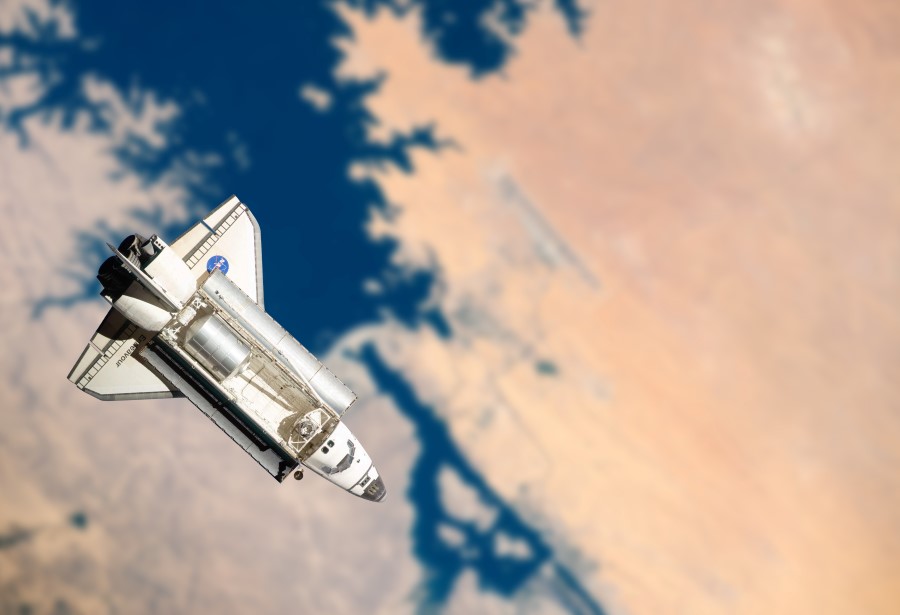
NASA's introduction of the space shuttle saw significant growth in the space research industry. It impeded the rest of the world to follow in similar footsteps. The missions undertaken by the space shuttles have provided important information for space researchers and answered many unknown questions.
The space shuttle was economically important for the world. It created a permanent link between the space and Earth. This article delves into the details of the space shuttle. Read along to know all the details about NASA’s space shuttle.

Table of Contents

As part of the Space Shuttle programme, the National Aeronautics and Space Administration (NASA) of the United States operated the Space Shuttle, a partially reusable, decommissioned low Earth orbit spacecraft system, from 1981 to 2011. The official programme name for it was Space Transportation Fleet (STS), derived from a 1969 concept that was the only one financed for development and called for a fleet of reusable spacecraft.
Four orbital test flights were conducted, the first of which (STS-1) took place in 1981. From 1982 onward, operational flights (STS-5) were performed. Between 1981 and 2011, 135 missions, including five fully functional Space Shuttle orbiter vehicles, were constructed and launched from Florida's Kennedy Space Centre (KSC).
Operational flights carried out science experiments in orbit, took part in the Shuttle-Mir programme with Russia, launched many satellites, interplanetary probes, and the Hubble Space Telescope (HST), and helped build and maintain the International Space Station (ISS). A total of 1,323 days were spent on missions by the Space Shuttle fleet.
A space shuttle is made of a few important parts. The space shuttle has these main components:
Two solid rocket boosters (SRB) are essential for the launch orbiter's fuel supply and are used to carry payloads and crew. Like a rocket, the space shuttle took off into Earth's orbit. However, it came back like a glider plane.
Organic fuel is in the exterior tank. It fell off the orbiter when it ran out of gasoline in the tank. They would burn up over Earth and never utilise external tanks again.
The shuttle orbiter touched down on Earth in a manner akin to an airliner. Its wheels came from underneath it. The orbiter came to a standstill on the runway. NASA then readied it for flight on a further mission.
The orbiter's primary engines and the solid rocket boosters enabled the shuttle to take off like a rocket from Earth's gravitational pull. Within two minutes of takeoff, the two rockets separated from the shuttle.
The Orbiter, which houses the crew, the sizable External Tank, which stores fuel for the main engines, and the two Solid Rocket Boosters, which generate the majority of the lift for the Space Shuttle during its initial two minutes of flight, make up the design of the Space Shuttle. Except for the external fuel tank, which burns up in the atmosphere following each launch, every component can be utilised again.
The HAL/S programming language was used in the Space Shuttle programme. The 8088 and 80386 microprocessors were the first to be used. The IBM AP-101 served as the avionics computer for the Space Shuttle orbiter.
Large payloads might be carried into orbit by the space shuttle, which could also be used to service them and return them to Earth if needed. Here is a table with a list of the Space Shuttle Missions:
The fifth Tracking and Data Relay Satellite (TDRS-F), launched on the first day of the mission, was the main payload. Later, the Inertial Upper Stage booster successfully moved it into its correct orbit.
Mission specialists Mario Runco and Greg Harbaugh spent about five hours performing space-walking chores in the open cargo area to broaden NASA's understanding of space operations. They performed exercises to assess their freedom of movement in the cargo area, their ability to put on foot restraints without using their hands, and their ability to lift heavy goods in microgravity conditions.
The Atmospheric Laboratory for Applications and Science-2 (ATLAS-2) was the flight's principal payload. After returning to Earth, the collected data was recorded on tape for later playback. SPARTAN-201 was retrieved on April 13.
Shuttle Point Autonomous Research Tool for Astronomy-201 (SPARTAN-201), a free-flying science instrument platform intended to measure solar wind acceleration and velocity as well as monitor the sun's corona, was deployed on April 11 by the crew using a remote manipulator arm.
The crew of Space Shuttle Columbia lifted off on April 26, 1993, at 10:50:00 a.m. (EDT). The German Dedicated Spacelab, or D2, was the main cargo. D-2 was the second Spacelab voyage managed by the Germans; the crew worked in two teams around the clock. Experiments conducted with Germany's advanced robotic assembly, the Robotics Experiment (ROTEX), yielded positive results.
The first task completed by the ROTEX robotic arm was to manipulate an object floating in space from Earth remotely. The crew could communicate in both directions with the Crew Telesupport Experiment, which had an onboard Macintosh computer to create a data link with ground control. Five crew members spoke with students worldwide using the Shuttle Amateur Radio Experiment (SAREX); Nagel also established contact with Russian cosmonauts on the Mir space station.
During the 25th shuttle mission to the International Space Station, known as STS-123, the Canadian Dextre robotics system and the Japanese Kibo Logistics Module were delivered. Commanding the STS-123 shuttle mission to transport the Canadian Dextre robotics system and the Japanese Kibo Logistics Module to the International Space Station was veteran space flyer Navy Capt. Dominic L. Gorie.
Léopold Eyharts, an astronaut with the European Space Agency, was brought back to Earth by the mission, while NASA astronaut Garrett Reisman was sent to the station. The 25th shuttle mission to the International Space Station was called STS-123.
The 26th shuttle flight to the International Space Station, STS-124—Discovery, carried the robotic arm of the Japanese Experiment Module, dubbed "Kibo" (hope), and the Pressurised Module. Three spacewalks were also part of the mission. STS-124 was the second of three flights that will launch parts to finish the Kibo laboratory.
There were three spacewalks throughout the mission. The lab's logistics module was affixed to the new lab after it was temporarily erected during STS-123. The 26th shuttle mission to the International Space Station was called STS-124.
To accommodate larger crews on the orbiting outpost, the STS-126 crew transferred equipment to the International Space Station. This cargo included more crew rooms, exercise facilities, regenerative life support system equipment, and spare hardware—the STS-126 mission aboard Endeavour, led by veteran space traveller Navy Capt. Christopher J. Ferguson brought supplies to the International Space Station that would allow larger teams to live there.
Endeavour's reusable logistics module contained provisions and gear, such as extra crew quarters, workout equipment, regenerative life support system equipment, and spare hardware. The 27th shuttle mission to the International Space Station was called STS-126.
The Kibo Japanese Experiment Logistics Module-Exposed Section and the Kibo Japanese Experiment Module-Exposed Facility were delivered by STS-127. On Wednesday, July 15, 2009, at 6:03 p.m. EDT, the space shuttle Endeavour and its seven astronaut crew blasted out from NASA Kennedy Space Center's Launch Pad 39A. After multiple previous launch attempts, the launch occurred on schedule.
Endeavour and its crew set off on a challenging mission to finish assembling the Japanese Kibo laboratory complex on the International Space Station. On the first landing chance of the mission, Endeavour landed at Kennedy's Shuttle Landing Facility at 10:48 a.m. EDT, after travelling over 6.5 million miles and nearly sixteen days.
The Leonardo Multi-Purpose Logistics Module, which included scientific and life support racks, was transported by Discovery. It was Discovery's 37th trip into orbit. Just before midnight on August 28, 2009, the space shuttle Discovery launched into the skies over NASA's Kennedy Space Centre in Florida, setting off a two-day pursuit of the International Space Station.
A cargo module named Leonardo, which was itself loaded with scientific apparatus, experiments, and a treadmill that became well-known for bearing the name of comedian Stephen Colbert, was loaded into Discovery's payload bay.
The seven astronauts of Discovery went back to their spacecraft, shut the hatches between the spaceships, and started making plans to fly down to Earth after nine days of working with the six residents of the station. In 13 days and 20 hours, Discovery travelled 5.7 million miles in space, including one extra day.
A spare gyroscope was among the parts that Atlantis brought to the space station. There were three spacewalks throughout the mission. The thirty-first shuttle mission to the station was STS-129. At 2:28 p.m. EST on November 16, the space shuttle Atlantis blasted into a brilliant blue sky from Launch Pad 39A at NASA's Kennedy Space Centre in Florida, headed for the International Space Station.
Nearly 30,000 pounds of spare components and equipment that would last the station for several years were safely stored inside the shuttle's payload bay. On November 27, at 9:44 a.m. EST, Atlantis and its seven-person crew touched down picture-perfect on runway 33 at Kennedy's Shuttle Landing Facility. After travelling over 4.5 million miles and spending nearly 11 days in orbit, an extremely complicated supply mission was accomplished.
Endeavour brought a seven-windowed cupola to serve as the centertics control centre along with the Tranquilly node, the third connecting module, to the station. There were three spacewalks throughout the mission. The 32nd shuttle mission to the station was STS-130.
On February 8, 2010, at 4:14 a.m. EST, the space shuttle Endeavour triumphantly launched into the early morning sky from Launch Pad 39A at NASA's Kennedy Space Centre in Florida, initiating the STS-130 mission. At 10:20 p.m. EST on February 21, Endeavour landed on Runway 15, capping over 5.7 million miles and over 14 days in space.
Science racks from Discovery were transported to the International Space Station's laboratories in a multipurpose logistics module. The 33rd shuttle mission to the station was STS-131. On April 5, 2010, the space shuttle Discovery and a crew of seven astronauts launched into space on a 15-day mission to the International Space Station.
At precisely 6:21 a.m. EDT, the two solid rocket boosters of Discovery ignited, propelling the shuttle past the launch tower at NASA's Kennedy Space Centre in Florida. The first day's landing attempt was cancelled due to weather, but on April 20, 2010, at 9:08 a.m. EDT, the mission successfully concluded in Florida.
An Integrated Cargo Carrier and a Russian-built Mini Research Module were transported to the International Space Station by space shuttle Atlantis. Atlantis's 32nd mission was STS-132. An Integrated Cargo Carrier and a Russian-built Mini Research Module were transported to the International Space Station by space shuttle Atlantis.
Atlantis's 32nd mission was STS-132. Atlantis undocked with Pilot Tony Antonelli and Commander Ken Ham at the helm following seven days of docked operations. On May 26, 2010, at 8:48 a.m. EDT, STS-132 was allowed to land in Florida following the completion of the last check of Atlantis' heatshield. The 34th shuttle flight to the International Space Station took place on this occasion.
After completing an almost faultless 13-day mission to connect a new module to the International Space Station and assist the station's occupants in equipping the orbiting laboratory for ongoing study, the crew of STS-133 concluded the space shuttle Discovery's exploits. In addition to installing the Permanent Multipurpose Module and attaching a platform with station spare parts, the crew undertook two spacewalks.
They also configured the orbiting laboratory for future study and furnished the new module for station occupants to use. On Wednesday, March 9, the shuttle took off over Florida under largely clear skies. At 11:57 a.m. EST, Lindsey manoeuvred Discovery onto the runway at NASA's Kennedy Space Centre.
The agency's newest shuttle, headed for the International Space Station, completed its last voyage carrying the Alpha Magnetic Spectrometer-2 (AMS) and essential supplies, including two communications antennas, a high-pressure petrol tank and extra Dextre robot parts. On May 16, 2011, at 8:56 a.m. EDT, STS-134 Commander Mark Kelly and his five-person crew launched the space shuttle Endeavour from Launch Pad 39A at NASA's Kennedy Space Centre in Florida.
After completing the STS-134 mission and making the 24th night landing in Space Shuttle Programme history, Endeavour landed on Runway 15 at 2:35 a.m. on June 1. This was Endeavour's 25th and last voyage, capping an incredible spaceflight career that saw the spacecraft spend 299 days in orbit, circle the planet 4,671 times, and travel 122,883,151 miles.
On July 8, 2011, at 11:29 a.m. EDT, space shuttle Atlantis blasted off Launch Pad 39A at NASA's Kennedy Space Centre, defying a bleak prelaunch weather forecast. In the Raffaello multi-purpose logistics module, the 13-day mission carried almost 9,400 pounds of spare parts, equipment, and other supplies, including 2,677 pounds of food. Raffaello, measuring 21 feet long by 15 feet in diameter, returned from the station with almost 5,700 pounds of unnecessary equipment.
On Thursday, July 21, 2011, early morning, Space Shuttle Atlantis completed STS-135, its 33rd and last mission, landing on Runway 15 at the Shuttle Landing Facility at Kennedy Space Centre. In total, there have been 78 night landings at KSC, and this was the 26th night landing in Space Shuttle Programme history. The space shuttle era came to an end with their journey.
The Space Shuttle was an inspiration for a new generation of space vehicles. Here are a few facts about the Space Shuttle:
The space shuttle program stands as a testament to human ingenuity and exploration, marking an era of unprecedented achievement and scientific discovery. Its legacy not only shaped our understanding of space but also paved the way for international collaboration and technological advancements that continue to influence space exploration today.



