


Life








General




Support



Resources











Is Accidental Death Covered in Term Insurance?
Yes. Term insurance usually covers death caused by an accident. If the policyholder dies in an accident while the policy is active, the nominee gets the full sum assured under the base term plan, as long as the death is not excluded in the policy.
If you have added an Accidental Death Benefit (ADB) rider, the insurer may pay an extra amount over and above the base cover, subject to the rider’s rules and exclusions.
I agree to the Terms & Conditions


Digit Glow Term Life Insurance
What is Accidental Death in Term Insurance?
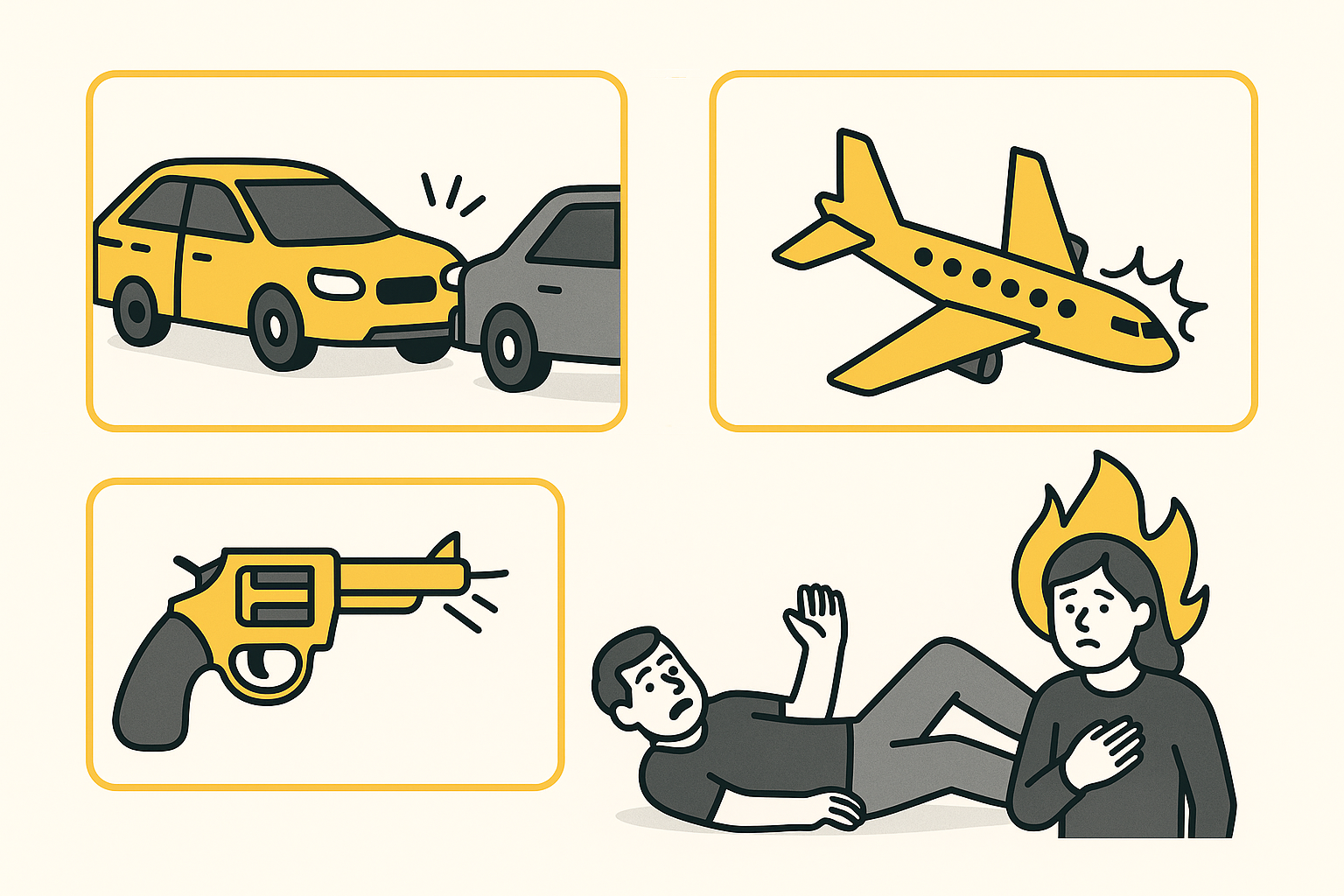
In term life insurance, accidental death means death caused by a sudden, unexpected, and external event that results in physical injury. This includes situations like:
- A road accident
- A fatal fall
- Electrocution
- Drowning
It does not include death caused by illness, medical conditions, or natural causes like heart attacks.

Table of Contents


How Term Insurance Pays in Case of Accidental Death?
Understanding how payouts work is critical because many people assume that accidental death automatically means a higher payout. That is not always true.
1. Base Term Plan Payout
A standard term insurance policy pays the sum assured on death, regardless of whether the death is caused by natural illness, accident or sudden medical event. As long as the policy is active, and the death is not excluded under policy terms, the nominee receives the full base sum assured.
2. Accidental Death Rider Payout
An accidental death benefit rider is an optional add-on. If the policyholder dies due to an accident within a specified period from the date of the accident (commonly 90-180 days) and meets the rider’s conditions, the base sum assured is paid, plus an additional lump sum under the rider. This additional amount is fixed at the time of purchase and is subject to limits.
What Accidental Deaths are Usually Covered by Term Insurance?
Term insurance coverage depends on your policy wording. Typically, accidental death refers to sudden, external events such as:
- Road accidents (car, bike, truck, auto, train)
- Accidental drowning
- Electrocution due to faulty wiring or appliances
- Death due to fire or explosion
- Accidental falls from height (workplace or otherwise)
- Accidental poisoning (taken by mistake)
- Industrial or factory machinery accidents
- Injuries during natural disasters like floods or earthquakes
Note: Coverage applies only if the accident is the direct cause of death and no exclusion applies.
What Accidental Deaths May Not be Covered?
Like all insurance products, accidental death cover also comes with exclusions. These may vary from one insurer to another, but common exclusions include:
- Suicide or intentional self-harm
- Accidents under the influence of alcohol or narcotics
- Death due to undisclosed adventure hobbies (disclosure is required when you fill out the proposal form)
- Death during criminal activity or while committing an offence
- War, armed conflict, nuclear/bio/chemical events
- Participation in riots or civil unrest
- Professional sports injuries
- Death from illness triggered by a non-accidental cause is misclassified as an accident
- Hazardous occupation not disclosed at policy inception
- Intentional self-administered drug overdose
- Mountaineering above the specified altitude (if undisclosed)
Note: Exclusions may differ between the base policy and the rider. Always read the policy brochure, rider terms, and benefit illustration carefully before purchasing.
Who Should Consider an Accidental Death Rider?
An accidental death rider may be useful for people who want extra protection and may face a higher exposure to accidental risk in everyday life. This may include people who:
- Travel frequently by road
- Use a two-wheeler regularly
- Work in construction, manufacturing, transport, or field-based roles
- You want an extra payout without increasing the base sum assured
- The rider premium is reasonable relative to the coverage offered
It may not add much value if:
- You already have a high base sum assured
- The rider coverage amount is small
- Exclusions significantly limit real-world applicability
- Comparing rider costs with simply increasing base cover is an important step.
That said, whether you need the rider depends on your budget, occupation, lifestyle and the protection already available under your base term plan.

Limitations of Accidental Death Benefit Rider
The accidental death benefit rider is designed to provide an additional payout over and above the base term insurance cover, but it applies only in specific situations
- Rider benefit is paid in addition to the base sum assured only if death occurs due to an accident.
- Most insurers cap the accidental death benefit rider at ₹25 lakh to ₹2 crore, regardless of how high the base cover is.
- The rider usually has a lower maximum coverage age, commonly between 65 and 70 years, even if the base term policy continues beyond that age.
- If the insured survives the accident but dies later due to unrelated causes, the rider does not pay out.
- If pre-existing conditions or health issues contribute to the death, the accidental death benefit claim may be affected.
Note: These conditions apply only to the rider and do not impact the base term insurance payout, which is evaluated separately.
How Much Additional Cover Does an Accidental Death Rider Provide?
The extra payout under an accidental death rider is pre-defined at policy purchase, it has an upper limit and cannot exceed the base sum assured specified in the policy.
Here is an example:
You purchase a term insurance policy with a base sum assured of 1 crore term plan and add an accidental death benefit rider worth ₹50 lakh. Now there are two scenarios of the claim:
- If you pass away due to natural causes, your nominee receives ₹1 crore.
- If your death is accidental, your nominee receives ₹1.5 crore (base sum assured + rider benefit).
Disclaimer: This example is illustrative. Actual rider limits, caps, and eligibility depend on the insurer’s underwriting rules and policy wording.
Base Term Plan vs Accidental Death Rider vs Personal Accident Policy
Disclaimer: *The premiums shown are indicative and may vary based on age, occupation, and insurer underwriting rules.

A rider does not replace the base cover. Always review both the base plan and rider benefits together. A term plan with an ADB rider is generally recommended. If disability or injury cover is the main requirement, a standalone personal accident policy may be more suitable.
Which Term Insurance Option Makes Sense for You?
How Accidental Death Claims are Evaluated in Term Insurance?
The examples below show how insurers assess accidental death claims based on cause of death, exclusions, disclosures, and rider terms.
How to Claim Accidental Death Benefit in Term Insurance?
If the policyholder dies due to an accident, the nominee should inform the insurer as early as possible and begin the claim process. Here is step-by-step process:
1. Notify Insurer Immediately
Inform the insurer within 30 days of the accident, ideally within 48 hours. Early notification prevents administrative delays and puts your claim on the priority track.
2. File Police FIR
This is the most important document for an accidental death claim. File an FIR at the nearest police station immediately after the accident. It must accurately describe the nature of the accident.
3. Submit Required Documents
Gather and submit a full application with all required documents, such as a death certificate, a post-mortem report, hospital records, a claim form, a policy document, a FIR copy, KYC, and ID proof of the nominee.
4. Submit and Track Online
Submit the document and get an acknowledgement reference number. The claims will be settled within 30 days. If an investigation is required, the outer limit is 120 days.
5. If the Claim is Rejected
A rejection letter must state the specific reason given by the insurer. If you disagree:
- File with the insurer’s Grievance Redressal Officer
- Escalate to the IRDAI Integrated Grievance Management System (IGMS)
- Approach the Insurance Ombudsman
Accidental death is generally covered under term insurance, but the base cover and accidental death rider are not the same. The base plan usually pays the standard death benefit, while the rider can provide extra payout in case of accidental death.
If you want broader protection for your family, it is worth checking whether your term plan offers an accidental death rider and whether it suits your needs. The most important step is read the policy wording carefully before buying. That is where the actual benefits, exclusions, and claim conditions are defined.
FAQs about Accidental Death Cover in Term Insurance
Is accidental death covered under a basic term insurance policy?
Do I need an accidental death rider if accidental death is already covered?
Is heart attack considered accidental death?
Are adventure sports covered under accidental death rider?
Will the nominee need extra documents for accidental death claim?
Does term insurance and health insurance provide the same accidental cover?
Does accidental death rider pay separately from base claim?
Is accidental death rider tax-free under Section 10(10D)?
Does rider cover death after 90/180 days of accident?
Is death due to illness considered an accidental death?
How essential is an accidental death cover?
What types of deaths are not covered by term insurance?
Is death due to suicide covered by term insurance?
Does term insurance cover death in a road accident if the insured was at fault?
What if someone survives an accident but dies in hospital weeks later from injuries?
Is death in a terrorist attack covered?
What happens if the insured's body is not found?
Is death during adventure sports covered?
Does term insurance cover accidental death outside India?
Does term insurance cover death while driving under the influence?
What happens if the nominee is involved in the policyholder’s death?
Does term insurance cover deaths from terrorist attacks?


Other Important Articles Related to Term Insurance

Renew & Download Policy Document, Check Challan, Credit Score, PUC & more
Anytime, Anywhere. Only on Digit App!

Rated App
Rated App
Scan to Download




IRDA Licensed Life Insurance Company in India - IRDAI Reg. No. 165

Sign-In to Digit Insurance
We have this phone number linked with the email ID in our database. Please login through OTP using this number or logout using below option and login again using new details.
Logout your email login