General
Life
Accessibility Options


General

General Products
Simple & Transparent! Policies that match all your insurance needs.
 Car Insurance
 Two Wheeler Insurance
 Commercial Vehicle Insurance
 Health Insurance
 Home Insurance
 Travel Insurance
 Business Insurance
Car Insurance
Two Wheeler Insurance
Commercial Vehicle Insurance
Health Insurance
Travel Insurance
Business Insurance
Car Insurance
Two Wheeler Insurance
Commercial Vehicle Insurance
Health Insurance
Travel Insurance



Scan to download

Life

Life Products
Digit Life is here! To help you save & secure your loved ones' future in the most simplified way.
 Term Life
 Savings Plan
 Retirement and Pension Plans
 Group Life Products
 Product Documents
Term Life
Savings Plan
Retirement and Pension Plans
Group Life Products
Product Documents
Term Life
Savings Plan
Retirement and Pension Plans
Group Life Products

Scan to download

Claims

Claims
We'll be there! Whenever and however you'll need us.
 Customer Support
 Motor Claims
Health Claims
Motor Claims
Health Claims
 Marine Insurance
 Grievance Redressal
Customer Support
Motor Claims
Health Claims
Marine Insurance
Grievance Redressal
Grievance Redressal
Customer Support
Motor Claims
Health Claims
Marine Insurance
Grievance Redressal

Scan to download
 General
 Life
General
Life
Life
General
Life
Renewals
Resources

Resources
All the more reasons to feel the Digit simplicity in your life!
Exclusive Features
 Transparency Report
Others
Exclusive Features
Transparency Report
Transparency Report
Others
Exclusive Features
Transparency Report
Scan to download


Our WhatsApp number cannot be used for calls. This is a chat only number.

 Grey Scale
 Readable Text
 Reset
Reset



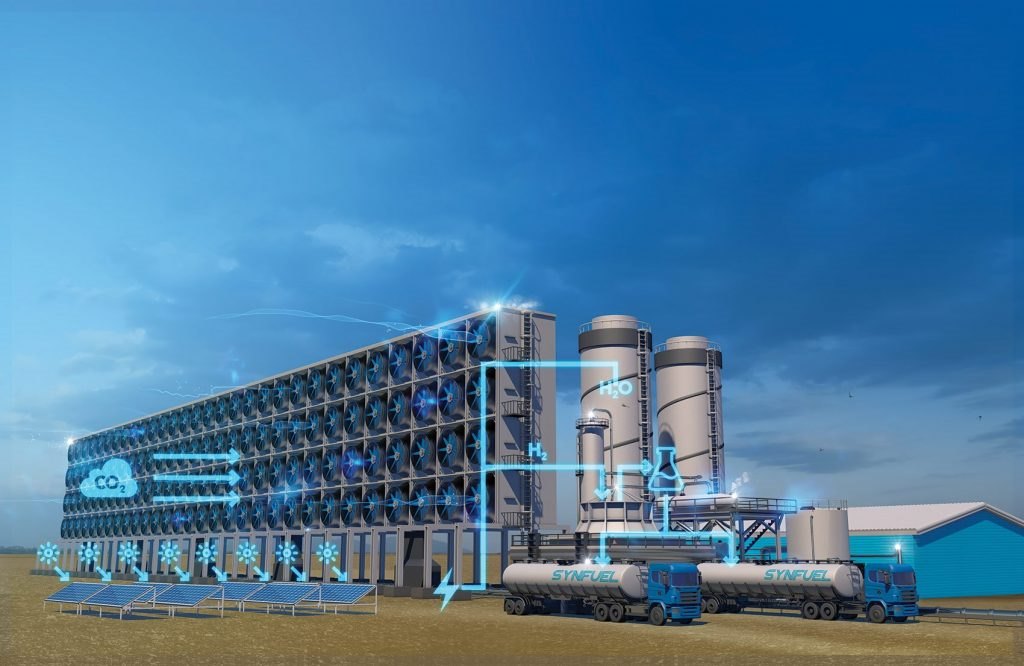
It is time to rewind the damage done to the environment and achieve goals for the common good. With the advancements in modern technology, we can capture carbon dioxide (CO2) in the atmosphere and use it as a raw material to produce synthetic fuels. Synthetic fuels function with the input of CO2 and water and are mostly similar to conventional fuels in their properties.
Let us delve more into the types of synthetic fuels, how they are made, future applications, pros, and cons.

Table of Contents

Synthetic fuels, also called e-fuels, synfuels, and biofuels, are man-made liquid fuels with the same properties as fossil fuels. This artificially produced fuel is used for planes, motors, trucks, ships, etc.
Synthetic fuels, produced using renewable energy resources, aim to reach the global net zero target in transportation.
Below is a list of common examples of synthetic fuels:
Hydrogen
Biodiesel
Methanol
Biocrude Oil
Synthetic Ethanol
Renewable Diesel
Renewable resources are extensively used to make synthetic fuel, which forms the basis of net zero, clean, and sustainable fuel production. Plants produce a fossil fuel-like fuel with the help of carbon-capturing technology. Through electrolysis, hydrogen from water is used as renewable hydrogen.
Some manufacturing plant units capture carbon from the atmosphere or the emissions of different industries and use it as a fuel. Coal or biomass is also collected to produce syngas, a synthetic fuel. Thus, the collected hydrogen gas and the captured CO2 are used to produce synthetic fuel that powers the transportation sector and is responsible for net zero environmental emissions.
Let us discuss the three different ways of producing synthetic fuels:
Under this process, the coal or biomass is directly converted into the final product, eliminating the step involving syngas production through gasification. Different direct processes involved in making synthetic fuel are:
This widely used procedure involves converting biomass, coal, or natural gas to a mixture of hydrogen or carbon monoxide, also called syngas, which is processed further into liquid fuel with the help of gasification or steam methane reforming procedure. This liquid fuel is used in transportation, fuel cell vehicles, etc.
Different variants of this process are under development. One process involves using solid second-generation biomass feedstocks like switchgrass, which undergoes pyrolysis to produce bio-oil, which is stabilised and deoxygenated to make jet-grade fuel.
Other variants use natural oils or fats to produce biofuels. The natural oils are deoxygenated and then isomerised to produce jet-grade biofuel.
Following are some of the widely known uses of synthetic fuels:
Synthetic fuels are commonly used in transportation to fuel vehicles like planes, ships, trucks, jets, etc. Because they are compatible with conventional fuels, synthetic fuels also fuel the batteries of vehicles like forklift trucks.
Synthetic fuels are used to generate low-cost energy or electricity.
This fuel is also used to decarbonise those vehicles that cannot be electrified to establish a safe environment.
Renewable synthetic fuels, such as sustainable aviation fuels (SAF), are extensively used to replace bulky batteries for long-distance aviation.
Currently, three ways of producing synthetic fuels are known, out of which plants for the first biofuel method have been set up. The following are the three methods to produce sustainable synthetic fuel:
Under this process, biomass is collected and used to produce biofuels. Biomass is then heated to convert into syngas, including burning grown plants, energy crops, waste biomass, algae, etc.
With the help of renewable electricity from different sources, e-fuels with net zero emissions are produced. In this method, renewable energy is made with the split of hydrogen and water, after which the separated hydrogen is mixed with carbon dioxide and converted to syngas.
Solar fuels are made with the energy received from solar heat. Carbon dioxide and water are converted into syngas in thermochemical reactors driven by solar energy.
The Ministry of New and Renewable Energy (MNRE) published a report in March 2024 stating that the cost of green hydrogen in India can go as low as Rs. 160-170 per Kg by 2030, similar to that of grey hydrogen.
The international cost of synthetic fuel ranges from Rs. 190-400 per litre, excluding the VAT. In the upcoming years, with better infrastructure for the production of synthetic fuels, the cost per litre of synthetic fuel will also decrease.
Synthetic fuels are seen as the future of fuels and will help decarbonise transportation sectors that cannot be electrified.
Synthetic fuels will replace fossil fuels in fleets, motorsports, combustion engines, etc.
Synthetic fuels will expand the economy with increased investments and infrastructure, thus providing jobs to many.
Synthetic fuels will reduce emissions by a significant amount, thus contributing in the initiatives to save the environment.
Car brands like Porsche, widely acknowledged for their high-performance conventional fuelled cars, look forward to synthetic fuels as their future. Since these and other classic car brands cannot be electrified, to sustain in the market among electric car owners, such brands can switch to synthetic fuels for net zero highly efficient cars.
The following are the synthetic fuel advantages for extensive uses:
Synthetic fuels are as efficient as conventional fuels, making them compatible with the existing transportation infrastructure.
This fuel is sustainable for the environment as it is produced with input from renewable resources, eliminating the need to exploit fossil fuels and nature.
Carbon is captured from the emissions of various industry units in the manufacture of synthetic fuels, reducing the amount of carbon particles released into the atmosphere.
Synthetic fuels have a balance between the amount of greenhouse gases that are produced in their manufacturing process and the amount of GHG that is released in their usage.
Let us look at some of the synthetic fuel disadvantages:
The cost of manufacturing synthetic fuels is much higher compared to traditional fuels, as it involves complex chemical procedures that can be expensive.
Synthetic fuels, too, release toxic pollutants like sulphur dioxide(SOx), nitrogen, and carbon dioxide (CO2).
The transportation sector has a huge demand for fuel, and more than the current infrastructure of synthetic fuel suppliers is needed to meet this demand.
There is limited accessibility and availability of synthetic fuels, which makes it a secondary choice for the users.
Synthetic fuels and biofuels are future fuels that are sustainable in use. However, they differ from one another in certain aspects, as listed below:
Production: Synthetic fuels are made by hydrolysis, which involves splitting water and then combining the hydrogen separated with carbon dioxide. Biofuels are made from biomass collected, such as waste, peat, plants, manure, etc.
Impact On The Environment: Biomass used in biofuels can be responsible for producing indoor pollution. However, synthetic fuels can be carbon intensive if made from fossil fuel sources while cleaner using renewable resources.
Efficiency: Biofuels' efficiency is questionable compared to synthetic fuels' as they require space for production, are not available all year, and can be labour-intensive.
Renewable resources like water, biomass, carbon dioxide, natural gas, vegetable oils, ethylene, etc., produce sustainable synthetic fuels that are the future of fuels.
Thus, there is a growing need to achieve net zero emissions in the future, as it is the only way to save Mother Earth and survive climate change. Therefore, technological advancements like the production of synthetic fuels are necessary and urgent for a greener and cleaner future.
Explore Insurance Coverage for Your Vehicle