General
Life
Accessibility Options


General

General Products
Simple & Transparent! Policies that match all your insurance needs.
 Car Insurance
 Two Wheeler Insurance
 Commercial Vehicle Insurance
 Health Insurance
 Home Insurance
 Travel Insurance
 Business Insurance
Car Insurance
Two Wheeler Insurance
Commercial Vehicle Insurance
Health Insurance
Travel Insurance
Business Insurance
Car Insurance
Two Wheeler Insurance
Commercial Vehicle Insurance
Health Insurance
Travel Insurance


Scan to download

Life

Life Products
Digit Life is here! To help you save & secure your loved ones' future in the most simplified way.
 Term Life
 Savings Plan
 Retirement and Pension Plans
 Group Life Products
 Product Documents
Term Life
Savings Plan
Retirement and Pension Plans
Group Life Products
Product Documents
Term Life
Savings Plan
Retirement and Pension Plans
Group Life Products

Scan to download

Claims

Claims
We'll be there! Whenever and however you'll need us.
 Customer Support
 Motor Claims
Health Claims
Motor Claims
Health Claims
 Marine Insurance
 Grievance Redressal
Customer Support
Motor Claims
Health Claims
Marine Insurance
Grievance Redressal
Grievance Redressal
Customer Support
Motor Claims
Health Claims
Marine Insurance
Grievance Redressal
Scan to download
 General
 Life
General
Life
Life
General
Life
Renewals
Resources

Resources
All the more reasons to feel the Digit simplicity in your life!
Exclusive Features
 Transparency Report
Others
Exclusive Features
Transparency Report
Transparency Report
Others
Exclusive Features
Transparency Report
Scan to download


Our WhatsApp number cannot be used for calls. This is a chat only number.

 Grey Scale
 Readable Text
 Reset
Reset




Premium Starting ₹395

24x7 Missed Call Facility



Check Price
Travel Insurance
Trip Type


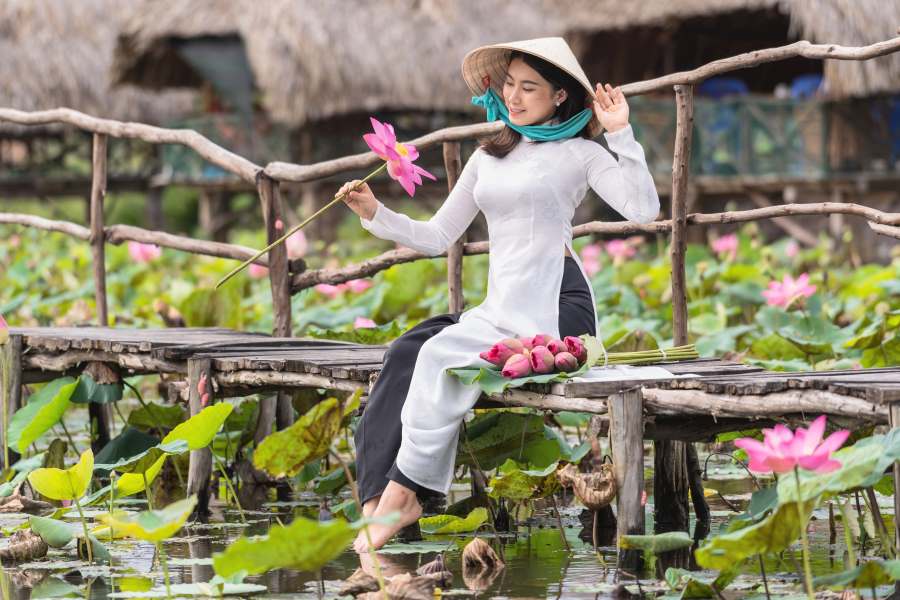
The best months to visit Vietnam, the ‘Land of Ascending Dragon’, are during February to April and August to October. This means you can plan your vacation to Vietnam during spring and autumn. The temperature is pleasant and moderate, and rainfall is light during this time, contributing to a wonderful vacation mood.
So, if you are planning to visit this place, get all the details here about the best time to visit Vietnam and places you can explore during these seasons.

Table of Contents

If you are trying to find the best seasons for travelling to Vietnam, note the list discussed below:
| Month | Average Temperature | Description |
| February-April (Spring Season) | 10 to 25 degrees Celsius in Northern Vietnam 20 to 30 degrees Celsius in Central and Southern Vietnam |
Pleasant weather in the north, ideal for exploring Hanoi and Halong Bay. Mild temperatures in the central region are perfect for visiting Hue and Hoi An. Warm and dry in the south, it is great for beach destinations like Phu Quoc and Nha Trang. Popular events during this time: Cold Food Festival, New Year's Day of ethnic Khmer, Reunification Day and International Labour Day |
| May-August (Summer Season) | 28 to 30 degrees Celsius in Northern Vietnam 30 to 40 degrees Celsius in Central and Southern Vietnam |
Hot and humid across the country, it is ideal for beach activities in Nha Trang and Phu Quoc. Central Vietnam is warm and wet, while the north experiences heavy rainfall, making it less ideal for trekking. Popular events during this time: Ghost Festival and Doan Ngo Festival |
| September-November (Autumn Season) | 20 to 25 degrees Celsius | Mild temperatures in the north are great for trekking in Sapa and exploring rice terraces in Mu Cang Chai. Central Vietnam experiences heavy rainfall and potential typhoons. The south remains warm and dry. Popular events during this time: Ooc Om Bok festival, Vu Lan Festival, Mid-Autumn Festival and the Vietnam Independence Day |
| December-February (Winter Season) | 20 to 26 degrees Celsius | Cool and dry in the north, ideal for visiting Hanoi and the northern highlands. Central Vietnam experiences mild and dry weather, which is perfect for visiting Hue and Da Nang. Warm and dry in the south, best for exploring the Mekong Delta and Ho Chi Minh City. Popular events during this time: Vietnamese Lunar New Year, Lim Festival, Perfume Pagoda Festival and Yen Tu Festival. |
In Vietnam, springtime extends from February to April; this is a period when Vietnam has splendid weather throughout the country, and it is, therefore, perfect for visiting the historical sites of Hanoi, touring Halong Bay by cruises, or wandering around flower gardens.
Here are some of the key details you should know about this season when planning for a trip to Vietnam:
| Weather |
|
| Temperature | 10°C to 25°C in Northern Vietnam, 20°C to 30°C in Central and Southern Vietnam |
| Season | Peak |
| Season for Localities | Cold Food Festival, New Year's Day of ethnic Khmer, Reunification Day and International Labour Day |
| Key Highlights |
|
With hot, humid weather, Vietnam's summer season runs from June through August. The time is right for beach activities in cities such as Nha Trang and Phu Quoc. It will be warm and dry in central Vietnam as northern regions experience heavy rainfalls, which makes trekking not preferable, but enjoying lively summer festivals is ideal.
Here are some of the key details you should know about this season when planning for a trip to Vietnam:
| Weather |
|
| Temperature | 28°C to 30°C in Northern Vietnam and 30°C to 40°C in Central and Southern Vietnam |
| Season | Off to moderate (Peak in July and August in Central Vietnam) |
| Season for Localities | Ghost Festival and Doan Ngo Festival |
| Key Highlights |
|
Autumn lasts from September to November, when temperatures are cool in the north, making it best for hiking at Sapa or viewing the rice terraces of the Mu Cang Chai area. Rainy spells and possible cyclones hit central Vietnam, whereas the South remains hot with decreasing rains. The season becomes more suitable for cultural trips and for experiencing beautiful fall sceneries in the nation.
Here are some of the key details you should know about this season when planning for a trip to Vietnam:
| Weather |
|
| Temperature | 20°C to 25°C |
| Season | Off |
| Season for Localities | Ooc Om Bok festival, Vu Lan Festival, Mid-Autumn Festival and the Vietnam Independence Day |
| Key Highlights |
|
Winter in Vietnam, from December to February, brings cold and dry weather to the north, which is ideal for visiting Hanoi and the northern highlands. In Central Vietnam, mild rains continue till late December, which makes it favourable to visit Hue and Da Nang. The South stays warm and dry, giving visitors an opportunity to enjoy good weather while exploring the Mekong Delta and Ho Chi Minh City, as well as experiencing Lunar New Year celebrations referred to locally as Tet festival.
Here are some of the key details you should know about this season when planning for a trip to Vietnam:
| Weather |
|
| Temperature | 20°C to 26°C |
| Season | Moderate to peak (Peak in Southern Vietnam) |
| Season for Localities | Vietnamese Lunar New Year, Lim Festival, Perfume Pagoda Festival and Yen Tu Festival |
| Key Highlights |
|
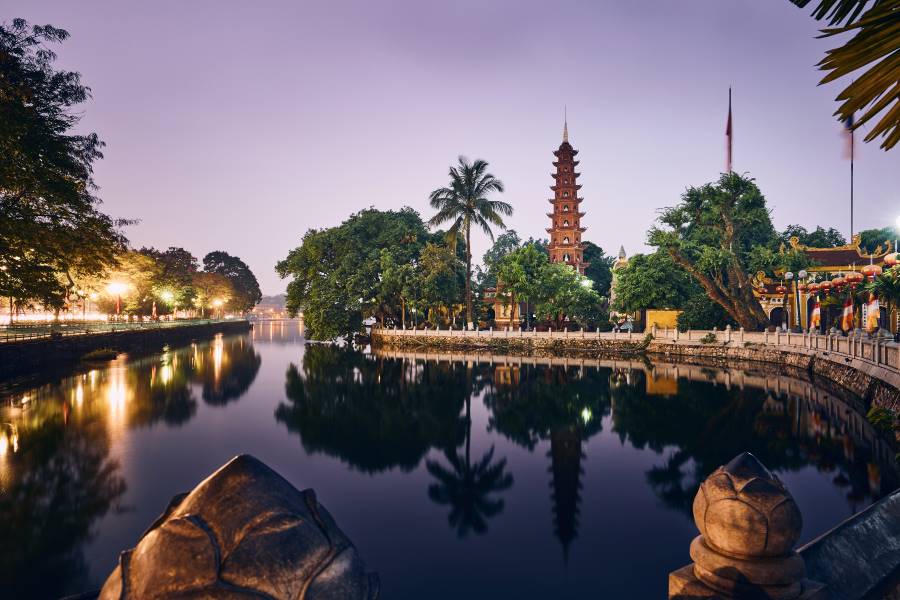
Though Vietnam is beautiful throughout all seasons, there are moments when it might not be desirable to visit for various reasons. One must understand those times to plan a trip that will give you joy; it's better to keep off moving around.
| Months to Avoid | Reason |
| May to November (Summer to Autumn Season) |
|
Travelling to Vietnam from India can be affordable if you choose the right time of year. The cost of flights and hotels varies significantly between seasons. Below is a detailed table outlining the different months/seasons and their respective pricing for various parameters:
| Season | Average Flight Cost | Average Hotel Cost per Night | Description |
| Spring (February-April) | ₹14,000 - ₹21,000 | ₹3,500 - ₹6,000 | Moderate prices; ideal for exploring cities and outdoor activities with cool weather. |
| Summer (May-August) | ₹9,000 - ₹20,000 | ₹2,500 - ₹7,000 | Moderate to peak prices; warmer weather and higher tourism demand; suitable for beach and outdoor activities in few regions. |
| Autumn (September-November) | ₹12,000 - ₹18,000 | ₹3,000 - ₹6,000 | Cheaper prices are great for sightseeing and cultural experiences. |
| Winter (December-February) | ₹14,000 - ₹25,000 | ₹3,500 - ₹7,000 | Cooler weather and moderate to peak prices; ideal for exploring cities and indoor activities. |
If you are a travel enthusiast and want to explore the unknown and famous places in Vietnam, here are certain things you must keep in mind before visiting:
As you plan your vacation to Vietnam, here are some tips you must follow:
Knowing the local language while travelling is helpful. This way, you will not have to struggle to communicate with the locals. Here is a list of some basic phrases that you must know while travelling to Vietnam.
| English | Vietnamese |
| Hello | Xin Chao |
| Goodbye | Tam biet |
| Thank you | Cam un ban |
| You are welcome | Khong co gi |
| Please | Lam on |
| Yes | Vang |
| No | Khong |
| How are you? | Ban khoe khong |
| I am fine, Thank you | Toi khoe, cam on! |
| Good | Tot |
| Bad | Xau |
| Excuse me | Xin loi |
| Excuse me (to a waiter) | Anh oi |
| Excuse me (to a waitress) | Chi oi |
| Can you help me? | Ban co the giup toi duc khong? |
| How much? | Bao nhieu? |
| Very expensive | Qua dat |
| I like | Toi thich |
| Can you reduce the price? | Ban co the giam gia? |
| May I have the menu? | Toi co the co thu c don khong? |
| I would like to have this | Toi muon co cai nay |
| Cold | Lanh |
| Hot | Nong buc |
| No ice | Khong co da |
| No sugar | Khong du ong |
| I am sick | Toi bi om |
| Call the police | Goi canh sat |
| I need to go to the hospital | Toi can den benh vien |
| Here is a list of pronouns you must remember while communicating: | |
| I | Toi |
| You | Ban |
| Male (senior) | Anh |
| Male (junior) | Em |
| Female (senior) | Chi |
| Female (junior) | Em |
| The numericals are as follows: | |
| One | Mot |
| Two | Hai |
| Three | So ba |
| Four | Bon |
| Five | So nam |
| Six | Sau |
| Seven | Bay |
| Eight | Tam |
| Nine | Chin |
| Ten | Mu o I |
| Related to locations: | |
| Where is the bathroom? | nha ve sinh o dau |
| Where is the ATM? | ATM o dau |
| Coffee shop | Quan ca phe |
| Bar | Qyan ba |
| Go to the airport | Di den san bay |
| Hotel | Khach san |
So now that you have all the information about the best time to visit Vietnam, you must plan your itinerary beforehand. Additionally, it is recommended to get travel insurance online before you visit this place.
This will ensure you have financial coverage during any emergency, whether it is a medical or personal loss. This includes loss of baggage, theft, hotel and flight cancellation, and any injury. Thus, you will be able to enjoy your vacation to the fullest.
The peak season in Vietnam is from mid-December to March and July to September, when the weather is cooler and more pleasant for exploring cities and outdoor activities.
Vietnam's moderate seasons are spring (March to May) and autumn (September to November), offering mild temperatures and fewer tourists, making it ideal for sightseeing and cultural experiences.
The off-season in Vietnam spans from May to November, depending on the region of Vietnam and excluding the peak months. These months are characterised by high temperatures and heavy rainfall, especially in the northern and central regions, making it less comfortable for outdoor activities.
The hottest months in Vietnam are June and July, with temperatures often exceeding 35°C. The coldest months are December and January, especially in the northern regions, where temperatures can drop significantly.
Yes, winter is a good time to visit Vietnam, especially in the southern regions, where the weather is cooler and more comfortable for exploring cities and beaches.
Snowfall is rare in Vietnam, but it can occasionally occur in the mountainous regions of Sapa and Ha Giang during the winter months of December to February.
Vietnam experiences its rainy season mainly from May to October, with the heaviest rainfall occurring in the central and southern regions during this period.
The best months to visit Hanoi are from October to April, when the weather is cooler and drier, ideal for sightseeing and boat tours.
Vietnam is preferred for its rich history, stunning landscapes, delicious cuisine, and vibrant culture, offering travellers a diverse and immersive experience.
Popular places to visit in Vietnam include Hanoi, Ho Chi Minh City, Halong Bay, Hoi An, Sapa, and the Mekong Delta, each offering unique cultural and natural attractions.
A trip of around 10 to 14 days is typically enough to explore the main attractions of Vietnam, allowing time to visit cities, beaches, and rural areas.
Yes, Vietnam is worth visiting for its breathtaking landscapes, historical sites, vibrant culture, and friendly locals.
Vietnam is generally tourist-friendly, with well-developed tourism infrastructure, welcoming locals, and a safe environment for visitors.
The currency used in Vietnam is the Vietnamese Dong (VND). It's advisable to carry Vietnamese Dong for transactions, but US dollars are also accepted in some places.
No, Vietnam offers a range of accommodation and dining options to suit different budgets, making it possible to explore the country affordably.
The best time to visit Hanoi is during Autumn and Spring, when the weather is pleasant for sightseeing and boat tours.
Yes, Indian citizens need a visa to visit Vietnam. Visas can be obtained in advance from Vietnamese embassies or consulates, or through the e-visa system available for easier processing.
Vietnam is worth visiting for its stunning natural landscapes, rich cultural heritage, delicious cuisine, and friendly people.
Yes, Hanoi is worth visiting for its historical sites, vibrant street life, and rich cultural heritage.
Vietnam experiences both hot and cold weather, with hot summers, particularly in the southern regions, and cooler winters, especially in the north.
Yes, it is generally safe to go to Vietnam at night, but it's advisable to exercise caution and be aware of your surroundings, especially in urban areas and unfamiliar locations.
Yes, Vietnam has a lively nightlife scene, especially in cities like Ho Chi Minh City and Hanoi, offering a variety of bars, clubs, and entertainment venues.
Vietnam is known for its rich cultural heritage, delicious cuisine such as pho and banh mi, stunning natural landscapes, and historical sites like the Cu Chi Tunnels and Imperial City of Hue.
Hanoi is one of the most visited places in Vietnam, followed by Ho Chi Minh City, Halong Bay, and Hoi An.
Halong Bay, with its stunning karst landscape and emerald waters, is considered one of the prettiest places in Vietnam.
Popular items to buy in Vietnam include traditional silk clothing, lacquerware, ceramics, coffee, and handicrafts.
Vietnam is famous for dishes such as pho (noodle soup), banh mi (Vietnamese sandwich), spring rolls, and bun cha (grilled pork with noodles).
Here are five facts about Vietnam:
Yes, Vietnam offers a range of shopping experiences from traditional markets to modern malls, where you can find unique local products, souvenirs, and handicrafts.