General
Life
Accessibility Options


General

General Products
Simple & Transparent! Policies that match all your insurance needs.
 Car Insurance
 Two Wheeler Insurance
 Commercial Vehicle Insurance
 Health Insurance
 Home Insurance
 Travel Insurance
 Business Insurance
Car Insurance
Two Wheeler Insurance
Commercial Vehicle Insurance
Health Insurance
Travel Insurance
Business Insurance
Car Insurance
Two Wheeler Insurance
Commercial Vehicle Insurance
Health Insurance
Travel Insurance



Scan to download

Life

Life Products
Digit Life is here! To help you save & secure your loved ones' future in the most simplified way.
 Term Life
 Savings Plan
 Retirement and Pension Plans
 Group Life Products
 Product Documents
Term Life
Savings Plan
Group Life Products
Product Documents
Term Life
Savings Plan
Group Life Products

Scan to download

Claims

Claims
We'll be there! Whenever and however you'll need us.
 Customer Support
 Motor Claims
Health Claims
Motor Claims
Health Claims
 Marine Insurance
 Grievance Redressal
Customer Support
Motor Claims
Health Claims
Marine Insurance
Grievance Redressal
Grievance Redressal
Customer Support
Motor Claims
Health Claims
Marine Insurance
Grievance Redressal

Scan to download
 General
 Life
General
Life
Life
General
Life
Renewals
Resources

Resources
All the more reasons to feel the Digit simplicity in your life!
Exclusive Features
 Transparency Report
Others
Exclusive Features
Transparency Report
Transparency Report
Others
Exclusive Features
Transparency Report

Scan to download


Our WhatsApp number cannot be used for calls. This is a chat only number.

 Grey Scale
 Readable Text
 Reset
Reset



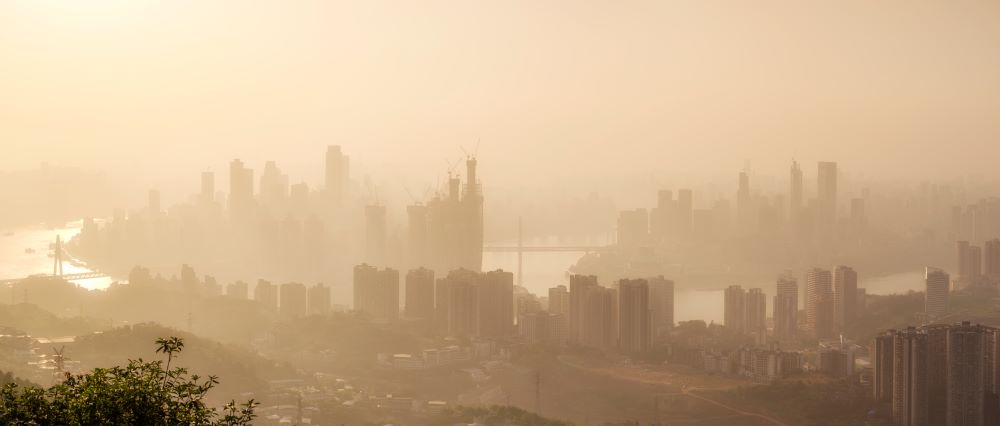
Smog, derived from the words ‘smoke’ and ‘fog’, refers to a mixture of smoke particles and solid and liquid fog. It is usually visible as a blackish or yellowish fog that stays suspended in the atmosphere. It is a kind of air pollution and poses serious environmental and health issues in many areas across the globe.
Given below is a detailed illustration of the various aspects related to diseases caused by smog.
Scroll through to know more!

Table of Contents


Smog diseases occur when people breathe in smog for a long time. Smog is a harmful mix of air pollutants, including ground-level ozone, particulate matter, carbon monoxide, sulphur dioxide, and nitrogen dioxide. These pollutants can cause serious health problems for the lungs and heart.
Some common diseases linked to smog are asthma, bronchitis, emphysema, chronic obstructive pulmonary disease (COPD), and lung cancer. Smog can also make existing health issues worse. This leads to more trips to the hospital, more breathing infections, and, in bad cases, early death.
Smog-related illnesses result from long-term contact with dirty air. This air contains harmful substances like ground-level ozone, tiny particles, sulphur dioxide, and nitrogen oxides. Cars, factories, and burning fossil fuels often release these pollutants. When these chemicals mix in the air, they create smog.
People breathe in this smog, which can irritate and harm their airways. This exposure makes people more likely to get breathing and heart problems as time passes. This is true for kids, older adults, and those with health issues.
Smog exposure can lead to several serious health conditions. Here are six common diseases caused by smog in humans. Illustrated below are the different diseases due to smog -

Smog triggers asthma attacks and severely worsens asthma conditions.
An aggravated form of asthma can, in turn, worsen the symptoms and lead to the following health effects -
The risk factors of this disease caused by smog or its aggravation include the following -

High levels of ozone irritate the respiratory system, leading to wheezing and coughing. After exposure, the affected individuals generally suffer from these effects for a few days. But the particles present in smog keep damaging the lungs even after the irritations go away.
Plus, a significant level of smog and air pollution may also raise the probability of allergies. As per researchers, cases of allergies are higher in areas having high smog concentrations.
All these health issues can lead to several effects in individuals, including -
The various risk factors associated with these health issues are -

Continuous smog exposure increases the chances of premature death from respiratory ailments and cancers. Smog particles contain formaldehyde, butadiene, and benzene - all composed of carcinogens. Inhalation of smog particles is responsible for several premature deaths in Asian countries, the United States, and Europe.
Cancer and respiratory ailments can lead to many complications such as -
The various risk factors of these diseases caused by smog are listed below -

Individuals wondering what type of disease is caused by smog, must note that there are various lung conditions that occur due to the harmful effects of smog. These include emphysema, bronchitis, and pneumonia. This is because smog causes damage to the lining of the lungs and also makes it difficult for individuals to breathe properly.
Lung damage can further lead to several complicated health conditions like -
The various risk factors for lung damage and breathing problems include the following -
Heavy smog lasting for a prolonged period blocks ultraviolet rays from reaching the surface of the earth. This leads to low vitamin D production in humans, thereby resulting in rickets owing to impaired metabolism of phosphorus and calcium in the bone marrow.
Rickets softens the regions of growing tissue at the ends of growth plates or bones of a child. It can lead to several skeletal deformities like -
The various factors that increase the risk of rickets in children include the following -

Searching “what are the diseases caused by smog in newborn babies”?
Read through to get your answers!
Due to smog exposure, pregnant women can give birth to babies with birth defects and low birth weight.
Even exposure to smog particulate matter measuring as low as 5 μg can pose risks of extremely low birth weights at the time of delivery.
Smog exposure leads to some severe birth defects in newborns. These include spina bifida, which is a condition depicting spinal column malfunctions. It also results in anencephaly that refers to a formation defect of a baby's neural tube during development. The baby is born with an incomplete skull and an underdeveloped brain in this condition.
Newborn babies with low birth weights can have several problems like -
Several conditions can pose as a risk factor for having a baby with low birth weight -
Smog is a dangerous mixture of chemicals that can damage the human body and cause sicknesses with different indications and symptoms, such as:
Recognising these signs early on is essential for smog-related disease detection and prevention. Taking precautions minimises health problems from smog exposure.
Based on its characteristics and origins, smog is classified into two categories -
This is the most commonly occurring smog. Photochemical smog forms when sunlight reacts with at least one volatile organic compound (VOC) and nitrogen oxides in the atmosphere.
Los Angeles smog requires neither fog nor smoke and is mainly found in urban regions having a large number of automobiles. Automobiles, factories and power plants emit nitrogen oxides into the atmosphere. Besides these, gasoline, cleaning solvents and paints release volatile organic compounds into the atmosphere.
The harmful compound in this smog causes diseases and leads to conditions like difficulty in breathing, irreversible damage to the heart and the lungs.
Sulphurous smog usually forms due to burning of fossil fuels like coal, a temperature drop, and the accumulation of particulate matter from industrial activity. London smog contains a high concentration of dust, nitrogen dioxides and sulphur oxides in the atmosphere. This smog usually forms during the colder months.
London smog can lead to irritation in the lungs, nose and human eyes.
Smog has a primary effect on human health and the environment. Exposure to smog for a long time can cause critical respiratory issues, heart illnesses, and environmental damage.
Various ailments can arise from breathing polluted air, which results from smog, a dangerous air pollutant. Prolonged exposure to smog could worsen respiratory and cardiovascular problems among vulnerable communities.
Smog-related diseases are typically diagnosed through medical history, physical examinations, and specific diagnostic tests. These tests help identify the impact of smog on respiratory and cardiovascular systems.
The illness caused by smog, mainly due to air pollution, can result in life-threatening respiratory problems and other related conditions. Treatment methods are concerned with easing symptoms and minimising contact with dangerous pollutants.
Effectively managing smog disease requires a combination of protective measures and medical interventions. By adopting these methods, individuals can safeguard their health and minimise the adverse effects of smog exposure.
To control the diseases caused by smog, it is imperative to find solutions to smog pollution in the first place. Illustrated below are some noteworthy solutions to the same -
Using household products containing high amounts of volatile organic compounds must be avoided altogether. These products emit particulate matter and hazardous substances into the atmosphere. These in turn form ground-level ozone by reacting in the presence of sunlight.
The usage of environment-friendly consumer products like eco-friendly sprays, paper, paints, plastics and solvents will help address smog pollution. Individuals can replace energy-intensive devices with energy-efficient ones to reduce energy demand and thus lower the problem of smog. They must also refrain from discarding packages of products as it exacerbates potential air and smog pollution.
Industries and vehicles are the biggest contributors to smog-forming pollutants. Therefore, the best method of reducing smog is to manage gaseous emissions from industries and cars. It is fundamental for industries to use renewable energy sources and manufacture environment-friendly consumer products.
Looking for ways to keep diseases caused by smog at bay?
Scroll through!
Following the 3R policy will go a long way in lowering the smog issue. Reducing consumption indicates reduced production of material things and usage of resources and fossil fuels. This, in turn, means lesser smog and air pollution.
Similarly, reusing and recycling will help check wasteful consumption of material and excessive waste production. This will again contribute towards reducing smog.
Conserving energy and increasing its efficiency simultaneously reduces gaseous emissions into the atmosphere. These emissions are, in fact, responsible for smog. A productive and efficient system for energy management will help reduce smog, thereby lowering pollutants like sulphur and nitrogen oxides in the air.
The usage of efficient systems to detect and monitor smog will help provide early warning signs. The meteorological departments can also assist with this by installing monitoring equipment that consistently records the amounts of particulate matter and emission in the air.
The Air Quality Index (AQI) is an example of an index that is used to report and monitor the relative concentrations of ground-level ozone and common air pollutants. This measure helps monitor the levels of smog-causing pollutants in the air, thereby helping employ strategies to cut down emissions and air pollution.
Opting for renewable energy will help reduce emissions from power generating plants. These plants are heavily dependent on fossil fuels. In simpler terms, using renewable energy will lower environmental impacts and cut down on smog and pollutants in the air.
Last but not least, personal protection is imperative when it comes to dealing with high smog levels present in the air and keeping diseases caused by smog at bay. In order to personally protect themselves, individuals can consider wearing masks while going outside. This will protect from getting contaminated with harmful particles.
Health insurance coverage for smog-related diseases varies depending on the policy and provider. Generally, respiratory illnesses like asthma or bronchitis, which can be aggravated by smog, are covered under most health insurance plans.
However, coverage specifics, including the extent of treatment and medication coverage, may differ. Some policies require additional riders for comprehensive coverage of pollution-related health issues.
It is crucial to review the terms and conditions of your health insurance policy or consult with your provider to understand the coverage details for smog-related diseases.
Individuals can reduce the impact of smog on their well-being by keeping themselves updated and adopting healthy practices. They must consider all the vital aspects discussed in this article related to diseases caused by smog to protect themselves against it. Additionally, they must adopt different measures to control smog and, hence, keep these diseases at bay. Doing so not only improves personal health but also contributes to standard safety.