General
Life
Accessibility Options


General

General Products
Simple & Transparent! Policies that match all your insurance needs.
 Car Insurance
 Two Wheeler Insurance
 Commercial Vehicle Insurance
 Health Insurance
 Home Insurance
 Travel Insurance
 Business Insurance
Car Insurance
Two Wheeler Insurance
Commercial Vehicle Insurance
Health Insurance
Travel Insurance
Business Insurance
Car Insurance
Two Wheeler Insurance
Commercial Vehicle Insurance
Health Insurance
Travel Insurance


Scan to download

Life

Life Products
Digit Life is here! To help you save & secure your loved ones' future in the most simplified way.
 Term Life
 Savings Plan
 Retirement and Pension Plans
 Group Life Products
 Product Documents
Term Life
Savings Plan
Group Life Products
Product Documents
Term Life
Savings Plan
Group Life Products

Scan to download

Claims

Claims
We'll be there! Whenever and however you'll need us.
 Customer Support
 Motor Claims
Health Claims
Motor Claims
Health Claims
 Marine Insurance
 Grievance Redressal
Customer Support
Motor Claims
Health Claims
Marine Insurance
Grievance Redressal
Grievance Redressal
Customer Support
Motor Claims
Health Claims
Marine Insurance
Grievance Redressal
Scan to download
 General
 Life
General
Life
Life
General
Life
Renewals
Resources

Resources
All the more reasons to feel the Digit simplicity in your life!
Exclusive Features
 Transparency Report
Others
Exclusive Features
Transparency Report
Transparency Report
Others
Exclusive Features
Transparency Report
Scan to download


Our WhatsApp number cannot be used for calls. This is a chat only number.

 Grey Scale
 Readable Text
 Reset
Reset



You must have heard people saying, ‘Climate change is real’. Living in the 21st century and experiencing extreme weather conditions is quite common. Besides general health issues, people living in extremely low and high temperatures face many challenges.
In these extreme conditions, one must always consider the tyres used in their vehicles. When you live in areas with high temperatures, your vehicle usually requires a summer tyre. Especially in hot conditions, you need a summer tyre for improved performance and seamless comfort.
Continue reading to learn important details about high-performance summer tyres!

Table of Contents

Summer tyres become the most effective and efficient option when there are regular and extreme temperature fluctuations. When temperatures rise above 7 degrees Celsius, summer tyres come into use.
When you experience extremely low temperatures (below 7 degrees Celsius) and high temperatures (above 7 degrees Celsius), you must constantly switch between winter tyres and summer tyres, as all-season tyres do not work smoothly in both terrains and conditions.
Summer tyres have a unique appearance and different functions, as compared to winter tyres and all-season tyres.
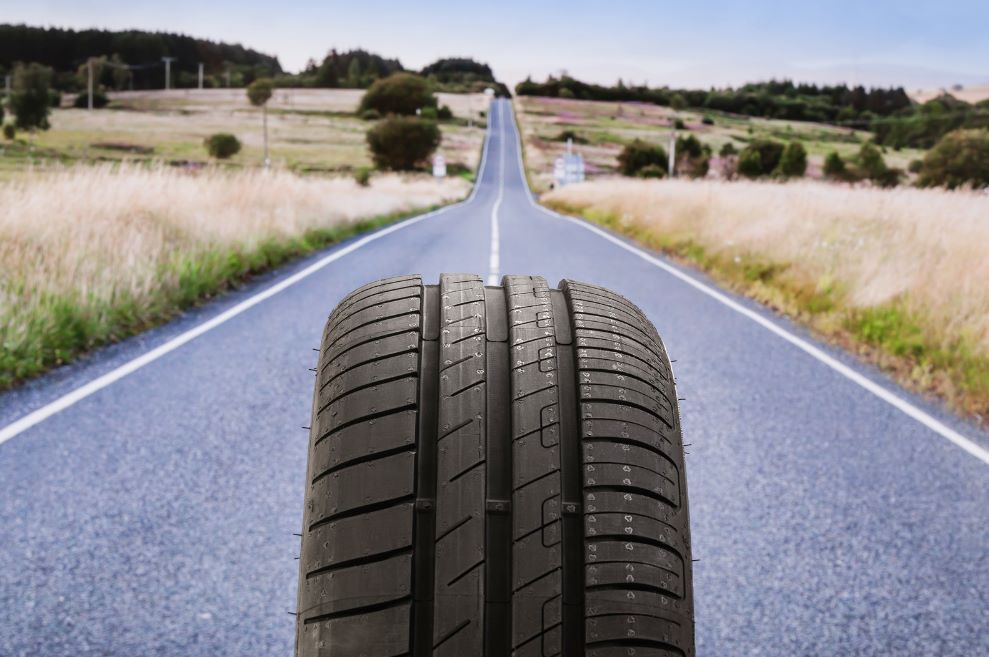
You will usually find larger tread blocks and fewer grooves as compared to the winter tyres. Their counterparts are used to soak gravel, snow, etc. On moderate to high temperatures, the large tread blocks on these tyres help improve the overall stability, control, and handling. They provide better contact with the road surface.
Another distinction in their appearance is their tread pattern or depth. These treads are not deep and, as a result, do not have much grip. But these provide excellent stability on road surfaces. Additionally, they offer a shorter braking distance and high speeds through their design.
A major function and application is that they efficiently control the vehicle in wet and dry road conditions. The rubber content in these tyres and sidewall design makes all the difference when comparing these to winter and all-season tyres.
Dry and warm conditions loosen or soften hard rubber content. This is the reason why these tyres are generally harder than their counterparts.
If you come across ultra-high-performance summer tyres, you will see that these tyres are built of hard rubber content. When they come in contact with a warm road surface, they soften and provide better fuel efficacy. You can also experience less tyre friction in these types of tyres.
The most interesting benefits of using summer tyres in your vehicle are provided as follows:
Stability is one of the key weapons of summer tyres. Through these tyres, one can expect better handling and control of their vehicle. Whether it is sharp turns and corners or immediate braking, you can handle your vehicle effectively and quickly.
Aquaplaning has a reduced risk as these tyres provide a decent grip on wet surfaces. Their hard rubber content helps attain this benefit.
One of the most attractive pros of summer tyres is that they are more fuel efficient than other tyres as there is less friction used on the roads.
Summer tyres have some demerits as well. You must consider the following points before buying and fitting a summer tyre in your vehicle.
Experts never suggest using these tyres during cold temperatures, especially below 7 degrees Celsius. The tyre may lose traction and elasticity and may break down in extremely low temperatures.
These tyres wear out rather quickly than other tyres due to their shallow tread pattern.
When you use both winter and summer tyres in a season, it becomes an expensive deal overall.