General
Life
Accessibility Options


General

General Products
Simple & Transparent! Policies that match all your insurance needs.
 Car Insurance
 Two Wheeler Insurance
 Commercial Vehicle Insurance
 Health Insurance
 Home Insurance
 Travel Insurance
 Business Insurance
Car Insurance
Two Wheeler Insurance
Commercial Vehicle Insurance
Health Insurance
Travel Insurance
Business Insurance
Car Insurance
Two Wheeler Insurance
Commercial Vehicle Insurance
Health Insurance
Travel Insurance


Scan to download

Life

Life Products
Digit Life is here! To help you save & secure your loved ones' future in the most simplified way.
 Term Life
 Savings Plan
 Retirement and Pension Plans
 Group Life Products
 Product Documents
Term Life
Savings Plan
Retirement and Pension Plans
Group Life Products
Product Documents
Term Life
Savings Plan
Retirement and Pension Plans
Group Life Products

Scan to download

Claims

Claims
We'll be there! Whenever and however you'll need us.
 Customer Support
 Motor Claims
Health Claims
Motor Claims
Health Claims
 Marine Insurance
 Grievance Redressal
Customer Support
Motor Claims
Health Claims
Marine Insurance
Grievance Redressal
Grievance Redressal
Customer Support
Motor Claims
Health Claims
Marine Insurance
Grievance Redressal
Scan to download
 General
 Life
General
Life
Life
General
Life
Renewals
Resources

Resources
All the more reasons to feel the Digit simplicity in your life!
Exclusive Features
 Transparency Report
Others
Exclusive Features
Transparency Report
Transparency Report
Others
Exclusive Features
Transparency Report
Scan to download


Our WhatsApp number cannot be used for calls. This is a chat only number.

 Grey Scale
 Readable Text
 Reset
Reset



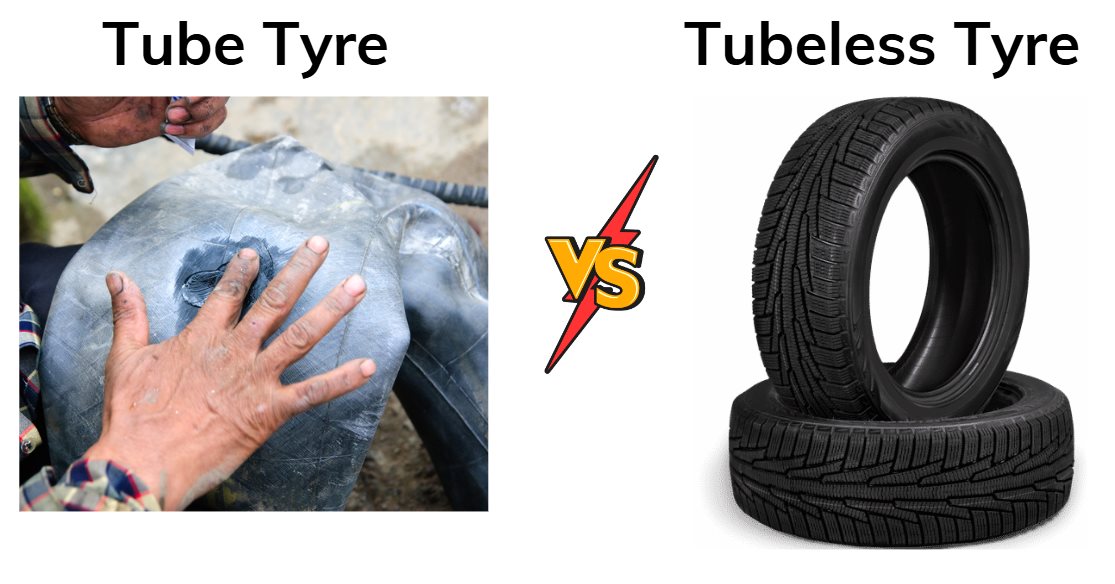
Picking the correct tyres for your vehicle requires understanding the difference between a tube tyre and a tubeless tyre. Each type has pros and cons, making it important to consider what you need from such tyres.
Several factors should be considered, especially when selecting tube or tubeless tyres. This article provides information on these tyres, differences between tube and tubeless tyres, and some of the most frequently asked questions.

Table of Contents

A tube tyre consists of a tyre casing and an inner tube. The inner tube is a separate inflatable unit placed inside the tyre casing that holds the air. The tyre casing provides the structure to support the load and the tread pattern that comes into contact with the road.
An inner tube is not present in a tubeless tyre. The tyre casing holds the air, which is designed for this purpose.
There are several differences between tubeless and tubed tyres:
Tube tyres have been known for good quality in the automotive industry for many years. Below are some of the features of tube tyres.
Generally, tube tyres are less expensive compared to tubeless tyres.
An inflatable tube is placed inside the tyre in tube tyres. This tube is filled with air, which supports the tyre and provides protection.
In the case of a puncture, tube tyres are usually easy to repair.
These tyres can be used with most types of wheels, including spoked wheels.
Tubeless tyres have no inner tubes. Find some features of Tubeless tyres below.
These kinds of tyres have to be sealed air tightly to render it unnecessary to use an inner tube.
Tubeless tyres can deflate slowly, making them safer in case of punctures.
Lower rolling resistance in tubeless tyres results in improved fuel efficiency.
The durability and low maintenance demanded by tubeless tyres set them apart from other types.
The advantages of a tubeless tyre over a tube tyre can be best understood by considering its fuel efficiency, heat dissipation, etc. Below is a list of the most common advantages of tubeless tyres over tube tyres:
Tubeless tyres have enhanced safety due to their ability to maintain air pressure even after a puncture. This reduces the risk of a sudden blowout and provides better control over the vehicle.
The reduced weight of tubeless tyres gives better fuel efficiency. The absence of an inner tube means less rolling resistance, which can lead to significant fuel savings over time.
Tubeless tyres dissipate heat more effectively than tube tyres. This reduces the risk of overheating and blowouts during long drives or high-speed travel.
There's no need to worry about maintaining an inner tube for tubeless tyres. Lower maintenance costs and fewer visits to the repair shop are associated with it.
There is a sealant present in the tubeless tyres, which automatically seal small punctures. This feature can save time and effort and allows you to continue your journey without interruptions.
The road surface is better accommodated by tubeless tyres, which provide a smoother and more comfortable ride. This feature will enhance your overall driving experience on rough or uneven roads.
A tubeless tyre is repaired comparatively more easily and quickly. You can use plug kits for temporary fixes until you reach the nearest shop without facing difficulty.
When we compare tube tyres vs tubeless tyres it must be based on your specific needs. If you need a tyre i.e. cheap and can easily be repaired, then you must go for tube tyres.
Each type of tyre has its benefits and drawbacks that might be considered when selecting one for your needs. From the ongoing discussion on tubeless tyres vs tube tyres, you should choose tubeless tyres if you want better performance and safety features in your vehicle.
Tyres should be purchased after considering several factors, such as your driving habits, local climate, the brand of the tyres, local laws, warranty period of tyres, etc.
Both tube tyres and tubeless tyres have their own advantages. Tube tyres are cost-effective and easier to repair, while tubeless tyres ensure better safety, efficiency, and durability. So, while answering which tyre is best, tube or tubeless, consider factors like your driving habits, budget, and safety preferences.