General
Life
Accessibility Options


General

General Products
Simple & Transparent! Policies that match all your insurance needs.
 Car Insurance
 Two Wheeler Insurance
 Commercial Vehicle Insurance
 Health Insurance
 Home Insurance
 Travel Insurance
 Business Insurance
Car Insurance
Two Wheeler Insurance
Commercial Vehicle Insurance
Health Insurance
Travel Insurance
Business Insurance
Car Insurance
Two Wheeler Insurance
Commercial Vehicle Insurance
Health Insurance
Travel Insurance


Scan to download

Life

Life Products
Digit Life is here! To help you save & secure your loved ones' future in the most simplified way.
 Term Life
 Savings Plan
 Retirement and Pension Plans
 Group Life Products
 Product Documents
Term Life
Savings Plan
Group Life Products
Product Documents
Term Life
Savings Plan
Group Life Products

Scan to download

Claims

Claims
We'll be there! Whenever and however you'll need us.
 Customer Support
 Motor Claims
Health Claims
Motor Claims
Health Claims
 Marine Insurance
 Grievance Redressal
Customer Support
Motor Claims
Health Claims
Marine Insurance
Grievance Redressal
Grievance Redressal
Customer Support
Motor Claims
Health Claims
Marine Insurance
Grievance Redressal
Scan to download
 General
 Life
General
Life
Life
General
Life
Renewals
Resources

Resources
All the more reasons to feel the Digit simplicity in your life!
Exclusive Features
 Transparency Report
Others
Exclusive Features
Transparency Report
Transparency Report
Others
Exclusive Features
Transparency Report
Scan to download


Our WhatsApp number cannot be used for calls. This is a chat only number.

 Grey Scale
 Readable Text
 Reset
Reset



When exploring India on a motorcycle, one essential aspect for gaining control on various terrains is selecting off-road tyres to fit your bike. These aggressively treaded tyres are the workhorses of adventure riders.
Whether travelling over slippery forests in the western ghats or going up and down rocky terrains of the Himalayas, off-road tyres provide you with the required traction and steadiness. They are not merely about output – they also give your drive the touch of a rugged outlook.
But with so many choices on the market, which tyres will enhance your off-road performance?
Let’s look at some of the best bike off-road tyre options for Indian riders who want to go beyond the limits of the tarmac.
Off-road tyres are best suited for riders who seek to ride beyond the normal tarmac or blacktop surfaces. These are specialised types of tyres that enhance the capacity of a vehicle to handle different kinds of roads.
Let's explore options that have gained traction among Indian off-road enthusiasts:
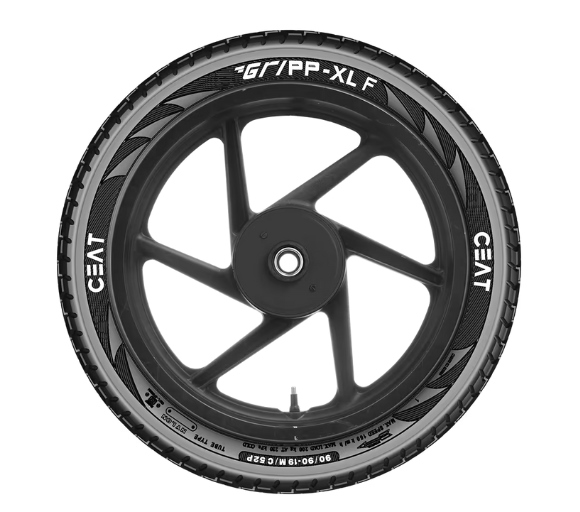
CEAT, one of the famous Indian tyre makers, has developed off-road tyres for adventurers. For dual-sport and Adventure motorcycles, they have the Gripp XL series, which has a highly aggressive tread pattern that provides a good grip on all terrains.
These tyres feature CEAT’s Compound Technology; the tyres offer durability and good traction on dry and wet off-road terrains.
The Gripp XL tyre features a robust side wall that guards against punctures and cuts from the rocks and chokes in off-road riding. It also has good on-road mobility and can be helpful to a rider who occasionally uses a bike on-road and off-road.
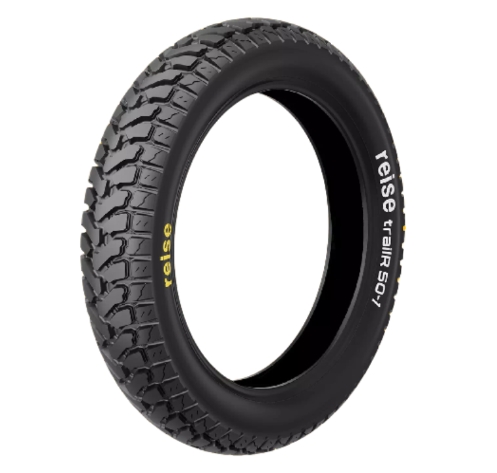
Manufactured for dual-purpose bikes such as the Royal Enfield Himalayan and Hero Xpulse 200, the trailR tyres provide a balance between on-road and off-road use.
They have a rugged, directional crossover block style that gives excellent traction on ground surfaces. Gradually wearing the tread from the centre to the shoulders improves cornering capability.
Through its engineering, Reise ensures these tyres have a broader contact patch for stability in their ride without compromising the noise level; thus, they are suitable for riders who often shift between tarmac and off-road surfaces.
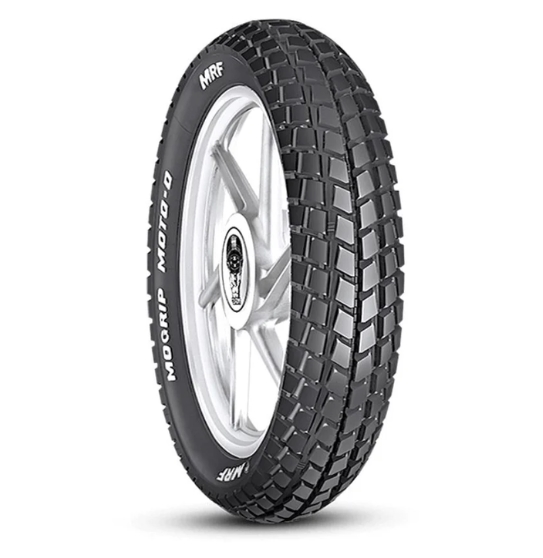
MRF, an established Indian tire company that has been around since 1946, has specifically MV8000 Adventure Off-road Tire for adventure motorcycles.
Their Mogrip series, especially the Mogrip Meteor models, are meant for off-road conditions. They are equipped with rigid and deep tread designs to provide excellent grip on mud, gravel and loose soils.
They are manufactured with extra strong sidewalls and long-wearing material, and they afford the best puncture shield and long service life even on unfriendly terrains. Affordable MRF tyres begin at ₹1000.
However, off-road-focused models could be pricier due to their performance. MRF's motorsport knowledge gives it an advantage in producing off-road tyres that adventure riders need when riding through India's terrains.
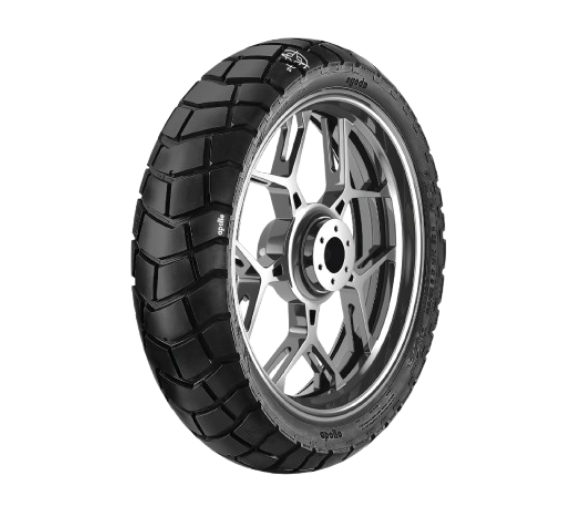
The TRAMPLR XR tyres are best for an aggressive off-road experience while maintaining a comfortable ride. These tyres employ steel radial technology, delivering optimal performance regarding sturdiness and control.
The wider shoulder has the ‘W’ grooves, which makes it very efficient in reducing instances of hydroplaning and, thus, more power in wet conditions.
Furthermore, one cannot dismiss the Life Indicator and the Stone Ejectors as features that add value in terms of the life of the tyre as well as the tyre’s off-road prowess.
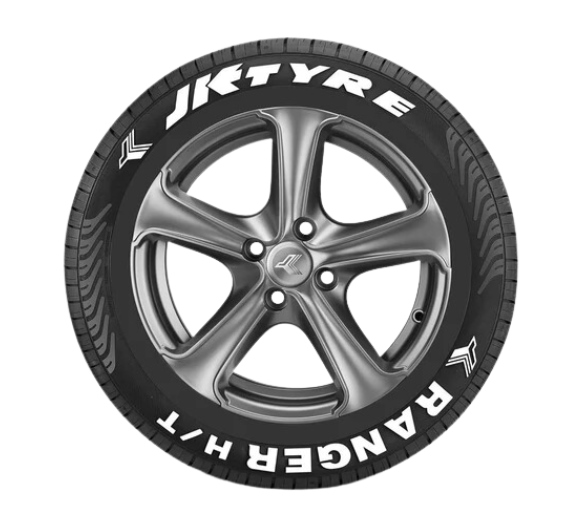
JK Tyres is venturing into products such as off-road bike tyres, such as the Ranger series. These tyres have deep treads and substantial sidings, making them easy to manoeuvre through rocky terrains. Their proprietary compounds can balance wear and traction on any necessary surface.
JK’s set of off-road motorcycle tyres is explicitly developed for the popular enduro motorcycles in India and provides reasonable results for the money. These qualities and reasonable prices have made JK famous among travellers who decided to ride the road less travelled.
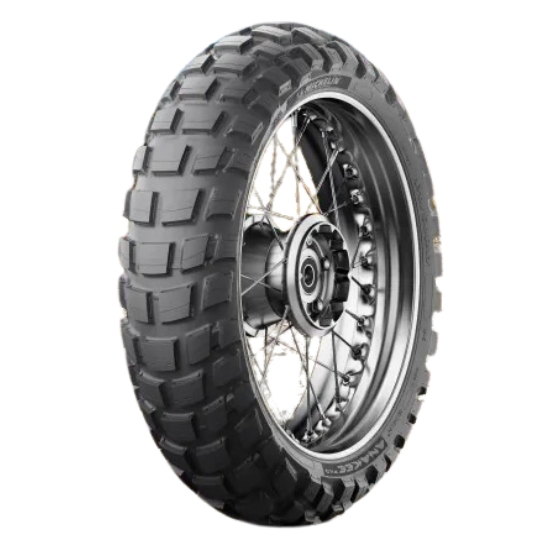
Michelin, the well-known French tyre manufacturer, has a growing business in India through a range of high-quality, high-durability tyres for bikes and other vehicles.
Michelin introduced the Anakee Wild series to cater to off-road lovers, which are bikes apt for adventure and dual-purpose use. These tyres have deep tread patterns for off- and on-road applications, and the tyre sides are made strong to cope with off-road terrains.
The Anakee Wild tyres are designed for excellent off-road performance, especially on loose surfaces such as gravel or mud.
The Anakee Wild tyres are pretty good on paved roads, even though they are not inspiring. Other tyre manufacturers use compounds similar to Michelin, so tyres of this make do not lose their grip in hot or cold temperatures.
Stable and widespread treads provide good contact on soft ground and are good on hard ground in wet and dry conditions.
When used in extreme conditions, it is stronger and more durable than a standard tyre, protecting against punctures, cuts, and abrasion.
Traction grooving, also known as progressive tread patterns, allows the vehicle to grip the surface better as it turns on loose surfaces.
Sustains contact using several sections while preventing the rider from slipping or moving uncontrollably.
Ensures the tyres can offer grip while descending without slipping or sliding.
Provides smooth road contact in dry and wet circumstances, enabling the riders to adapt appropriately to the existing conditions.
Succeeds in performing well in muddy, sandy, gravelled or rock off-road conditions to address the off-road challenges.
It gives riders confidence in riding more complex and different terrains, such as hill tracts, rocky terrains, and sand tracts.
All-terrain (A/T) tyres are for everyday use on slick and muddy roads, roads wet from rain, lightly snow-covered, and so on. They deliver good grip on the ground, have a longer life span than mud tyres, and are cheaper.
However, A/T tyres are unsuitable for packed snow and handle worse than mud-terrain tyres.
Different environments call for different pressures, and choosing the proper pressure for off-road driving depends on the type of surface the car will cover. For light off-roading, you must drop your tyre pressure to around 20-25 psi.
The approximate recommended tyre pressure should range from 12-15 psi, as this increases the tyre’s footprint, thereby avoiding cases where the vehicle slips or sinks. On aggressive off-road terrains like rocky terrain or steep inclines, you can lower your tyre's pressure by 30-35% to have the best grip on the large rocks.