General
Life
Accessibility Options


General

General Products
Simple & Transparent! Policies that match all your insurance needs.
 Car Insurance
 Two Wheeler Insurance
 Commercial Vehicle Insurance
 Health Insurance
 Home Insurance
 Travel Insurance
 Business Insurance
Car Insurance
Two Wheeler Insurance
Commercial Vehicle Insurance
Health Insurance
Travel Insurance
Business Insurance
Car Insurance
Two Wheeler Insurance
Commercial Vehicle Insurance
Health Insurance
Travel Insurance


Scan to download

Life

Life Products
Digit Life is here! To help you save & secure your loved ones' future in the most simplified way.
 Term Life
 Savings Plan
 Retirement and Pension Plans
 Group Life Products
 Product Documents
Term Life
Savings Plan
Retirement and Pension Plans
Group Life Products
Product Documents
Term Life
Savings Plan
Retirement and Pension Plans
Group Life Products

Scan to download

Claims

Claims
We'll be there! Whenever and however you'll need us.
 Customer Support
 Motor Claims
Health Claims
Motor Claims
Health Claims
 Marine Insurance
 Grievance Redressal
Customer Support
Motor Claims
Health Claims
Marine Insurance
Grievance Redressal
Grievance Redressal
Customer Support
Motor Claims
Health Claims
Marine Insurance
Grievance Redressal
Scan to download
 General
 Life
General
Life
Life
General
Life
Renewals
Resources

Resources
All the more reasons to feel the Digit simplicity in your life!
Exclusive Features
 Transparency Report
Others
Exclusive Features
Transparency Report
Transparency Report
Others
Exclusive Features
Transparency Report
Scan to download


Our WhatsApp number cannot be used for calls. This is a chat only number.

 Grey Scale
 Readable Text
 Reset
Reset



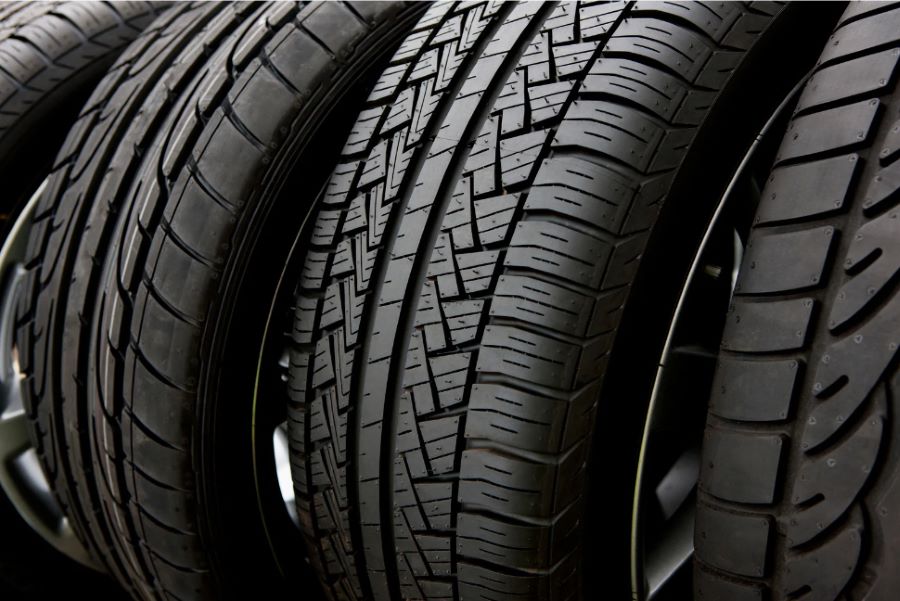
Car, bus, cycle, or take any common vehicle; tyre holds utmost importance in the functioning of any vehicle. It operates and enhances the performance, safety, and comfort throughout your journey.
A tyre has many elements depending on the vehicle type, road surface, versatility, weather conditions, etc. The classification of tyres explains what is included in the functional component of a vehicle with round rubber. Some vehicles are built for off-road capacities, while some are designed for all-round performance.
Here is a detailed guide on different nomenclatures of tyres, what is tyre, how it works, and many more things.

Table of Contents

This essential vehicle component is made up of rubber or synthetic rubber. The cylindrical rubber adjusts and fits the wheel rim of a car. It helps maintain the friction and flexibility between the road surface and the vehicle.
Have you ever felt some roughness or invariable movement of a vehicle while one of the tyres is not filled with gas?
So, if you do not put the right tyre, there are high chances of accidents, uneven vehicle motion, inconsistent shocks, etc. Therefore, this constituent of the vehicle has many uses and functions, which will be discussed later.
Before jumping on to the classification of tyres and how a tyre works, it is crucial to understand what are the nomenclatures and parts of a tyre.
Most tyres have an outer layer of rubber enclosing materials like fibreglass, rayon, and steel. It acts as a glueing agent, holding the tyre in a firm place. Since it is placed in the middle of a tyre, it helps resist puncture and ensures that there is smooth contact with the road surface.
This part is one of the most important components of a tyre as it makes direct contact with the road surface. It allows the passage of heat and is responsible for the durability and performance of a vehicle.
These are internal treads that supplement a tyre’s main tread pattern or function. Sipes have a crucial role in enhancing the grip and overall performance of the tyre.
These are small empty spaces on the outer layer of a tyre. Their main function is to provide light during bad weather conditions. They enhance the passage through which water can spread out, improve smoothness and friction between the tyre and different road surfaces, etc.
It is located right at the end of the primary tread, spreading across the sidewall element. It is responsible for maintaining stability and promoting overall vehicle handling abilities.
This component makes contact with the outer environment but does not come directly in contact with the road. It shows and indicates useful details like tyre markings, size, etc.
The inner liner is the innermost layer of any tyre, which significantly stops the air passage between its inner part and exteriors. In other words, it assists in striking a balance in tyre pressure and maintaining structural integrity.
There are many types of tyres that fit different vehicles and requirements, offering the best flexibility and driving experience. Have a look below at the most common classification of tyres.
These are a common tyre type with different tread patterns on either side. As a result, the driver or rider can expect brilliant performance for a long time. These tread patterns are designed to maintain force and pressure and enhance wet grip. Many asymmetric tyres also boost the overall handling abilities and stability.
This type of tyre has a clear distinction with a downwards or one-way directional arrow on the sidewall. These do not rotate in different directions, allowing them to disperse water quickly and effectively. Additionally, these tyres help decrease road noise and enhance flexibility.
Although they are termed as winter tyres, these are all-in-one tyres. You can trust these tyres for all seasons. These are known for their excellent traction control. As the name suggests, these are helpful in extremely cold seasons when the rubber starts to lose its softness and when the grip gets reduced on extremely icy surfaces.
One of the most commonly found tyres, all-season tyres strike a perfect match for low and high temperatures. Their material composition provides grip in both winters and summers. When you use this type of tyre, you need to change your vehicle tyres regularly while the seasons change.
These modern and safety-driven tyres are ideal for today’s generation. You can drive your vehicles at safe speeds without the air pressure. These aid in loading heavy capacity and provide great stability to a vehicle. However, a major disadvantage of this tyre is that it is unrepairable once punctured or damaged.
A tyre is full of utilities, forming a major part of any vehicle. You cannot even imagine a vehicle without having a tyre. The following points highlight the main functions of a tyre.
A tyre is full of different types of gas and is responsible for carrying loads on the vehicle. During regular movement, braking, acceleration, etc., tyres maintain the vehicle stability by adjusting air pressure.
Tyres provide the required traction and friction to the vehicle. It aids in moving the vehicle forward in different weather conditions and on different road surfaces without skidding.
Tyres are a messiah when you come across bumpy roads, barriers, uneven and off-roads, etc. When you go through these lanes, many parts of the vehicle, such as the suspension, wheel, etc., are affected. Tyres protect you and your vehicle by taking these shocks first and impacting other components the least.
Acceleration, power, braking, and cornering; all forces provide the much-needed boost to a vehicle. But the tyre combines all these forces and transfers them on the road or ground to provide the desired performance.
There are many alphabets, numbers, and markings on a tyre you must know. These are detailed hereunder.
The sidewall of a tyre has a long alphanumeric marking. Let us break down these alphabets and numbers.
The first three numbers written on the tyre sidewall indicate the total width of the tyre. Here, the unit of this embossed width is millimetres.
The next two digits after the width dimension highlight the percentage of the profile height. In other words, this shows the percentage of tyre width.
The first alphabet in the marking refers to the type of tyre. For example, if it is ‘R’, it is of radial construction.
After this alphabet, you will see two digits. These point towards the inner rim diameter of the tyre.
The final two digits of the marking refer to the load rating of the tyre.
The final element of the marking, i.e., the alphabet, indicates the maximum speed rating. Refer to the following table to know which alphabet highlights the level of maximum speed rating.
Other information is printed on the tyres. You can see the manufacturing date on the tyre. Tyres display information such as the production facility in which it was produced, the week and year of production, etc.
You can find additional details on flat-run tyres. The tyre sidewall has a two- to five-letter long code, signifying the load rating. Lastly, manufacturers also put codes of the technology used in designing the run-flat tyres.
This information is useful when assessing the safety standards of the tyre being used in the vehicle. Apart from these details, you will be able to see the following information:
Rim Diameter
Load Index
Maximum Cold Tyre Pressure
Treadwear Number
Traction Grade
Temperature Grade
Tyre Ply Composition
There is much more that goes into a vehicle before it is good to be on the road. A tyre that directly contacts the ground or road has a major chunk of utility. From maintaining stability to excellent cornering, a tyre is truly the heart of any vehicle. So whenever you buy a vehicle, ensure you buy one with the best tyre capabilities.