General
Life
Accessibility Options


General

General Products
Simple & Transparent! Policies that match all your insurance needs.
 Car Insurance
 Two Wheeler Insurance
 Commercial Vehicle Insurance
 Health Insurance
 Home Insurance
 Travel Insurance
 Business Insurance
Car Insurance
Two Wheeler Insurance
Commercial Vehicle Insurance
Health Insurance
Travel Insurance
Business Insurance
Car Insurance
Two Wheeler Insurance
Commercial Vehicle Insurance
Health Insurance
Travel Insurance



Scan to download

Life

Life Products
Digit Life is here! To help you save & secure your loved ones' future in the most simplified way.
 Term Life
 Savings Plan
 Retirement and Pension Plans
 Group Life Products
 Product Documents
Term Life
Savings Plan
Retirement and Pension Plans
Group Life Products
Product Documents
Term Life
Savings Plan
Retirement and Pension Plans
Group Life Products

Scan to download

Claims

Claims
We'll be there! Whenever and however you'll need us.
 Customer Support
 Motor Claims
Health Claims
Motor Claims
Health Claims
 Marine Insurance
 Grievance Redressal
Customer Support
Motor Claims
Health Claims
Marine Insurance
Grievance Redressal
Grievance Redressal
Customer Support
Motor Claims
Health Claims
Marine Insurance
Grievance Redressal
Scan to download
 General
 Life
General
Life
Life
General
Life
Renewals
Resources

Resources
All the more reasons to feel the Digit simplicity in your life!
Exclusive Features
 Transparency Report
Others
Exclusive Features
Transparency Report
Transparency Report
Others
Exclusive Features
Transparency Report
Scan to download


Our WhatsApp number cannot be used for calls. This is a chat only number.

 Grey Scale
 Readable Text
 Reset
Reset




10000+ Cashless Garages
1.5 Cr+ Policies Sold


Check Price

Car insurance Online, Up to 90% Discount
It's a Brand New Car
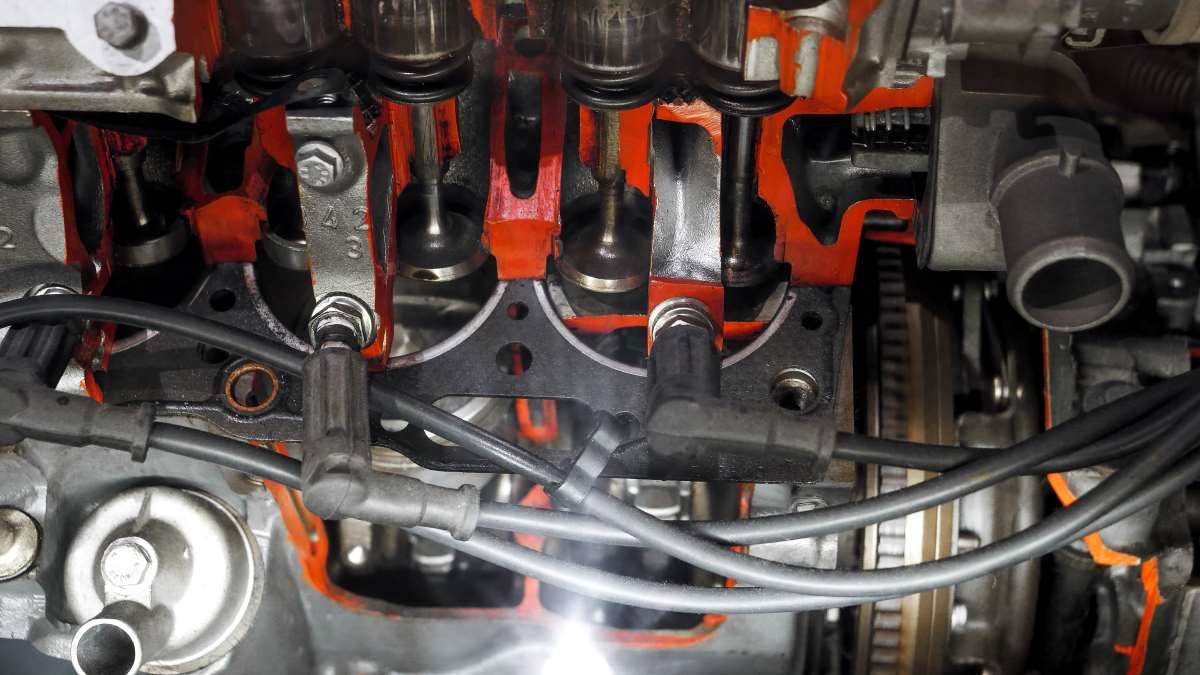
Pistons are an important part of internal combustion engines. Hence, the latter are often referred to as ‘piston engines.’ Besides converting the energy released during combustion into mechanical energy, this key component performs other functions as well.
In this piece, we’ll cover everything from how pistons are made, parts of a piston, functions, and types.

Table of Contents

A piston is a crucial component of various reciprocating machinery, such as gas compressors, hydraulic and pneumatic cylinders, pumps, and engines. The piston rings provide a gastight seal within the cylinder containing the moving component. Its function in an engine is to transmit the force of the expanding gas in the cylinder to the crankshaft through a connecting rod and/or piston rod.
The crankshaft is linked to the piston with a connecting rod. When the piston rises and falls, the connecting rod and crankshaft turn the crankshaft, which rotates the wheels. Most cars have four, six, or eight cylinders, but some have twelve. Steam engines, which use boiling water to move pistons in cylinders outside the engine, use them.
As the piston rises and falls in the cylinder, the fuel-air mixture compresses, starting the spark plug ignition process. The explosion pushes the piston down, releasing exhaust gases through the exhaust system.
Here is a step-by-step explanation of how a piston works:
In modern engines, pistons are primarily made of aluminium alloys owing to their lightweight nature and efficiency. While most pistons are cast, some might be forged to enhance strength and fatigue life.
Piston rings, on the other hand, are predominantly made of cast iron or steel alloys. The ring package comprises a wiper ring, a compression ring, and an oil ring.
Let’s dig deeper into the major parts of a piston and its functions.
Typically made of cast iron and alloy cast iron, piston rings play an important role in engine operation. They serve the most important function of minimising friction between the piston and cylinder walls and preventing gas from leaking in the combustion process.
There are two main types of piston rings - Compressor rings, which seal the compression chamber, and oil control ring which helps regulate oil consumption.
Located just above the piston, it is the part that comes in contact with the combustion gases, making it experience high temperature and pressure.
The piston skirt refers to the cylindrical portion of the piston that travels within the cylinder. They are intentionally roughened during manufacturing to retain lubrication and withstand thrust.
Also referred to as a gudgeon pin, this pin connects the piston to the connecting rod. They are made up of harder steel in order to offer good tensile strength.
The role of connecting rod is to connect the piston to the crankshaft. This allows piston movement within the cylinder and subsequently transmits motion to the engine. The connecting rod is made using cast aluminium alloy and is designed in a manner to withstand piston movement.
The primary role of the bolt is to secure the connecting rod to the crankshaft.
Piston bearings or wrist pin bearings provide support and reduce friction between the piston pin and connecting rod, thus enhancing engine performance and longevity.
While there are many different types of pistons, when it comes to piston shapes, these are the notable ones:
The primary role of the piston is to transfer energy by receiving the force generated by the combustion gases within the cylinder. The energy is thereafter transmitted from the connecting rod to the crankshaft.
Additionally, the piston plays an important part in dissipating the heat generated during combustion by transferring it to the cylinder walls.
Overall, the functions of a piston include:
A good piston must possess the following properties:
Strength and Durability: To avoid breaking under the strain of the power stroke, it must be able to endure high pressure and temperatures.
Lightweight: A lightweight piston helps improve engine efficiency and reduces inertia forces.
Low Heat Expansion: During operation, the piston's design should minimise the impact of thermal expansion.
Balanced Design: The ideal piston design considers the crown shape, the design of the piston skirt, and other aspects to achieve a balance between the piston's weight, strength, and performance.
Thus, the piston is a key component of internal combustion engines. From withstanding high temperatures and pressures, it plays a crucial role in ensuring optimal engine performance and efficiency!
Explore Insurance Coverage for Your Vehicle