General
Life
Accessibility Options


General

General Products
Simple & Transparent! Policies that match all your insurance needs.
 Car Insurance
 Two Wheeler Insurance
 Commercial Vehicle Insurance
 Health Insurance
 Home Insurance
 Travel Insurance
 Business Insurance
Car Insurance
Two Wheeler Insurance
Commercial Vehicle Insurance
Health Insurance
Travel Insurance
Business Insurance
Car Insurance
Two Wheeler Insurance
Commercial Vehicle Insurance
Health Insurance
Travel Insurance



Scan to download

Life

Life Products
Digit Life is here! To help you save & secure your loved ones' future in the most simplified way.
 Term Life
 Savings Plan
 Retirement and Pension Plans
 Group Life Products
 Product Documents
Term Life
Savings Plan
Retirement and Pension Plans
Group Life Products
Product Documents
Term Life
Savings Plan
Retirement and Pension Plans
Group Life Products

Scan to download

Claims

Claims
We'll be there! Whenever and however you'll need us.
 Customer Support
 Motor Claims
Health Claims
Motor Claims
Health Claims
 Marine Insurance
 Grievance Redressal
Customer Support
Motor Claims
Health Claims
Marine Insurance
Grievance Redressal
Grievance Redressal
Customer Support
Motor Claims
Health Claims
Marine Insurance
Grievance Redressal
Scan to download
 General
 Life
General
Life
Life
General
Life
Renewals
Resources

Resources
All the more reasons to feel the Digit simplicity in your life!
Exclusive Features
 Transparency Report
Others
Exclusive Features
Transparency Report
Transparency Report
Others
Exclusive Features
Transparency Report

Scan to download


Our WhatsApp number cannot be used for calls. This is a chat only number.

 Grey Scale
 Readable Text
 Reset
Reset




10000+ Cashless Garages
1.5 Cr+ Policies Sold


Check Price

Car insurance Online, Up to 90% Discount
It's a Brand New Car
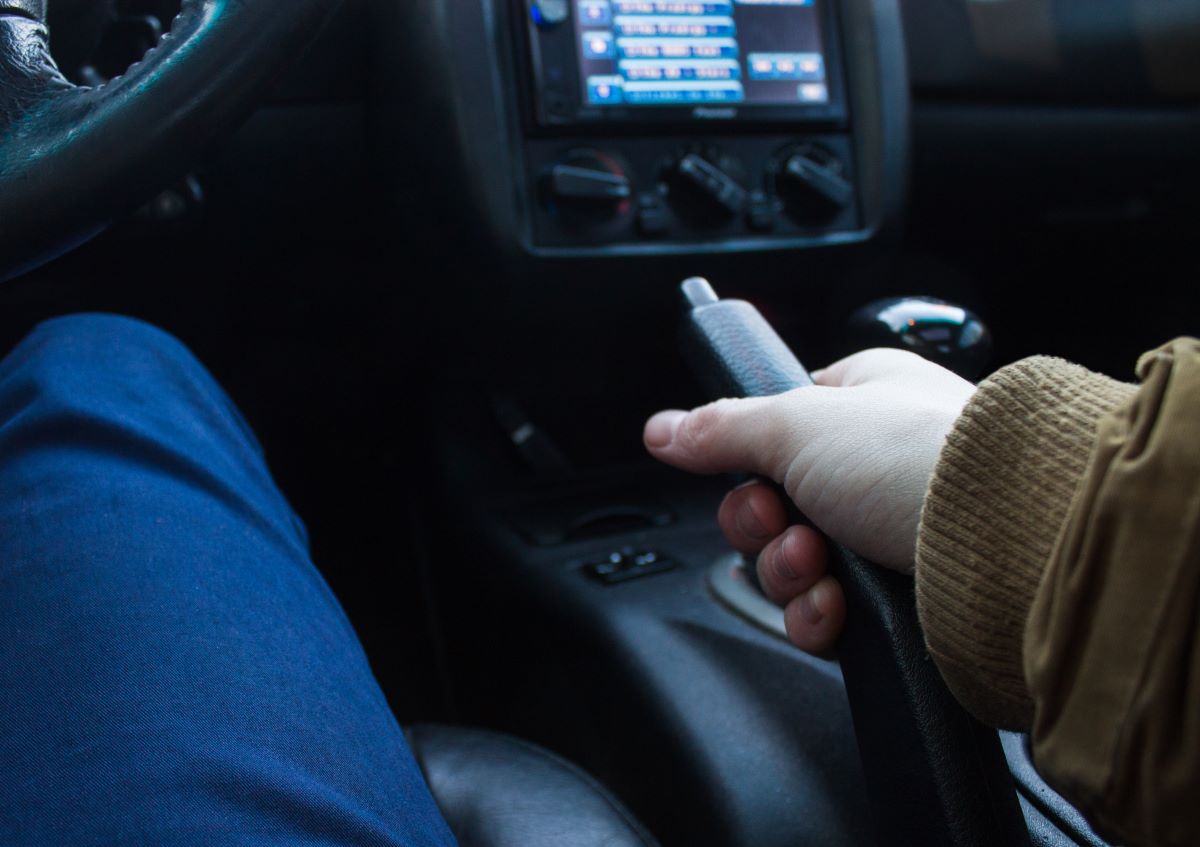
Choosing between a manual and an electric handbrake is not merely a choice. It significantly affects vehicle safety and convenience. This also affects the overall driving experience. The manual handbrakes have been available for ages. They are simple and reliable. Conversely, electric handbrakes reflect the technological step forward.
It is a user-friendly and space-saving option. But how do both systems differ? You will get the answer to this question in this article. This article will outline the difference between manual vs electric handbrakes. So you can better understand how these will impact safety, usability, and maintenance needs.

Table of Contents

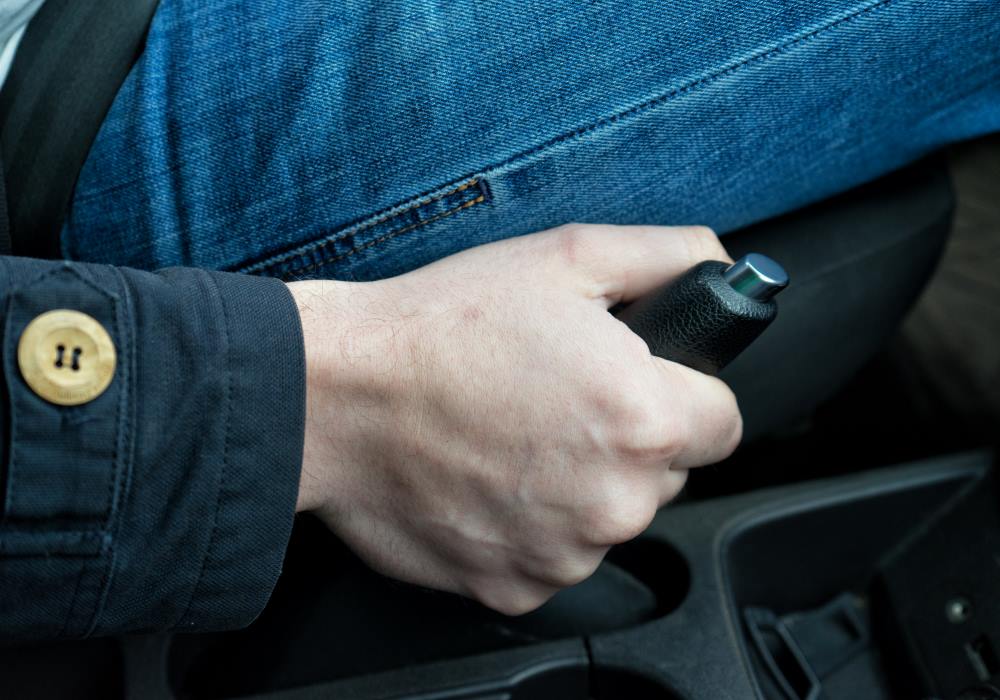
The lever handbrake is often referred to as a manual handbrake. This braking system includes a mechanical lever stationed between the two front seats. When pulled, this lever engages with the rear brakes to station the car in one place. This system is simple to understand and, hence, reliable for most drivers who are all too familiar with it.
A manual handbrake is mechanically simple, inexpensive, and hence easy to repair. They need periodic service and maintenance to reduce wear and tear and ensure proper working, especially in old units.
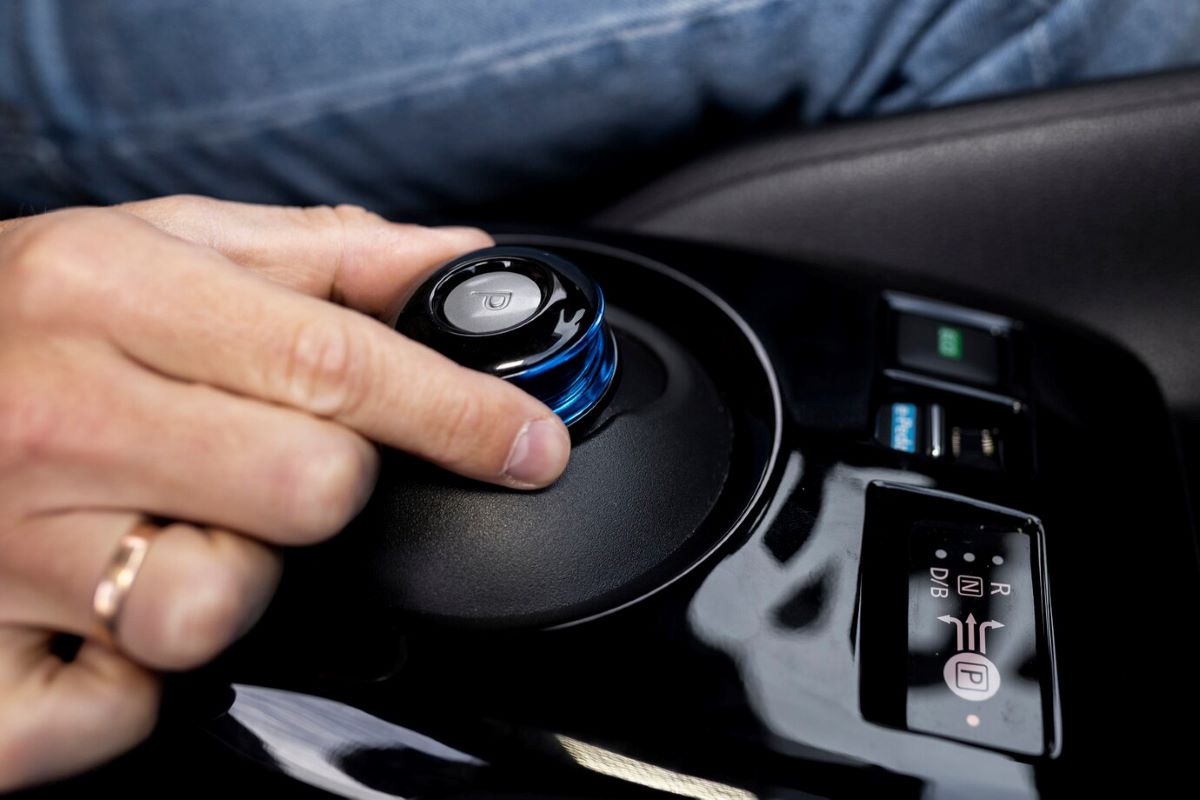
Electric handbrakes are a new age and convenient alternative to traditional handbrakes. The engagement or disengagement to enable the break is not done through the conventional lever. This handbrake is an electronic device with an attached control unit. This ensures automatic calibration at the applied and released conditions of this brake.
Additionally, auto-hold ensures that on an incline, the car stays still. Even as a driver transitions from the brake to the accelerator and never rolls back. Most electric handbrakes are also fitted with hill-start assistance. This makes driving on slopes much more manageable.
The comparison table shows the essential differences between manual and electric handbrakes. This helps you to analyse the workings of the handbrakes critically:
Knowing how different handbrakes work will make us use them more efficiently. Here is a quick overview of how the manual and electric brakes work
Operation: The manual handbrake operates through a mechanical lever, which the driver pulls up or releases to engage the parking brake. It involves direct contact with the driver's effort in physical terms.
Mechanism: The rear brakes are attached to manual handbrakes via cables when the lever is pulled. This pulls them and creates friction to stop the wheels from turning. These sometimes must be adjusted because they stretch or wear out.
User Control: In this, the driver directly operates the brake's engagement. He pulls the lever upwards to engage the brake and pushes it down to disengage it. When applying the brake, the driver must be conscious of where the car is.
Operation: The system is activated by a button or switch. It is operated electrically to deploy the electric handbrake to apply or release the parking brake. Electrical motors and sensors entirely run the process.
Mechanism: These automatically apply and release the brakes using motors and sensors. The system is installed into the vehicle's ECU so that the proper force at the right time is applied or released for braking.
User Control: This involves an auto-electric handbrake provision. Hence, it excludes driver’s manually exerted force causing discomfort while parking. Automatic holding and hill assist mechanisms often exist on different car models to aid in slopes.
Manual handbrakes are traditional braking technology. They are reliable and offer many benefits. However, it comes with certain drawbacks too.
They have reliable performance. It delivers quick and safe control in urgent conditions if swift action is required.
They have a simple mechanical design. This is much easier to repair or replace than an electrical system. Thus, reduce your expenditure on repair.
Manual handbrakes do not require the car's electrical system to work. Therefore, it will always work even when the electricity is cut.
They are strong and ideal for off-road or rough terrains. Therefore, they give reliable control in challenging driving conditions.
A manual handbrake provides a touchy feel that lets the driver know when the handbrake is engaged. It gives precise control and safety while driving.
Manual handbrakes are more feasible to retrofit in older vehicles. Hence, they remain an adaptable option for many cars.
Pulling the lever is tiring for drivers with weak or crippled limbs. Thus, it becomes inaccessible to a few drivers, causing trouble while breaking.
Over time, manual handbrake cables may stretch or rust. It causes wear and reduces their effectiveness. It gives additional expenditure to the owners.
The manual versions don't have high-tech features such as hill-start assist or auto-hold.
New drivers may be unable to handle the manual handbrake on their own. This is mostly when driving on hills or other situations that demand proper control.
Manual handbrakes sometimes automatically disengage if not engaged. This results in the rolling of vehicles and may lead to accidents and damages.
Electric handbrakes are the next generation of braking technology. They have the highest convenience and features. However, sophistication brings some benefits and challenges.
It is an electronic handbrake that is easy to engage with the touch of a button. This requires less physical effort from all drivers.
Electric handbrakes are made safer with higher safety features. They include hill-start assist and auto-hold, which provide fail-safes.
Most handbrakes with electricity are automatically released by the accelerator pedal. Thus making driving much easier.
Electric handbrakes also have modern designs. They are an excellent match for the high-tech look of modern vehicles.
It features electronic control. So it breaks perfectly and uniformly. They have improved performance and reliability each time they are used.
With the advanced technology incorporated into electric handbrakes. The installation cost is more expensive and has a higher upfront cost.
Repairs are also costly and time-consuming. This is because they require specialised equipment. This also requires a specialist to diagnose and repair.
Electric handbrakes do not do as well in off-road or off-road conditions. This is where things require more mechanical dependability to achieve the optimum.
The maintenance and repair costs incurred are high because of the electronic components. It must be maintained frequently, be they sensors or motors.
It would be reliable if the manual handbrakes were well taken care of. It remains up to the driver's input whether it needs to be better used. It will weaken, especially when critical moments such as breaking sharp or climbing steep slopes occur.
Electric handbrakes have the added features of auto-hold and hill-start assist. This increases safety in adverse driving conditions. Their electronic dependency is a part of the safety factor. However, there's always a chance of system failure or software malfunction. This happens when the system is not designed with proper diagnostics or alternatives.
The decision between the two depends on conditions and preferences for driving. Electric handbrakes enhance convenience with easy activation, automatic release and hill-start assistance. They are convenient for urban driving and traffic. Since it depends on the electrical system, repairs can be expensive.
Manual handbrakes are also efficient. It is simple to use and not power-consuming. Thus, they are easier to repair. They demand more physical effort, especially when trying to climb an incline. A manual handbrake is a better option for durability and low maintenance.
Electric and manual brakes are beneficial and suitable for different driving styles and conditions. The manual handbrakes are simple, dependable, and reasonably priced. This makes them especially good for off-road use and older cars.
However, electric handbrakes are more manageable, more up-to-date, and safer for driving within the city. A person would have to choose between the two depending on his needs and type of car.
On hills, manual hand brakes supply more precise control. However, electrical handbrakes with a hill hold assist can sometimes be as good.
Yes, electric handbrakes are faster via a button click, and manual handbrakes require more bodily effort.
Electric handbrakes can also be used in an emergency. However, the engagement speed will be slower than that of a mechanical handbrake.
Yes, most electric handbrakes have a manual release feature to disengage during a malfunction in the break.
Electrical handbrakes are more expensive because they contain electronic complexities and installation costs.