General
Life
Accessibility Options


General

General Products
Simple & Transparent! Policies that match all your insurance needs.
 Car Insurance
 Two Wheeler Insurance
 Commercial Vehicle Insurance
 Health Insurance
 Home Insurance
 Travel Insurance
 Business Insurance
Car Insurance
Two Wheeler Insurance
Commercial Vehicle Insurance
Health Insurance
Travel Insurance
Business Insurance
Car Insurance
Two Wheeler Insurance
Commercial Vehicle Insurance
Health Insurance
Travel Insurance


Scan to download

Life

Life Products
Digit Life is here! To help you save & secure your loved ones' future in the most simplified way.
 Term Life
 Savings Plan
 Retirement and Pension Plans
 Group Life Products
 Product Documents
Term Life
Savings Plan
Retirement and Pension Plans
Group Life Products
Product Documents
Term Life
Savings Plan
Retirement and Pension Plans
Group Life Products

Scan to download

Claims

Claims
We'll be there! Whenever and however you'll need us.
 Customer Support
 Motor Claims
Health Claims
Motor Claims
Health Claims
 Marine Insurance
 Grievance Redressal
Customer Support
Motor Claims
Health Claims
Marine Insurance
Grievance Redressal
Grievance Redressal
Customer Support
Motor Claims
Health Claims
Marine Insurance
Grievance Redressal
Scan to download
 General
 Life
General
Life
Life
General
Life
Renewals
Resources

Resources
All the more reasons to feel the Digit simplicity in your life!
Exclusive Features
 Transparency Report
Others
Exclusive Features
Transparency Report
Transparency Report
Others
Exclusive Features
Transparency Report
Scan to download


Our WhatsApp number cannot be used for calls. This is a chat only number.

 Grey Scale
 Readable Text
 Reset
Reset




10000+ Cashless Garages
1.5 Cr+ Policies Sold


Check Price

Car insurance Online, Up to 90% Discount
It's a Brand New Car
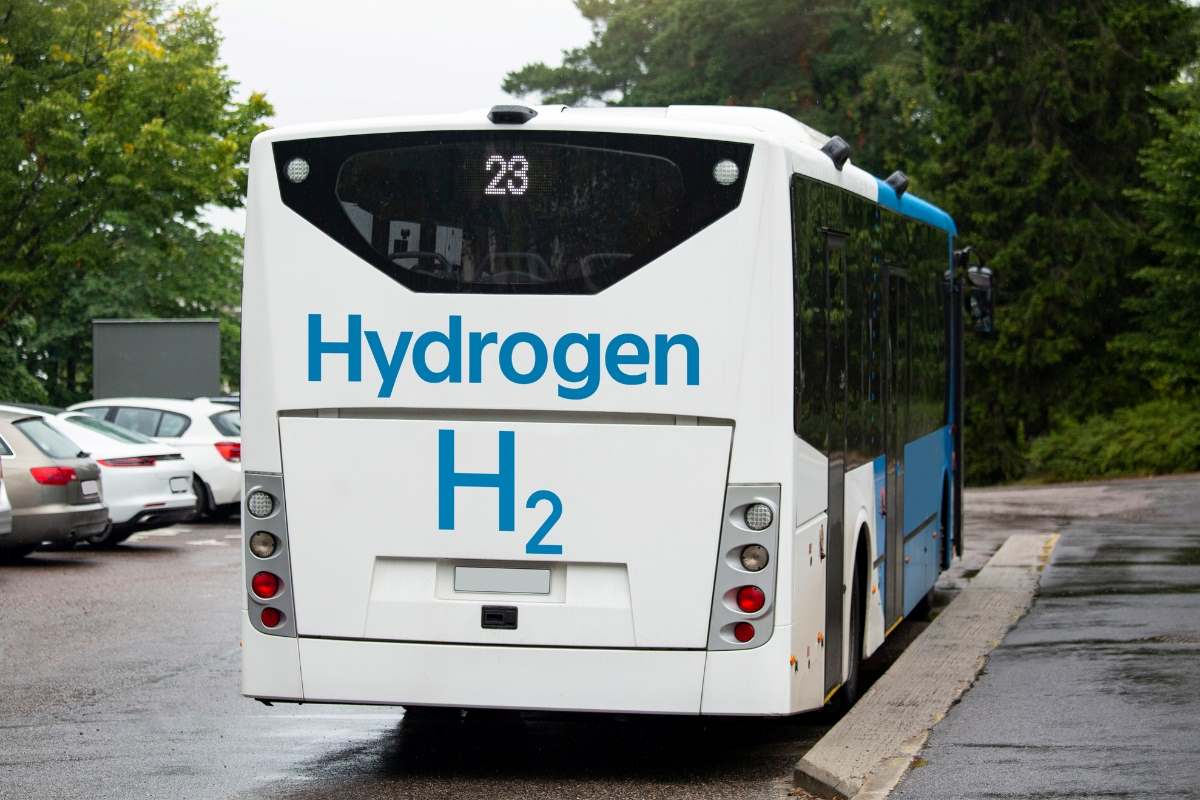
Today, the world of electrified motoring offers a diverse range of options, including fuel-cell electric vehicles (FCEVs), regular EVs, hybrid cars, and plug-in hybrid cars.
However, hydrogen-powered EVs are vastly too scarce, to the point where just two FCEV models are available for sale—the Toyota Mirai and the Hyundai NEXO SUV.
In this guide, we will explain what exactly this hydrogen fuel-cell vehicle is and how it works.

Table of Contents

A fuel cell electric vehicle runs on hydrogen. These four-wheelers boast a propulsion system similar to that of a battery EV. However, their energy comes from hydrogen, which is converted into electricity with the help of a fuel cell.
Ever wondered what factors initially contributed to the rise in the popularity of FCEVs?
Well, unlike conventional internal combustion engine cars, these vehicles do not produce any hazardous tailpipe emissions. So, they actively contribute to a healthier environment. Another significant advantage is that they enhance energy resiliency by promoting diversity, eventually boosting the economy.
Moreover, these FCEVs in the testing stage, have not only been well established for convenience but also they are highly reliable. Unlike traditional cars, a fuel cell electric vehicle (EV) can be refueled in around 5 minutes, providing a driving range of over 300 miles.
The key components of a fuel cell EV comprise:
It is a low-voltage auxiliary battery in an electric drive vehicle, which provides electricity to start the car until when the traction battery comes into action. Additionally, it powers various accessories of the vehicle.
This high-voltage battery stores energy captured during regenerative braking and offers supporting power to the electric traction motor.
It converts higher-voltage DC power coming from the traction battery pack into the lower-voltage AC power that will run the accessories and the vehicle. Moreover, the AC/DC converter recharges the auxiliary battery.
This motor takes power, required to drive the wheels of a FCEV, both from a fuel cell and from the traction battery pack. Some fuel cell EV manufacturers use traction motors that contribute to both drive and regeneration.
It is an assembly of individual membrane electrodes that combine hydrogen and oxygen to produce electricity.
Fuel filler, a nozzle out of the fuel dispenser, is connected to the receptacle of a vehicle. It helps fill the fuel tank.
This part is responsible for storing backup hydrogen gas until it is needed by the fuel cell.
A power electronics controller is responsible for directing the flow of electrical energy discharged by the traction battery and the cell. They do this by regulating the speed and torque of the electric traction motor.
The thermal or cooling system optimises operating conditions for the vehicle within a proper temperature range. This ensures optimal performance of the fuel cell, electric motor, power electronics, and so on.
A fuel cell electric vehicle is highly eco-friendly, emitting only pure water vapour and electrons, which generate electricity. To understand how it is working, we suggest going through the pointers below:
While the engine is on, the fuel cell alone can power your FCEV’s electric motor. Additionally, it stores the electricity onboard with the help of a battery pack.
Now, if you really want to determine if a fuel cell EV is a good fit for you, we suggest considering its individual pros and cons.
Below, you can see some major advantages of using a fuel cell EV:
These are some significant cons of relying on a fuel cell electric vehicle:
If you are in India and hopeful about adopting a zero-emission way of commuting, you might consider owning a Toyota Mirai. This fuel cell electric vehicle could be launched in the country if the manufacturer feels confident about the potential demand.
However, driving it for long distances can pose significant challenges, especially if you live in an area where hydrogen refuelling is an issue. So, please consider carefully before proceeding.