
General
Life
Accessibility Options


General

General Products
Simple & Transparent! Policies that match all your insurance needs.
 Car Insurance
 Two Wheeler Insurance
 Commercial Vehicle Insurance
 Health Insurance
 Home Insurance
 Travel Insurance
 Business Insurance
Car Insurance
Two Wheeler Insurance
Commercial Vehicle Insurance
Health Insurance
Travel Insurance
Business Insurance
Car Insurance
Two Wheeler Insurance
Commercial Vehicle Insurance
Health Insurance
Travel Insurance



Scan to download

Life

Life Products
Digit Life is here! To help you save & secure your loved ones' future in the most simplified way.
 Term Life
 Savings Plan
 Retirement and Pension Plans
 Group Life Products
 Product Documents
Term Life
Savings Plan
Retirement and Pension Plans
Group Life Products
Product Documents
Term Life
Savings Plan
Retirement and Pension Plans
Group Life Products

Scan to download

Claims

Claims
We'll be there! Whenever and however you'll need us.
 Customer Support
 Motor Claims
Health Claims
Motor Claims
Health Claims
 Marine Insurance
 Grievance Redressal
Customer Support
Motor Claims
Health Claims
Marine Insurance
Grievance Redressal
Grievance Redressal
Customer Support
Motor Claims
Health Claims
Marine Insurance
Grievance Redressal
Scan to download
 General
 Life
General
Life
Life
General
Life
Renewals
Resources

Resources
All the more reasons to feel the Digit simplicity in your life!
Exclusive Features
 Transparency Report
Others
Exclusive Features
Transparency Report
Transparency Report
Others
Exclusive Features
Transparency Report
Scan to download


Our WhatsApp number cannot be used for calls. This is a chat only number.

 Grey Scale
 Readable Text
 Reset
Reset




10000+ Cashless Garages
1.5 Cr+ Policies Sold


Check Price

Car insurance Online, Up to 90% Discount
It's a Brand New Car
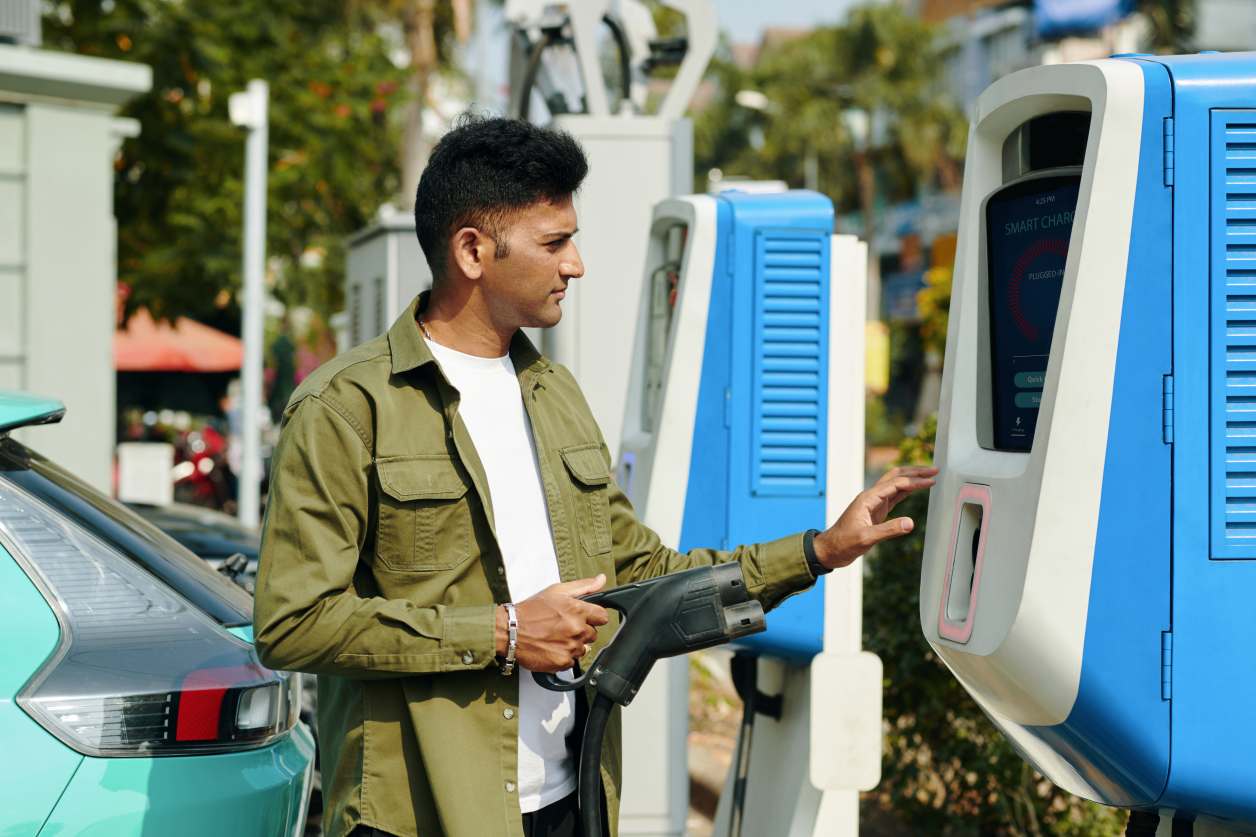
Electric vehicles have changed how we view transportation and its environmental impact. Many people prefer electric cars for their low maintenance, reduced emissions, and other advantages. With increasing discussions about climate change and individual contributions to a greener planet, you may consider purchasing an electric vehicle.
Navigating the world of electric cars can be overwhelming. You must be mindful of the qualities and factors you seek while selecting an EV. A well-thought-out decision will help ensure you choose the right vehicle for your needs in the years ahead.
Keep reading to discover the key considerations that can simplify your journey toward the perfect EV.

Table of Contents

Electric cars are the future of the traditional automobile industry. Logically and environmentally, an electric vehicle may be a better solution for your daily travel needs than a diesel or petrol car. Let us look at some reasons why you may consider purchasing an electric car over a fuel-run one.
As fuel prices keep increasing, travelling becomes costlier day by day. By switching to an electric car, you will save a significant amount of money that you would otherwise be spending on fuel.
Over the years, an electric car generates less carbon footprint than vehicles run on diesel or petrol. Electric vehicles generate lesser emissions over time than traditional four-wheelers.
Electric cars, unlike fuel-run cars, are mostly automatic. This makes them a lot easier to drive, as the hassle of shifting gears while driving is non-existent. New drivers often choose an automatic vehicle for a favourable driving method.
Unlike fuel cars requiring visits to refuelling stations, electric vehicles can be charged at home or in your garage with a simple charging port installation. This convenience is especially useful during emergencies.
Traditional petrol or diesel cars often produce significant engine noise, especially at high speeds. In contrast, electric cars operate quietly, contributing to a reduction in noise pollution. Some manufacturers even add artificial sounds to ensure pedestrians can hear vehicles approaching for safety.
If you choose to buy an electric car, you must keep a few factors in mind before making the purchase. Keep reading to learn about these aspects:
The government provides incentives and tax benefits to help you reduce the overall cost of electric vehicle purchasing. Under section 80EEB, you can get an exemption of up to ₹1.5 lakhs on the interest of the loan amount. Special GST savings can also lower the vehicle's purchase cost.
The upfront cost of purchasing an electric car is significantly higher than that of a traditional fuel car. While a petrol hatchback starts at ₹4 lakhs, similar electric battery hatchbacks start from ₹7 lakhs onwards.
Electric cars run with the help of technology. Software updates help the car perform to its maximum capability. Some manufacturers offer software updates for a nominal fee, whereas others give it for free. Before purchasing an electric car, you must be mindful of such technical updates and their costs.
Electric car manufacturers give an estimated driving range, which is not always accurate. Consider researching or asking people who drive electric cars about the distance their vehicles can travel on a full charge. This will help you get a precise idea about the car’s mileage.
You must select the battery type most appropriate for your electric car. Check the price and the battery life before committing to a battery pack. The longer the battery life and its warranty, the lower the maintenance cost over the years will be.
Electric cars can be charged using standard, slow, or fast methods. While fast chargers offer quicker turnaround times, they are less commonly available and involve higher installation costs. However, you can conveniently charge your electric car at public charging stations accessible in your area, or opt for a standard charging port at home for ease and flexibility.
EVs often require specialised technicians for repairs, as not all service centres are equipped. However, their simpler design with fewer moving parts reduces breakdowns. As EV adoption grows, skilled professionals are becoming more available, making maintenance easier.
Electric cars don't have a great driving range as they only run as long as the charge lasts. If you live in the suburbs, where you must travel a significant distance daily, an EV might not be a good option. However, if you live in a metropolitan city and mostly travel to and from work, an electric car will be cost and fuel-efficient.
Electric cars have a higher upfront cost and additional expenses such as home charging ports, installation, and maintenance. These costs can add up, so it's important to factor them into your decision before purchasing an electric vehicle.
The choice between an EV and a hybrid depends on your daily needs. A hybrid offers reliability and eco-friendliness compared to traditional vehicles. However, an electric car has a lower carbon footprint, offers long-term savings, and is easier to maintain, provided you can access a stable charging port.
The costlier the car, the higher the insurance will be. As Electric vehicles are more expensive than traditional fuel cars, insurance companies charge a higher premium for them. While EVs are generally safer, their parts can be expensive to repair or replace. Keep the cost of insurance in mind before you commit to an electric car.
Purchasing a used EV might be an option if a new car is out of your budget. Unlike other used cars, electric cars do not have many moving parts, which makes the vehicle retain its like-new condition. Ensure to get a used EV checked by professionals before purchasing.
Understanding the primary functioning of an electric vehicle and its specifications before deciding to purchase one is crucial. Evaluating each aspect will give you a clearer picture of what to expect from an electric car.
Refer to the table below to explore the key specs:
First-time buyers of electric cars are advised to research extensively about the models, batteries, and prices of these vehicles to make the purchase easier:
Electric cars initially cost more than traditional ICE cars. Similar models can have an alarming price gap based on whether it's electric or not. However, an electric vehicle is easier to maintain, making it a cost-efficient option in the long run.
Electric vehicles run solely on a charge, so it is crucial to scope out nearby charging ports or install a charging port at home while making a purchase. To charge your EV, simply open the charging port door, connect one end of the cable to the charging station, and plug the other into your car’s charging port.
The time it takes to charge an electric car depends on the type of charger used. Fast chargers can fully charge your car in about an hour, while standard chargers may take up to 40 hours to charge the car to 80%. Depending on daily driving needs, charging overnight every 3 to 4 days is ideal for most owners.
First-time owners often make the mistake of overestimating the capacity of an EV battery. Before departing with your car, you must consider the distance of a round trip. Without a charging port at your destination, you might have barely any charge left while returning home.
Purchasing an electric vehicle requires careful consideration of various factors such as cost, charging options, and maintenance. You can make a well-informed decision that suits your lifestyle and driving needs by evaluating these key aspects.





