General
Life
Accessibility Options


General

General Products
Simple & Transparent! Policies that match all your insurance needs.
 Car Insurance
 Two Wheeler Insurance
 Commercial Vehicle Insurance
 Health Insurance
 Home Insurance
 Travel Insurance
 Business Insurance
Car Insurance
Two Wheeler Insurance
Commercial Vehicle Insurance
Health Insurance
Travel Insurance
Business Insurance
Car Insurance
Two Wheeler Insurance
Commercial Vehicle Insurance
Health Insurance
Travel Insurance


Scan to download

Life

Life Products
Digit Life is here! To help you save & secure your loved ones' future in the most simplified way.
 Term Life
 Savings Plan
 Retirement and Pension Plans
 Group Life Products
 Product Documents
Term Life
Savings Plan
Retirement and Pension Plans
Group Life Products
Product Documents
Term Life
Savings Plan
Retirement and Pension Plans
Group Life Products
Scan to download

Claims
Claims
We'll be there! Whenever and however you'll need us.
 Customer Support
 Motor Claims
Health Claims
Motor Claims
Health Claims
 Marine Insurance
 Grievance Redressal
Customer Support
Motor Claims
Health Claims
Marine Insurance
Grievance Redressal
Grievance Redressal
Customer Support
Motor Claims
Health Claims
Marine Insurance
Grievance Redressal
Scan to download
 General
 Life
General
Life
Life
General
Life
Renewals
Resources
Resources
All the more reasons to feel the Digit simplicity in your life!
Exclusive Features
 Transparency Report
Others
Exclusive Features
Transparency Report
Transparency Report
Others
Exclusive Features
Transparency Report
Scan to download


Our WhatsApp number cannot be used for calls. This is a chat only number.

 Grey Scale
 Readable Text
 Reset
Reset



Buy/Renew Comprehensive Bike Insurance Online

10000+
Cashless Garages

1600 Crore+
Paid-in Claims

7 Crore+
Policies Sold
I agree to the Terms & Conditions

Buy Online for Huge Savings

Check Price

Bike insurance Online, starting ₹752
10000+
Cashless Garages
1600 Crore+
Paid-in Claims
7 Crore+
Policies Sold
Following are the benefits of getting a comprehensive bike insurance plan:

Wide Coverage
A comprehensive 2-wheeler insurance policy covers your vehicle against almost all types of damages, whether caused by road accidents or manmade or natural disasters. It also covers losses due to theft and third-party liabilities.

Financial Security
Losses due to accidents, theft, and unfortunate events can be expensive. A comprehensive bike insurance policy acts as a financial shield, saving you a significant financial burden.

Peace of Mind
Knowing you're comprehensively covered allows you to ride your two-wheeler with peace of mind as you'll be less worried about the financial burdens due to unforeseen events.

Add-on Covers Available
Comprehensive insurance plans allow you to buy additional benefits in the form of add-ons for enhanced protection.

Cashless Repair Network
Access a wide network of authorised garages where your bike can be repaired cashlessly, with the insurer settling the bill directly with no upfront payment or hassle.

High‑Value Protection
New and high‑end bikes have higher repair and replacement costs; this cover helps protect you from heavy financial losses in case of damage.

Third-Party Bike Insurance

Comprehensive Bike Insurance

Own Damage Bike Insurance
Third Party
Comprehensive
Own Damage
|
Damages/Losses to own two-wheeler due to an accident |
×
|
✔
|
✔
|
|
Damages/Losses to own two-wheeler in case of fire |
×
|
✔
|
✔
|
|
Damages/Losses to own two-wheeler in case of a natural calamity |
×
|
✔
|
✔
|
|
Damages to Third-Party Vehicle |
✔
|
✔
|
×
|
|
Damages to Third-Party Property |
✔
|
✔
|
×
|
|
Personal Accident Cover |
✔
|
✔
|
×
|
|
Injuries/Death of a Third-Party Person |
✔
|
✔
|
×
|
|
Theft of your scooter or bike |
×
|
✔
|
✔
|
|
Customize your IDV |
×
|
✔
|
✔
|
|
Extra protection with customized add-ons |
×
|
✔
|
✔
|
Know more about the difference between comprehensive and third party two wheeler insurance
Third‑party insurance covers losses you cause to others, while comprehensive insurance covers third‑party liability plus damage or loss to your own bike. Here is a quick comparison on what each policy covers and what it doesn’t, so you can choose between the both.
Your comprehensive bike insurance not only comes with a super easy claim process, but also with the option to choose a cashless settlement

Cashless Repairs
10,000+ Cashless Network Garages for you to choose from across India

Smartphone-Enabled Self Inspection
Quick and paperless claims through Smartphone enabled processes that make you go "That's it?"

Super-Fast Claims
Quick and hassle-free claim process that's digital and paperless

Customize Your Vehicle IDV
With us, you can customize your vehicle IDV as per your choice!

24*7 Support
24*7 call facility even on National Holidays

Complimentary Wellness Benefits
Get exclusive wellness benefits on the Digit App offered by top-rated health and wellness partners.
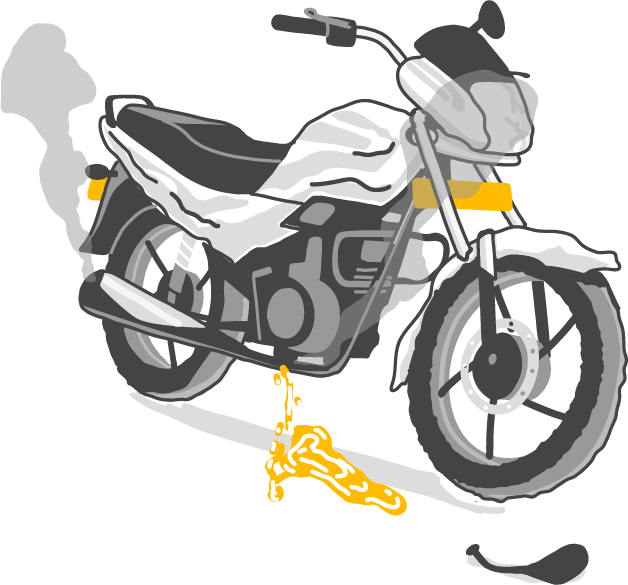
Accidents
Damages and losses that may arise due to an accident or collision
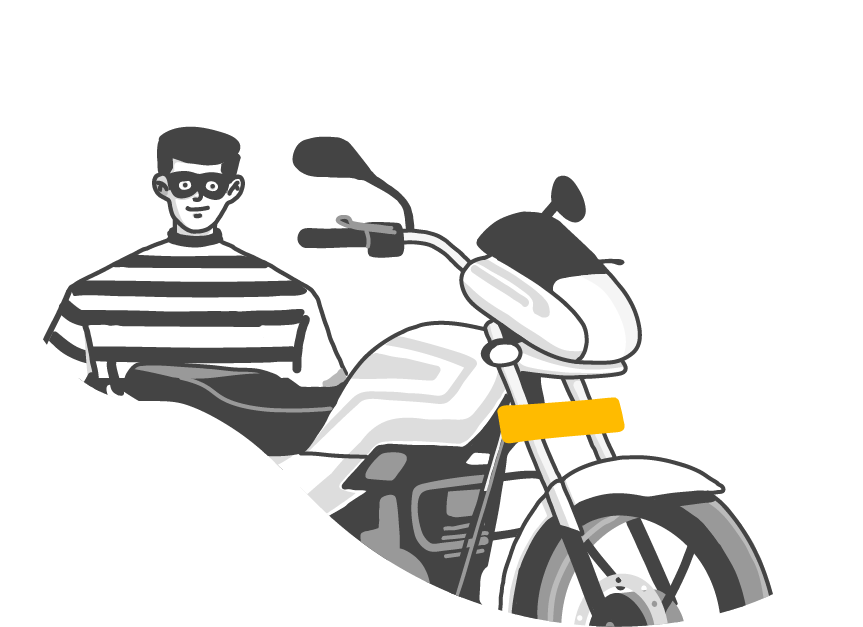
Theft
Covers for your losses in case your two-wheeler is unfortunately stolen!
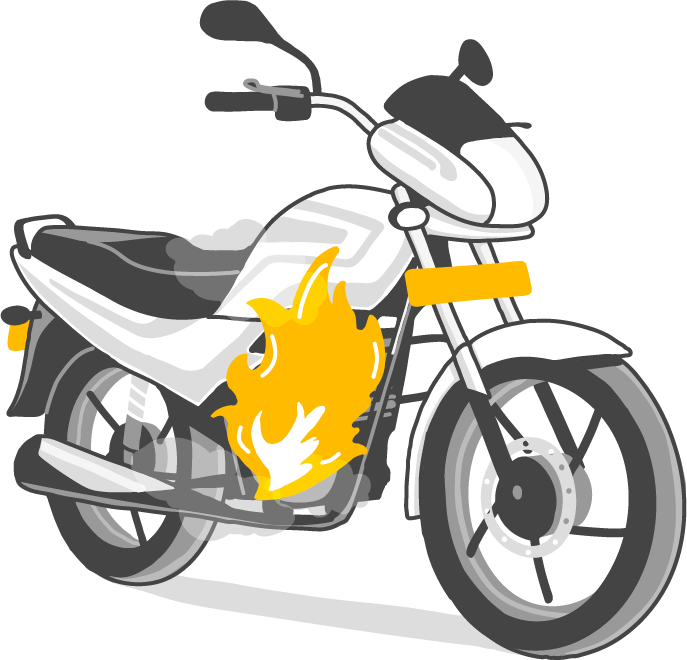
Fire
Damages and losses to your two-wheeler in case of an accidental fire!
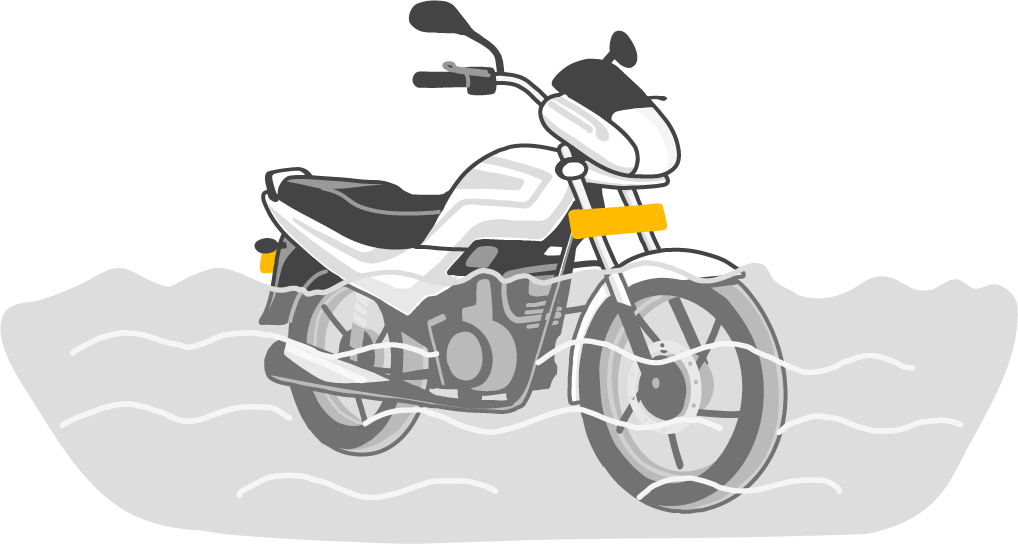
Natural Disasters
Damages caused to your two-wheeler due to nature’s many furies, such as due to floods, cyclones, etc.

Personal Accident
Covers for your expenses in cases where you’ve hurt yourself too bad!
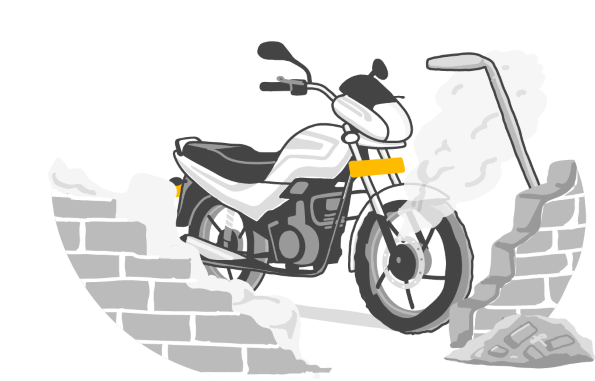
Third Party Losses
When a person, a vehicle or a property is hurt or damaged due to your bike's actions.
What is not covered differs from one insurance company to another but to list some, we give you some conditions under which the damage to your bike will not be covered in your comprehensive insurance policy by Digit:

Drunk Driving
Damage is done by a person driving under the influence of drugs or alcohol.

No Valid Licence
Damage is done by a person driving without a valid license or has a learner’s license but no valid license holder on the vehicle.

Consequential Damage
Consequential damage does not occur as a direct result of the accident. Unless covered for in an add-on, such damages can’t be covered.

Contributory Negligence
Any contributory negligence, like damage due to driving the bike in a flood can pose a risk, which is not recommended as per the manufacturer’s driving manual, will not be covered!

Add-Ons not Bought
Some situations are covered in add-ons bought along with the policy. In case the add-ons are not bought, the corresponding situations will not be covered.
Two-wheeler insurance add-ons which you can buy with your comprehensive two-wheeler insurance policy

Daily Conveyance Benefit
The add-on cover of daily conveyance benefit will ensure that you are compensated for your transportation cost during the period when two-wheeler is under repair subject to applicable time excess. A policyholder can be compensated in the form of fixed allowance per day or coupons from taxi operators from an amount equal to per day fixed allowance.

Engine & Gear-box Protection Cover
In a standard two-wheeler insurance policy, only damages caused during the accident are covered. However, with the engine and gear-box protection add-on cover, you can specifically cover the life of your vehicle for any consequential damages caused post the accident.

Tyre Protect
The tyre protect add-on cover is offered only to vehicles fitted with run flat technology. As part of it, the cost of replacing damaged tyres with equivalent or near equivalent to the one being used in the vehicle, labour and wheel balancing charges can be reimbursed. However, claims made under the add-on cover is subject to conditions set forth under the vehicle insurance policy.

Consumable Cover
The add-on of consumable cover adds an additional shield to your two-wheeler. Covers the cost for all your bike’s nitty-gritties such as the engine oils, screws, nuts and bolts, grease, etc. in the event of an accident.

Return to Invoice Cover
With return to invoice add-on, if the bike is stolen or damaged beyond repair, the insurer cover the costs of getting you the same, or similar bike, including the road tax and registration fees for the same

EV Shield Add-on Cover
This EV Shield add-on cover for electric two wheeler in India will protect you and your vehicle against any loss or damage to the electrical panel for the vehicle charging point, vehicle charger including charging cable, and offer roadside assistance services specific to EVs.

Zero Depreciation Cover
Usually, the required depreciation amount is always taken in account during claims. However, a zero-depreciation cover ensures no depreciation is taken into consideration, so you get the full value of the cost of repair/replacement during claims.

Breakdown Assistance
The roadside assistance add-on ensures we’ll always be there for you and your two-wheeler in case of any breakdowns. The best part? Asking for our help doesn’t even count as a claim.

Luxury Bike Owners

New Bike Owners
Daily Commuters
Possessive Bike Owners
Inexperienced Bike Owners
Why Comprehensive Insurance Makes Sense
Raj (40) and Preeti (36) recently bought a premium touring bike for weekend getaways. Given the bike’s high market value and long‑distance usage, they opted for comprehensive insurance. It protects them against risks like accidents, theft, and natural calamities—situations where repair or replacement costs could be substantial.
They also chose add‑ons such as zero depreciation to avoid deduction on parts during claims, and roadside assistance to handle breakdowns during highway trips. For them, comprehensive insurance isn’t just about compliance—it’s about reliability, convenience, and peace of mind.
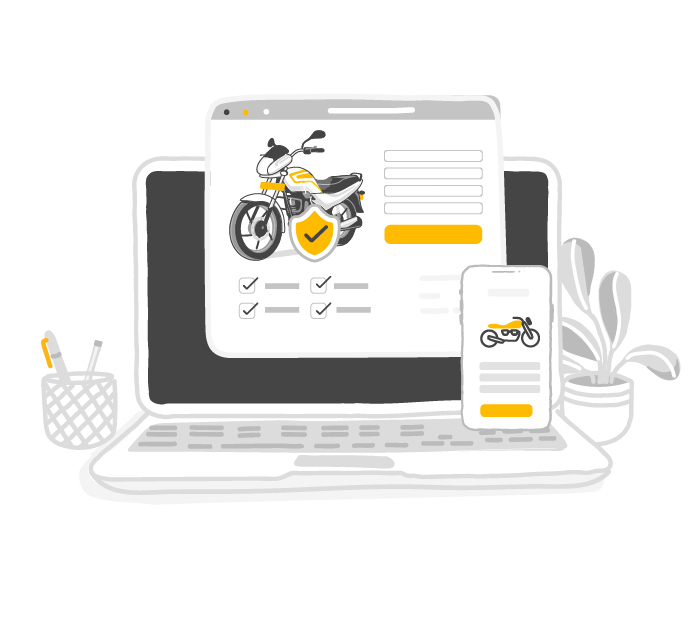
Enter Bike Details
On the Digit App or website, enter bike’s registration number and select the policy status.
Choose the Plan
Select the comprehensive bike insurance plan and choose desired add-ons.
Enter Personal & Nominee Details
Enter your personal, nominee and vehicle details, and start the payment.
Complete Payment & KYC
Complete the payment and mandatory KYC verification process. Once completed, the policy will be issued and available in Digit App.

The premium for comprehensive two‑wheeler insurance is a combination of a fixed third‑party premium and a variable own‑damage premium. You can calculate this using a Bike Insurance Premium Calculator.
Total Premium = Own Damage Premium – NCB & Applicable Discounts + Third‑Party Premium + Add‑On Charges
Third‑Party Premium: Fixed and regulated by IRDAI based on engine capacity
Own Damage Premium: Calculated by the insurer based on risk factors such as IDV, bike age, location, and usage
Since multiple variables influence pricing, using an online bike insurance premium calculator is the most accurate way to get a personalised quote for your comprehensive policy.
The premium of comprehensive bike insurance is influenced by multiple vehicle‑ and rider‑specific factors that determine risk and repair costs. Understanding these factors helps you estimate your premium and choose coverage more efficiently.

Bike Make and Model
The make, model, and engine capacity of your bike significantly impact the premium. Premium, sports, or high‑performance bikes generally have higher premiums because their spare parts and repair costs are more expensive.
Age of the Bike
As a bike gets older, depreciation reduces its market value. This lowers the Insured Declared Value (IDV), which in turn reduces the base premium. Newer bikes usually attract higher premiums due to a higher IDV.

Insured Declared Value (IDV)
IDV represents the bike’s current market value and is the maximum amount payable in case of total loss or theft. A higher IDV offers better financial protection but also results in a higher premium.
No Claim Bonus (NCB)
If you do not make any claims during a policy year, you earn an NCB at renewal. This discount can significantly reduce the own‑damage portion of your premium over time.

Coverage Type
Comprehensive bike insurance includes both third‑party liability and own‑damage coverage. While it offers wider protection than third‑party‑only insurance, it also comes at a higher premium.

Add‑On Covers
Optional add‑ons such as zero depreciation, roadside assistance, engine protection, or consumables cover enhance policy benefits. Choosing add‑ons increases the premium but reduces out‑of‑pocket expenses during claims.

Modifications to the Bike
Performance or aesthetic modifications increase the bike’s replacement and repair costs. As a result, insurers charge a higher premium to account for the added risk.

RTO Location
The city or region where your bike is registered affects the premium. Bikes registered in high‑traffic, accident‑prone, or theft‑prone areas generally attract higher premiums due to increased risk exposure.
Your comprehensive bike insurance premium reflects the risk profile of your bike, how and where it is used, and the level of coverage you choose. For the most accurate estimate, using an online bike insurance premium calculator helps tailor the premium to your exact details.

You can reduce your comprehensive bike insurance premium by managing claims wisely, choosing only necessary coverage, and optimising policy features like NCB, deductibles, add‑ons, and IDV. These strategies are especially relevant for Indian two‑wheeler owners, where premiums are influenced by IRDAI‑regulated and risk‑based factors.
NCB is one of the most effective ways to lower your renewal premium. For every claim‑free year, you earn a discount on the own‑damage premium ranging from 20% up to 50%. Avoid filing claims for minor repairs that you can afford out of pocket, as even a small claim resets your accumulated NCB.
A voluntary deductible is the amount you agree to pay from your own pocket during a claim. Choosing a higher deductible reduces the insurer’s risk, which directly lowers your premium. This strategy works best if you are a confident rider with a low claim history.
Insured Declared Value (IDV) represents your bike’s current market value. While a higher IDV increases coverage, it also increases your premium. Avoid overestimating the IDV, select a value that accurately reflects your bike’s age and depreciation to strike the right balance between protection and cost.
Add‑ons like zero depreciation, roadside assistance, engine protection, and consumables cover enhance protection but also add to the premium. Review your riding pattern and remove add‑ons you no longer need especially for older bikes where certain covers may offer limited value.
Timely renewal helps you retain your accumulated NCB and avoids policy lapses. If your bike insurance expires, you may lose NCB benefits and be charged a higher premium after inspection and reassessment of risk.
Premiums can vary across insurers based on pricing models, risk assessment, and add‑on costs. Using an online bike insurance comparison tool helps you evaluate coverage, deductibles, and premiums side by side so you can choose the most cost‑effective comprehensive policy.
Comprehensive insurance is ideal for new, premium, or frequently used bikes. However, if your bike is old, infrequently used, or has a low market value, switching to third‑party insurance may significantly reduce costs while still meeting legal requirements.
Read More
Read Less
IDV (Insured Declared Value) is crucial because it directly determines both your premium and the maximum payout you can receive if your bike is stolen or declared a total loss. Choosing the right IDV ensures you neither overpay for insurance nor stay under‑protected.
1. Defines Your Maximum Claim Amount
IDV represents your bike’s current market value. In cases like theft or total loss, the insurer pays up to this value. A realistic IDV ensures you get fair compensation without delays or disputes.
2. Directly Influences Premium
A higher IDV increases your premium, while a lower IDV reduces it. Setting an IDV too high means overpaying; setting it too low means saving on premium but receiving inadequate compensation.
3. Reflects the Bike’s Age and Depreciation
IDV decreases each year due to depreciation. This ensures your premium naturally becomes more affordable as your bike ages, keeping coverage aligned with the bike’s value.
4. Helps You Avoid Under‑Insurance
Choosing an unrealistically low IDV may reduce your premium, but you risk getting much less money during a major claim. For newer or high‑value bikes, maintaining an accurate IDV is essential.
5. Affects Add‑On Decisions
Add‑ons like zero depreciation or return‑to‑invoice work best when IDV is set correctly. An inaccurate IDV limits the benefit of these covers.
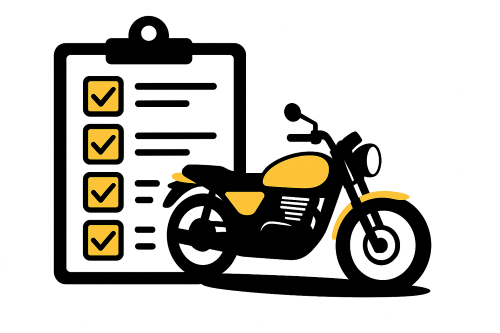
1. Coverage essentials to check first
Make sure the policy includes own‑damage cover for accidents, theft, fire, and natural calamities. Third‑party liability must be included, as it is legally mandatory, and personal accident cover is essential to protect the owner‑driver.
2. Key parameters that affect protection
Choose the right IDV (close to your bike’s current market value) so claims are not underpaid. Check if No Claim Bonus (NCB) is correctly applied for claim‑free years. Decide whether a 1‑year or long‑term (2–3 years) policy suits your usage and budget.
3. Add‑ons worth considering
Opt for zero depreciation if you want full payout on parts like plastic and rubber. Engine protection is important in flood‑prone areas, while roadside assistance helps during breakdowns on long rides. Return to Invoice is useful if you want the full bike value in case of total loss.
4. What impacts your premium
Premiums vary based on bike age and engine capacity, your voluntary deductible, and your location, cities usually cost more due to higher risk of theft or accidents.
5. Choosing the right insurer
Look at the claim settlement ratio for reliability, ensure there’s a good cashless garage network near you, and check customer reviews for real claim experiences.
This checklist helps you balance legal compliance, cost, and real‑world protection, so your bike is insured the way it should be.



Content Writer
Storyteller at heart, Manasvi brings 4 years of content and marketing experience to Digit. Whether it's writing SEO-optimised articles or a researched and insightful blog, she strives to transform ideas into creating impactful and engaging content.


Product Head - Motor
Mayur specializes in motor insurance and is responsible for overseeing the development and management of motor insurance products. With expertise in product strategy and market analysis, he focuses on developing customer-centric insurance solutions.