General
Life
Accessibility Options


General

General Products
Simple & Transparent! Policies that match all your insurance needs.
 Car Insurance
 Two Wheeler Insurance
 Commercial Vehicle Insurance
 Health Insurance
 Home Insurance
 Travel Insurance
 Business Insurance
Car Insurance
Two Wheeler Insurance
Commercial Vehicle Insurance
Health Insurance
Travel Insurance
Business Insurance
Car Insurance
Two Wheeler Insurance
Commercial Vehicle Insurance
Health Insurance
Travel Insurance



Scan to download

Life

Life Products
Digit Life is here! To help you save & secure your loved ones' future in the most simplified way.
 Term Life
 Savings Plan
 Retirement and Pension Plans
 Group Life Products
 Product Documents
Term Life
Savings Plan
Group Life Products
Product Documents
Term Life
Savings Plan
Group Life Products

Scan to download

Claims

Claims
We'll be there! Whenever and however you'll need us.
 Customer Support
 Motor Claims
Health Claims
Motor Claims
Health Claims
 Marine Insurance
 Grievance Redressal
Customer Support
Motor Claims
Health Claims
Marine Insurance
Grievance Redressal
Grievance Redressal
Customer Support
Motor Claims
Health Claims
Marine Insurance
Grievance Redressal

Scan to download
 General
 Life
General
Life
Life
General
Life
Renewals
Resources

Resources
All the more reasons to feel the Digit simplicity in your life!
Exclusive Features
 Transparency Report
Others
Exclusive Features
Transparency Report
Transparency Report
Others
Exclusive Features
Transparency Report

Scan to download


Our WhatsApp number cannot be used for calls. This is a chat only number.

 Grey Scale
 Readable Text
 Reset
Reset



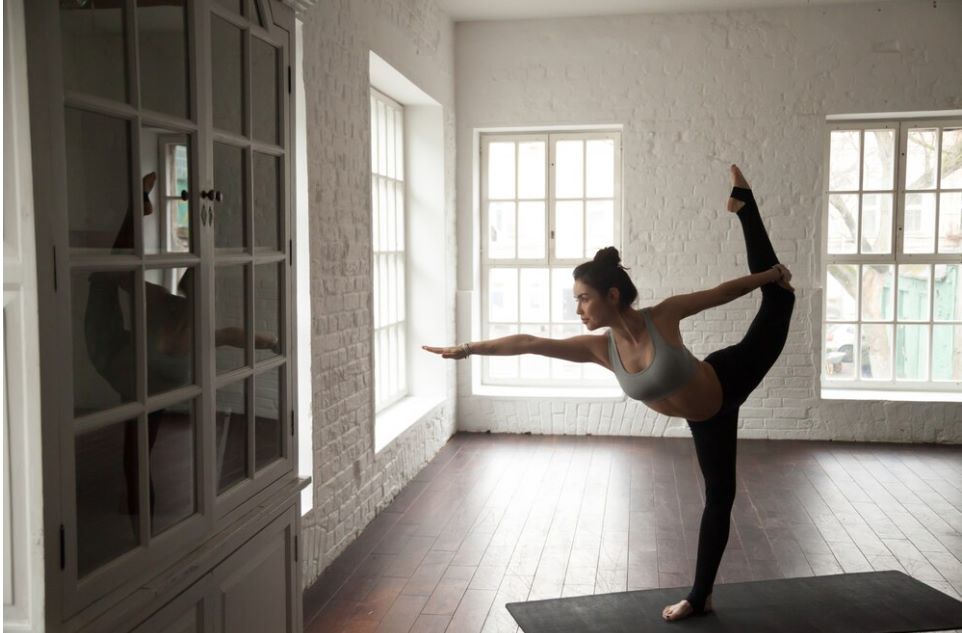
If you are someone who does not enjoy going to the gym but wants to build flexibility and improve strength, yoga is a good option for you. In this regard, you must have heard of Natarajasana or Lord of the Dance Pose.
It is derived from Bharatnatyam, a classical Indian dance form, and this pose is depicted in the Nataraja temple. If you are curious to know more about the health benefits of Natarajasana, keep reading.

Table of Contents

The qualities of Lord Shiva are strength, intensity, and equilibrium. Natrajasana replicates one of his most well-known dancing personas, Nataraj, which beautifully captures his love of dance, music, and expression.
The form is in harmony with this stance. Regularly performing this exercise helps strengthen your core, enhance body balance, promote flexibility, and increase overall physical strength. However, you must perform this yoga pose on an empty stomach or at least four hours after eating.
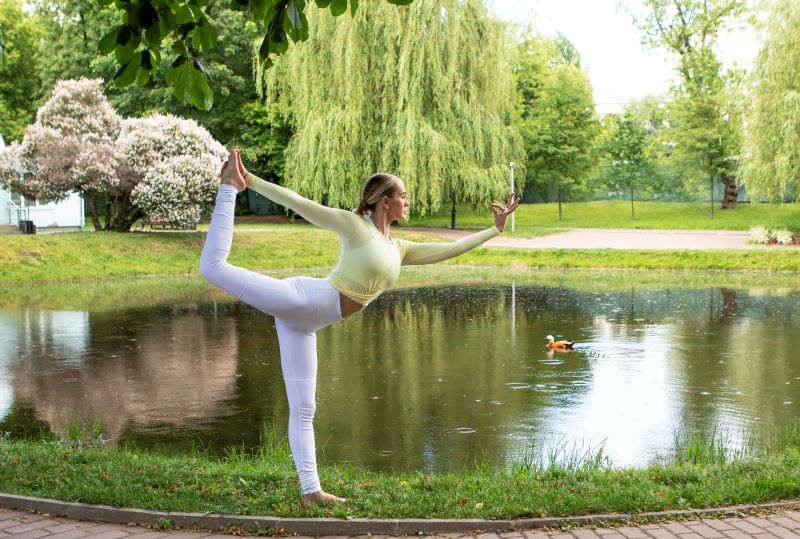
The following are the steps one needs to follow to perform Natarajasana:
Step 1: Start by forming the Mountain Pose (Tadasana), standing tall and distributing your weight evenly between both feet.
Step 2: Place more weight on your right foot. Bend your left knee to lift your left foot off the ground. Throughout this pose, keep your left knee near your midline.
Step 3: With your left hand, take hold of your left foot's instep. Your thumb should point towards your toes while resting on the bottom of your foot.
Step 4: Straighten out your right arm and reach the ceiling.
Step 5: As a counterbalance, raise your left leg behind you and lean forward. Always remember not to let your left knee splay to the side. You will also extend your right arm.
Step 6: Powerfully kick your left foot into your left hand to elevate the leg higher and deepen the backbend. Keep moving your left toes.
Step 7: To maintain your balance, fix your sight (Drishti) on anything stationary.
Step 8: Stay in this position for 5 to 10 breaths.
Step 9: Keep kicking your left foot into your left hand to get back up. Your left leg should now be parallel to your right. Now repeat the same on the opposite side.
Natarajasana is a dynamic yoga posture that combines strength, flexibility, and balance. This graceful pose, inspired by the Hindu deity Shiva's cosmic dance, offers numerous health benefits for the body, mind, and spirit, such as:
Natarajasana challenges the mind-body connection, requiring focus and concentration to maintain balance. Regularly engaging in this pose can enhance memory, cognitive function, and overall mental health.
As you balance on one leg in Natarajasana, the knees are strengthened and stabilised. This can help prevent injuries and improve knee joint health, which is especially beneficial for individuals with weak or injured knees.
Natarajasana improves body balance by challenging stability and coordination. By practising this pose, you can enhance proprioception and spatial awareness, leading to better balance and coordination in daily activities.
The mindful movement and deep breathing in Natarajasana help reduce stress and promote relaxation. This pose can alleviate stress and anxiety by releasing tension and calming the nervous system, fostering a sense of peace and calm.
Regular practice of Natarajasana can aid in weight management and reduce obesity. This dynamic pose engages multiple muscle groups, burns calories, and promotes metabolic function, contributing to weight loss and overall fitness.
This pose strengthens the muscles of the legs, ankles, and feet as they work to support the body's weight. The quadriceps, hamstrings, glutes, and calf muscles are engaged in the pose, helping to build strength and endurance in these areas.
Natarajasana stretches the shoulders, chest, thighs, groynes, and abdomen, promoting flexibility and mobility. Regular practice of this pose can help release tension and tightness in these areas, improving overall flexibility.
Balancing in Natarajasana requires focus and concentration to maintain stability and alignment. By bringing your attention to the present moment and focusing on your breath, you can cultivate mental clarity and presence, enhancing overall focus and concentration.
The twisting action in Natarajasana stimulates digestion and massages the abdominal organs, promoting healthy digestion and elimination. This can help alleviate digestive issues such as bloating, gas, and constipation.
The deep breathing and mindful movement in Natarajasana can help calm the nervous system and reduce anxiety. By connecting with your breath and allowing your body to relax into the pose, you can experience a sense of peace.
Natarajasana opens the heart centre, stretching the chest and shoulders and promoting emotional well-being. This can help release tension and negativity, allowing you to experience greater compassion and connection with yourself.
Natarajasana elongates the spine and strengthens the muscles of the back, improving posture and alignment. By standing tall and lifting through the chest, you can counteract the effects of slouching and hunching, promoting better spinal health.
Natarajasana increases circulation and oxygen flow throughout the body, energising the body and uplifting the mood. This can help alleviate feelings of fatigue and lethargy, leaving you feeling invigorated and revitalised after practice.
The mudras of Natarajasana, or Lord of the Dance Pose, enhance the practice by incorporating hand gestures that deepen the connection between mind, body, and spirit. Each of the following mudra holds its own significance and benefits, contributing to a holistic experience of this dynamic yoga posture:
Damaru Hasta Mudra is formed by joining the tips of the thumb and the little finger while extending the other fingers. This mudra represents the shape of a traditional Indian drum (damaru) and symbolises rhythm, creativity, and divine energy.
Benefits of Damaru Hasta Mudra: Damaru Hasta Mudra activates the Sacral Chakra, one of the seven chakras, stimulating creativity and passion. It also enhances focus and concentration, promoting mental clarity and productivity.
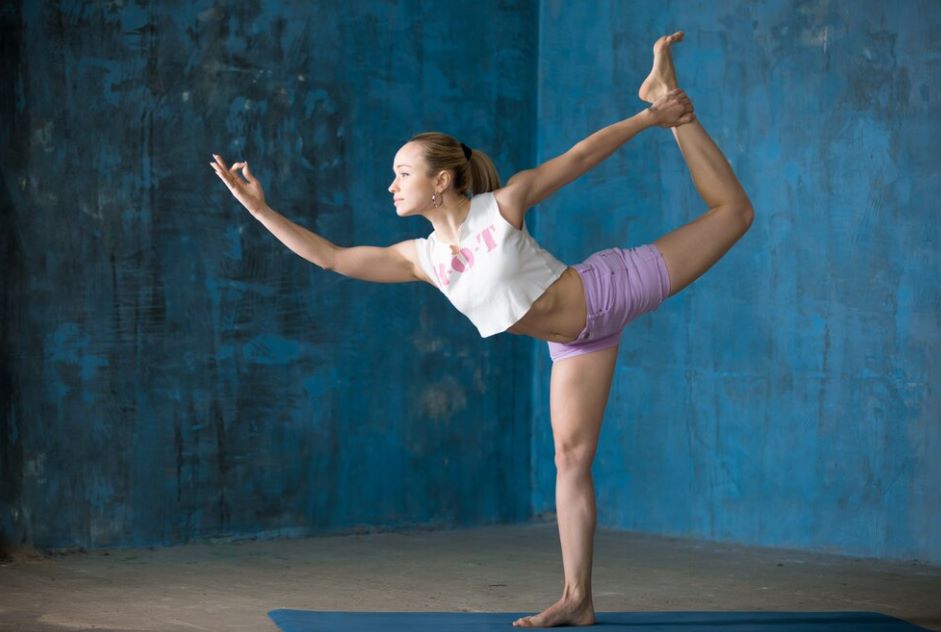
Gyan Mudra is created by touching the tip of the index finger to the tip of the thumb while the other three fingers remain extended. This mudra symbolises knowledge and wisdom, facilitating mental clarity and insight.
Benefits of Gyan Mudra: Gyan Mudra stimulates the brain and enhances concentration, making it ideal for meditation and spiritual practices. It also alleviates stress and anxiety, promoting a sense of calm and balance.
Bio Mudra is formed by curling the fingers into the palms and pressing the thumbs against the index fingers, creating a fist-like shape with the hands. This mudra represents the vitality and life force energy within the body.
Benefits of Bio Mudra: Bio Mudra increases energy levels and revitalises the body, promoting overall health and well-being. It also improves circulation and detoxification, enhancing vitality and immune function.
Natarajasana can be practised in several variations, each offering unique challenges and benefits. Some common types of Natarajasana variations include:
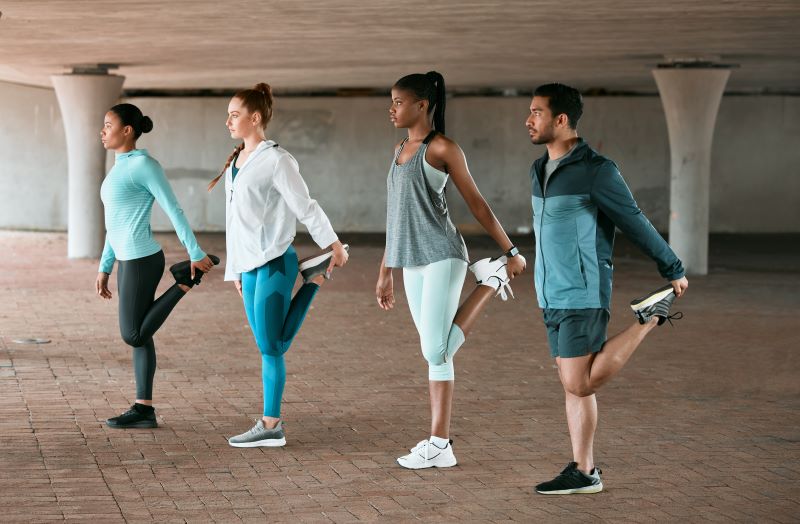
This variation involves standing on one leg while reaching back to hold the opposite foot, stretching the quadriceps. Maintain balance and gently press the foot towards the buttocks to deepen the stretch. It enhances flexibility and balance.
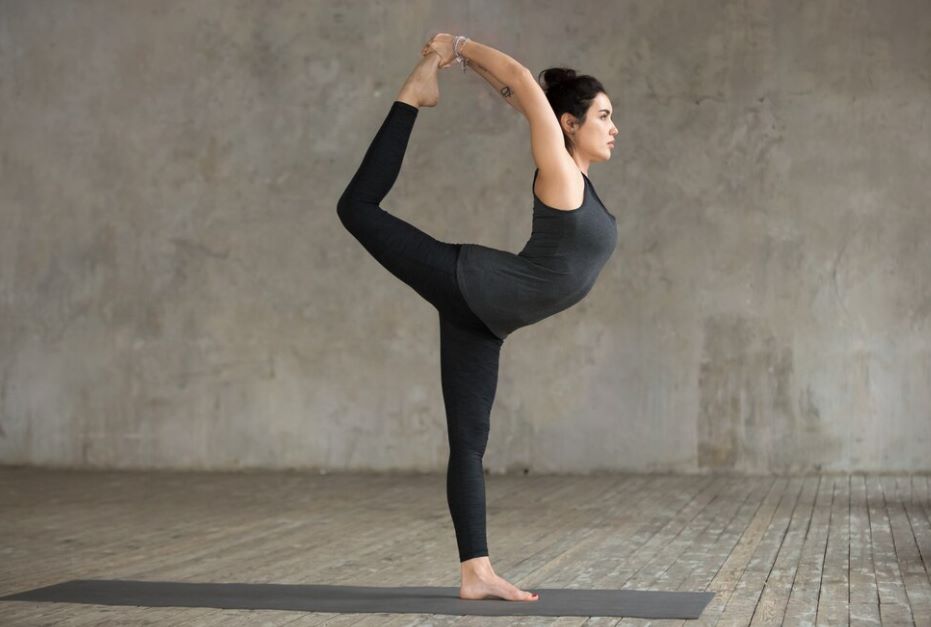
Using a chair for support, lift one leg behind and reach back to hold the ankle or foot. The chair aids balance, allowing for stability and support during the pose. This variation is ideal for those needing assistance with balance.
Perform Natarajasana and then hinge at the hips, lowering the torso towards the ground. Aim to bring the torso parallel to the ground, creating a bow-like shape. It provides a deep stretch for the front body and strengthens the back muscles.
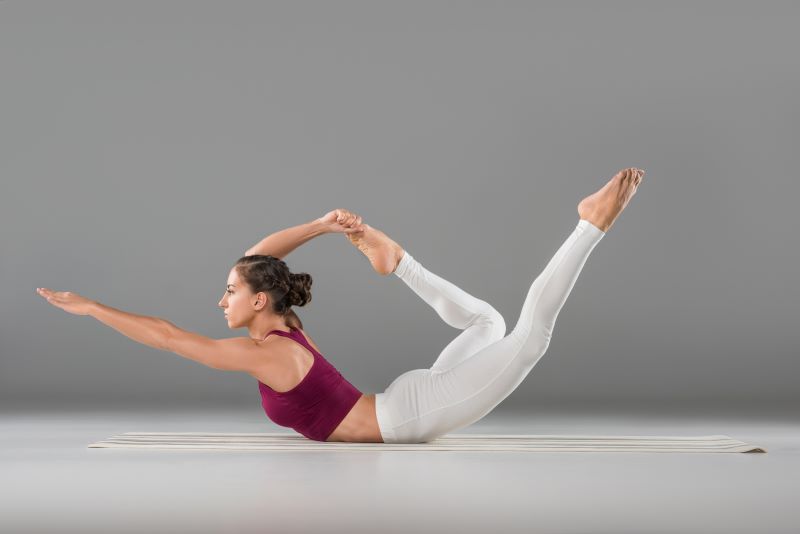
Begin by lying face down and reach back to hold the ankles or feet. Lift the chest and legs off the ground, engaging the back muscles for a deep backbend. This variation strengthens the back, opens the chest, and improves spinal flexibility.
Before delving into the elegant and dynamic practice of Natarajasana, it's essential to consider various factors to ensure a safe and fulfilling yoga experience. Here's what you need to know before attempting Natarajasana:
Determining how long to hold Natarajasana requires consideration of various factors. Here's a guide to help you choose the appropriate duration for sitting in Natarajasana based on your skill level:
Remember that the time spent in Natarajasana can vary depending on flexibility, strength, and comfort. You must approach the pose with mindfulness, patience, and a deep respect for your body's capabilities and limitations.
While Natarajasana offers numerous benefits, being aware of the risks associated with overdoing the pose is essential. Here are some risks to be mindful of:
To minimise these risks, practice Natarajasana mindfully, with proper alignment, control, and awareness of your body's limits.
As a beginner, you might find it difficult to perform Natarajasana with ease. So here are some tips for you:
Never perform this yoga pose without the supervision of a qualified instructor because it is an intermediate asana. To learn how to execute this pose, seek yoga classes in your area.
By utilising a chair or a strap as a prop, beginners, the elderly, and even those struggling initially with this pose can alter it. The quadriceps stretch while using a wall as support is another useful variant of this pose.
When performing Natarajasana, never overstretch, hyperextend, or lock your muscles or limbs, as it can lead to various injuries.
Here are some safety precautions and contraindications you should consider before performing Natarajasana:
If you have a back or ankle ailment, stay away from Natarajasana.
Avoid doing this pose until your wound has fully healed if you recently had surgery.
Never perform Natarajasana without first warming up. Since this pose involves a full-body stretch, your muscles should be warmed up before beginning.
Start off cautiously. Never begin with too many repeats.
Always perform Natarajasana in a clean and well-ventilated spot. Turn off the TV and your phone to prevent distraction.
Stop doing Natarajasana immediately if you experience any pain or a strong pull.
If you are experiencing tension or anxiety, refrain from performing this asana. Your body may get overheated as a result, which could give you palpitations or irritability.
Stay away from this asana if you have a fever, flu, or a cold.
Specific individuals should approach Natarajasana with caution or avoid it altogether. These include:
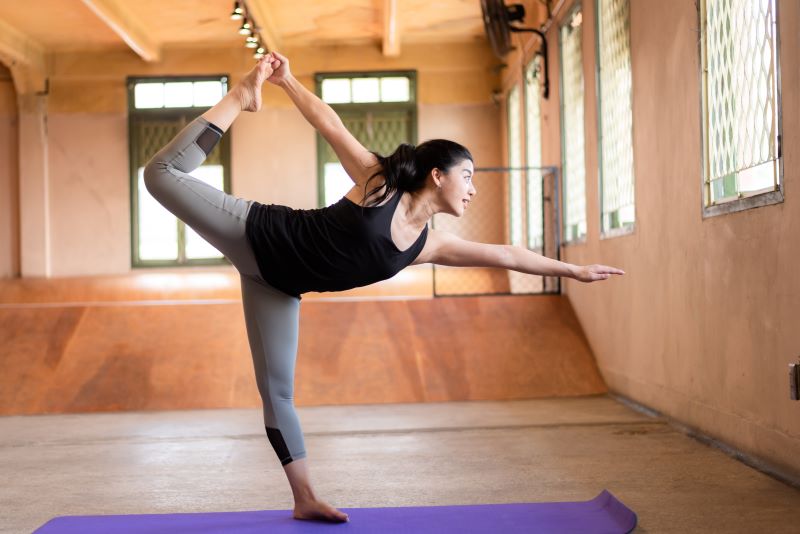
The first level of this posture, which is a detailed elevation of the leg by holding it from behind with your arms, is what someone who wishes to master this pose should focus on. Several adjustments that can be made to simplify the posture are listed below:
The ideal approach to go further into the pose is to use a wall for balance. You can also use a partner to assist you and help you maintain a steady balance.
If the lower back and arms aren't flexible enough to raise the legs high enough, you might use a yoga strap to wrap it around the ankle and pull the leg toward you by pulling the strap higher. But be careful to do this under the supervision of an instructor.
If the hips aren't flexible enough, you can begin the practice by bringing your foot to your elbow, twisting your lower back slightly, and then raising the leg that's supporting it within this elbow. By practising to stay in this position for a few breaths, you'll gain more confidence in your ability to twist your hips fully.
One could lean the bent shin against the wall to improve stretch and hold on to the toes before entering the position.
So, as you see, Natarajasana has multiple benefits, and doing it regularly can improve your body's flexibility and strength. In addition, knowing the steps to perform it and the precautions you should take before doing it will help you perform it effortlessly.
Natarajasana enhances breathing, muscle function, and blood flow, supporting general well-being and minimising health risks. Studies suggest it can help regulate hormonal balance, stress levels, and immunity, which are key in preventing chronic diseases.
However, relying solely on yoga isn’t enough. Health insurance ensures financial protection for diagnostic tests, treatments, and specialist care, complementing holistic health practices like yoga.