General
Life
Accessibility Options


General

General Products
Simple & Transparent! Policies that match all your insurance needs.
 Car Insurance
 Two Wheeler Insurance
 Commercial Vehicle Insurance
 Health Insurance
 Home Insurance
 Travel Insurance
 Business Insurance
Car Insurance
Two Wheeler Insurance
Commercial Vehicle Insurance
Health Insurance
Travel Insurance
Business Insurance
Car Insurance
Two Wheeler Insurance
Commercial Vehicle Insurance
Health Insurance
Travel Insurance



Scan to download

Life

Life Products
Digit Life is here! To help you save & secure your loved ones' future in the most simplified way.
 Term Life
 Savings Plan
 Retirement and Pension Plans
 Group Life Products
 Product Documents
Term Life
Savings Plan
Retirement and Pension Plans
Group Life Products
Product Documents
Term Life
Savings Plan
Retirement and Pension Plans
Group Life Products

Scan to download

Claims

Claims
We'll be there! Whenever and however you'll need us.
 Customer Support
 Motor Claims
Health Claims
Motor Claims
Health Claims
 Marine Insurance
 Grievance Redressal
Customer Support
Motor Claims
Health Claims
Marine Insurance
Grievance Redressal
Grievance Redressal
Customer Support
Motor Claims
Health Claims
Marine Insurance
Grievance Redressal

Scan to download
 General
 Life
General
Life
Life
General
Life
Renewals
Resources

Resources
All the more reasons to feel the Digit simplicity in your life!
Exclusive Features
 Transparency Report
Others
Exclusive Features
Transparency Report
Transparency Report
Others
Exclusive Features
Transparency Report

Scan to download


Our WhatsApp number cannot be used for calls. This is a chat only number.

 Grey Scale
 Readable Text
 Reset
Reset



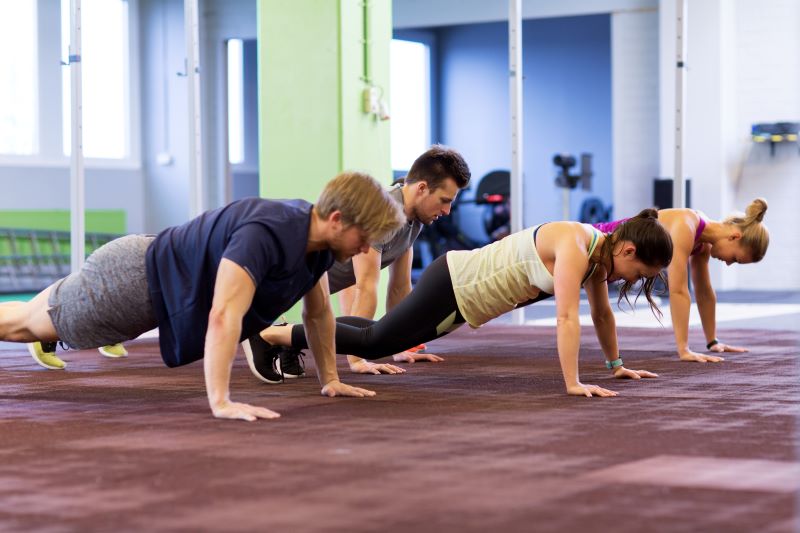
HIIT, or high-intensity interval training, is a workout routine in which you exert all-out effort in short, intense exercise, followed by short, sometimes active, rest periods. This sort of workout raises and maintains your heart rate while burning more fat in less time.
Moreover, if you have a packed-up schedule and find it challenging to manage time for exercise, this routine is best for you. Wondering which are the best HIIT workouts you can begin your routine with? Keep reading.

Table of Contents

High-intensity interval training (HIIT) is a form of cardiovascular exercise that alternates between short bursts of intense activity and periods of lower-intensity recovery or rest.
The recovery periods can involve light activity or complete rest, usually lasting as long as or slightly longer than the intense intervals. They often last 20 to 30 minutes and effectively burn calories, improve cardiovascular health, and increase metabolic rate, making them a popular choice for people looking to maximise their workouts quickly.
Here is the list of top HIIT workouts that you can try. Remember to increase your workout routine gradually and only do as much as your body allows. Overdoing any exercise can have harmful effects on your health.
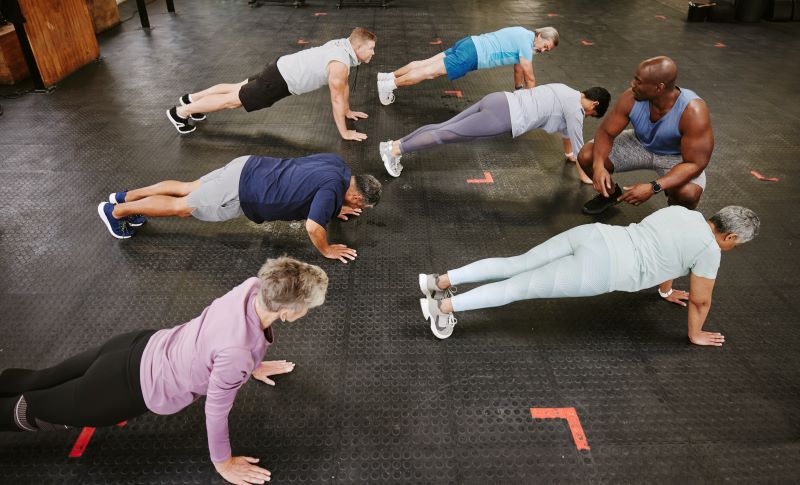
Burpees consist of a push-up followed by an air leap, making it a two-part exercise. All of your muscles are worked during burpees, which are mostly intended to strengthen the triceps, chest, glutes, shoulder, calves, biceps, and lats.
Burpees are a quick exercise that doesn't need any special tools or weights. To do burpees, you must bend over in a partial squat position. Put your chest on the floor while keeping your spine straight. Push yourself up, do a frog jump with both legs together, and then throw your hands up in the air.

High knees are another easy HIIT exercise that requires no extra equipment. By raising your heart rate, high knees encourage overall coordination and flexibility, which in turn helps strengthen all of your legs' muscles.
Open your feet to hip width and raise your left knee towards your chest to perform a high knees exercise. Repeat with the second leg while jogging at a fast pace. The exercise should also be tried with your arms outstretched and your knees resting on your palms.

Jumping jacks, or side-straddle hops, are total-body workouts that can be performed almost anywhere. No special equipment is needed.
To begin this HIIT exercise, stand tall with your feet at least hip-width apart. Maintain a calm posture while keeping your gaze straight ahead. Now leap and laterally spread your feet. At the same time, raise and lower your hands above your head.

A more challenging variation of the walking lunge exercise is the lunge leap. The workout involves leaping into the air, changing to your other foot in front of you, and landing. This exercise, in particular, helps with muscles like calves, quads, hip flexors, hamstrings, and glutes, while also enhancing the cardiovascular system.
When performing lunge jumps, your legs should be at least shoulder-width apart. Keep your back straight as you advance on one leg. Make sure your leg is parallel to the floor as you flex it and lower yourself. Jump and extend the other leg forward as you finish the exercise.
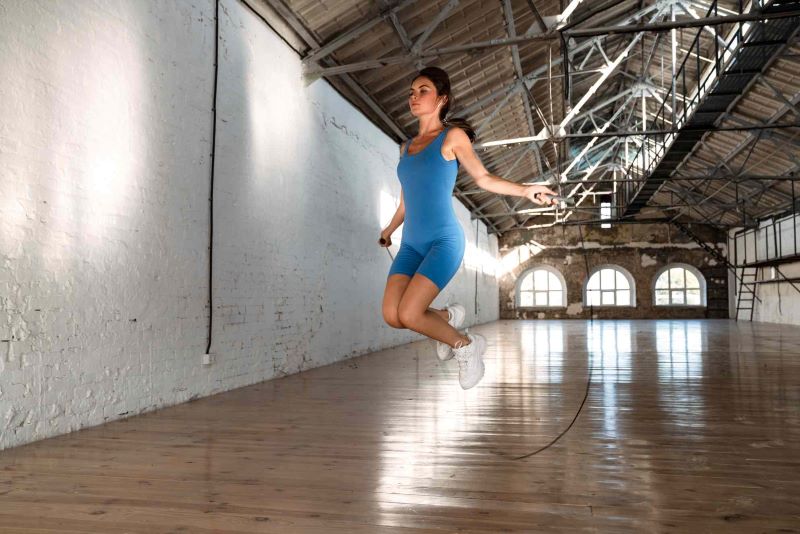
Rope jumping, often known as skipping, is chosen by thousands of people over jogging due to its numerous advantages.
A rope is all you need to start skipping. Now stand straight up with your elbows pointing toward your tummy and your legs close together. Jumping now will cause the rope to circle your entire body from head to toe. Jumping both forward and backward will also change the trajectory of the jump.
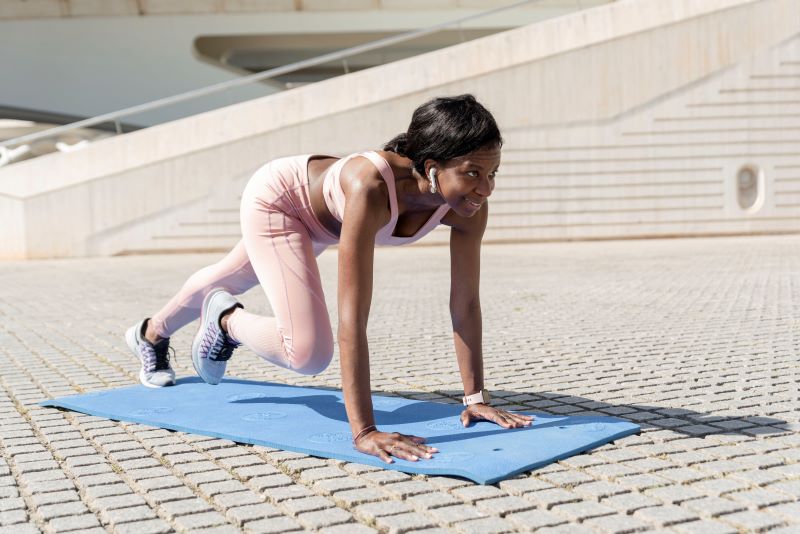
This exercise is well known for its many advantages, including improved agility and cardiovascular endurance.
To perform mountain climbers, assume the straight arm plank position. A little wider than your shoulders should be where your hands should be. Without lifting your hips, bring your right knee to your chest. Then, advance it and add the second knee. To continue performing it, repeat the steps.

This exercise works best for the upper back, shoulders, quads, biceps, hamstrings, and chest. Start by holding the handles of the battle rope. Then, keep your feet shoulder-width apart. Next, roll your shoulders back and chest out and maintain a straight face. After that, bend your knees to get into a half-sitting position.
You must maintain a 90-degree angle with your upper arms and keep the elbows close to your torso. Pick your right arm up slightly and slam the rope on the ground as you lower it. Simultaneously, you must drop and pick up your left arm to slam the rope on the ground. Increase your speed once you have gained momentum.
Keep your back straight, and your shoulders rolled back.
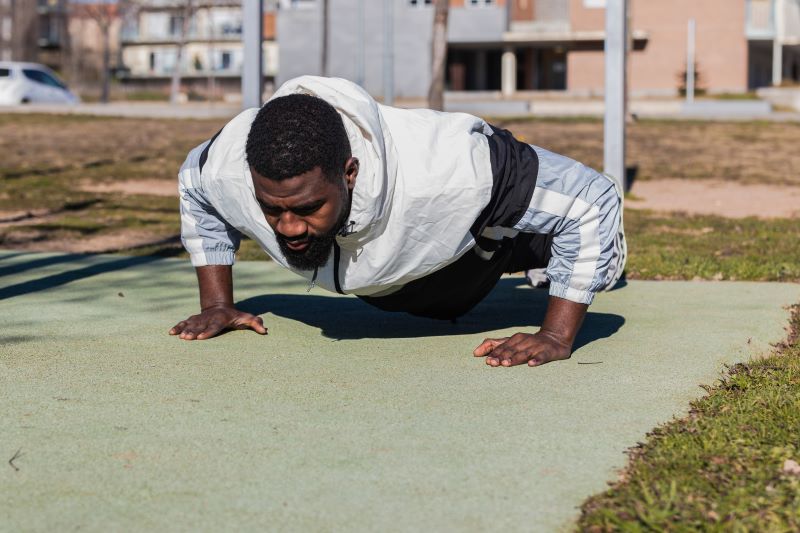
One of the best HIIT exercises is the push-up, which you can perform at home without any extra equipment. Begin the exercise on the floor, maintaining a posture that resembles a crawling cat with your palms and toes touching the surface, and then practise push-ups.
Then, go down till your chest is touching the ground. Make sure to maintain a straight spine and legs. Putting your toes together will allow you to exert more force as you gain experience.
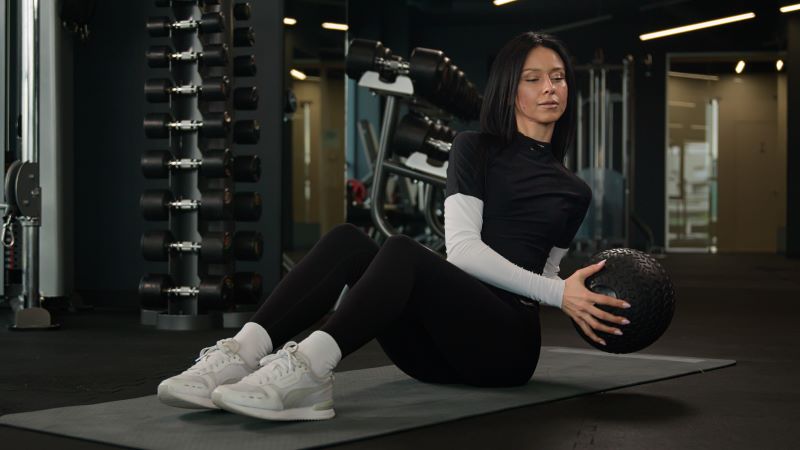
This twisting exercise is perfect for strengthening your hips and core. Start on the ground with your legs extended before you to execute the Russian twist. Then, bend your knees and sit in a v-sit. Keep your legs shoulder-width apart at all times.
Finally, rotate your body from side to side. Repeat a lot to condition your body.
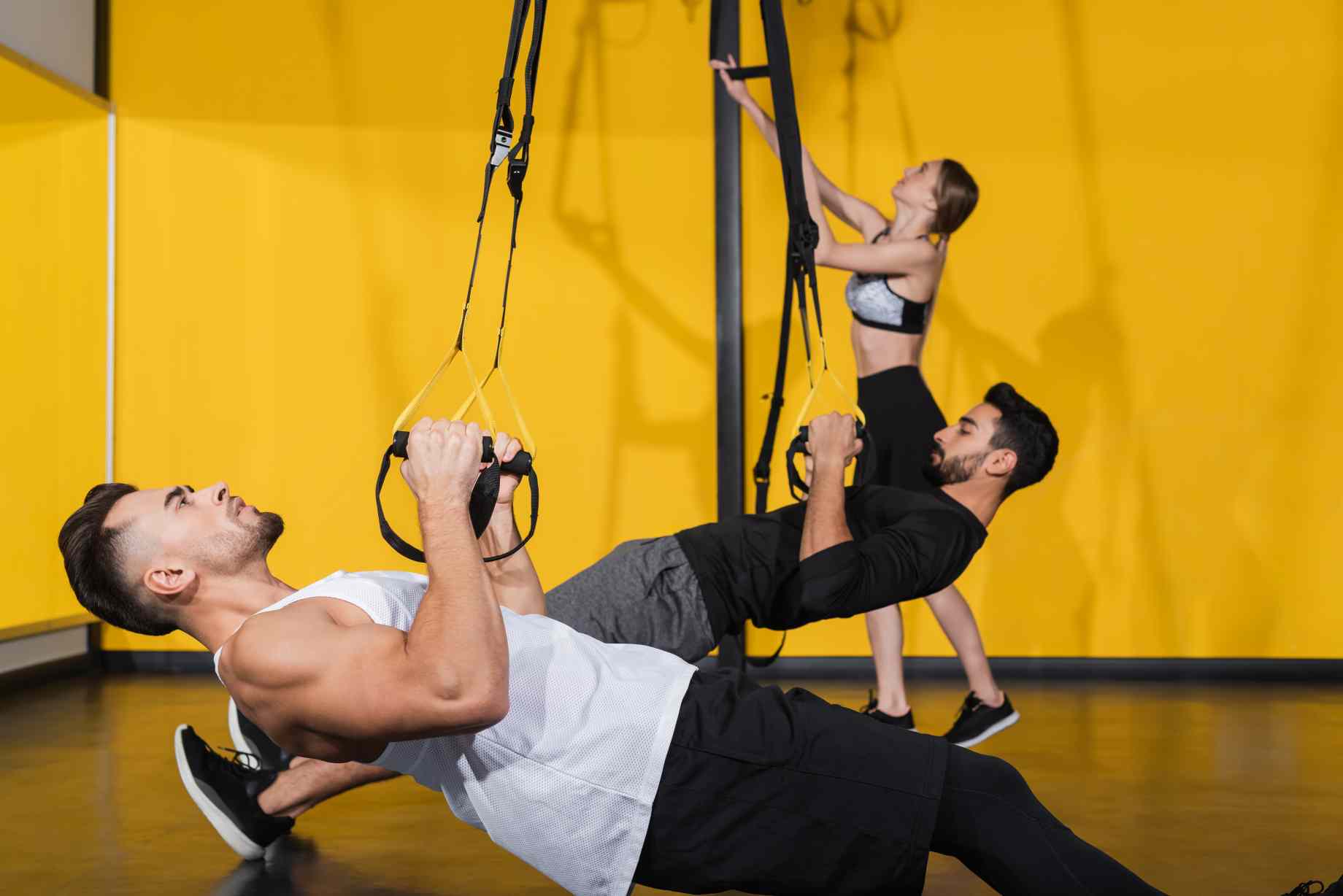
Although it demands a lot of upper body power, this challenging HIIT workout is simple if you know how. To perform a TRX pull-up, take a TRX grip. Now lift your torso upward with your arms extended and your legs shoulder-width apart.
Try to raise your chest to level with the handles, but don't worry if you cannot do so the first time. Practice is all that is necessary. After that, maintain that position briefly before lowering your body and repeating the procedure.
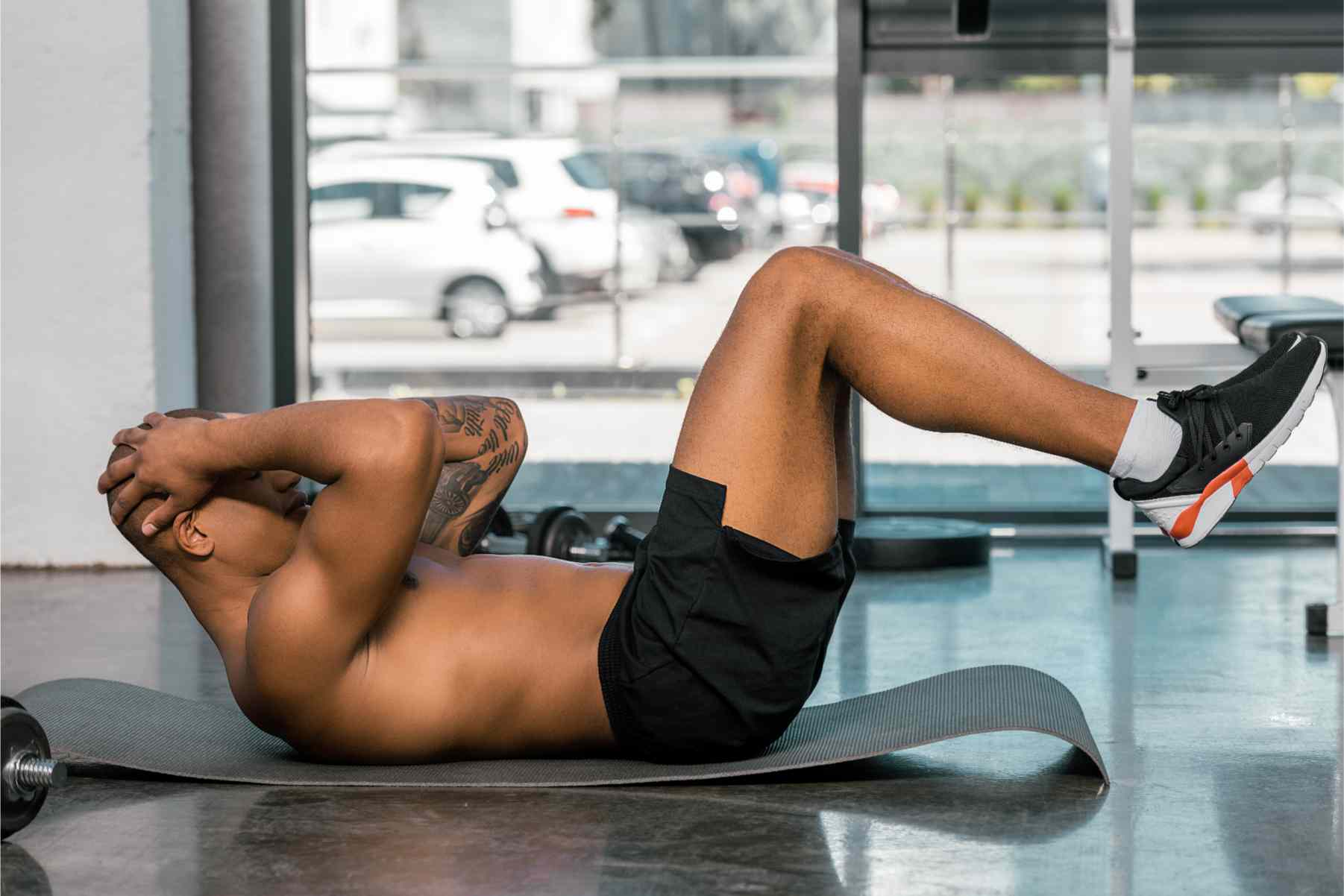
If you want to train your middle, upper, and lower abs, try this exercise. Lie on your back. Place your feet hip-width apart on the ground. Bend your knees and cross your arms behind your head. Inhale while contracting your abs.
Then, lift your upper body while exhaling and keeping your head and neck relaxed. Inhale and exhale to return to the beginning posture.
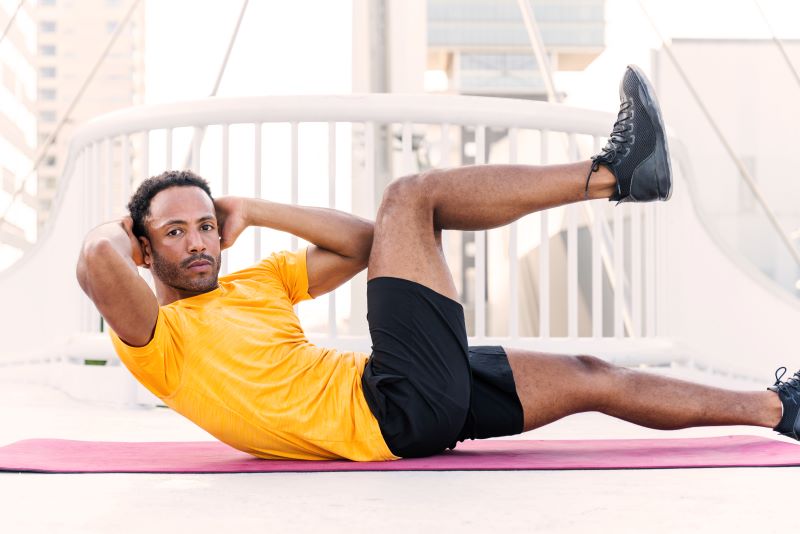
To perform this workout, lie on the floor, knees bent, feet flat, and arms straight up. Maintain a flat back as you progressively stretch your left arm and right leg.
Then, keep your core strong and your lower back on the floor. Return to the starting position and repeat on the other side for 1 rep.
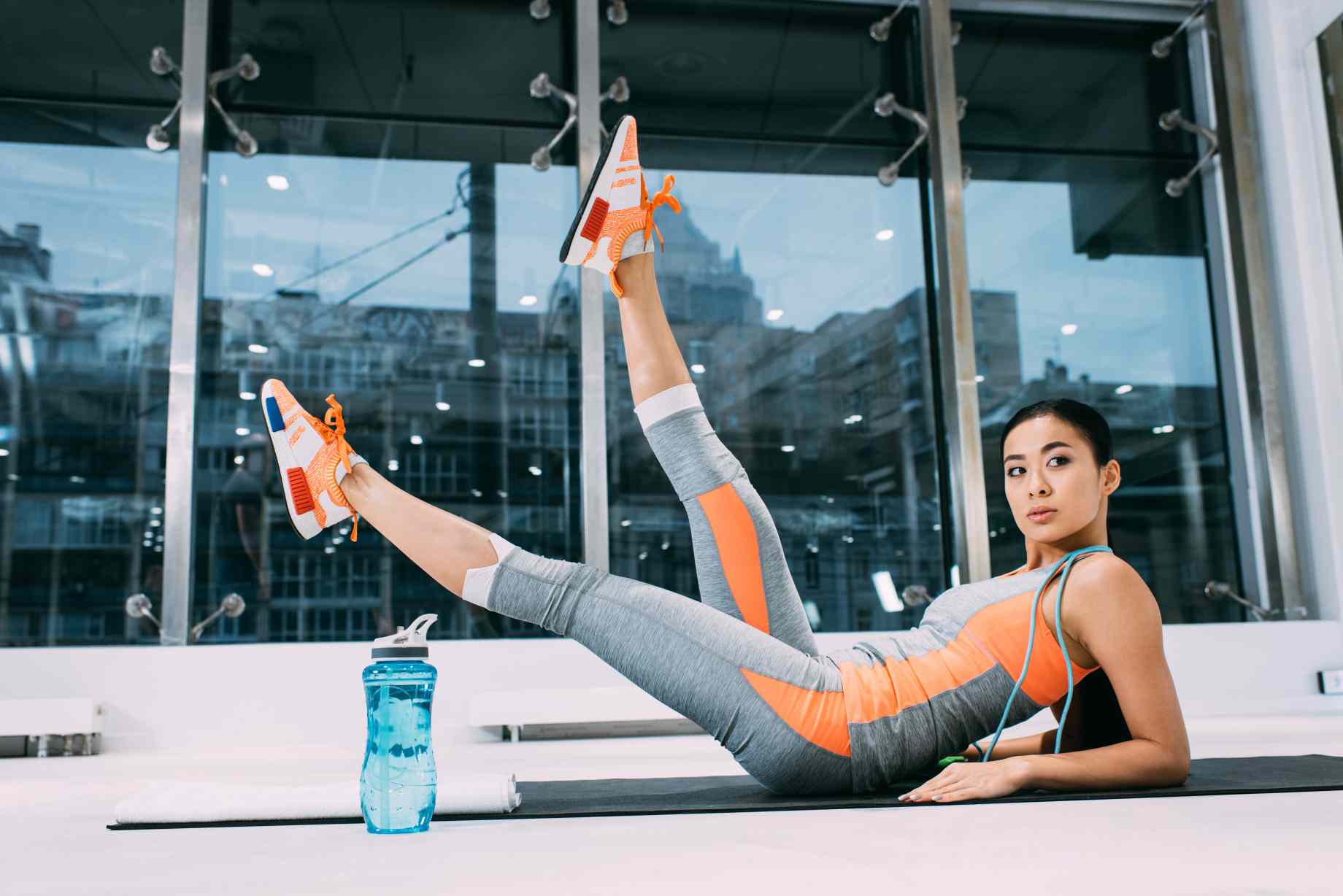
This exercise can train your glutes, quads, and lower abs. Both of your hands should remain beneath your buttocks. Keep your lower back on the ground as you lift your right leg slightly past hip height and your left leg a few inches off the floor.
Then, hold for 2 seconds before switching legs and performing a flutter kick motion.

Maintain a straight posture. Maintain a neutral spine, a straight posture, and relaxed shoulders. Keep your legs shoulder-width apart and your feet 45 degrees out. Bring your hips back, bend your knees, and draw your hands together close to your chest to sit (squat).
Get back up and try to jump as high as you can. To gain momentum, throw your hands to the sides. Softly place your feet on the ground. To avoid injury, do not land on the balls of your feet. Return to the squatting position. Do this at a faster but more precise pace.
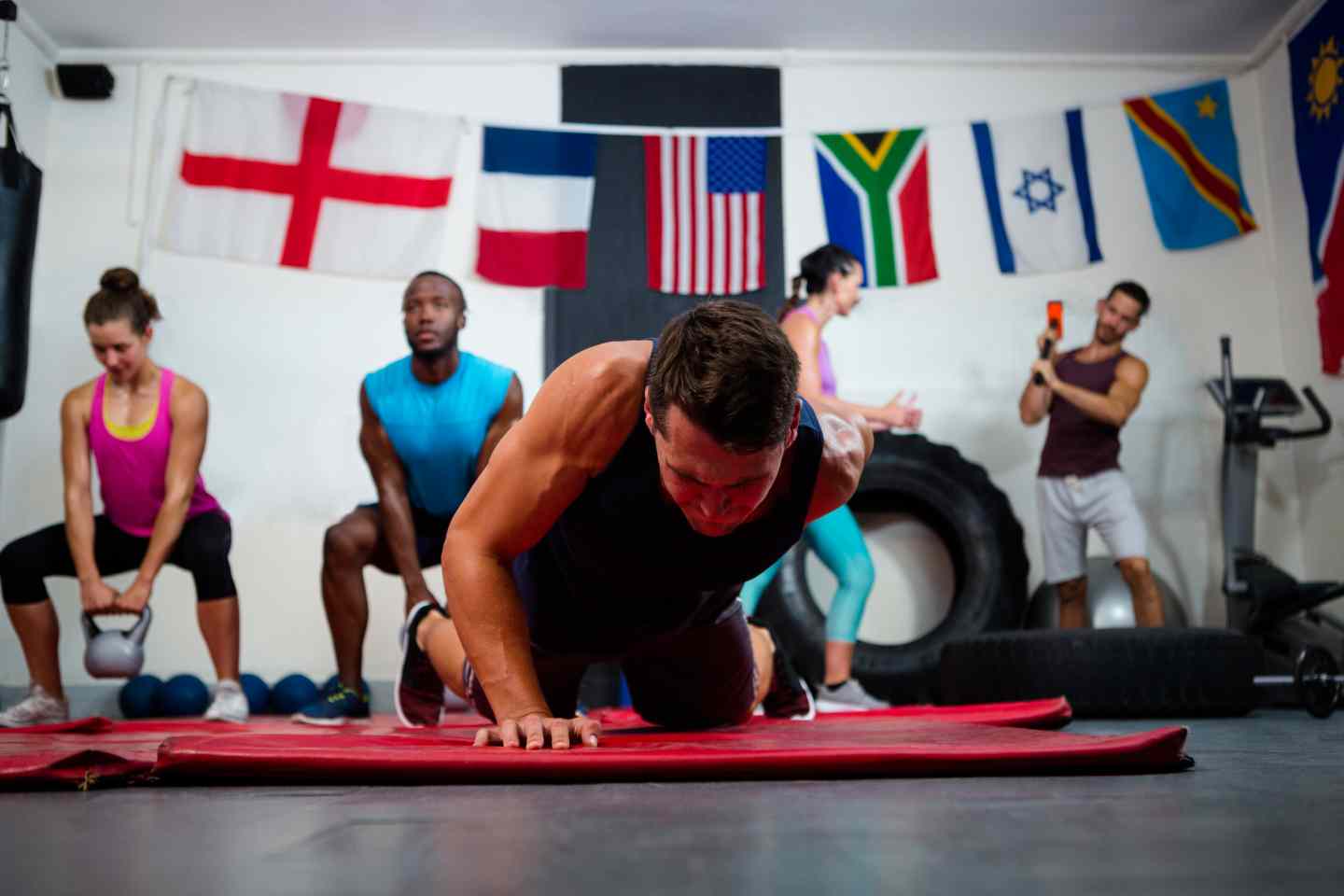
Tabata consists of eight rounds of ultra-high-intensity exercises in a specific 20-second-on, 10-second-off interval. It typically lasts for only four minutes but delivers a powerful cardiovascular workout. Exercises can vary from squats to push-ups to burpees, making it adaptable to different fitness levels.
Tabata training is perfect for gaining the most impact in a short time. It provides an intense full-body workout in a short amount of time.

Interval running involves alternating between periods of intense sprinting and slower recovery jogging. For example, you might sprint for 30 seconds and then jog for 60 seconds, repeating the cycle for a set duration. This workout improves cardiovascular endurance, burns calories, and boosts metabolism.
This exercise is excellent for weight loss in both men and women. At least once a week, you can do it on a treadmill or outdoors.
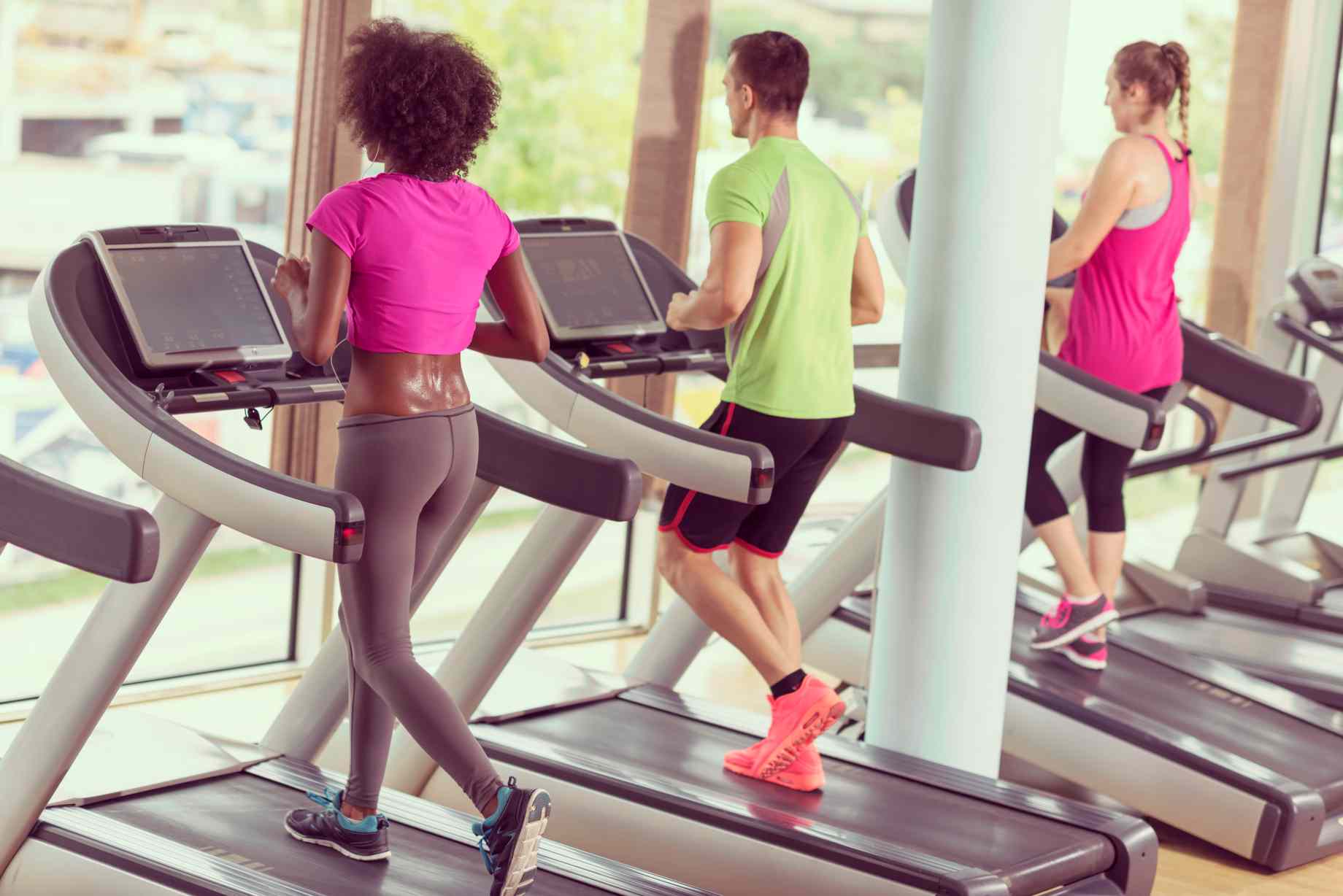
Sprint intervals involve alternating between short bursts of maximum-effort sprints and periods of active recovery. This workout can be performed outdoors on a track or indoors on a treadmill. A typical sprint interval session might involve sprinting at maximum intensity for 20 to 30 seconds, followed by a recovery period of walking or light jogging for one to two minutes.
Sprint intervals are incredibly efficient for improving cardiovascular fitness, increasing speed and power, and burning calories. They also stimulate the body's metabolism, leading to continued calorie burn after the workout.
Here's a list of common equipment used in HIIT workouts. These items can vary depending on your workout routine and preferences, but having a few basics can make your HIIT sessions more effective and enjoyable:
There are plenty of benefits to performing HIIT workouts. A few of them are mentioned below.
Certain exercises pose a higher risk of injury or may be less effective in a HIIT setting. Understanding which exercises to avoid can help individuals design safer and more effective HIIT routines. Here are a few exercises to avoid:
Here are a few safety tips you should remember before and during your HIIT workout.
That is all regarding the top HIIT workouts. Before starting, you can talk to a physical instructor to seek expert advice. Understand your body’s requirements and work accordingly. If you feel uneasy during any exercise, you should immediately stop and consult a doctor.
Disclaimer: Practice the above-mentioned exercises under the supervision of a trained practitioner and consult a doctor beforehand to ensure your body is fit enough to perform the required moves/postures.
Although HIIT is very beneficial, the body may experience significant stress from it. To allow for the complete replenishment of energy stores and the regeneration of damaged muscle tissue, exercise should only be done twice or thrice each week, with a minimum of 48 hours of gap between two sessions.