General
Life
Accessibility Options


General

General Products
Simple & Transparent! Policies that match all your insurance needs.
 Car Insurance
 Two Wheeler Insurance
 Commercial Vehicle Insurance
 Health Insurance
 Home Insurance
 Travel Insurance
 Business Insurance
Car Insurance
Two Wheeler Insurance
Commercial Vehicle Insurance
Health Insurance
Travel Insurance
Business Insurance
Car Insurance
Two Wheeler Insurance
Commercial Vehicle Insurance
Health Insurance
Travel Insurance



Scan to download

Life

Life Products
Digit Life is here! To help you save & secure your loved ones' future in the most simplified way.
 Term Life
 Savings Plan
 Retirement and Pension Plans
 Group Life Products
 Product Documents
Term Life
Savings Plan
Retirement and Pension Plans
Group Life Products
Product Documents
Term Life
Savings Plan
Retirement and Pension Plans
Group Life Products

Scan to download

Claims

Claims
We'll be there! Whenever and however you'll need us.
 Customer Support
 Motor Claims
Health Claims
Motor Claims
Health Claims
 Marine Insurance
 Grievance Redressal
Customer Support
Motor Claims
Health Claims
Marine Insurance
Grievance Redressal
Grievance Redressal
Customer Support
Motor Claims
Health Claims
Marine Insurance
Grievance Redressal

Scan to download
 General
 Life
General
Life
Life
General
Life
Renewals
Resources

Resources
All the more reasons to feel the Digit simplicity in your life!
Exclusive Features
 Transparency Report
Others
Exclusive Features
Transparency Report
Transparency Report
Others
Exclusive Features
Transparency Report

Scan to download


Our WhatsApp number cannot be used for calls. This is a chat only number.

 Grey Scale
 Readable Text
 Reset
Reset




Running and swimming are great cardiovascular exercises that help burn calories and improve cardio fitness. For example, swimming improves your heart rate, increases the strength of your lower and upper body muscles, and tones them as well. At the same time, running helps to tone your lower body, prevents bone loss, and burns calories.
However, if you are not convinced about their benefits and are confused about which is better for promoting overall fitness, keep reading this article about 'running vs. swimming' to learn more.

Table of Contents

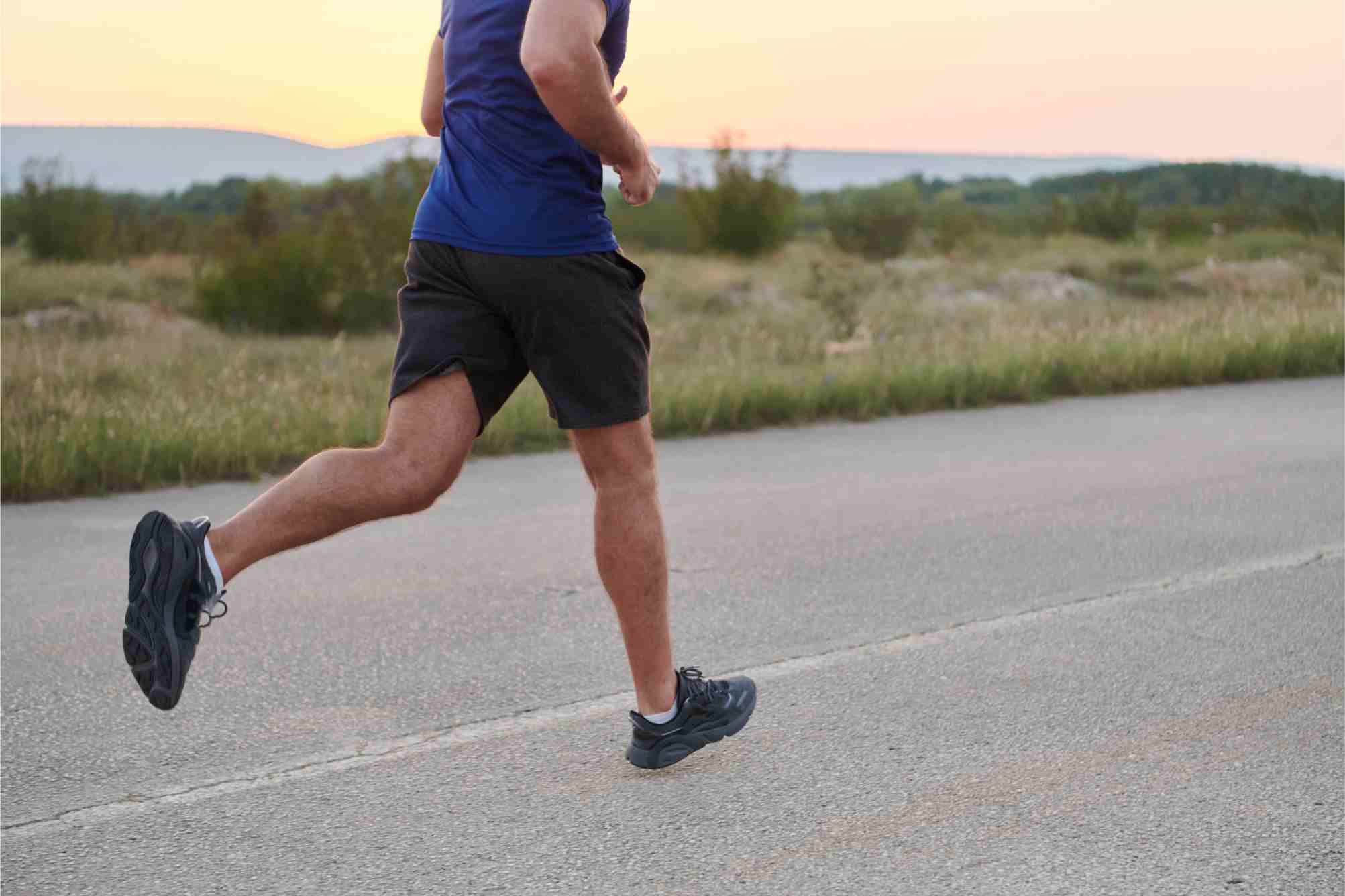
Running is the activity of moving quickly forward while on foot. This differs from walking, which always has one foot on the ground. However, running comes to a point when both feet are off the ground. Because of this, running is a high-impact activity.
Running can be anaerobic, aerobic, or a combination of the two types of exercise, depending on what kind of running you're performing. There are two forms of cardiovascular exercise: anaerobic and aerobic. Anaerobic exercise entails brief bursts of energy spent at your maximum effort for a short time. In contrast, aerobic exercise involves a sustained increase in heart rate and oxygen intake.
Swimming propels the body through water, requiring coordination of arm and leg movements. It requires much work to overcome the water's natural resistance, and it will improve your muscles. During a total-body workout, the majority of your muscles are used, which can increase muscle strength.
People swim for various reasons; it can be a fun activity or something they must do for work or other obligations. Swimming can also be used to recover from injuries, particularly muscle and cardiovascular ailments. Swimming is another sport or job option. Some talented people might decide to compete professionally.
Both swimming and running are effective ways to maintain a healthy body. However, there are some differences between these two. Knowing them will help you ascertain which exercise is suitable for you.
So, without any further delay, let's go through the differences between running and swimming mentioned in the table below:
Here is a list of muscles that are involved in running and swimming, each generating propulsion, maintaining stability, and controlling movement mechanics unique to each activity:
During running, the quads contract concentrically to extend the knee and propel the body forward with each stride. In contrast, swimming involves less direct use of the quadriceps for propulsion since the legs mainly assist in maintaining body position and balance in the water.
Running places significant stress on the hamstrings, particularly during the eccentric phase, when they lengthen to decelerate the leg. In swimming, the hamstrings also help stabilize the legs and assist in kicking motions, especially in strokes like freestyle and backstroke.
During running, they contract to plantarflex the ankle, pushing the body off the ground and aiding in forward movement. In swimming, the calves assist in pointing the toes during kicking movements, enhancing propulsion and streamlining in the water.
During running, the glutes work dynamically to extend the hip joint and propel the body forward with each stride. In swimming, the glutes assist in maintaining a streamlined body position and contribute to the propulsion phase during strokes like freestyle and butterfly.
The latissimus dorsi muscles are primarily involved in swimming, playing a key role in the pulling motion during some strokes. While running does not directly engage the lats to the same extent, maintaining strong and flexible lat muscles can still benefit overall posture.
In running, the deltoids contribute to arm swing and balance, helping to maintain efficient running mechanics and upper body posture. In swimming, the deltoids are crucial for generating propulsion during the arm strokes of various swimming styles.
In running, the pecs assist in maintaining arm swing and upper body stability, contributing to efficient running mechanics and overall posture. In swimming, the pectoral muscles are essential for generating propulsion during the arm movements of strokes such as freestyle and butterfly.
A strong core helps maintain proper posture and alignment during running, reducing the risk of injuries such as lower back pain. In swimming, the core muscles are crucial in maintaining a streamlined body position and stabilising the torso during arm and leg movements.
Swimming is comparatively better as a cardiovascular exercise than running because resistance in water is higher than in air. Therefore, you need to make more effort to do swimming than you put in while running.
However, if you must choose between the two, it completely depends on your preference, lifestyle, and health condition.
For example, if you suffer from joint pain, you must practise swimming instead of running. Swimming will put less stress and will not increase joint issues. On the other hand, if you want to improve your bone health, running is a better option. Similarly, you need to assess your other health conditions, like injury, before exercising.

Running daily is beneficial for overall fitness and strength improvement. Listed below are the benefits of running:
As mentioned earlier, running is a weight-bearing exercise that increases bone density and prevents bone loss.
Unlike swimming, it is easy to get started with running. All you need to do is head outdoors or run on treadmills indoors.
It helps to strengthen your overall musculoskeletal systems, such as hamstrings and quads.
Improves heart health and decreases the risk of developing severe diseases such as high blood pressure and diabetes.
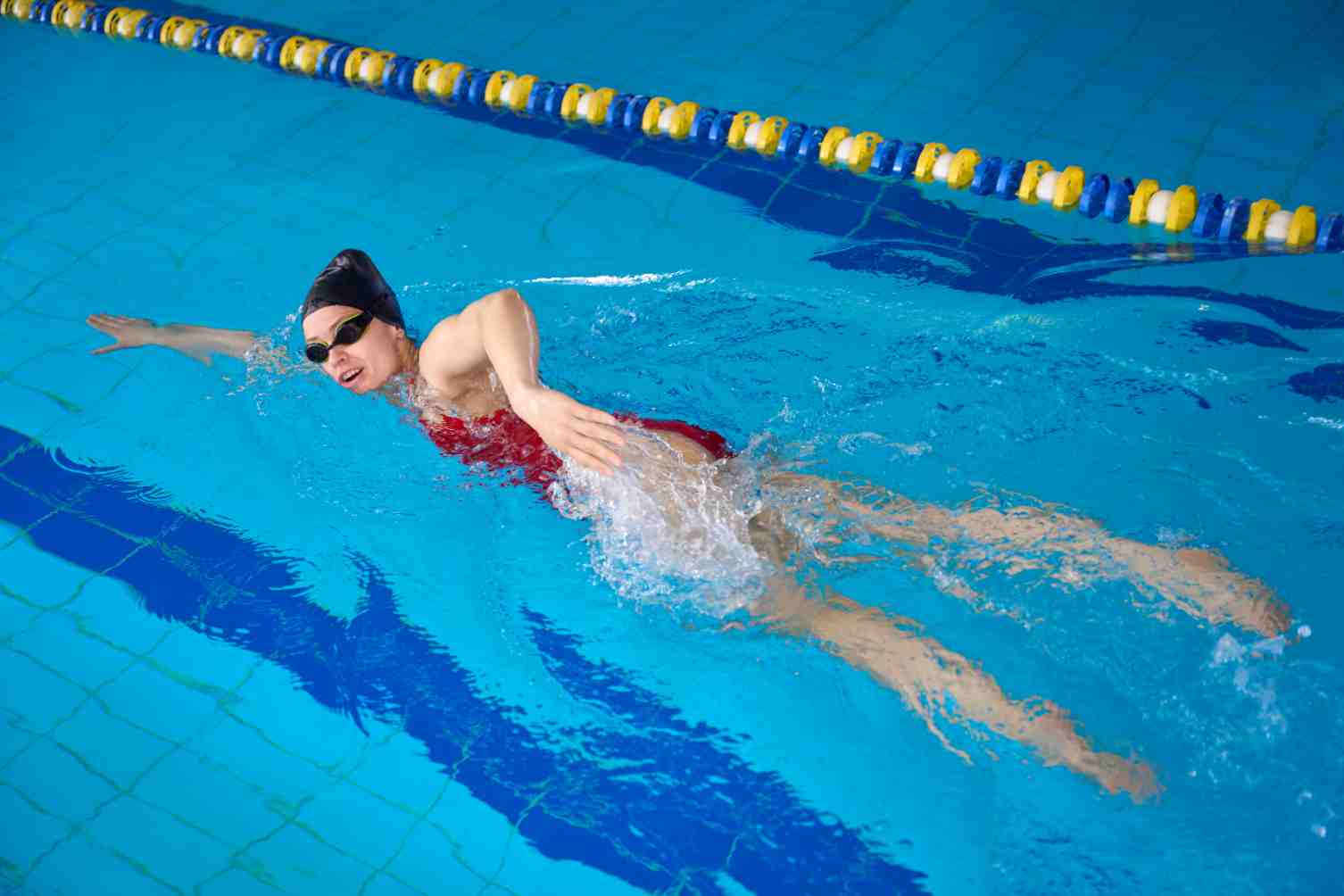
Swimming for both recreation and fitness is beneficial for a healthy mind and body. Mentioned below are the benefits of swimming:
Swimming is an excellent exercise to treat rheumatoid arthritis, osteoarthritis, and other conditions that lead to joint pain.
This exercise is safer for you in case you are recovering from injuries. This is because the buoyancy in water backs your joints and muscles and helps you work out harder by lowering your body's stress.
Swimming engages multiple muscles in your body, providing a full-body workout.
It boosts heart rate and builds muscle strength.
Swimming increases flexibility in the body and improves posture, balance and coordination.
Yes. Swimming is an excellent exercise to complement your running schedule. Your swimming session should follow your long-running schedule as swimming will help you to recover from the tiredness you got from running extra miles.
Besides, swimming requires full-body movements, further strengthening muscles not used while running. This reduces muscle imbalances and protects you from injury. Furthermore, swimming trains you to regulate your breath during any effort. This is extremely helpful when you have to race outside under challenging conditions.
And while combining both activities enhances your overall fitness, protecting your health journey with comprehensive health insurance plan is equally important. Many insurers now offer wellness-linked benefits or coverage for sports-related injuries and physiotherapy, ensuring you're financially supported while staying active.
You should swim four to five days a week to get the best results for losing weight. Initially, begin swimming for 15 to 20 minutes and then slowly, once your body allows it, increase the timing to 30 minutes for five days a week. If you begin swimming at a high intensity, you may experience fatigue and muscle soreness, ultimately leading you to give up.
In the case of running, you should run 30 minutes a day or 2.5 hours a day per week, which must be continued for five days a week to enjoy long-term health benefits, according to a group of Dutch researchers.
Running and swimming are generally considered safe and beneficial exercise for most people. However, certain individuals may need to exercise caution or avoid these activities altogether based on specific health conditions or circumstances:

Running is a common activity among most people. However, there are a few myths surrounding running as an activity:
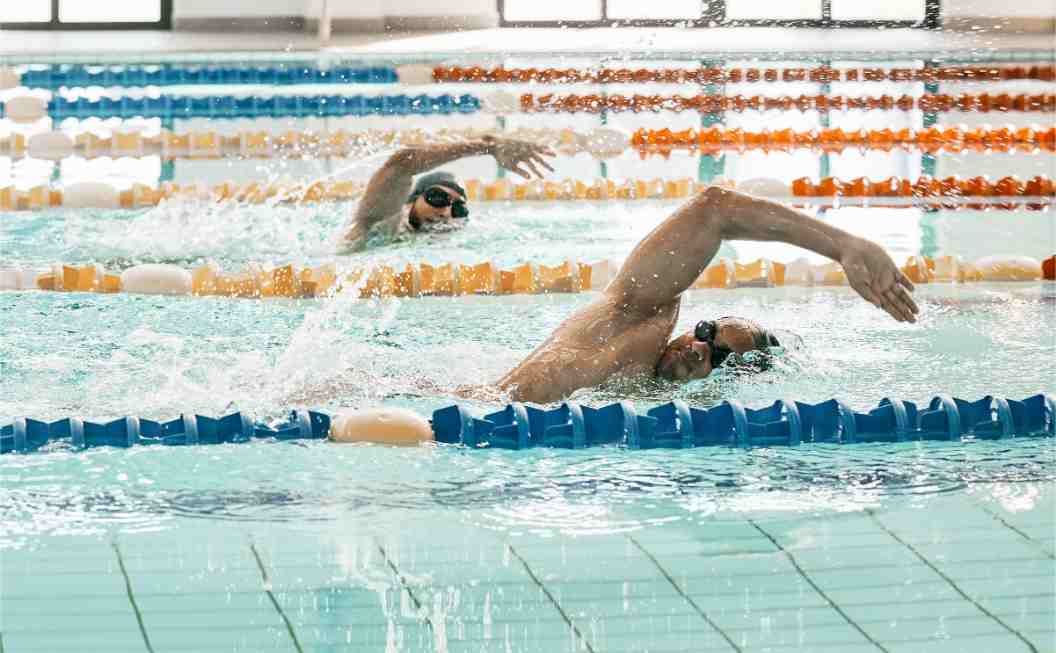
Swimming is a beneficial sport and activity. But it has many misconceptions surrounding it. Here are a few:
Hopefully, this guide about running vs swimming has cleared up all your confusion. If you still have any doubts and also suffer from any existing health condition, consult a healthcare expert before starting any new exercise to avoid any health issues later.