General
Life
Accessibility Options


General

General Products
Simple & Transparent! Policies that match all your insurance needs.
 Car Insurance
 Two Wheeler Insurance
 Commercial Vehicle Insurance
 Health Insurance
 Home Insurance
 Travel Insurance
 Business Insurance
Car Insurance
Two Wheeler Insurance
Commercial Vehicle Insurance
Health Insurance
Travel Insurance
Business Insurance
Car Insurance
Two Wheeler Insurance
Commercial Vehicle Insurance
Health Insurance
Travel Insurance



Scan to download

Life

Life Products
Digit Life is here! To help you save & secure your loved ones' future in the most simplified way.
 Term Life
 Savings Plan
 Retirement and Pension Plans
 Group Life Products
 Product Documents
Term Life
Savings Plan
Retirement and Pension Plans
Group Life Products
Product Documents
Term Life
Savings Plan
Retirement and Pension Plans
Group Life Products

Scan to download

Claims

Claims
We'll be there! Whenever and however you'll need us.
 Customer Support
 Motor Claims
Health Claims
Motor Claims
Health Claims
 Marine Insurance
 Grievance Redressal
Customer Support
Motor Claims
Health Claims
Marine Insurance
Grievance Redressal
Grievance Redressal
Customer Support
Motor Claims
Health Claims
Marine Insurance
Grievance Redressal

Scan to download
 General
 Life
General
Life
Life
General
Life
Renewals
Resources

Resources
All the more reasons to feel the Digit simplicity in your life!
Exclusive Features
 Transparency Report
Others
Exclusive Features
Transparency Report
Transparency Report
Others
Exclusive Features
Transparency Report

Scan to download


Our WhatsApp number cannot be used for calls. This is a chat only number.

 Grey Scale
 Readable Text
 Reset
Reset



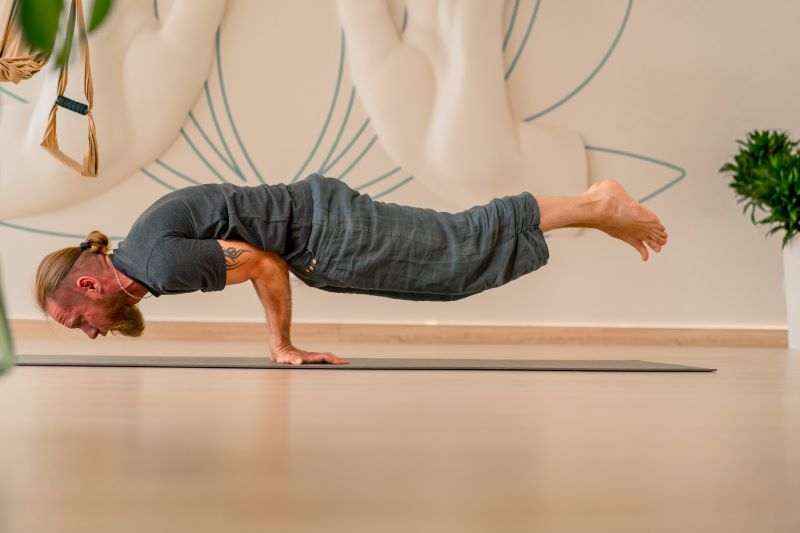
Mayurasana is one of the beneficial yoga poses that can help you strengthen your core and body muscles to get rid of common issues. To explore more benefits of Mayurasana, keep scrolling!
This pose improves balance, tones abdominal organs, and increases willpower. Practised regularly, Mayurasana promotes detoxification, stimulates circulation, and enhances mental focus.

Table of Contents

Mayurasana is a yoga pose that is helpful for overall health. In this pose, you need to pose like a peacock, so it is also called the Peacock Pose. Mayurasana can strengthen your whole body, work on your core muscles, and provide multiple other health benefits.
Mayurasana is an advanced yoga posture demanding impressive core strength and balance. Resembling a peacock with its spread feathers, the pose involves balancing your body horizontally with your weight on your forearms pressed into your abdomen while your hands are clasped together on the floor.
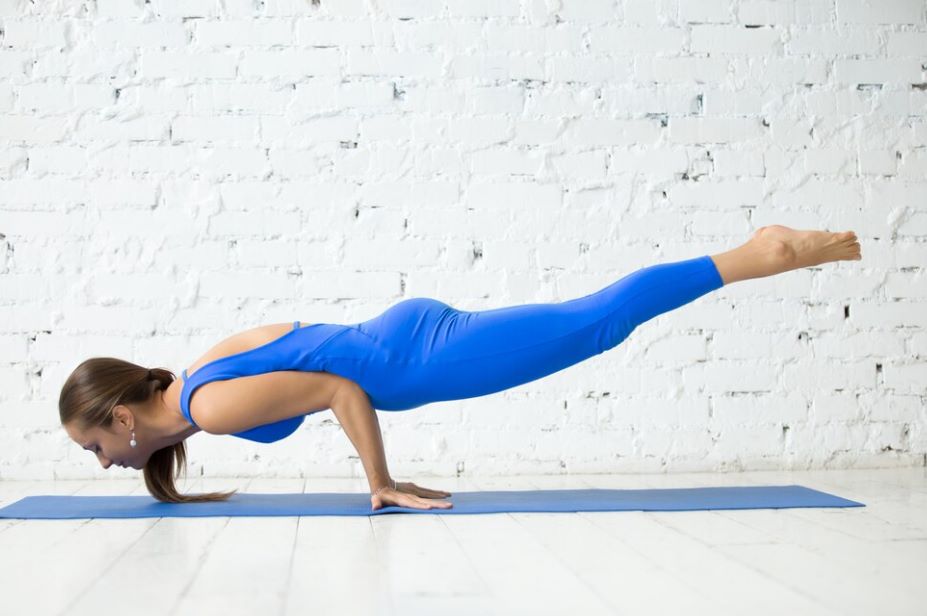
Mayurasana can be performed on any soft surface, such as a yoga mat or carpeted floor. Check out the following step-by-step guide to perform Mayurasana:
Step 1: Sit on your heels and ensure your knees are folded and wide apart like Padmasana.
Step 2: Place both hands on the floor before your chest.
Step 3: Gently press your abdomen with your elbows.
Step 4: Keep your head on the floor with the same posture, pushing your stomach.
Step 5: Stretch out your legs, keeping your knees straight. Your face should be facing the floor.
Step 6: Accumulate strength to your buttocks and push them into your back by keeping your head and shoulder blade firm.
Step 7: Lift your body and legs upward by balancing the body weight on your hands, which should be parallel to the floor.
Step 8: Keep your breathing pattern regular and hold the position for 20 to 30 seconds.
Step 9: Lower your feet and knees to the ground to release the posture.
Mayurasana is an advanced yoga posture known for its challenging nature and numerous health benefits. This pose, resembling a peacock with its lifted tail feathers, requires significant strength, balance, and concentration.
The different health benefits of Mayurasana are:
Mayurasana is a well-known remedy for fixing faulty body postures. Properly practising Mayurasana can treat the shape of limbs, spine, joints, and back. Therefore, it effectively reduces posture-related pain and other health issues.
Mayurasana helps in reproduction by regulating its functions. Further, the yoga pose also boosts sexual interest and activities.
The yoga pose strengthens your core muscles, creates pressure on the digestive system, and boosts function. It helps improve blood circulation in the lower abdominal area and enhances the function of the liver, stomach, kidney, pancreas, etc.
Mayurasana effectively relaxes your body and mind. Therefore, it relieves stress and freshens up your mind. So it is helpful for different mental disorders such as anxiety attacks, depression, etc.
Peacock Pose is very helpful for body detoxification. It boosts the body’s natural cleansing system and detoxifies from the core. Therefore, this yoga pose helps treat piles and diabetes.
This exercise also helps in stimulating the function of the lungs. Therefore, it can be helpful for the respiratory system and boost its function.
Peacock Pose is extremely effective for boosting muscle strength. In addition, it helps to strengthen your body parts such as the elbow, forearms, back, spine, thighs, chest, etc. So this yoga posture is highly beneficial for any problems concerning the body parts.
One of the biggest advantages of Mayurasana is it calms your body and, therefore, enhances your mental capabilities. It improves concentration power and helps in better body and mind connection.
Mayurasana strengthens your back in three ways: by engaging the erector spinal muscles to hold your spine straight, requiring the lower back muscles to stabilise your lifted body, and by demanding shoulder strength, which indirectly improves upper back posture.
Mayurasana stimulates the solar plexus, the Manipura chakra, through deep compression. By pressing the forearms into the abdomen, the pose fires up the digestive organs and intensifies internal heat associated with the solar plexus chakra's energy.
Mayurasana may promote emotional balance in a few ways. Firstly, the intense focus and breath control required during the pose can quiet the mind and reduce stress. Secondly, successfully holding the pose can boost feelings of accomplishment and self-confidence.
Mayurasana fires up your core, stimulating digestive organs and blood flow in the abdomen. This improved circulation energises these organs, like the liver and pancreas, which play a key role in regulating your metabolism.
Mayurasana strengthens core muscles, which are vital for endurance in all activities. Holding the pose challenges your respiratory system, improving its efficiency and boosting stamina. The balance required strengthens supporting muscles, enhancing overall resilience.
While Mayurasana strengthens the core, no scientific evidence prevents hernias. Hernias are often caused by weak spots in the abdominal wall, and Mayurasana might put a strain on those areas. If you're concerned about hernias, consult a doctor and avoid advanced poses like Mayurasana.
Mayurasana strengthens your core, the foundation for stability throughout your entire body. Balancing on your forearms requires control and coordination, engaging your arms, shoulders, and legs. Holding the pose builds overall body awareness and teaches you to manage your weight distribution for better control.
It helps in better blood circulation.
It treats tumours.
The pose is helpful for fevers.
It improves menstrual health and aids in menopause.
There can be two types of Mayurasana. First, you must select the position based on your requirements and expertise. Here are the two types:
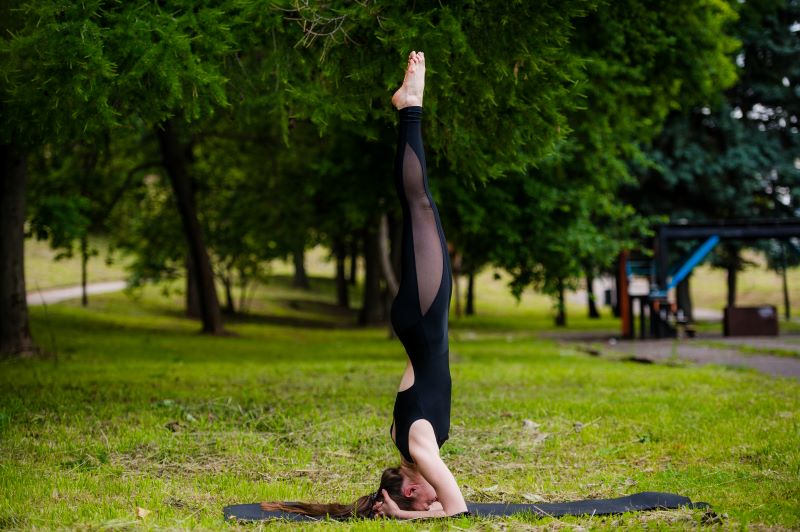
Pincha Mayurasana, or forearm stand, requires upper body strength. Start in a downward-facing dog. Engage your core and lift your hips high, kicking your legs up one at a time. Gaze down between your forearms and slowly walk your shoulders towards your wrists. Keep your core tight and your legs lifted for a stable hold.
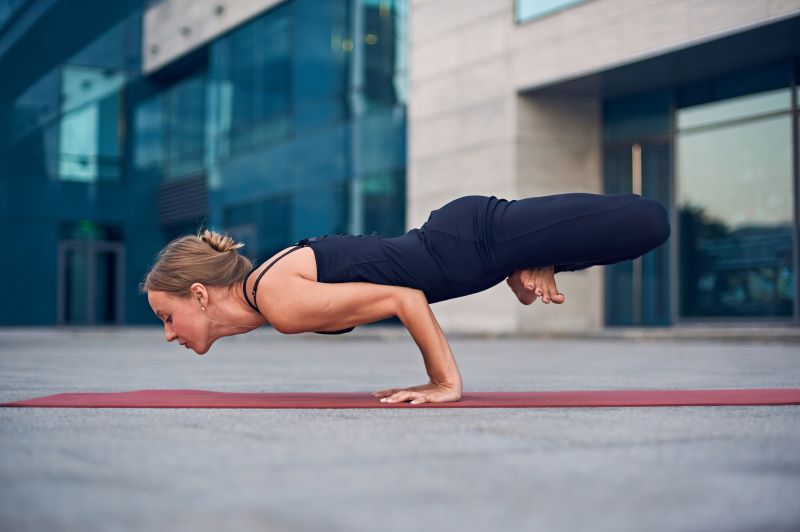
This variation combines Padmasana with Mayurasana for added challenge. The legs are crossed in lotus pose while balancing on the hands. This version requires advanced flexibility and strength in the upper body.
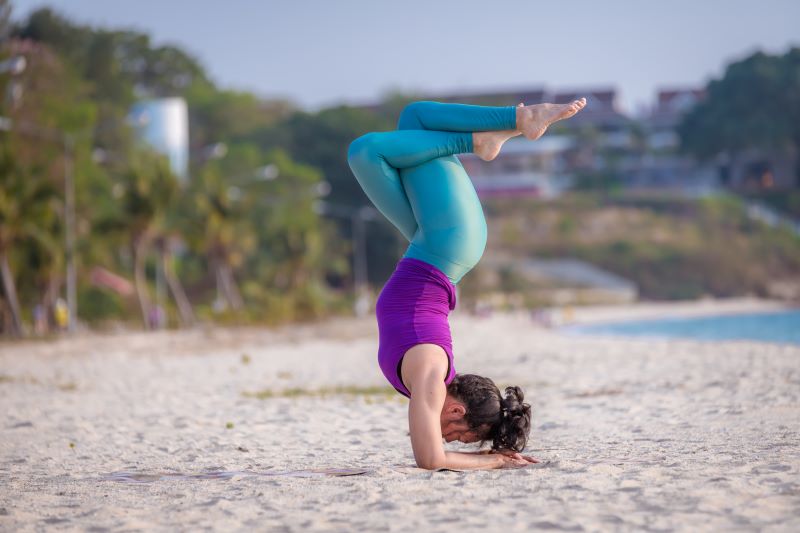
Starting from a forearm stand at the wall, you transition to a Peacock Pose by engaging your core and pressing your forearms into your abdomen. Finally, mimicking the eagle pose, wrap one leg around the other, finding stability and balance in this impressive arm balance.
Mayurasana is an advanced yoga asana that requires significant strength, balance, and concentration. Before attempting this pose, it is essential to understand its prerequisites, potential risks, and proper techniques to ensure safety and effectiveness.
Mayurasana is a powerful yoga posture known for its numerous physical and mental benefits. However, holding this challenging pose requires strength, balance, and proper technique.
Mayurasana is a powerful yoga asana that offers numerous benefits like any physical exercise. Understanding these risks is essential for maintaining a safe and balanced yoga practice. Here are some of the primary risks associated with overdoing Mayurasana:
Overdoing Mayurasana can lead to physical and mental strain, emphasising the need for a balanced practice. Listen to your body and allow adequate rest to enjoy the pose's benefits safely.
Mayurasana is a very beneficial yoga pose with different health benefits. However, as the pose involves tough body posture, beginners may find it challenging to perform. Nevertheless, they can follow the below-mentioned tips to perform it properly:
In Mayurasana, you will need to hold your body in balance with your hands. Therefore, you will feel a high contraction in your tricep muscles. Further, your shoulder and forearm also should be strong enough to perform this yoga pose. So you should check your body’s capabilities beforehand to do this pose without any risk.
While performing the Peacock Pose, you need to hold your body up on your hands which will be pretty challenging if you have belly fat. Further, activating core muscles is also important for performing this pose. Therefore, you should invest some time in reducing excess abdominal fat to perform this posture.
Yoga postures are highly beneficial for health until they do not give you pain. They are meant to calm your body and relieve your muscle stress. Therefore, if you feel pain while practising, you should stop immediately and relax your body.
Mayurasana is an advanced type of yoga posture that should be done properly for optimum benefits. Therefore, if you are a newbie in yoga, you should refrain from practising this pose at the beginning. Instead, train yourself with simpler postures and prepare your body for the advanced steps.
The precautions you should follow as precautions of Mayurasana pose are as follows:
Do not practise this pose if you have an injured wrist, shoulder or elbow.
Avoid performing the pose if you have heart disease.
Avoid performing if you are a patient with high blood pressure.
Intestinal problems and issues of hernia should be treated before you perform this pose.
If you are pregnant, avoid practising the pose.
Menstruation is not the proper time to perform Mayurasana.
If you have any eye, ear or nose infection, avoid this yoga posture.
Stop practising the pose as soon as you face any discomfort while performing.
Mayurasana is an advanced yoga posture that requires significant strength and balance. While it offers numerous health benefits, certain individuals should avoid this pose due to its demanding nature. Here are some groups who should refrain from practising Mayurasana:
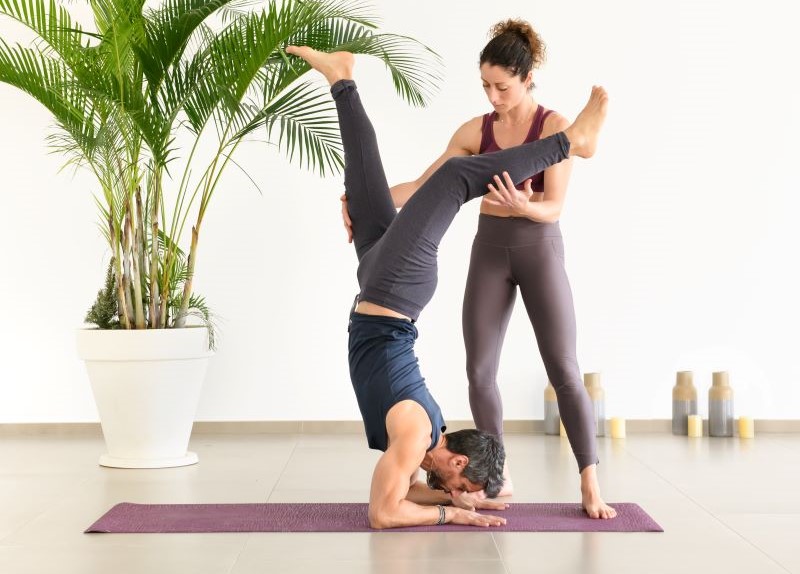
Mayurasana is an advanced form of yoga that needs practice and strength. Hence, beginners will find it challenging to perform. However, they can modify the pose and benefit from it in the following ways:
Mayurasana offers various potential health benefits for those who can perform it safely and effectively. These benefits include improved digestion, core strength, posture, and balance. With proper guidance and preparation, this pose can be a valuable addition to your yoga practice.