General
Life
Accessibility Options


General

General Products
Simple & Transparent! Policies that match all your insurance needs.
 Car Insurance
 Two Wheeler Insurance
 Commercial Vehicle Insurance
 Health Insurance
 Home Insurance
 Travel Insurance
 Business Insurance
Car Insurance
Two Wheeler Insurance
Commercial Vehicle Insurance
Health Insurance
Travel Insurance
Business Insurance
Car Insurance
Two Wheeler Insurance
Commercial Vehicle Insurance
Health Insurance
Travel Insurance



Scan to download

Life

Life Products
Digit Life is here! To help you save & secure your loved ones' future in the most simplified way.
 Term Life
 Savings Plan
 Retirement and Pension Plans
 Group Life Products
 Product Documents
Term Life
Savings Plan
Retirement and Pension Plans
Group Life Products
Product Documents
Term Life
Savings Plan
Retirement and Pension Plans
Group Life Products

Scan to download

Claims

Claims
We'll be there! Whenever and however you'll need us.
 Customer Support
 Motor Claims
Health Claims
Motor Claims
Health Claims
 Marine Insurance
 Grievance Redressal
Customer Support
Motor Claims
Health Claims
Marine Insurance
Grievance Redressal
Grievance Redressal
Customer Support
Motor Claims
Health Claims
Marine Insurance
Grievance Redressal

Scan to download
 General
 Life
General
Life
Life
General
Life
Renewals
Resources

Resources
All the more reasons to feel the Digit simplicity in your life!
Exclusive Features
 Transparency Report
Others
Exclusive Features
Transparency Report
Transparency Report
Others
Exclusive Features
Transparency Report
Scan to download


Our WhatsApp number cannot be used for calls. This is a chat only number.

 Grey Scale
 Readable Text
 Reset
Reset



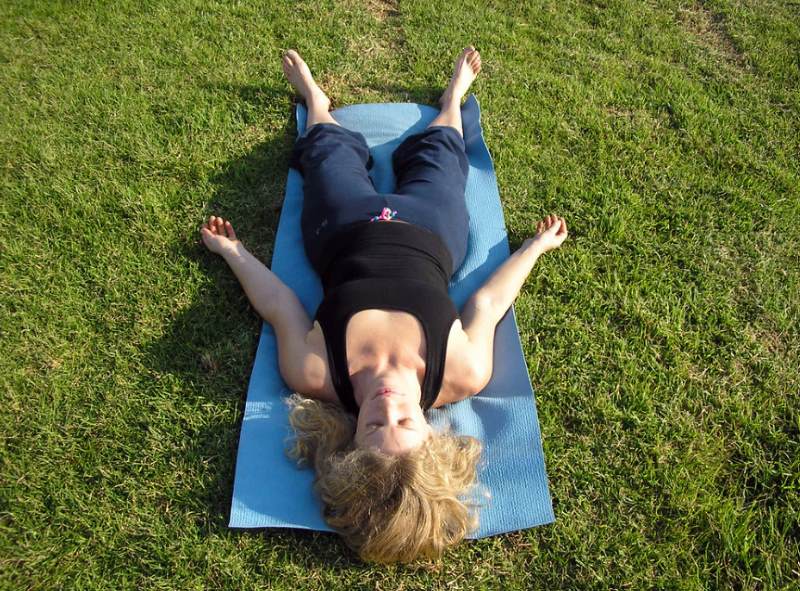
Every exercise has some profound effect on your body. Whether you do sun salutations, cycling, or HIIT classes, it makes your heart beat faster, your lungs breathe in more air, and your body sweat more profusely. However, one such yoga pose, Shavasana, aims to relax your body and mind.
Shavasana, in particular, has benefits that go beyond the body. It is a calming yoga posture that is relatively simple for all.

Table of Contents

In this fast-paced world, people barely sit back and relax. However, yoga can help re-energise people and improve all problem areas in the body and mind. The Shavasana yoga pose helps people relax at the end of a yoga session, allowing them to cool down, lie face up, and be aware of their inner selves.
Shavasana is the Sanskrit name for an essential restorative asana. It is the final resting pose that individuals perform at the end of almost every yoga practice. This yoga brings its type of rest, relaxation and calmness. The word comes from the Sanskrit words 'Sava', which means corpse and 'asana', which means posture.
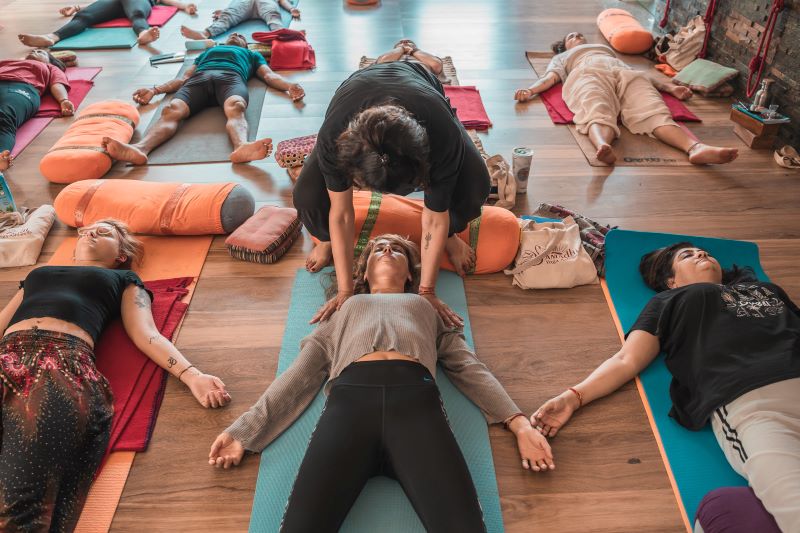
You need to follow the steps below to perform this super easy yoga pose:
Step 1: Lay down on your back, either on the floor or on your yoga mat. This basic meditation pose in Shavasana ensures you are not disturbed for the next 15 minutes after lying down.
Step 2: Close your eyes gently.
Step 3: Relax and place your feet at a comfortable distance apart.
Step 4: In the next step, keep your arms straight along your body. Keep your palms facing up while keeping your arms slightly away from your torso.
Step 5: Focus on your toes and observe them. While doing this, take deep breaths through your nose and exhale slowly.
Step 6: Continue deep breathing while slowly shifting your attention from your toes to the top of your head.
Step 7: Your mind may wander. If so, gently bring it back to your body.
Step 8: Ensure you do not fall asleep while performing this exercise.
Step 9: After about 10 to 12 minutes, you will start to feel relaxed, then slowly roll over to one side and sit up.
Step 10: Now, you can slowly open your eyes while turning your attention outwards.
Shavasana provides numerous health benefits to those who perform it. Knowing its benefits can motivate you to add this pose to your routine. The following are the benefits of Shavasana individuals can get by regularly doing it:
One advantage of Shavasana is that it allows you to focus on your breathing and helps you relax your body. This will help you increase your overall mindfulness and mental health.
Shavasana improves memory and concentration. It also helps you focus and recall things better. Practising Shavasana is essential for students and older people.
This asana is highly beneficial for people with hypertension, as it helps lower blood pressure by relaxing the body, which drops the heart rate.
Most individuals find that Shavasana helps provide a restful and good night's sleep. People having insomnia but do not want medications can try this pose.
The main objective of the Shavasana pose is to help the body to unwind and relax. Therefore, individuals need to end their high-intensity workout with this pose as it works as a buffer between their workout routine and daily life.
The corpse pose benefits your nervous system by activating the parasympathetic nervous system.
One spiritual benefit that Shavasana provides your body is that it helps align your mind with your body's energies. Therefore, this pose makes you aware of the energies surrounding you because your mind and body should ideally align with the universe.
Practising Shvasana can help reduce stress, which is a major pathogenic factor in the development of diabetes. Stress triggers the oxidation process at the lipid membrane level, which aids in the tissue's oxygen release and results in hypoxia.
People’s stress levels significantly changed after doing Shavasana. This could be because breathing and stretching produce endorphins, which lessen physical tiredness and help people feel in the present.
The last resting position is achieved by doing active asanas that require expanding the chest or airways, stretching the muscles, and letting go of tension. Shavasana stance for more than fifteen minutes helps the body release tension and become more relaxed
Despite its calming nature, Shavasana can boost energy levels by providing deep rest and rejuvenation. Allowing the body and mind to recharge can leave practitioners feeling refreshed and revitalised.
Shavasana promotes emotional balance by encouraging the release of tension and pent-up emotions. Creating space for inner reflection and introspection can help process emotions and foster a sense of inner peace and equilibrium.
Although Shavasana is a passive pose, the deep relaxation it induces can stimulate digestion and improve gut health. Reducing stress and promoting relaxation help relieve digestive issues such as indigestion and bloating.
Shavasana enhances mental clarity and concentration by calming the mind. By letting go of distractions and focusing on the present moment, practitioners can improve their ability to concentrate and focus on tasks.
Mudras can deepen relaxation and focus in Shavasana. Each mudra channels energy and enhances the meditative state, making it more than just physical relaxation but also a mental and spiritual practice.
Here are some mudras commonly used:
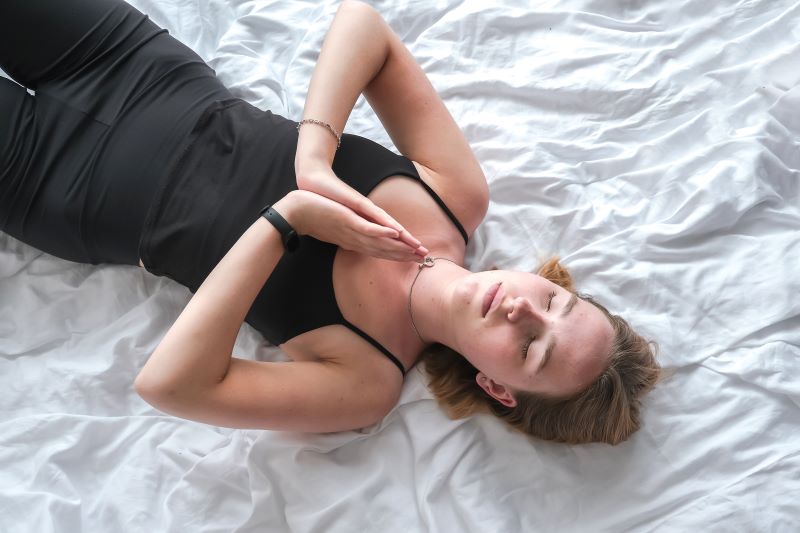
Place the palms together at the centre of your chest while in the Shavasana position. This can enhance the sense of balance and harmony, help quiet the mind, and deepen relaxation.
Benefits of Anjali Mudra: This mudra in the Shavasana pose helps bring focus inwards and encourages balance while relaxing your intuitions.
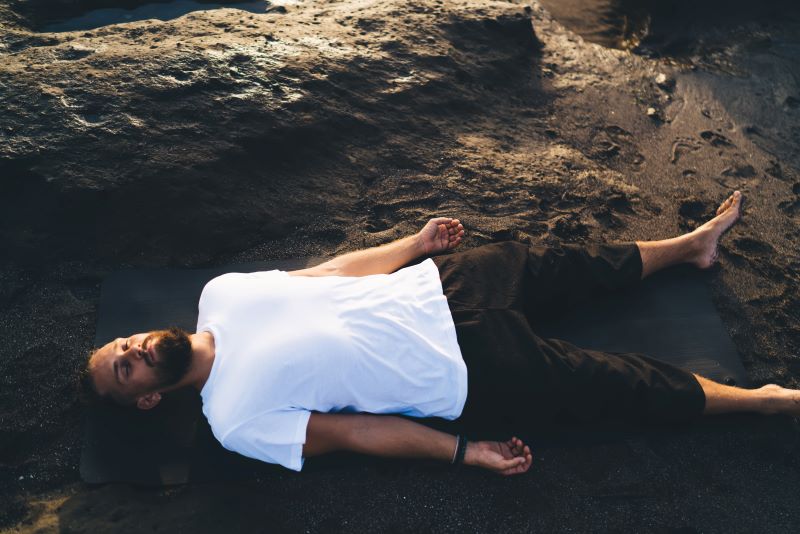
Joining the tip of the thumb and index finger while resting the hands on either can promote inner peace and mental clarity, enhancing the meditative aspect of Shavasana.
Benefits of Chin Mudra: Chin mudra helps to regulate blood pressure and manage stress and depression levels.
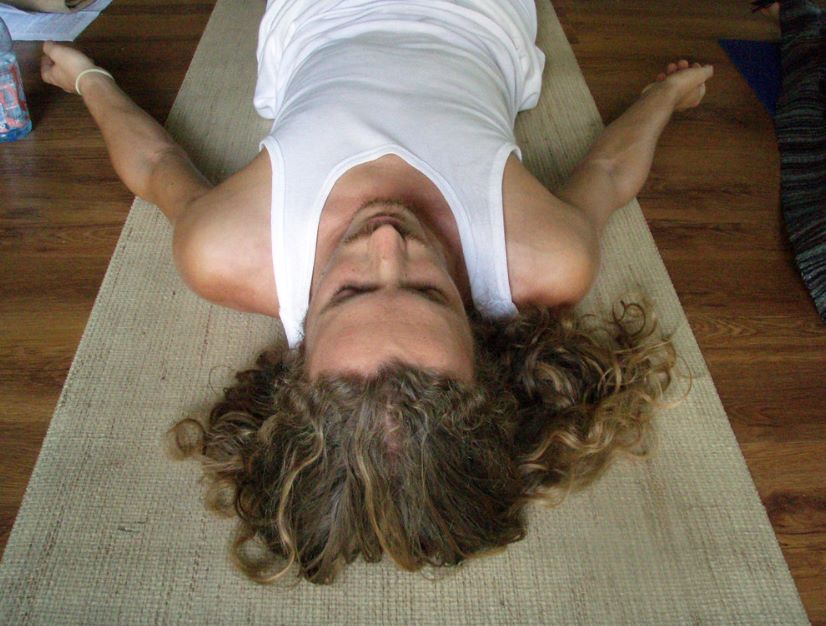
Curling the fingers into the palm and placing the thumbs over them can help draw inward energy and quiet the mind, allowing for a deeper state of relaxation.
Benefits of Adi Mudra: Adi mudra guides energy flow to various body parts, thereby decreasing blood sugar levels and increasing lung capacity.
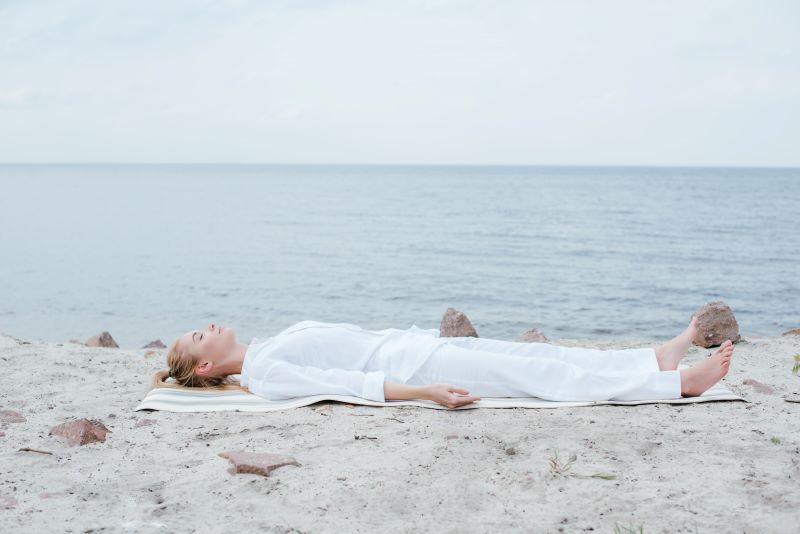
Connecting the tip of the middle finger and thumb while keeping the other fingers extended can promote patience and inner strength, aiding in surrendering to the present moment during Shavasana.
Benefits of Shunya Mudra: Shunya mudra helps improve balance and reduce hearing loss and tinnitus (ringing in the ears).
There can be a few types of Shavasana to practice. First, select what suits your position best, depending on your expertise and needs. Here are
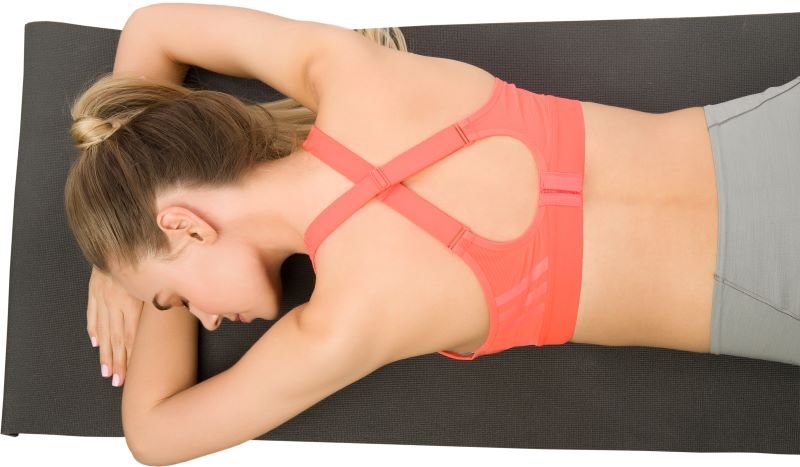
Lie on your belly with your head resting on your hands and elbows bent out. If you need support, keep a pillow under your torso. Your legs can be neutral or slightly turned out, spaced anywhere from a hip bone distance apart to wider than your mat.
Lie on your side with your knees bent and stacked. Prop your head with a folded blanket or pillow. Rest your arms comfortably, one along your body or on a bolster.
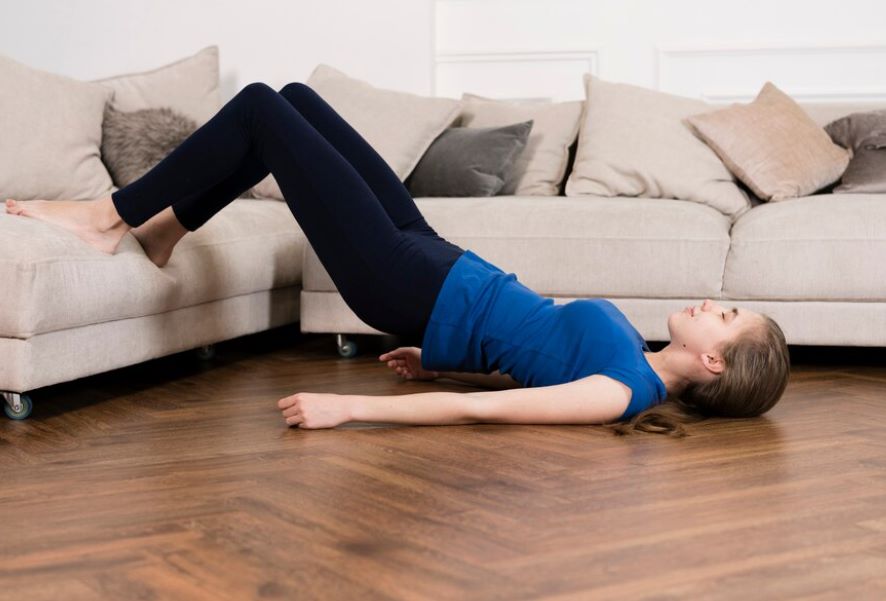
Lie before a chair or sofa and prop your feet on its edge. This position will lift your waist while keeping your upper back and head flat on the floor. The arms can rest down at a 45 to 60-degree angle from the sides of your body.
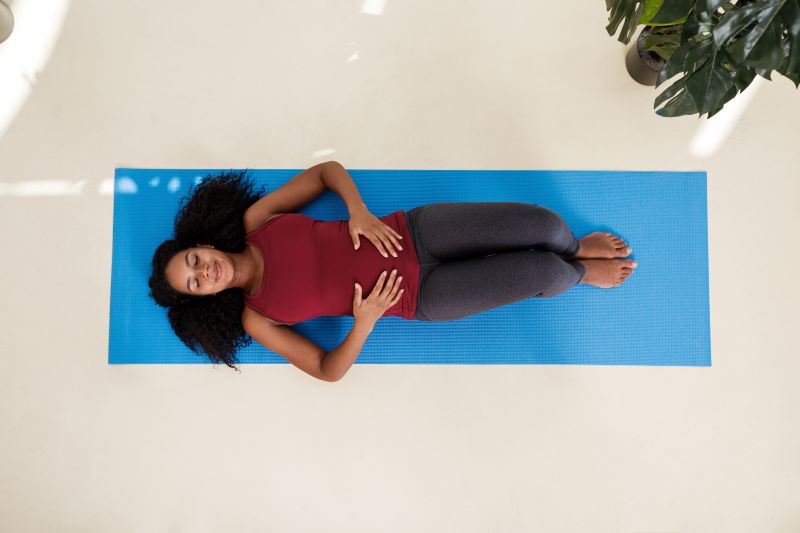
Also known as Constructive Rest Pose, it involves bending the knees in a corpse position. This position assists in compressing the lower back further into the ground, promoting good vertebrate alignment and releasing excess strain and stress.
Practitioners must know some crucial aspects before beginning Shavasana. Knowing when and how to do this yoga pose is important to getting the most out of it.
The duration of Shavasana depends on the yoga session before it. Before performing Shavasana, it's essential to listen to your body and how much rest it needs.
Regardless of skill level, listening to your body and honouring its needs is critical. If you're new to yoga, start with shorter durations and gradually increase as you become more comfortable. Always remember that Shavasana is about physical relaxation and mental and emotional rejuvenation.
Although Shavasana seems like a harmless and easy-to-do yoga pose, it has disadvantages. To prevent unease due to Shavasana's malpractice, perform this pose carefully within your level of comfort.
Shavasana should be practised in moderation to reduce the above risks. Before attempting the pose, understand your body's needs and proceed with the position to prevent the above risks.
Ideally, this is one of the easiest poses that one can try; however, performing it perfectly can be difficult for some. So, here are some tips that you need to keep in mind:
Before trying it out by yourself, opt for expert assistance to gain its intended benefits.
Individuals with neck, shoulder or lower back concerns can keep a pillow either under their knees or bellies.
Ensure the place where you are performing Shavasana is clean and well-ventilated without any distractions.
It is ideal to start slowly and build up steadily. Beginners can start off with a 10-minute session and then gradually increase the duration and frequency.
If the room you are in is very cold, try to carry a blanket or wear a sweater before performing it. This is because it becomes very difficult to relax and focus when your body is cold.
The precautions that one needs to take while performing the corpse pose are:
Doctors do not generally suggest performing Corpse Pose if you have any pre-existing diseases, such as heart disease, spinal issues, or recent surgeries. Hence, they recommend treating such conditions before it’s too late. Hence, having a health insurance plan that covers chronic conditions is necessary for individuals. It will help you manage the expenses in case any emergency treatment arises.
While Shavasana is fairly easy for everyone, even those who are not daily yoga practitioners, some should avoid it.
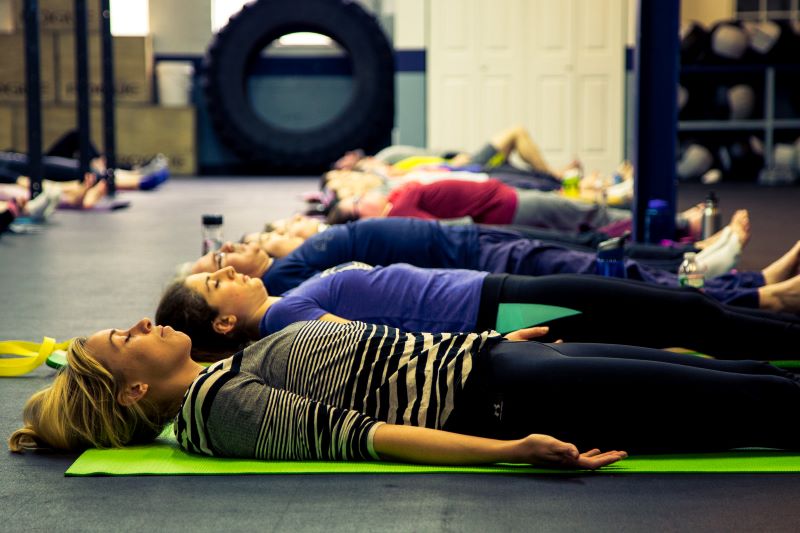
Even though it is one of the simplest yoga poses, you might find it challenging to perform Shavasana, especially if you have pre-existing ailments. Thus, you can bring modifications to this pose by using props and make it more relaxing and comfortable:
To provide better back support, you can raise your knees by placing a blanket or using a bolster below them.
Gather several blankets and bolsters for downward-facing Shavasana. Keep a bolster under your belly and chest, and support your forehead with a blanket or pillow. This will help you get some breathing space, and you can then relax.
So, this is all about the health benefits of Shavasana and why our bodies need it. Amidst the busy lives, most of us lead, we often push ourselves too hard and forget to relax and rejuvenate. In such situations, our bodies develop stress, causing severe anxiety. However, regular exercise and a few minutes of Shavasana can help our bodies rejuvenate, relax, and keep stress away.
The Shavasana is generally of three stages, as follows:
Stage 1: This is where one allows the body to find relaxation.
Stage 2: This stage is the one where the Shavasana begins.
Stage 3: This is the final stage of Shavasana, and in this stage, the ego and mind let go completely.