General
Life
Accessibility Options


General

General Products
Simple & Transparent! Policies that match all your insurance needs.
 Car Insurance
 Two Wheeler Insurance
 Commercial Vehicle Insurance
 Health Insurance
 Home Insurance
 Travel Insurance
 Business Insurance
Car Insurance
Two Wheeler Insurance
Commercial Vehicle Insurance
Health Insurance
Travel Insurance
Business Insurance
Car Insurance
Two Wheeler Insurance
Commercial Vehicle Insurance
Health Insurance
Travel Insurance



Scan to download

Life

Life Products
Digit Life is here! To help you save & secure your loved ones' future in the most simplified way.
 Term Life
 Savings Plan
 Retirement and Pension Plans
 Group Life Products
 Product Documents
Term Life
Savings Plan
Retirement and Pension Plans
Group Life Products
Product Documents
Term Life
Savings Plan
Retirement and Pension Plans
Group Life Products

Scan to download

Claims

Claims
We'll be there! Whenever and however you'll need us.
 Customer Support
 Motor Claims
Health Claims
Motor Claims
Health Claims
 Marine Insurance
 Grievance Redressal
Customer Support
Motor Claims
Health Claims
Marine Insurance
Grievance Redressal
Grievance Redressal
Customer Support
Motor Claims
Health Claims
Marine Insurance
Grievance Redressal
Scan to download
 General
 Life
General
Life
Life
General
Life
Renewals
Resources

Resources
All the more reasons to feel the Digit simplicity in your life!
Exclusive Features
 Transparency Report
Others
Exclusive Features
Transparency Report
Transparency Report
Others
Exclusive Features
Transparency Report

Scan to download


Our WhatsApp number cannot be used for calls. This is a chat only number.

 Grey Scale
 Readable Text
 Reset
Reset




2000+ Cashless Garages
80 Lacs+ Policies Sold



Check Price
Buy Commercial Vehicle Insurance Online
It's a Brand New Vehicle
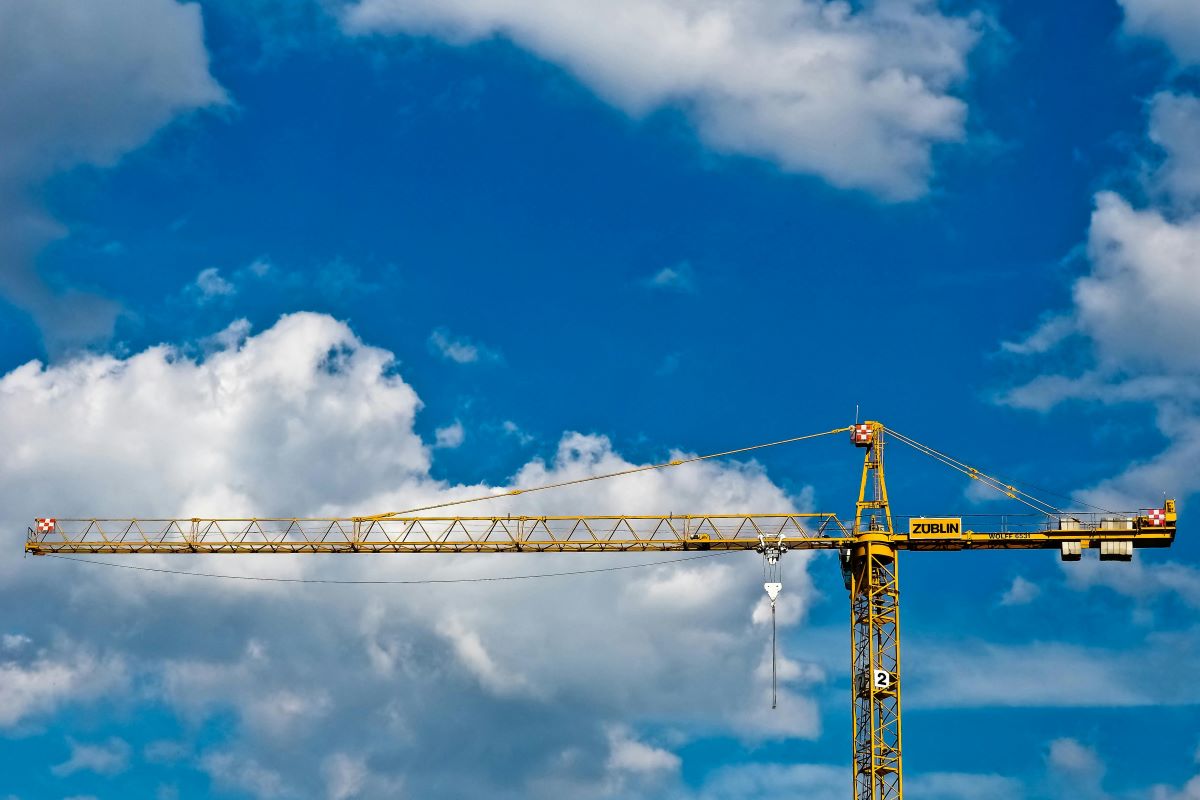
Have you ever been fascinated with tall structures like skyscrapers and how they were built? Well, when it comes to such a level of construction, cranes play a crucial role.
A crane is a heavy-duty simple machine used to lift and lower heavy materials. Cranes have today become quite important in simplifying processes in manufacturing, mining, infrastructure, automotive and construction industries. There are various types of cranes available, each with their own unique features and capabilities.
Read here everything you need to know about what a crane is, its types, uses and even the working mechanism.

Table of Contents

A crane is a type of heavy-duty machine that can lift and move heavy loads and materials for different reasons, with accuracy. A crane has three parts: a hoist rope or chains, a winder, and sheaves to lift, lower, and move loads horizontally.
The heavy-duty machine uses one or more simple machines to get a mechanical advantage that is beyond normal human capability.
Cranes are used in different industries - from construction to transport and from manufacturing to shipbuilding and material loading.
The working principle of cranes is easy to understand – they use a combination of simple machines, which essentially includes pulleys and levers working together to provide a mechanical advantage for lifting and moving heavy loads.
Pulley systems in cranes play a big role in changing the direction of the force required to lift a load and distribute that force over larger lengths. To bring down the load, the pulley in the crane rotates to produce mechanical energy that can be converted into electrical energy.
While the ropes and sheaves provide strength to lift objects with the hook.
Being simple machines, cranes, too, obey the principle of conservation of energy. This implies that the energy provided to the load is not more than the energy put into the crane machine.
An efficient crane is the one which satisfies these three major design conditions:
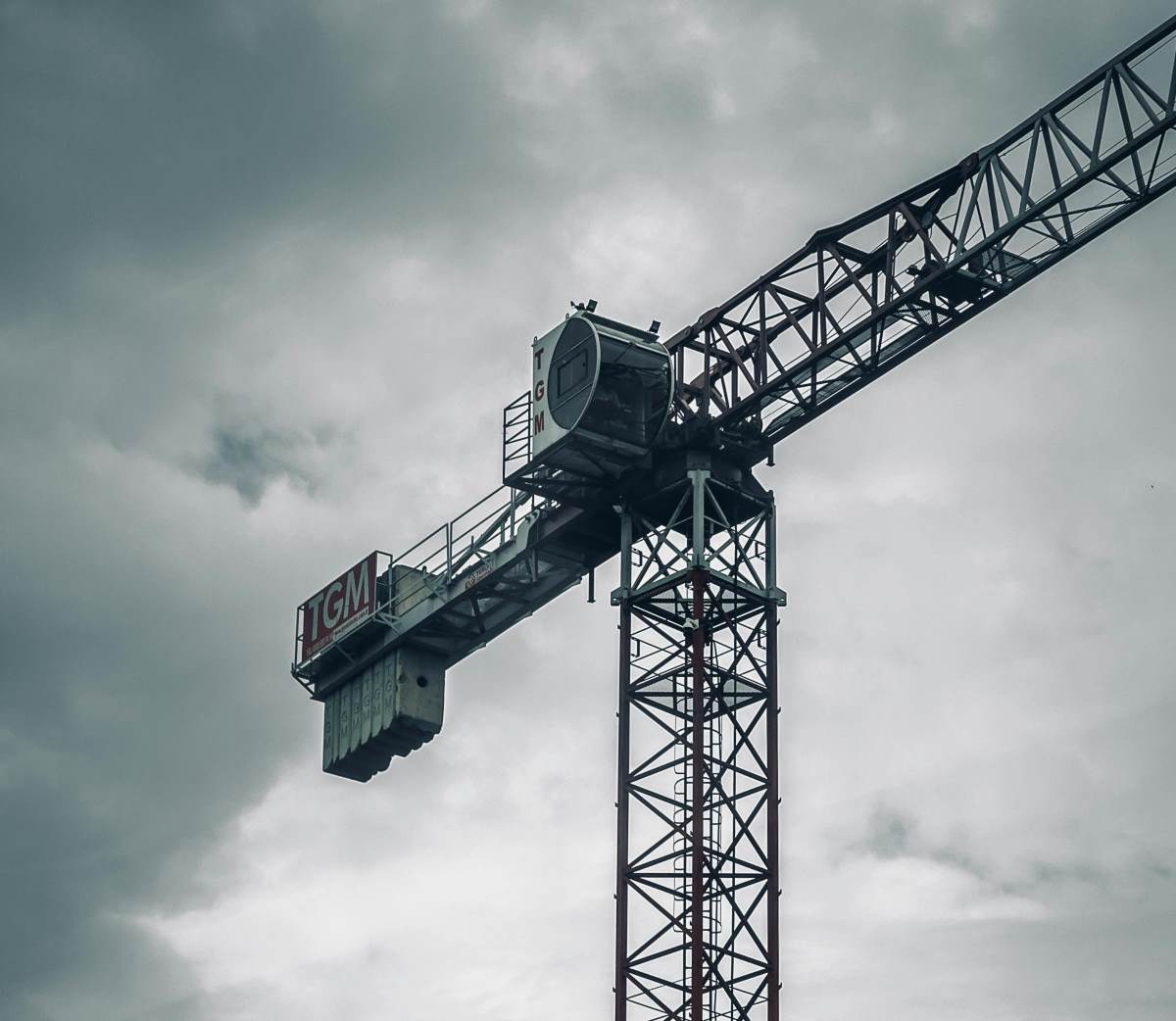
There are various types of cranes available, each designed to fulfil to a specific use. Here are some common types of crane machines:
A crawler crane is a type of heavy-duty construction machine used in industries like infrastructure, mining, etc. Unlike other cranes, these types of cranes have an undercarriage fitted with a pair of rubber tracks or crawlers, instead of wheels, to move around the work site.
These crawlers provide better stability and manoeuverability over rough terrain or when climbing inclines. They are best used to lift and move hundreds of tons of load, and in large-scale construction and demolition projects.
This is the most common type of crane and is mainly used for constructing tall structures, as it offers amazing lifting capabilities and is of suitable height.
Tower cranes are equipped with an operating cab and a jib that extends horizontally from the mast, which can move materials up, down, and horizontally.
Mainly used for loading and moving heavy equipment on the work site, truck-mounted cranes are designed to travel easily on the roads with no special set up as they have the boom or arm of the crane attached to the top of carrier or truck.
They are fitted with counterweights to provide enhanced stabilization, so that these cranes can easily transport large loads through roads. They are mainly used for the maintenance and building of bridges.
As the name suggests, rough terrain cranes are designed specifically to lift and transport materials and carry out other operations on rough terrains and off-road sites. They have excellent stability and better mobility which makes them much more manageable in narrow and rough areas.
Rough terrain cranes are built like crawler cranes, but instead of tracks in crawler cranes, their undercarriage has four large rubber tires equipped with four-wheel drive.
Carry deck cranes are small, four-wheeled, extremely portable, simple to set up, and can rotate 360 degrees.
Their small size is a huge advantage as it makes them suitable to navigate in narrow and confined worksites.
It is also known as a crane vessel or crane ship, and the only difference between floating cranes and the other common type of cranes is that they’re used at sea. These floating cranes are used at seaports or oil rigs.
Equipped with a hydraulic cylinder that allows it to change the length of the boom (arm) like a telescope, these types of cranes are highly adaptable in a variety of work sites.
They are fixed cranes and are typically mounted on a truck to transport to and from different worksites. They are generally used for short-term construction jobs projects or sometimes in rescue operations like during natural disasters or other emergencies.
These are extremely heavy cranes that are most commonly used in construction projects, and therefore, generally assembled on the work site itself.
Hammerhead cranes come with a horizontal lever attached to a fixed tower. While the trolley, resting on the forward part of the arm, offers a feature called racking in which it can move forward and back along the crane arm.
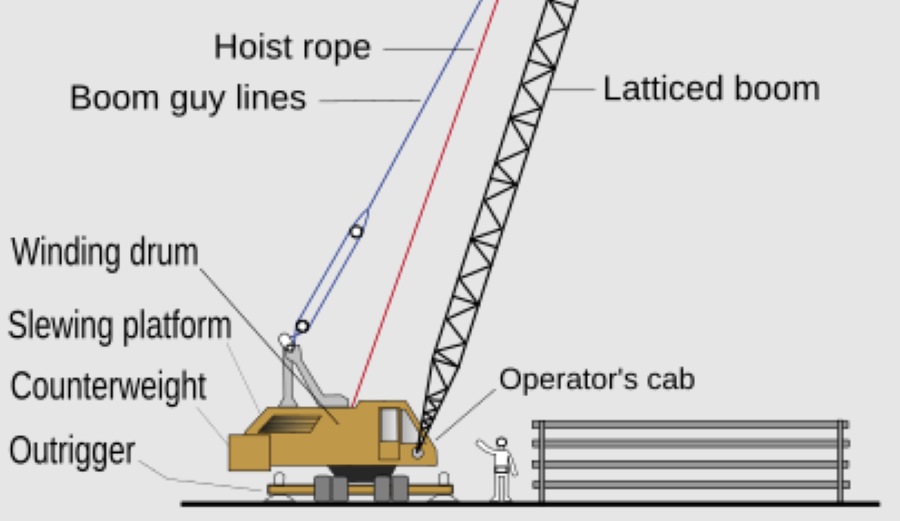
Here are some of the important parts of a crane.
Cranes are extremely versatile heavy-duty machines that can be used for the following purposes:
Thus, this was all about what is a crane, types of cranes and their uses.
Since cranes are used in various industries and are quite important as heavy machinery, secure them with a commercial vehicle insurance policy that provides financial coverage in situations of damage or loss, such as accidents, theft, natural calamities, and third-party liability, etc.