General
Life
Accessibility Options


General

General Products
Simple & Transparent! Policies that match all your insurance needs.
 Car Insurance
 Two Wheeler Insurance
 Commercial Vehicle Insurance
 Health Insurance
 Home Insurance
 Travel Insurance
 Business Insurance
Car Insurance
Two Wheeler Insurance
Commercial Vehicle Insurance
Health Insurance
Travel Insurance
Business Insurance
Car Insurance
Two Wheeler Insurance
Commercial Vehicle Insurance
Health Insurance
Travel Insurance


Scan to download

Life

Life Products
Digit Life is here! To help you save & secure your loved ones' future in the most simplified way.
 Term Life
 Savings Plan
 Retirement and Pension Plans
 Group Life Products
 Product Documents
Term Life
Savings Plan
Retirement and Pension Plans
Group Life Products
Product Documents
Term Life
Savings Plan
Retirement and Pension Plans
Group Life Products

Scan to download

Claims

Claims
We'll be there! Whenever and however you'll need us.
 Customer Support
 Motor Claims
Health Claims
Motor Claims
Health Claims
 Marine Insurance
 Grievance Redressal
Customer Support
Motor Claims
Health Claims
Marine Insurance
Grievance Redressal
Grievance Redressal
Customer Support
Motor Claims
Health Claims
Marine Insurance
Grievance Redressal
Scan to download
 General
 Life
General
Life
Life
General
Life
Renewals
Resources

Resources
All the more reasons to feel the Digit simplicity in your life!
Exclusive Features
 Transparency Report
Others
Exclusive Features
Transparency Report
Transparency Report
Others
Exclusive Features
Transparency Report

Scan to download


Our WhatsApp number cannot be used for calls. This is a chat only number.

 Grey Scale
 Readable Text
 Reset
Reset




10000+ Cashless Garages
1.5 Cr+ Policies Sold


Check Price

Car insurance Online, Up to 90% Discount
It's a Brand New Car
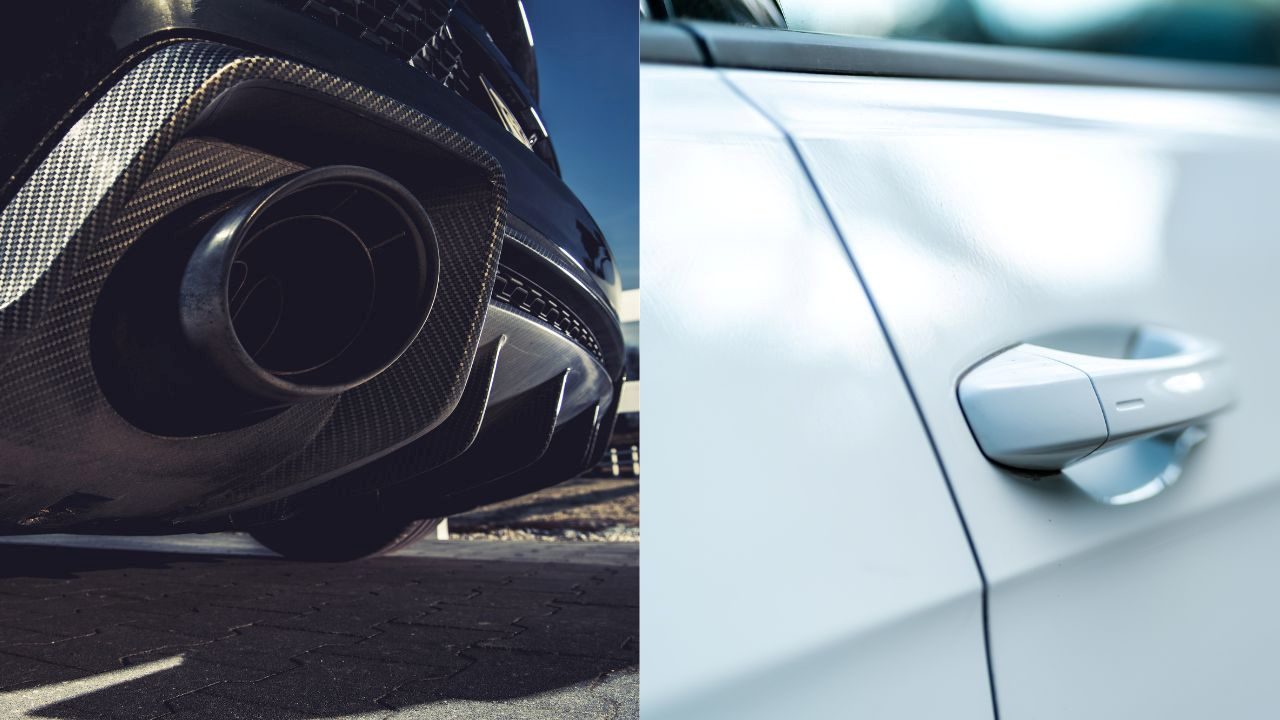
Carbon fibre is a material made of carbon atoms. The atoms are very closely bonded within a minimal crystal structure. It is five times stronger than steel but significantly lighter. This is the reason that contributes to improving the speed, fuel use, and safety of cars.
Carbon fibre is robust yet very light. Meanwhile, aluminium provides excellent affordability and an impressive degree of flexibility. From fundamental differences between carbon fibre vs aluminium to benefits, this article is intended to help you make informed decisions.

Table of Contents

Carbon fibre is a fibre drawn from thin strands of carbon atoms. The carbon fibres have been combined and bonded by a resin into a composite fabric. Such a composite is strong, has an excellent strength-to-weight ratio, and also rust-free.
The material is rugged and excels well in many industries. It is from the aerospace and automotive industries to equipment for sports. It is thus in demand for high-performance items like bicycles and racing cars, for which minimum weight and good strength are required.
Aluminium is a lightweight and ductile metal used in many industries, from automobiles to other products. One of the reasons it is popular is that it rarely rusts and is recyclable, besides being cheap. Aluminium bends and shapes relatively quickly. So it remains very popular when it has to make lots of things.
It is, in fact, cheaper compared to carbon fibre and, thus, used in structural parts, panels, and frames. However, it's not as strong as carbon fibre. Aluminium is a great, strong, and reliable choice for most car applications.
Although both carbon and aluminium are good, they have certain differences. The table below highlights the key attributes of carbon fibre and aluminium:
The main advantages and disadvantages of carbon fibre used in car manufacturing are presented in the following points:
This section highlights the essential benefits and drawbacks of aluminium in automobile manufacture.
Carbon fibre offers weight savings but is costly to the environment. Its production is energy-intensive and uses a lot of electricity. Recycling is still challenging and not nearly as efficient. While recycling is being improved through new technologies. Yet, the sustainability of carbon fibre is still relatively lower than that of other materials, such as aluminium.
Aluminium, however, has excellent recyclability. This makes it an extremely sustainable material. Recycling aluminium requires only 5% of the energy that new production does. It is also recyclable indefinitely with no loss in quality. Therefore, it saves energy and ecological conditions against the use of other materials.
Carbon fibre reduces the vehicle's weight to optimise the range of electric vehicles (EVs). The battery has a better energy-to-weight ratio. This makes it last longer than the heavier body and structural components. It also determines the performance of the EV. The high cost serves as a constraint for applying carbon fibre in all versions of EVs
Aluminium is inexpensive and possesses excellent recyclability. The material is not critical in weight. This helps improve the efficiency of the EV without paying for carbon fibre. Aluminium structures can be found in frameworks, body panels, and covers of batteries. This enhances the performance obtained along with manufacturing flexibility.
Carbon fibre is widely used in high-performance vehicles. Sports cars and luxury models are based on excellent strength-weight ratios. It improves speed and handling. Therefore, reducing weight enables faster acceleration and braking. However, the cost is too high while manufacturing. This makes them inappropriate for budget-conscious, mass-produced cars.
Meanwhile, aluminium may represent an economic optimum for performance in terms of price. While it is lighter than steel, it saves fuel consumption without being as pricey as carbon fibre. Its inherent flexibility makes it easy to shape. So, it is the material most car manufacturers favour for volume production.