General
Life
Accessibility Options


General

General Products
Simple & Transparent! Policies that match all your insurance needs.
 Car Insurance
 Two Wheeler Insurance
 Commercial Vehicle Insurance
 Health Insurance
 Home Insurance
 Travel Insurance
 Business Insurance
Car Insurance
Two Wheeler Insurance
Commercial Vehicle Insurance
Health Insurance
Travel Insurance
Business Insurance
Car Insurance
Two Wheeler Insurance
Commercial Vehicle Insurance
Health Insurance
Travel Insurance



Scan to download

Life

Life Products
Digit Life is here! To help you save & secure your loved ones' future in the most simplified way.
 Term Life
 Savings Plan
 Retirement and Pension Plans
 Group Life Products
 Product Documents
Term Life
Savings Plan
Retirement and Pension Plans
Group Life Products
Product Documents
Term Life
Savings Plan
Retirement and Pension Plans
Group Life Products

Scan to download

Claims

Claims
We'll be there! Whenever and however you'll need us.
 Customer Support
 Motor Claims
Health Claims
Motor Claims
Health Claims
 Marine Insurance
 Grievance Redressal
Customer Support
Motor Claims
Health Claims
Marine Insurance
Grievance Redressal
Grievance Redressal
Customer Support
Motor Claims
Health Claims
Marine Insurance
Grievance Redressal
Scan to download
 General
 Life
General
Life
Life
General
Life
Renewals
Resources

Resources
All the more reasons to feel the Digit simplicity in your life!
Exclusive Features
 Transparency Report
Others
Exclusive Features
Transparency Report
Transparency Report
Others
Exclusive Features
Transparency Report
Scan to download


Our WhatsApp number cannot be used for calls. This is a chat only number.

 Grey Scale
 Readable Text
 Reset
Reset




10000+ Cashless Garages
1.5 Cr+ Policies Sold


Check Price

Car insurance Online, Up to 90% Discount
It's a Brand New Car
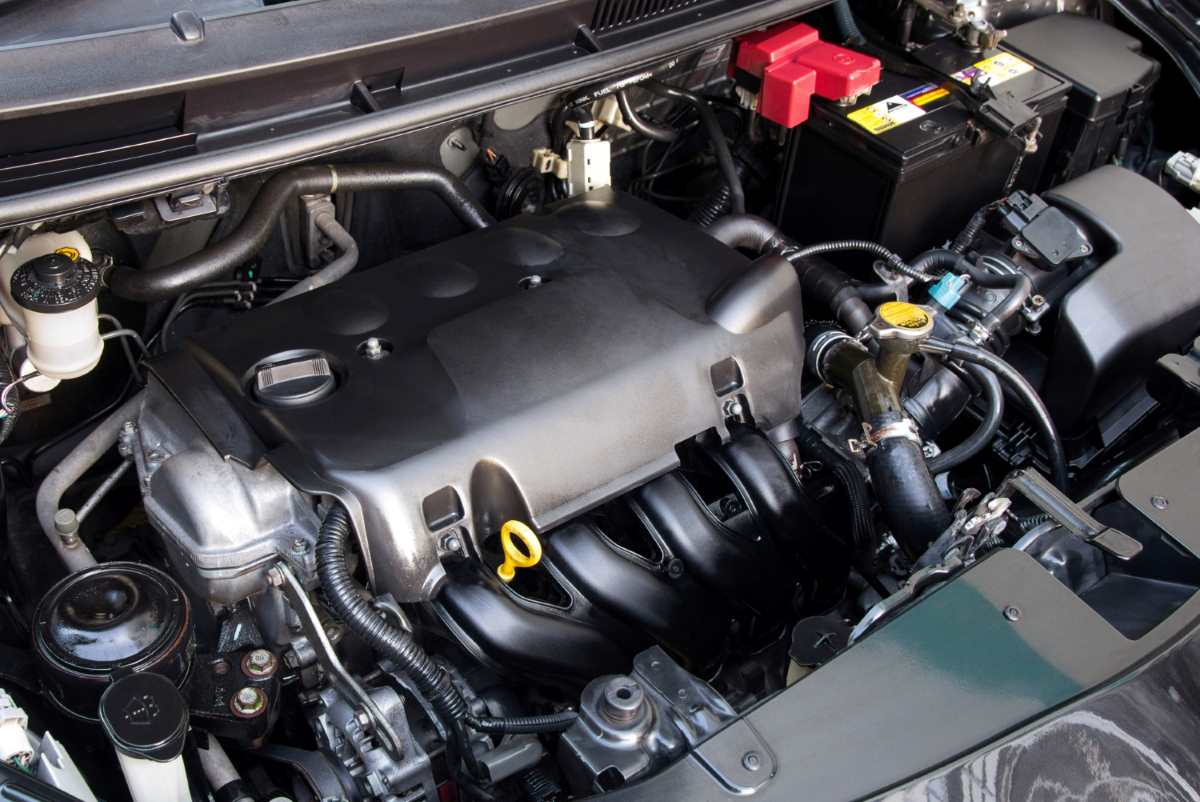
Bharat Stage Emissions Norms (BS) are India's vehicle emission standards. The government of India has introduced these to tackle vehicular pollution. There are different types of Bharat Stage Emission series. Each stage has its own emission levels depending on the engine type and functionality.
The market mainly manufactures BS4 and BS6 series components. Recently, there has been a gradual shift from BS4 to BS5.To advance from one series to another, the vehicle owner must have a thorough understanding of BS IV and BS VI engines. This article will explore these engines and the differences between BS 4 and BS 6.

Table of Contents

The Bharat Stage IV (BS IV) emission standards represented a significant leap forward in India's efforts to control vehicle pollution and improve air quality. It was implemented in a few select cities in 2010 and enforced nationwide by April 2017.
The primary objective of the present regulation was to control emissions of contaminants, such as carbon monoxide (CO), hydrocarbons (HC), and nitrogen oxides (NOx), which are the primary sources of environmental pollution and public health issues.
To meet BS IV standards, vehicles were equipped with simple fuel injection systems and regular catalytic converters, which were fabricated to attenuate polluting emissions efficiently. Although at a higher degree of complexity compared to BS III, these technologies, though mature compared to BS III, represented a small-scale solution to lead the way toward future technology for the control of emissions.
BS VI (Bharat Stage VI) is India's current set of emission regulations, which came into effect in April 2020 to counteract vehicular air pollution. It is a substantial echelon above BS IV, aimed at reducing damaging emissions such as carbon monoxide (CO), hydrocarbons (HC), nitrogen oxides (NOx), and particulate matter (PM).
The transition favours better air quality and conformity with international standards of Indian emissions. Emissions in BS VI vehicles are controlled by employing advanced technologies, such as Selective Catalytic Reduction (SCR) and Diesel Particulate Filters (DPF).
There are several differences between BS4 and BS6 fuel engines based on NOx and hydrocarbons. Here's a breakdown of the differences based on different parameters:
| Parameter | BS IV | BS VI |
| Nitrogen Oxide (NOx) | 80 mg (Petrol), 250 mg (Diesel) | 60 mg (Petrol), <80 mg (Diesel) |
| Particulate Matter (PM) | Nil (Petrol), 25 mg/km (Diesel) | <4.5 mg/km (Petrol and Diesel) |
| Carbon Monoxide (CO) | 1000 mg/km | 500 mg/km |
| Sulfur in Fuel | 50 ppm | 10 ppm |
| Emission Control | Basic EGR, Catalysts | Advanced EGR, SCR systems |
| Testing | Lab-based testing | Real Driving Emission (RDE) testing |
The BS4 diesel engines have good configurations to meet emission standards and minimise noxious emissions. Here's a breakdown of how it:
Step 1: The fuel delivery occurs precisely under high pressure with common-rail fuel injection for efficient combustion.
Step 2: Diesel Oxidation Catalysts (DOC) oxidise hydrocarbons and carbon monoxide to reduce emissions.
Step 3: Exhaust Gas Recirculation (EGR) recycles a fraction of the exhaust gases to reduce combustion temperature and NOx emissions.
Step 4: Engines are fuelled by low-sulfur fuel to minimise the outgassing of polluting gases.
Step 5: Electronic management systems precisely set combustion parameters to optimise performance.
Step 6: EGR systems help cool down the combustion, and DOCs help neutralise hydrocarbons and CO efficiently.
Bharat Series (BS6) diesel engines are developed with state-of-the-art technology to meet stringent emission regulations. Below is the step-by-step working of a BS6 engine:
Pollution emission standards have changed substantially from BS IV to BS VI to reduce the environmental effects of vehicular emission leakage. The following table sums up the pollution norms of BS IV vs BS VI:
| Parameter | BS IV (BS4) | BS VI (BS6) |
| Sulfur Content | 50 ppm | 10 ppm |
| NOx (Diesel) | 250 mg/km | 80 mg/km |
| Particulate Matter | Not Regulated | 4.5 mg/km |
BS I, BS II, BS I, BS IV, and BS VI are the Bharat Stage Emission Standards (BSES) regulating the number of pollutants vehicles emit in India. Here's a breakdown of each norm in detail:
| Emission Standard | Year of Introduction |
| India 2000 | 2000 |
| Bharat Stage II (BS2) | 2005 |
| Bharat Stage III (BS3) | 2010 |
| Bharat Stage IV (BS4) | 2017 |
| Bharat Stage VI (BS6) | 2020 |
Note: BS V was skipped, and BS VI was implemented directly.
The first emission standard was introduced in 2000. It was designed to regulate the principal pollutants CO, HC and NOx of vehicles, representing an initial step toward a more robust system for controlling such pollutants. This norm served as an introduction to the proper control and conceptually defined emissions control of vehicular emissions in India, eventually paving the way for the adoption of relatively simple catalytic converter technologies.
BS II has increased caps on CO and HC+NOx-constrained limits for diesel particulate matter. At this stage, a transition towards using cleaner fuel with lower sulfur content also occurred to improve the emission reduction performance. BS-II was implemented in a few cities, including Delhi NCR, Mumbai, Kolkata, and Chennai, in 2001 and became nationwide by 2005.
BS III regulations place considerably lower NOx and HC emissions than BS II, and engine design changes are necessary. The generated compounds also allowed high-performance catalytic converters and fine regulators to be used as effective emission-control devices. The BS emission standards have helped reduce pollution levels, but they have also increased vehicle costs.
BS IV focused on improving urban air quality by significantly reducing CO, HC, and NOx emissions. It established the gold standard for the sophistication of the technology, such as electronically actuated fuel injection and scrubbers with higher capacity, so that less polluting exhaust emissions could be generated. BS4 engines improved emission controls and fuel quality.
As an improvement from BS IV, BS VI uses next-generation technologies (e.g., SCR and DPF) to reduce NOx emissions. It also contained a real driving emission (RDE) test to confirm adherence in real-world situations and driving for cleaner, greener transport. The BS6 standards are designed based on European regulations, and the higher the number, the more rigid the standard.