General
Life
Accessibility Options


General

General Products
Simple & Transparent! Policies that match all your insurance needs.
 Car Insurance
 Two Wheeler Insurance
 Commercial Vehicle Insurance
 Health Insurance
 Home Insurance
 Travel Insurance
 Business Insurance
Car Insurance
Two Wheeler Insurance
Commercial Vehicle Insurance
Health Insurance
Travel Insurance
Business Insurance
Car Insurance
Two Wheeler Insurance
Commercial Vehicle Insurance
Health Insurance
Travel Insurance


Scan to download

Life

Life Products
Digit Life is here! To help you save & secure your loved ones' future in the most simplified way.
 Term Life
 Savings Plan
 Retirement and Pension Plans
 Group Life Products
 Product Documents
Term Life
Savings Plan
Retirement and Pension Plans
Group Life Products
Product Documents
Term Life
Savings Plan
Retirement and Pension Plans
Group Life Products

Scan to download

Claims

Claims
We'll be there! Whenever and however you'll need us.
 Customer Support
 Motor Claims
Health Claims
Motor Claims
Health Claims
 Marine Insurance
 Grievance Redressal
Customer Support
Motor Claims
Health Claims
Marine Insurance
Grievance Redressal
Grievance Redressal
Customer Support
Motor Claims
Health Claims
Marine Insurance
Grievance Redressal
Scan to download
 General
 Life
General
Life
Life
General
Life
Renewals
Resources

Resources
All the more reasons to feel the Digit simplicity in your life!
Exclusive Features
 Transparency Report
Others
Exclusive Features
Transparency Report
Transparency Report
Others
Exclusive Features
Transparency Report
Scan to download


Our WhatsApp number cannot be used for calls. This is a chat only number.

 Grey Scale
 Readable Text
 Reset
Reset




10000+ Cashless Garages
1.5 Cr+ Policies Sold


Check Price
Car insurance Online, Up to 90% Discount
It's a Brand New Car
We use brakes to bring our cars to rest from continuous motion. Although superficially applying brakes might seem simple, a lot of physics run within a car.
Generally, we can find two types of brakes in a car. These are foot brakes (brake pedals) and handbrakes. This article elaborates on everything a car owner should know about car handbrakes.

Table of Contents

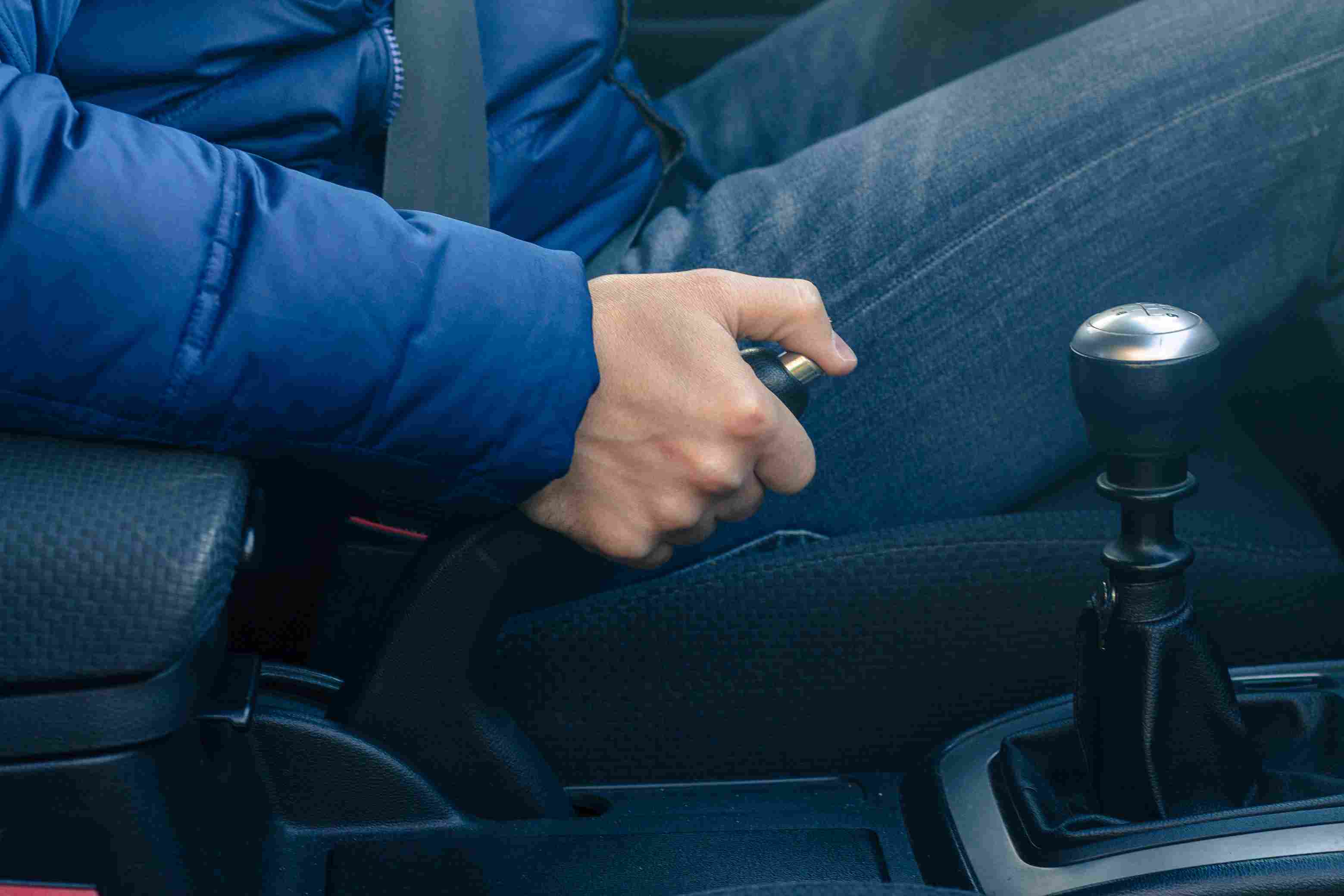
In simple terms, these are brakes that we operate with our hands. You can find them between the front two seats of your car. In addition, you might locate car handbrakes between the driver's seat and car door in many cars.
A car's handbrake is a stick with a button on its head. Drivers use them to bring their vehicles to a halt in an emergency. You need to press that button first and pull up the stick to activate the handbrake in a car. These are also called parking brakes, as they stop a vehicle from rolling away when parked. Emergency brakes and e-brakes are some other names for car handbrakes.
Modern high-end cars come with automatic handbrakes. These activate when you stop your car and disengage as you step on the throttle.
A car handbrake is a mechanical lever that stops your vehicle when hydraulic brakes fail. These brakes also prevent your car rolling backwards or downhill towards gravity when you are not driving. It does so by applying disc pads or brake shoes on the rear tyres of your vehicle.
The following points will help explain how handbrakes work:
Despite its name, you can activate handbrakes by pressing a third pedal in some vehicles. In addition, you can engage and disengage the handbrakes by pressing these pedals repetitively.
Some vehicles may also come with a handle as a parking brake which you can pull to activate brakes. Similarly, pushing this handle can deactivate the handbrake system in your car.
This is the most commonly found type of car handbrake. It gets its name owing to its placement. This is a lever usually between your car's driver seat and front passenger seat. Stick or centre lever handbrake is easy to operate as it requires little arm strength to raise this lever.
You will find this button on the lever's head, which you must press before pulling to stop your car.
This is the most advanced format of handbrakes, first seen in 2001. In these electronically manipulated brakes, you only need to push a button on the dashboard/central console to engage or disengage brakes.
The purpose of a handbrake is to stop your car when standard brakes fail to function efficiently. Here are a few features and functions of handbrake systems in cars:
Stops Your Car from Rolling: Handbrakes apply pressure on your car's rear wheels and prevent it from rolling backwards. This feature is a saviour while your car moves against gravity on an inclined surface, driving uphill. Car handbrakes prevent your car from rolling down towards gravity, whether your car is at rest or in motion.
Keeps the Car in Position When Foot Brakes Malfunction: Handbrakes are also known as emergency brakes for a reason. It allows you to park your car when foot brakes fail or do not function properly. However, one must be cautious while applying car handbrakes as they tend to stop your rear wheels from running. Consequently, a sudden application might spin your car.
For Waiting at Traffic Signals: Instead of applying foot brakes, you may opt for handbrakes for short and sudden halts in traffic. Secondly, car handbrakes prevent your car from moving forward if it is suddenly hit from behind as the rear wheels are locked.
For Steep Rises and Sharp Turns: Handbrakes prevent vehicles from rolling down while they are ascending a steep slope. Drivers tend to climb uphill using an active handbrake to avoid rolling down. Another use of handbrakes in cars is for making sharp turns. This is also the reason why race car drivers pull handbrakes while making sharp and fast turns.
Handling a handbrake in a car is crucial for proper parking and controlling the vehicle on most occasions. The basic operation of how the motion is created is still the same from car to car, but how it is done changes slightly depending on the type of transmission and hand brake in the car.
Next, let’s learn how to use a handbrake in an automatic car:
Parking brakes, commonly called handbrakes or emergency brakes, are safety features usually incorporated in all cars, including automatic ones. Although most automatic car drivers do not pay much attention to them, handbrakes can save your transmission and guarantee that your car stays parked.
When Parking:
When Ready to Drive:
This process ensures that your vehicle remains securely parked and facilitates easy and smooth driving when starting. However, you should always refer to the car’s handbook for a specific procedure since handbrakes cannot be designed in the same way in all vehicles.
Applying a handbrake in a manual car is essential for improving safety and controlling the vehicle, especially when parking on different types of slopes or starting uphill. Manual vehicles are different from automatic vehicles, where the use of handbrakes has to be considered for the selected gear and the clutch.
Now, let us consider how to engage or release a handbrake in a manual car properly:
When Parking:
When Starting to Drive:
The primary functions of the handbrake, commonly referred to as the parking brake or the emergency brake, are not limited to merely parking the car.
Here are some of the possible usages of the handbrake and when it is wise to apply it:
An important note should be made regarding the handbrake, the parking brake or the emergency brake. The handbrake is normally applied when parking your car. It is most useful on a slope, avoiding early car body movement causing possible damage. In addition to safety, it is recommended to engage both the handbrake and other corresponding gear, mainly in manual transmission cars.
The benefit of using the handbrake in extended periods of stalling is that it involves two movements. It reduces the driver's effort to apply on the brake pedal and saves energy. However, when the car in front of the impacted vehicle is stopped at an intersection or facing other traffic that could be in further danger, it serves as a buffer to avoid pushing the bumped car into dangerous areas.
In very few circumstances, when the primary brakes are defective, the handbrake is used as the vehicle’s emergency brake. Nevertheless, this should be done sparingly because it only activates the rear brakes, and the car will likely spin when the brake is pressed.
Hand brakes are highly beneficial in vehicles that use manual transmission, especially when the mountain starts. This works on a similar mechanism of keeping the car locked while you search for the clutch's biting point so that the car does not roll back and you get a confident start on descends.
Applying the handbrake enhances protection during car maintenance, such as changing a bulb or working on the car's underside. It is an extra precaution besides placing wheelchocks.
Engaging the handbrake is generally an essential part of the test, which assesses one’s competency as a driver. It shows the driver’s comprehension of the vehicle's control and various preventive measures.
Again, most present vehicles have electronic parking brakes or hill-hold assist control. Some may have incorporated some of the functions usually handled by handbrakes, although mastery of the principles is still crucial for every driver.
Although using a car handbrake is pretty simple, a driver must remember certain points while applying them for a safe ride.
Avoid Raising the Lever Without Pressing the Button: Most drivers tend to raise the parking brake lever without pressing the button. This practice helps stop your vehicle; however, it is an ill practice. Frequently pulling up the handbrake lever without pressing a button can wear out its teeth over time. This can decrease car handbrakes’ functioning efficiency.
Use Emergency Brakes Only During Emergency: Using handbrakes frequently can wear these cables out. As a result, you will not be able to apply them when you need to park your vehicle.
Shelter Your Car in Warm Places During Winter: You may find it difficult to apply parking brakes during winter. This is solely because brake cables tend to freeze in winter. Consequently, your vehicle tends to slow down, and you cannot fully engage these brakes during emergencies. To avoid such a scenario, try keeping your vehicle in a sheltered space during winter. Also, you can opt for warming up your car before disengaging the parking brakes.
They Do Not Bring Your Car to a Sudden Stop: As you browse through the necessity of parking brakes, remember these brakes slow your car down. You cannot apply them to bring your car to a sudden halt. Car handbrakes bring your car to a gradual halt, unlike foot brakes. As car handbrakes function on rear wheels, you can ride up a steep slope with engaged brakes. This will prevent your vehicle from rolling downhill.
Note the Brake Sign: If the Brake sign reflects an instrument cluster, handbrakes are active. Therefore, you must refrain from pulling the brake lever higher. If you continue to pull up the lever, it may exert too much pressure and damage its cables.
Make Sure to Disengage Handbrakes Before Driving: A car can move with slightly active handbrakes. You must avoid practising this in usual cases, as engaged handbrakes can harm your car's engine performance and mileage. However, in certain scenarios, like driving up a hill or taking sharp turns, you can drive with parking brakes engaged.