General
Life
Accessibility Options


General

General Products
Simple & Transparent! Policies that match all your insurance needs.
 Car Insurance
 Two Wheeler Insurance
 Commercial Vehicle Insurance
 Health Insurance
 Home Insurance
 Travel Insurance
 Business Insurance
Car Insurance
Two Wheeler Insurance
Commercial Vehicle Insurance
Health Insurance
Travel Insurance
Business Insurance
Car Insurance
Two Wheeler Insurance
Commercial Vehicle Insurance
Health Insurance
Travel Insurance


Scan to download

Life

Life Products
Digit Life is here! To help you save & secure your loved ones' future in the most simplified way.
 Term Life
 Savings Plan
 Retirement and Pension Plans
 Group Life Products
 Product Documents
Term Life
Savings Plan
Group Life Products
Product Documents
Term Life
Savings Plan
Group Life Products
Scan to download

Claims

Claims
We'll be there! Whenever and however you'll need us.
 Customer Support
 Motor Claims
Health Claims
Motor Claims
Health Claims
 Marine Insurance
 Grievance Redressal
Customer Support
Motor Claims
Health Claims
Marine Insurance
Grievance Redressal
Grievance Redressal
Customer Support
Motor Claims
Health Claims
Marine Insurance
Grievance Redressal
Scan to download
 General
 Life
General
Life
Life
General
Life
Renewals
Resources

Resources
All the more reasons to feel the Digit simplicity in your life!
Exclusive Features
 Transparency Report
Others
Exclusive Features
Transparency Report
Transparency Report
Others
Exclusive Features
Transparency Report
Scan to download


Our WhatsApp number cannot be used for calls. This is a chat only number.

 Grey Scale
 Readable Text
 Reset
Reset




10000+ Cashless Garages
1.5 Cr+ Policies Sold


Check Price

Car insurance Online, Up to 90% Discount
It's a Brand New Car
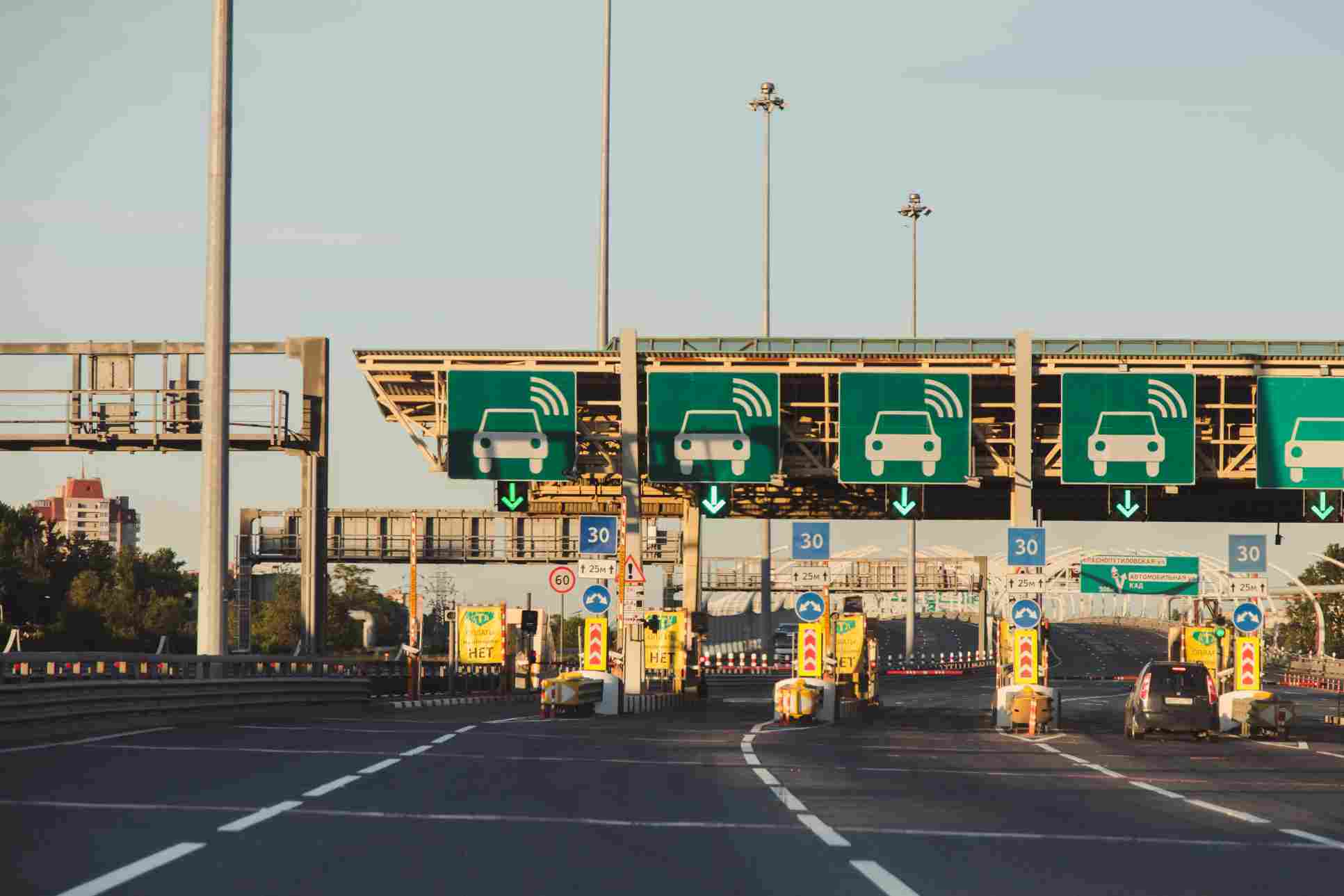
In India, everything is becoming hands-free, whether it is payments or ordering groceries online. One such hands-free technology that is gaining great popularity is RFID technology, which is enabled in FASTag.
FASTag, integrated with RFID, gained swift momentum in India during the COVID-19 pandemic, which helped to accelerate the adoption of this new system on roadways. Now, every vehicle owner operates using the same. Read this article to gain insights on what are RFID FASTags and what a vehicle owner should know before getting and operating an RFID-enabled tag.

Table of Contents

An RFID (Radio Frequency Identification) tag is a small electronic piece often used to identify objects and store other information. Functionally, it is very similar to a digital barcode. It consists of an Electronic Product Code (EPC) that is unique to each tag, enabling the proper identification and tracking of items or vehicles.
For example, in the FASTag system, the EPC is the 13-digit number allocated by GS1 India, the authentication authority for barcode registration. RFID scanners read it and digitise all payments at toll plazas, eliminating the hassle of manually paying one's toll. It is capable of storing information and syncing with radio waves.
RFID technology is a system that comprises several components working together to facilitate complete and seamless data transfer and automation. Below are some of the vital components fueling RFID technology:
An RFID tag is typically a small device containing an electronic microchip and an antenna. Microchip memorises a specific identification number, along with additional information as specified by the application. This number enables the tag to transmit information to the RFID reader, allowing systems to identify, track, or manage those objects.
An antenna is essential to the system, serving as the interface between the RFID reader and the tag. It radiates electromagnetic waves at a defined frequency, transfers energising energy to passive antenna tags, and detects their relative location. The size and shape of an antenna determine the detection range and the frequencies for which it is tuned.
An RFID reader comprises all the elements of a typical RFID system, and those components collect data from the tags. Their built-in antennas allow the emission of radio waves that energise the tags and gather the data affixed to them. Meanwhile, that data gets pulled from the reader toward a backend processing system.
The software or backend system acts as the brain within the RFID setup. This is where the data read by the RFID reader is further processed. It relays with the reader for scanning trigger functions, manages data storage and analyses the scanned data for insight extraction. Additionally, the system allows for integration with other applications.
A technological procedure is followed whenever a toll must be paid through FASTag. This procedure is convenient for both the driver and the toll collector. Here is how RFID technology works in FASTag:
FASTag is based on RFID technology, which involves adhesive stickers attached to the windshield of vehicles. Every sticker includes a unique 13-digit code that associates the tag account with the vehicle owner's specific details, enabling easy identification and tracking.
The RFID reader usually scans the FASTag when the vehicle approaches a toll booth. It reads the unique code associated with the car and initiates the exchange of transaction data. This straightforward process requires minimum effort from the driver and the toll collector.
The RFID reader sends a unique code from the tags to the central server. Then, the server checks the vehicle's owner details, validates the transaction with them, and finally verifies if the car exists in the system. After confirmation, the payment procedure is initiated.
The calculation of the toll amount depends on the location and travel details. The amount is deducted from the base account against the FASTag, and an instant alert is sent to confirm the transaction. After confirmation of payment, the gate at the toll booth opens up.
The need for RFID technology has eliminated cash toll payments on highways. It has rendered toll collection much more manageable and has improved the overall experience for travellers. Here are some of the benefits of RFID Technology in FASTag:
FASTag utilises RFID technology to facilitate entirely cashless and seamless transactions, allowing travel without the need for toll booths or manual payment requirements.
It ensures that vehicles pass through the toll booths without stopping, thereby relieving congestion in a given toll booth, which would otherwise increase the time drivers spend.
This technology reduces vehicles' fuel consumption by preventing emissions and costs through no pickup lines. Vehicles tend to idle for a long time while waiting in line, resulting in increased fuel consumption.
An entirely automated toll deduction system will eliminate manual errors related to measurements and promote transparency in all financial transactions. The digital nature of RFID toll payments is accurately noted.
FASTags made toll booths more manageable; thus, general productivity in toll plazas increased. Reduced human intervention in toll collecting leads to more effective management of traffic passage through toll booths.
Radio Frequency Identification Technology has diverse applications in many industries. Industries have been automating their business processes on RFID-based solutions to enhance efficiency and security. Here are some examples:
Examples like FASTag demonstrate how hassle-free cashless toll payments have become possible through RFID technologies. Waiting in endless hours at a toll booth is now obsolete. For instance, any vehicle with a FASTag can approach a toll plaza and proceed without making a cash or card payment.
One can hardly go far wrong in believing that all products have been imported from shelf warehouses into retail stores and now reflect real-time snapshots of random inventory levels. Walmart, the giant in retail, aims to boost inventory visibility, improve replenishment, and reduce out-of-stocks across its entire chain by deploying RFID.
RFID is utilised nowadays in tracking shipments, providing a convenient mode of managing and safeguarding elements while in transit within the supply chain. Their systems increased the operational efficiency of DHL and FedEx by reducing the period required for error detection and enhancing the tracking operations of shipments.
Hospitals utilise RFID technology extensively due to the high and increasing shortage of well-tracked medical equipment, patients, and medications, which is crucial for high-level patient care and safety. One example is the wristbands, which allow for their identification to be linked through a more thorough, risk-averse protocol against drug administration.
The new RFID technology enhances efficiency and accuracy in baggage tracking by enabling real-time identification and monitoring of luggage. Tags attached to bags will enable airlines and airports to track baggage at various points, reducing the likelihood of mishandling and loss.
RFID is widely used in security access control environments to manage and restrict access to secured areas. When scanned with an RFID reader, tags or cards will allow entry into the entrance area, ensuring that only authorised people can access specific locations.
The classifications of RFID tags primarily consist of two types: active and passive, based on the power sources supplied and the functions performed. Here's a breakdown of the key types:
Both RFID tags and barcode systems serve the purpose of identifying and tracking data. However, the technology and its uses are different. Here's a table explaining their key differences:
Despite the introduction of boom barrier-free toll collection using RFID technology in India, such as FASTag, several issues persist regarding the technology's deployment and application. A few of them are challenges, such as:
Unfortunately, due to misinformation on the subject, acceptance of RFID by two-wheel users remains low. This requires increased public awareness and promotion of broader FASTag usage for multiple services.
An RFID system in the local transport database is significant in vehicle identification and penalty implementation. However, legacy systems lack a unified format, which is time-consuming, resource-intensive, and tedious.
RFID devices are hackable through unauthorised scanning or the exfiltration of information. All these will require changing encryption and authentication schemes to ensure the privacy and security of information concerning the user.
RFID works efficiently with individual toll systems, but interoperability becomes problematic when systems across different states or regions are involved. It lacks standards for toll operators, which may confuse them and cause issues with toll collection.
The initial cost of implementing RFID technology, FASTag devices, and installation and maintenance may be a burden for some vehicle owners. In many cases, rural areas have limited access to obtain or recharge RFID tags conveniently.