General
Life
Accessibility Options


General

General Products
Simple & Transparent! Policies that match all your insurance needs.
 Car Insurance
 Two Wheeler Insurance
 Commercial Vehicle Insurance
 Health Insurance
 Home Insurance
 Travel Insurance
 Business Insurance
Car Insurance
Two Wheeler Insurance
Commercial Vehicle Insurance
Health Insurance
Travel Insurance
Business Insurance
Car Insurance
Two Wheeler Insurance
Commercial Vehicle Insurance
Health Insurance
Travel Insurance



Scan to download

Life

Life Products
Digit Life is here! To help you save & secure your loved ones' future in the most simplified way.
 Term Life
 Savings Plan
 Retirement and Pension Plans
 Group Life Products
 Product Documents
Term Life
Savings Plan
Retirement and Pension Plans
Group Life Products
Product Documents
Term Life
Savings Plan
Retirement and Pension Plans
Group Life Products

Scan to download

Claims

Claims
We'll be there! Whenever and however you'll need us.
 Customer Support
 Motor Claims
Health Claims
Motor Claims
Health Claims
 Marine Insurance
 Grievance Redressal
Customer Support
Motor Claims
Health Claims
Marine Insurance
Grievance Redressal
Grievance Redressal
Customer Support
Motor Claims
Health Claims
Marine Insurance
Grievance Redressal

Scan to download
 General
 Life
General
Life
Life
General
Life
Renewals
Resources

Resources
All the more reasons to feel the Digit simplicity in your life!
Exclusive Features
 Transparency Report
Others
Exclusive Features
Transparency Report
Transparency Report
Others
Exclusive Features
Transparency Report

Scan to download


Our WhatsApp number cannot be used for calls. This is a chat only number.

 Grey Scale
 Readable Text
 Reset
Reset




10000+ Cashless Garages
1.5 Cr+ Policies Sold


Check Price

Car insurance Online, Up to 90% Discount
It's a Brand New Car
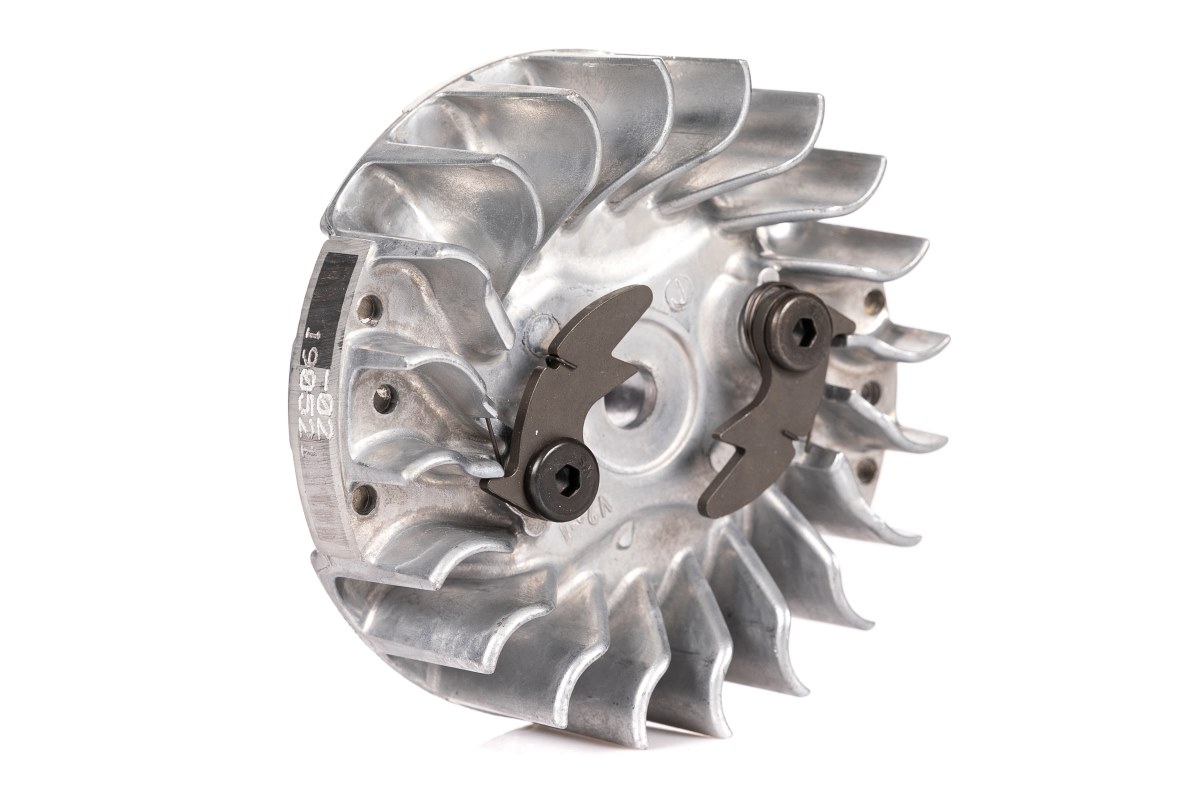
A flywheel is an essential component of an automobile engine. It is a mechanical device that is particularly designed for storing rotational energy and unlocking its potential to drive the engine operation efficiently.
Let’s delve into what it exactly is and understand its construction, working principle, and other details to better understand its role in modern vehicles.
A flywheel is a heavy disc or rotor-shaped component that is found on one end of the crankshaft. Its main function is to ensure the engine operates smoothly by maintaining a consistent and steady rotational motion in the transmission.
Traditionally, flywheels in engines used to be made up of cast iron. However, in modern times, it is generally made up of steel owing to its durable nature. Flywheels with high energy density comprise carbon fibre composites. These flywheels use magnetic bearings with wheels that can spin really fast, up to a speed of 60,000 RPM or revolutions per minute.
We have listed down some of the major uses of flywheels in engines.
The working principle of a flywheel is quite easy to comprehend. It acts like a rotational energy storage device for the vehicle. The energy stored is determined by its angular velocity and moment of inertia.
Here is the list of the common problems of a flywheel.
Check out the main benefits of car flywheels below:
Some of the notable disadvantages of the flywheel are listed below:
Thus, the flywheel plays a crucial role in the smooth operation of engines. The ability to store and release energy when required efficiently contributes greatly to the overall vehicle performance.