
General
Life
Accessibility Options


General

General Products
Simple & Transparent! Policies that match all your insurance needs.
 Car Insurance
 Two Wheeler Insurance
 Commercial Vehicle Insurance
 Health Insurance
 Home Insurance
 Travel Insurance
 Business Insurance
Car Insurance
Two Wheeler Insurance
Commercial Vehicle Insurance
Health Insurance
Travel Insurance
Business Insurance
Car Insurance
Two Wheeler Insurance
Commercial Vehicle Insurance
Health Insurance
Travel Insurance



Scan to download

Life

Life Products
Digit Life is here! To help you save & secure your loved ones' future in the most simplified way.
 Term Life
 Savings Plan
 Retirement and Pension Plans
 Group Life Products
 Product Documents
Term Life
Savings Plan
Retirement and Pension Plans
Group Life Products
Product Documents
Term Life
Savings Plan
Retirement and Pension Plans
Group Life Products

Scan to download

Claims

Claims
We'll be there! Whenever and however you'll need us.
 Customer Support
 Motor Claims
Health Claims
Motor Claims
Health Claims
 Marine Insurance
 Grievance Redressal
Customer Support
Motor Claims
Health Claims
Marine Insurance
Grievance Redressal
Grievance Redressal
Customer Support
Motor Claims
Health Claims
Marine Insurance
Grievance Redressal
Scan to download
 General
 Life
General
Life
Life
General
Life
Renewals
Resources

Resources
All the more reasons to feel the Digit simplicity in your life!
Exclusive Features
 Transparency Report
Others
Exclusive Features
Transparency Report
Transparency Report
Others
Exclusive Features
Transparency Report
Scan to download


Our WhatsApp number cannot be used for calls. This is a chat only number.

 Grey Scale
 Readable Text
 Reset
Reset




10000+ Cashless Garages
1.5 Cr+ Policies Sold


Check Price
Car insurance Online, Up to 90% Discount
It's a Brand New Car
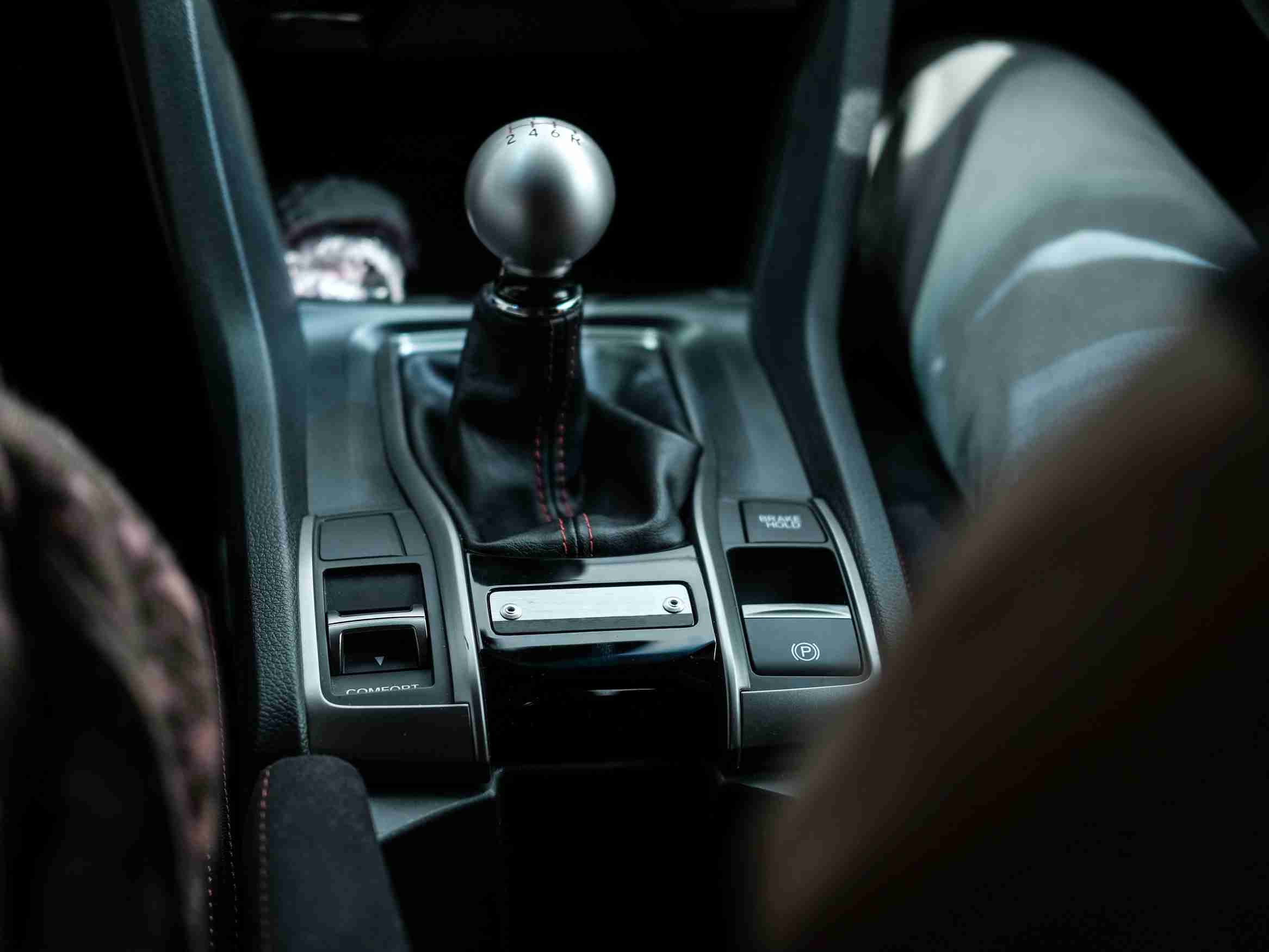
CVTs are now featured in most modern cars. Most car makers focus on enhancing mileage and driving comfort. CVTs have smooth ride quality and excellent mileage, which makes them an alternative to conventional automatics. Yet, they are pretty quirky, often confusing many drivers.
Knowing how this technology works and what issues it encounters is essential to improving your driving experience. This article will unravel the principles of CVT transmissions, discuss the typical troubles they may face, and discuss how best to solve them.

Table of Contents

CVT, or continuous variable transmission, is an automatic transmission which modifies engine power output. It replaces fixed gears using a pulley system and belts. An infinite array of gear ratios is possible for faster acceleration and less fuel consumption. Unlike transmissions, CVTs provide an ideal driving experience.
There is no notice of gear shifts with constant adjustments in engine performance. They differ from traditional automatic transmissions because they don't use fixed gears. They have two pulleys, one connected to the engine and the other to the wheels, with a belt connecting them. The width of the pulleys changes based on the vehicle's power needs.
A CVT, or Continuously Variable Transmission, works differently from other types of transmissions. It gives a smoother, more efficient drive and adjusts the gear ratio to match the engine's power output. Here's how a CVT (Continuously Variable Transmission) works in detail:
The process starts with the engine generating power, which is transferred to the CVT system through the crankshaft.
There are two pulleys. One is driven and connected to the wheels, and the other is the drive pulley attached to the engine.
Now, a belt or chain connects both pulleys. This is a belt of high-strength material capable of coping with stress caused by various outputs.
As the pulleys vary in size, the ratio between the drive and the driven pulleys varies, creating an infinite number of gear ratios.
The CVT adjusts for changes in driving conditions. It changes acceleration, speed, and loading to maintain engine efficiency and performance.
When the vehicle is about to stop, the pulleys are set to the lowest diameter. This ensures the engine remains in a low RPM range and prevents stalling.
Continuous variable transmission technology developments have gradually covered over five hundred years of innovation. Here's a breakdown of its brief history:
The concept of CVT dates back to a drawing by Leonardo da Vinci from his notebooks. He illustrated the fundamental design of a variable-speed drive system.
In 1886, Gottlieb Daimler, one of the founders of Mercedes-Benz, filed the first known patent for a CVT. This was for a variable-speed transmission in an automobile.
In the 1950s, the first practical CVT system, a belt and pulley system, was developed. It was used in the Daf 600 (a Dutch car).
Daf introduced the first commercially successful CVT in the Daf 600. This small car used a rubber belt to adjust the gear ratios for smoother acceleration.
CVTs were used in motorcycles and scooters. The reason behind this was the optimal seamless power effect and high efficiency, especially in the case of small-engine vehicles.
Nissan released the first CVT in a mass-produced car in Japan. The Nissan March increased its usage in more passenger vehicles.
Steel-belted CVTs from Jatco and others were more extensive and durable. It paved the way for their much broader usage in today's cars.
Japanese auto giants such as Honda, Toyota, and Subaru include CVTs in their car models. This was for fuel-friendly variants and hybrid models like Honda Insight and Toyota Prius.
The improvement of CVT technology has enabled a better design with performance, durability, and refinement. Most manufacturers have used the systems to enhance driveability and even add features.
Cars fitted with continuously variable transmissions still cruise along with the increasing number of electric and hybrid vehicles. Their smoothness and efficiency are well-matched by the electric motors and hybrid powertrains.
This timeline shows the progress from early concepts to the wide use of CVTs in modern vehicles. Hence, manufacturers continuously seek opportunities to improve efficiency and comfort in driving.
The main parts of CVT include the belt, the secondary pulley, and the primary pulley. With the help of these components, one can now realise smooth gear ratio changes without actually having conventional means. Below are several key components of a CVT:
Gears are essential to connecting the engine to the wheels in a conventional gearbox. Vehicles often need varying amounts of power and torque. This requires using varied gear ratios, such as low or high torque-low speed. Conical pulleys replace the traditional gear arrangement in a CVT system. It changed the paradigm and gave it the name of 'pulley gearbox.'
The crankshaft of the engine is connected to the primary pulley. The drive shaft in cars leads to the wheels and connects to the secondary pulley. Both pulleys comprise stationary and movable sheaves. A pulley results from these parts working together. The pulleys at both ends have different contraction and expansion directions. The driven pulley contracts with the driving pulley's expansion and vice versa.
Within the CVT system, the push belt is a conduit for torque transfer from the driving pulley to the driven pulley. Toqure in cars is a measure of the strength or twisting force of your car engine. CVTs use one of two main types of belts:
The advanced CVT boasts all such features that automatic transmissions generally fail to. Today, it is considered an ideal choice for most modern vehicles-mainly for:
It includes well-enjoyed, smooth driving without traditional gear shifts; hence, no jerks.
Engine adjustment to the gear ratios is possible with CVT. The engine forever runs in the power band, with smooth and speedy acceleration.
The CVT will continuously adjust the requirements. It reduces the engine stress brought about during acceleration and deceleration.
A CVT is one of the best transmission types for hybrid vehicles. It gives a smooth connection between the gasoline and electric motor.
No gears are involved in shifts with a CVT. The CVT systems are thus quieter than the automatically operated transmissions.
It costs nothing compared to an automatic transmission since it has fewer moving parts that can wear out with time.
Even though CVT has numerous benefits, it has drawbacks that are unsuitable for certain people. Several key drawbacks included:
CVTs are generally inefficient regarding heavy towing. They tend to damage quickly, resulting in decreased performance.
Some people find the CVT driving experience unnatural. It feels as if the car is driving on a rubber band without any gear shifts.
CVTs usually require less upkeep than other kinds of automatic transmissions, but repair expenses for them are quite expensive.
Due to the advanced technology involved, cars with CVTs are sometimes more expensive than conventional automatic variants.
Although CVTs are less noisy, they create a whining or droning sound when the engine hits high RPMs. This is undesirable.
CVTs are popular in fuel-efficient and hybrid vehicles, but they are less common in trucks or performance cars.
CVTs are popular because they offer an excellent driving experience and better gas mileage. Some of the most famous CVT cars in India are:
The Japanese automaker Nissan offers around 32 variants of its Magnite, including several models with CVT. Its key features are an engine start/stop button, rear camera, rear AC vents, wireless charger, and a 7-inch digital instrument cluster.
The Renault Kiger is one of the most beautiful 5-seater SUVs in the Indian automobile market. The company offers the Kiger in 21 variants with several CVT options. This includes the top model, Kiger RXZ Turbo CVT DT, which costs INR 11.23 lakhs ex-showroom.
The Renault Kiger is one of the most beautiful 5-seater SUVs in the Indian automobile market. The company offers the Kiger in 21 variants, with several CVT options, including the top model, Kiger RXZ Turbo CVT DT, which costs INR 11.23 lakhs ex-showroom.
One of Honda's most popular offerings is the City V CVT. It is a 5-seater sedan known for its looks, performance, specifications, and practical features. It has a 4-cylinder i-VTEC engine, FWD, tyre pressure check, and many ADAS features.
The Maruti Suzuki Baleno is a popular hatchback with a CVT option for its 1.2-litre petrol engine. The Delta, Zeta, and Alpha all have the CVT version available. The vehicle also claims a mileage of 21.4 km, the same as the manual variant.
The Yaris is a compact sedan with a smooth and efficient CVT option. It has a choice of 1.5-litre petrol or diesel engines. The base model starts from Rs. 9.16 lakh and has a mileage of 17.81 km for the CVT against the 17.1 km average for the 6-speed manual.
When considering a car with a CVT, consider the following factors to meet your driving preference and long-term needs:
Test your driving habits and needs. If you drive in city traffic or highways, a CVT can provide better fuel efficiency and smooth acceleration, making it an ideal choice.
Look for reviews and consumer reports on the reliability of the specific make and model. Some CVTs are more durable than others, and choosing a car with a good track record is essential.
Drive the car around for a while to feel the acceleration and braking with the CVT. Check its response at varying speeds. If you miss old-fashioned gear shifting, ensure the driving experience feels good.
CVTs are generally known for improving fuel efficiency. Compare the fuel economy of CVT-equipped vehicles to cars similar to traditional transmissions. See if the difference is significant.
CVTs generally need less maintenance than traditional automatic transmissions. However, repairs can be expensive. Research the typical cost of servicing the CVT in the model you're interested in.
Some CVT-enabled cars offer paddle shifters. Other features enable you to perform gear shifts. If you want this level of control, consider these extra features.
Not all buyers will appreciate a CVT. Check how well cars with CVTs hold their value in the used market, especially if you plan on reselling the car in the future.
While checking used vehicles for CVT, ensuring the transmission's condition is good enough to save yourself from unnecessary future repairs is important. Below are several things to consider:
Check for contamination in the fluid in the CVT transmission. Also, check for discolouration or a burnt smell. Low or dirty fluid might point to a problem that requires replacement.
Observe how the CVT performs during the test drive, especially on acceleration. The vehicle should shift without hesitation, slipping, or unusual noises.
Check the dashboard for any warning lights about the transmission. Notice the "check engine" or "transmission" light. These may show possible CVT issues that need immediate attention.
When accelerating or shifting, listen for whining or grinding noises from the transmission. Unusual sounds could state wear or damage to the CVT components.
Refer to the undercarriage and the transmission. Investigate for leaks, as leaking transmission fluid might cause wear to guide seals or even damage to some CVT components.
Even though CVTs do not have conventional shifting, during road testing, look for signs of jerky or uneven shifting while accelerating. These may indicate that the transmission is faulty.
There are many reasons why the CVT Transmission may fail. However, before that happens, you will get these signs from your vehicle:
Grinding, whining, or buzzing noises related to the transmission are possible signs of internal damage in the CVT.
The CVT's issue with adjusting gear ratios is hesitation or slip when the vehicle must gain acceleration, a symptom of a defective transmission.
Although CVTs are designed to run smoothly, jerky or rough driving may indicate a problem with the belt, pulleys, or transmission control system.
If the "Check Engine" or transmission warning lights come on, it signals a transmission problem. These lights indicate an internal or fluid problem.
If the transmission overheats, it will lose some performance and can ruin the CVT. This is due to too-low fluid levels, a blocked cooler, or excessive wear.
A low power or slow acceleration while the gas pedal is depressed indicates that the CVT fails to adjust engine power adequately; this is an internal failure.
Visible fluid leaks around the transmission or under the vehicle indicate an issue with seals or other parts of the CVT system. It can lead to transmission failure.
If shifts from park to drive or reverse delay or the vehicle gears are not engaging, that could indicate problems in the CVT system needing service.
Here's a comparison table between CVT (Continuously Variable Transmission) and traditional automatic transmissions:
Whether a CVT is appropriate depends on your driving needs and preferences. A CVT is best if you want smooth acceleration, fuel efficiency, and little noise while you drive. A CVT is preferred for most city driving.
A conventional automatic is more suitable if you want extra performance from your vehicle, will be making long-distance drives, or need to tow something. Before going for a CVT, consider all factors, such as reliability, maintenance costs, and driving style.





