General
Life
Accessibility Options


General

General Products
Simple & Transparent! Policies that match all your insurance needs.
 Car Insurance
 Two Wheeler Insurance
 Commercial Vehicle Insurance
 Health Insurance
 Home Insurance
 Travel Insurance
 Business Insurance
Car Insurance
Two Wheeler Insurance
Commercial Vehicle Insurance
Health Insurance
Travel Insurance
Business Insurance
Car Insurance
Two Wheeler Insurance
Commercial Vehicle Insurance
Health Insurance
Travel Insurance



Scan to download

Life

Life Products
Digit Life is here! To help you save & secure your loved ones' future in the most simplified way.
 Term Life
 Savings Plan
 Retirement and Pension Plans
 Group Life Products
 Product Documents
Term Life
Savings Plan
Retirement and Pension Plans
Group Life Products
Product Documents
Term Life
Savings Plan
Retirement and Pension Plans
Group Life Products

Scan to download

Claims

Claims
We'll be there! Whenever and however you'll need us.
 Customer Support
 Motor Claims
Health Claims
Motor Claims
Health Claims
 Marine Insurance
 Grievance Redressal
Customer Support
Motor Claims
Health Claims
Marine Insurance
Grievance Redressal
Grievance Redressal
Customer Support
Motor Claims
Health Claims
Marine Insurance
Grievance Redressal

Scan to download
 General
 Life
General
Life
Life
General
Life
Renewals
Resources

Resources
All the more reasons to feel the Digit simplicity in your life!
Exclusive Features
 Transparency Report
Others
Exclusive Features
Transparency Report
Transparency Report
Others
Exclusive Features
Transparency Report
Scan to download


Our WhatsApp number cannot be used for calls. This is a chat only number.

 Grey Scale
 Readable Text
 Reset
Reset




Check Credit Score for FREE
Instant in 2 Mins. No Impact on Credit Score
When discussing income in the context of personal finance, two essential concepts frequently arise gross salary and net salary. Both serve different functions in financial planning and represent other portions of wages, even though they are both critical components in your entire pay.
Whether you're a recent graduate starting your career or an experienced professional navigating the intricacies of pay packages, comprehending the differences between gross and net wage is critical to laying a strong foundation for your future financial well-being.

Table of Contents

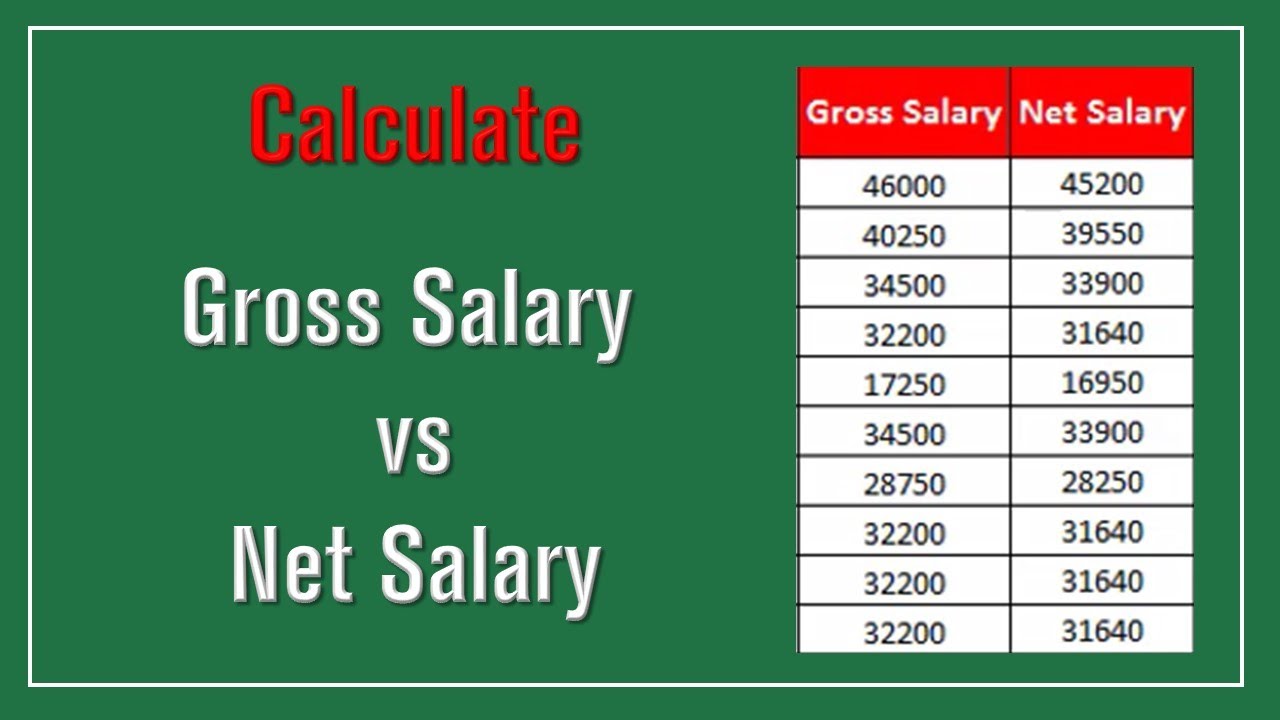
Gross salary refers to the aggravated amount released before deductions by the employer of a company towards employees. It is known as Savings Contributions, and employees receive it without deductions, such as income tax, medical insurance, PF, etc.
However, gross income includes bonuses, holiday pay, overtime pay, and many other differentials.
In the workplace, your pay is more than a number; it represents the value you provide to your company and the remuneration you obtain in exchange. But to maximise your earning potential and gain insight into your overall pay package, you must comprehend the elements that comprise your gross wage.
Basic Salary: The amount given to an employee excludes incentives, perks, bonuses, and benefits.
Housing Rent Allowance, or HRA: The amount is given to an employee to help with housing costs.
Contribution to the Provident Fund: A portion of the employee's pay goes towards the Employment Provident Fund. This represents 12% of the employee's Salary fixed components.
Special Compensation: This portion of the pay includes additional company-provided allowances, which could cover transportation, lodging, and out-of-town expenses.
Particular Debts: Extra amounts resulting from pay increases are considered perks, typically financial components, while non-monetary benefits, such as additional vacation days or wellness programs, are also provided to employees in certain businesses.
Bonus: An employee might receive a more significant bonus in a year. This sum is determined by how well workers perform for the organisation.
Pension: A pension is the sum an employer gives a retired worker. It is a crucial component of financial security after retirement.
The total of an employee's basic pay and allowances determines their gross salary before any deductions, such as tax deductions, are made. Employees' base pay, or the set element of their benefits package, is their basic salary. The gross salary is determined using the formula below:
Gross salary = Basic salary + HRA + Other Allowances
For instance, the employee's pay scale is as follows:
| Basic Salary | ₹25,000 |
| House Rent Allowance | ₹9,000 |
| Transport Allowance | ₹1,300 |
| Income Tax | ₹2,000 |
| Statutory Bonus | ₹1,600 |
| Provident Fund | ₹2,400 |
Gross salary = ₹25,000 + ₹9,000 + ₹1,300 + ₹1,600
Total Gross salary = ₹36,900
The gross pay is computed without taking into account the Provident Fund. Moreover, the amount of income tax has no bearing on gross compensation since it is determined by gross annual income before deductions.
Net or in-hand salary refers to the amount that salaried individuals receive after TDS deductions. Also known as take-home salary, this income is the ultimate amount an individual takes home after tax deductions, provident funds, and other deductions.
Net income is lower than the gross amount as it is calculated after deductions. However, in some instances, both gross and net salaries can be equal if there is no income tax deduction. This is possible when the wages of individuals do not come under income tax slabs.
Now that individuals have learnt about gross and net income, let’s focus on comparing net salary vs. gross salary.
Net salary, also known as take-home pay, is the amount you actually receive after taxes and other deductions. It is different from gross salary, which shows the total amount you make before deductions. Knowledge of the elements that comprise your net compensation is crucial to understanding your disposable income and practising sound financial management.
Base Salary or Hourly Wage: This is the primary component of your income, representing the amount you earn per year (if salaried) or hourly (if hourly).
Overtime Pay: If you work additional hours beyond your regular schedule, you may receive overtime pay, typically calculated at a higher rate than your regular hourly wage.
Bonuses and Incentives: Some employers offer bonuses or performance-based incentives as part of their compensation packages. These may be paid out periodically or as one-time rewards.
Commissions: If your job involves sales or generating revenue, you may receive commissions based on your sales performance. Commissions are typically calculated as a percentage of the sales you generate.
Benefits Deductions: Your employer may offer various benefits such as health insurance, dental insurance, vision insurance, and life insurance. The cost of these benefits is often deducted from your gross salary before you receive your net pay.
Retirement Contributions: If you participate in an employer-sponsored retirement plan, contributions are typically deducted from your gross salary before taxes, reducing your taxable income and increasing your take-home pay.
Tax Withholdings: Federal, state, and local income taxes are withheld from your gross salary by your employer and remitted to the respective tax authorities on your behalf. The amount of tax withheld depends on factors such as your filing status, income level, and allowances claimed on your W-4 form.
Other Deductions: Depending on your circumstances and employer policies, other deductions may be taken from your gross salary, such as contributions to flexible spending accounts (FSAs), health savings accounts (HSAs), or wage garnishments for things like child support or student loan payments.
Voluntary Deductions: You may also be able to make voluntary deductions from your paycheck, such as contributions to charitable organisations or additional retirement savings beyond what your employer matches.
Professional Tax must be subtracted from the net salary calculation. The annual maximum for Professional Tax Deduction is ₹2,500.
As a result, a monthly professional tax deduction of about ₹200 can be made. The following is the formula used to determine net salary:
Net Salary = Gross Salary - Income Tax - EPF - Professional Tax
Gross and net salary are fundamental to understanding an employee's compensation package. While gross salary represents the total earnings before deductions, net salary reflects the amount received after deductions, such as taxes and insurance. Follow the table below to understand gross vs net salary clearly.
Gross Salary vs Net Salary
Now that individuals know about the difference between gross and net salaries, they can easily understand the salary slips given by employers and the details mentioned there.
Understanding gross and net salary differences can help people understand their overall income package and make well-informed investing, saving, and budgeting decisions. It can also help them confidently navigate the complexity of personal finance, ensuring financial stability and security for the future.
The alternative formula to calculate gross salary is –
[CTC-(EPF + Gratuity)]
Yes, leave encashment is a part of gross income.