General
Life
Accessibility Options


General

General Products
Simple & Transparent! Policies that match all your insurance needs.
 Car Insurance
 Two Wheeler Insurance
 Commercial Vehicle Insurance
 Health Insurance
 Home Insurance
 Travel Insurance
 Business Insurance
Car Insurance
Two Wheeler Insurance
Commercial Vehicle Insurance
Health Insurance
Travel Insurance
Business Insurance
Car Insurance
Two Wheeler Insurance
Commercial Vehicle Insurance
Health Insurance
Travel Insurance



Scan to download

Life

Life Products
Digit Life is here! To help you save & secure your loved ones' future in the most simplified way.
 Term Life
 Savings Plan
 Retirement and Pension Plans
 Group Life Products
 Product Documents
Term Life
Savings Plan
Retirement and Pension Plans
Group Life Products
Product Documents
Term Life
Savings Plan
Retirement and Pension Plans
Group Life Products

Scan to download

Claims

Claims
We'll be there! Whenever and however you'll need us.
 Customer Support
 Motor Claims
Health Claims
Motor Claims
Health Claims
 Marine Insurance
 Grievance Redressal
Customer Support
Motor Claims
Health Claims
Marine Insurance
Grievance Redressal
Grievance Redressal
Customer Support
Motor Claims
Health Claims
Marine Insurance
Grievance Redressal

Scan to download
 General
 Life
General
Life
Life
General
Life
Renewals
Resources

Resources
All the more reasons to feel the Digit simplicity in your life!
Exclusive Features
 Transparency Report
Others
Exclusive Features
Transparency Report
Transparency Report
Others
Exclusive Features
Transparency Report
Scan to download


Our WhatsApp number cannot be used for calls. This is a chat only number.

 Grey Scale
 Readable Text
 Reset
Reset




Check Credit Score for FREE
Instant in 2 Mins. No Impact on Credit Score

Employers remunerate their staff members monthly with dearness allowances or DAs, to help them counteract the effects of inflation on their purchasing power. It's a standard practice in several nations, such as India, where remuneration for public and government personnel is heavily incorporated.
To guarantee that workers can maintain their living level despite growing costs, the rate of DA is normally modified periodically by modifications in the cost of living index.

Table of Contents

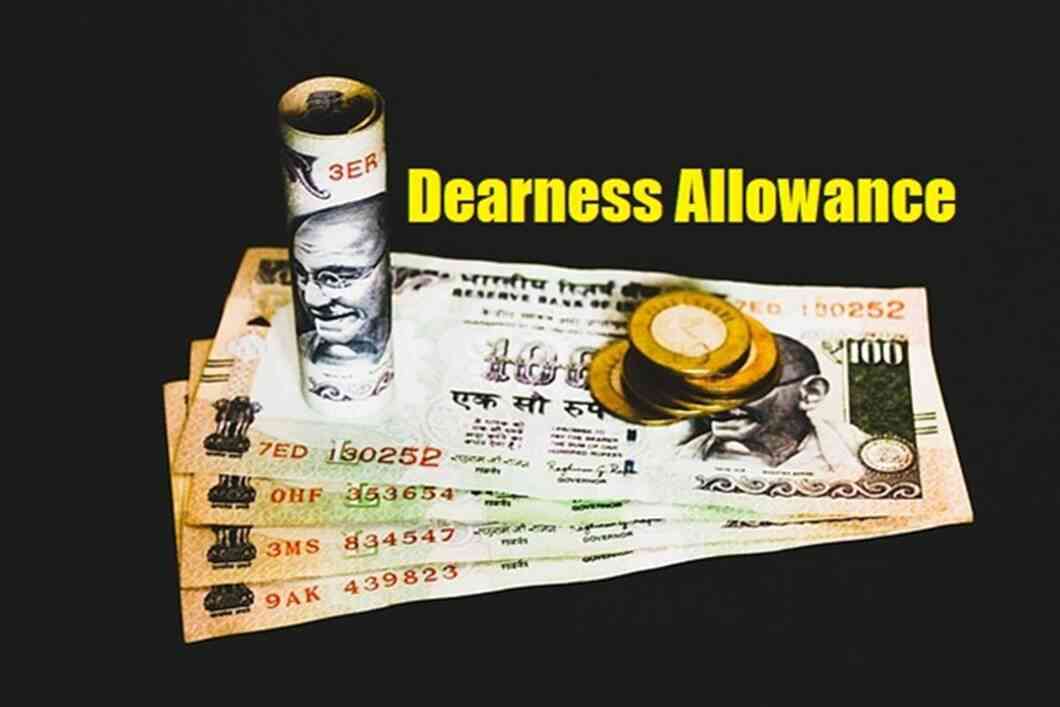
Dearness Allowance is a component of a salary structure in an Indian payroll system.
All public sector employers pay their employees a Dearness Allowance to offset the effect of inflation.
We base the calculation of dearness allowance on the location of a person’s job. Moreover, DA is different for different sectors, such as urban, rural and semi-rural sectors.
To shield its employees from inflation, companies and the Indian Government opt for DA or Dearness Allowance.
The dearness allowance (DA) rate is a crucial reference point for the continuing discussion over labour remuneration and economic policy. Its swings impact numerous people's lives, changing their purchasing power and standard of living.
Since the cost of living determines DA, this part of the wage is variable. Public sector employees have different experiences depending on where they work. As a result, employees in the rural, urban, and semi-urban sectors receive various DA allowances.
Starting January 1, 2024, the dearness allowance (DA) for central government employees in India is 50%, up by 4% from last year. Central government pensioners also see their dearness relief (DR) rise to 50%.
Twice a year, DA rates are subject to revision. Every six months, the government raises this allowance. The modification is typically implemented on July 1st for the period from July to December and January 1st for the period from January to June.
Calculating the dearness allowance (DA) is a critical aspect of financial planning for individuals and organisations. It significantly influences budgetary allocations and purchasing power.
Presently Dearness Allowance is calculated as follows -
There are two ways in which we figure Dearness Allowance. We have shown both methods below:
There are two types of Dearness Allowance. They are -
The Indian Government pays this allowance to the employees of public sector companies. Moreover, the Indian Government revises the rate of DA every quarter and bases it on the consumer price index.
The Central Government offers this dearness allowance to those employees employed under it. Moreover, it revises it on a half-yearly basis and bases it on the consumer price index.
There are 3 elements in calculating a variable dearness allowance. They include:
In India, dearness allowance (DA) is a buffer against inflation for government employees and pensioners. It's a variable amount paid as a percentage of the basic salary. Here's how it's decided:
Consumer Price Index (CPI): The CPI is the key element. It measures changes in the cost of living. When the CPI is higher, it means inflation is higher.
DA Revision: The dearness allowance (DA) is updated regularly, usually twice yearly (January 1st and July 1st), based on the previous year's average CPI.
State Governments: States have some flexibility in how they calculate DA. They often follow the central government's DA but might make slight adjustments.
Central Government: For central government employees, DA is tied to the CPI for industrial workers (base year 2016). The DA calculation uses the average CPI from the past 12 months and a specific linking factor.
Location: DA can differ depending on whether the employee is in an urban, semi-urban, or rural area to reflect varying living costs, though this detail may only sometimes be clearly stated in all sources.
The dearness allowance (DA) has changed significantly over the years, reflecting changes in the economy and governmental priorities. This summary examines the ten most recent changes to DA and analyses their effects on labourers and the economy.
Dearness Allowance (DA) is provided to working individuals and pensioners in India. It is reviewed periodically and varies based on location and employer.
Working people in India receive a payout called Dearness Allowance (DA) to assist balance inflation, or the growing cost of living. It's an attempt to keep an employee's purchasing power constant over time.
In India, working individuals receive a payout called Dearness Allowance (DA), which is a percentage of their basic salary, reviewed periodically based on the Consumer Price Index (CPI) to help balance inflation and maintain their purchasing power, with variations depending on the employer (central or state government, private sector) and location (rural, urban, semi-urban).
Pensioners are retired central government employees who qualify for an individual or family pension from the government. Whenever the Pay Commission introduces a new salary structure, this change is also applied to the pensions of these retired employees.
Every time the salary of public sector employees is revised, the pension for retired employees is also modified. Hence, this revision depends on the dearness allowance for retired employees.
Retired individuals usually don't receive Dearness Allowance (DA) when re-employed, as DA is given based on a time scale or fixed salary. However, in some cases, re-employed pensioners might receive DA, but it is restricted to the amount they last earned.
Employers in the public or private sectors may pay their workers a dearness allowance (DA). This allowance seeks to counteract inflation's higher cost of living. The employee's base salary determines it and is usually adjusted every two years to account for variations in the rate of inflation.
The allowance is meant to relieve the associated hardships brought on by inflation; the phrase "Dearness" in DA refers to growing expenditures.
The pay guarantees that workers can preserve higher living standards and keep their purchasing power despite increasing expenses. The government established Dearness Allowance (DA) to assist its workers in adjusting to inflation. Although it's not required by law, private companies can provide DA.
Under the Income Tax Act, Dearness Allowance is entirely taxable. It is especially the case for those who are salaried employees as per Income Tax Act 1961.
However, suppose an employee is residing in a rent-free, unfurnished accommodation that the employer has provided. In that case, the part of the Dearness Allowance will equal the retirement benefit that the employee receives.
Two essential components often stand out in employee compensation: Dearness Allowance (DA) and House Rent Allowance (HRA). While both serve to enhance the overall remuneration package, they operate in distinct ways, catering to different aspects of an employee's financial needs.
This article explained the meaning of dearness allowance and the method of calculating it. Dearness allowance is an essential part of the salary structure and is required by employees to combat the effects of inflation. Hence, employees are keen to learn some details about it.
In India, all subsequent pay commissions are mandated to reevaluate the salaries of public sector employees, accounting for all of the various components of their compensation. Dearness allowance will be included in the following pay commission report.
Pay commissions must consider every factor that affects the pay of public sector workers. The pay commissions may review and change the multiplication factor.