General
Life
Accessibility Options


General

General Products
Simple & Transparent! Policies that match all your insurance needs.
 Car Insurance
 Two Wheeler Insurance
 Commercial Vehicle Insurance
 Health Insurance
 Home Insurance
 Travel Insurance
 Business Insurance
Car Insurance
Two Wheeler Insurance
Commercial Vehicle Insurance
Health Insurance
Travel Insurance
Business Insurance
Car Insurance
Two Wheeler Insurance
Commercial Vehicle Insurance
Health Insurance
Travel Insurance



Scan to download

Life

Life Products
Digit Life is here! To help you save & secure your loved ones' future in the most simplified way.
 Term Life
 Savings Plan
 Retirement and Pension Plans
 Group Life Products
 Product Documents
Term Life
Savings Plan
Retirement and Pension Plans
Group Life Products
Product Documents
Term Life
Savings Plan
Retirement and Pension Plans
Group Life Products

Scan to download

Claims

Claims
We'll be there! Whenever and however you'll need us.
 Customer Support
 Motor Claims
Health Claims
Motor Claims
Health Claims
 Marine Insurance
 Grievance Redressal
Customer Support
Motor Claims
Health Claims
Marine Insurance
Grievance Redressal
Grievance Redressal
Customer Support
Motor Claims
Health Claims
Marine Insurance
Grievance Redressal
Scan to download
 General
 Life
General
Life
Life
General
Life
Renewals
Resources

Resources
All the more reasons to feel the Digit simplicity in your life!
Exclusive Features
 Transparency Report
Others
Exclusive Features
Transparency Report
Transparency Report
Others
Exclusive Features
Transparency Report
Scan to download


Our WhatsApp number cannot be used for calls. This is a chat only number.

 Grey Scale
 Readable Text
 Reset
Reset




The VDRL full form is Venereal Disease Research Laboratory test, which is a blood test used to detect syphilis, a sexually transmitted infection. Syphilis, a sexually transmitted infection (STI), is a common health concern in recent times. The bacterium Treponema pallidum is usually responsible for causing this. Therefore, health researchers have developed the VDRL test to determine if you have this condition.
The test is commonly used for screening, diagnosis, and monitoring treatment effectiveness. Are you worried about having syphilis and trying to get it verified with a VDRL test? This article will give you a complete guide about its procedure and risks.

Table of Contents

The full form of the VDRL test is the Venereal Disease Research Laboratory test. A standard blood test used in healthcare settings, the VDRL test, helps to identify the presence of syphilis in your body. This test does not look for bacteria that causes this condition but instead looks for the antibodies that your body makes while responding to the antigens produced to damage the bacteria. Your immune system produces these antibodies to fight against bacteria and toxins.
When doctors conduct this test, it helps them confirm if you have this disease. For example, if you have the following symptoms of syphilis, doctors are more likely to suggest this test.
Thus, if you wonder what a VDRL test means, it is a nontreponemal test mainly used to confirm the infection with a treponemal test specific to syphilis. Doctors conduct the examination either through blood or the cerebral spinal fluid (CSF). Now, if you wonder about the procedure of a VDRL test, it is done in two ways, as described below.
The main aim of the VDRL test is to screen for syphilis, especially during its onset stages, and early detection is important in order to effectively treat and prevent complications.
Additionally, it monitors the progress of treatment for syphilis. When antibody levels are reduced, this reflects that the particular treatment is working, but if levels remain stagnant or increase, this indicates a poor response to therapy.
The test can also be used to detect syphilis among newborns whose mothers have this disease. Early identification helps prevent serious consequences and ensures timely intervention.
Occasionally, neurosyphilis may require evaluation using a VDRL test since it is a severe form of infection that affects the nervous system, and cerebrospinal fluid can be tested to confirm this condition.
In some cases, the VDRL test is used to assess neurosyphilis, a severe form of the disease affecting the nervous system. It can be performed on cerebrospinal fluid to diagnose this condition.
VDRL is a valuable test in the diagnosis and management of syphilis; it is vital as a means to detect early infection, guide treatment and prevent complications.

Although a universally obligatory procedure in every pregnancy is not, it is usually included in the prenatal screening package. This test is utilised to identify syphilis that has serious consequences for both the mother and the child if left untreated.
By detecting syphilis early using the VDRL test it enables timely treatment, thereby reducing the chances of newborn complications such as congenital syphilis or other health issues. As a result, healthcare providers may order this test as part of regular antenatal care to guarantee a healthy pregnancy and stop transmission.
No preparation is needed for a VDRL test. Also, there are no drinking or eating requirements before taking the test. However, informing your healthcare provider about any current medications or symptoms is advisable. Ensure that you follow any specific instructions your healthcare provider gives for accurate results.
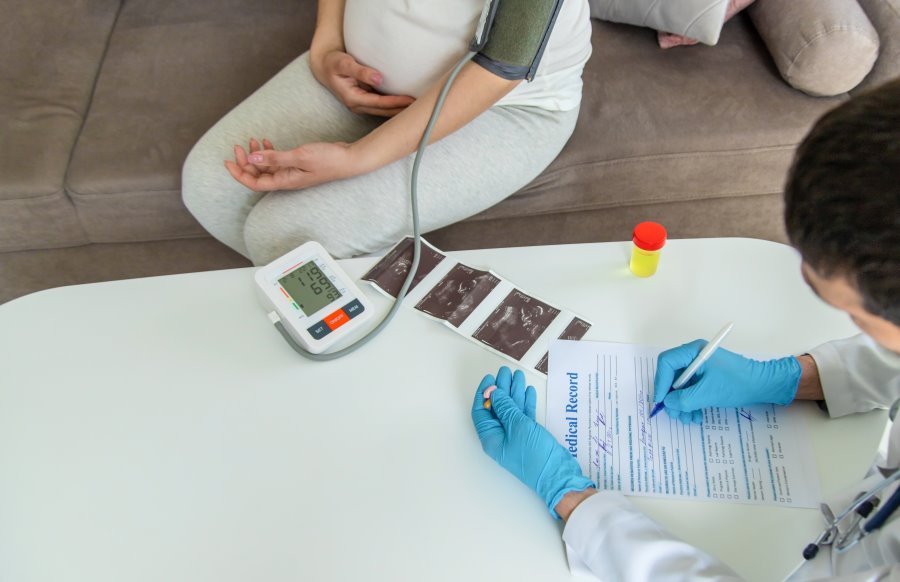
The VDRL exam usually requires a blood specimen to be checked for antibodies. It is a multi-step process that guarantees syphilis detection accuracy.
Patients may be advised not to take particular drugs or food before the test. Adhering to these recommendations is critical for accurate results.
A healthcare provider extracts a blood sample from a vein, often the arm; this takes only a few seconds and does not hurt much.
They put the collected blood in containers labelled with their names. This should be done carefully to prevent contamination or improper storage.
This sample will then be forwarded to the laboratory for analysis, where reagents are added to blood samples to detect if certain antibodies exist in syphilis.
The lab examines the reactions between the sample and reagent. If it is positive, it shows that there are antibodies present, indicating syphilis infection.
The results shall be reviewed by a healthcare professional who will interpret them. Confirmatory tests must follow positive results for accurate diagnosis.
After you have had a VDRL test, take these steps to ensure proper care and interpretation of results. They will help keep you in charge of your health and enable you to navigate possible outcomes well.
Just wait for the results, which typically take three or four days. Be sure to follow up with your healthcare provider for an accurate interpretation.
Discuss the findings with your doctor, especially if the result is positive. They may require further testing or treatment as needed.
Confirmatory tests such as RPR or FTA-ABS might be necessary if VDRL is positive. These tests provide information on syphilis presence and stages.
Comply with the prescribed treatment plan if diagnosed with syphilis. This is because early treatment is vital in complications and disease transmission.
Tell any people who have recently had sex that they are affected by this infection, too. If they get tested, it will help them get treated.
Plan regular checkups with your doctor; Follow-up appointments should be made regularly for effective treatment.
Now that you know what the VDRL test is, you must be curious to know how to read it. Once the doctors take your sample for testing, the report takes about 3-5 days to come. The process is simple, as reading includes only positive or negative. If your VDRL test report shows negative, it suggests that you do not have syphilis. Likewise, a negative VDRL blood test indicates no evidence of infection. However, a negative CSF report does not rule out a diagnosis of neurosyphilis.
On the other hand, a positive VDRL test means syphilis antibodies are present in your body. However, such a result is not always accurate. Other infections such as HIV or pneumonia and other autoimmune diseases can trigger a false-positive report. If your blood test comes positive, your doctor might ask you to do a fluorescent treponemal absorption assay test to confirm if the existing infection is syphilis. On the other hand, they might ask you to do a syphilis-specific treponemal test if you get a positive CSF report.
While a VDRL test is accurate, sometimes it might generate false-positive and false-negative results. A past survey in 2016 shows among 1926 patients, about 52 of them had genuinely positive results, and 11 had false-positive reports. In some cases, a VDRL test report might be positive even in the absence of syphilis. Other infections and health conditions might trigger a positive result. For example, you might receive a positive report if you suffer from the following conditions.
Occasionally, if you take a VDRL test during pregnancy, you can end up receiving a positive report, even in the absence of syphilis. Therefore, it is advisable to conduct additional diagnoses even after receiving a positive VDRL test report.
In some cases, your body may fail to produce antibodies even if you have a syphilis infection. As a result, the VDRL test will not detect it. Moreover, the antibodies can continue to stay even after you have completed your syphilis treatment. In such conditions, this test can produce false-negative reports.
The accuracy of the VDRL (Venereal Disease Research Laboratory) test varies, although it is useful for syphilis screening. This kind of test does not involve treponemal testing; thus, positive results imply that there are antibodies against T.pallidum, which other types of bacteria could also cause, but in this case, the syphilis bacteria.
Nevertheless, while helpful in detecting possible infections like syphilis, VDRL testing can often lead to false positive results due to different factors, such as other illnesses. False-negative results also occur mainly during the early stages of the illness. Confirmatory tests involving treponemal examinations are the best way to have an accurate diagnosis.
The price of a VDRL (Venereal Disease Research Laboratory) test varies depending on the place and healthcare provider. However, it is generally among the least costly diagnostic tests.
Though prices may vary depending on the location of the health facility and whether it is done in public or private hospitals, costs range from ₹750 to ₹1,600 in many parts.
Out-of-pocket costs might be affected by insurance. However, it is important to consult your healthcare provider or laboratory for precise cost information.
Now that you know why a VDRL test is done, you must be worried about its possible risks. It is safe to say that there are no significant risks associated with this test. However, you might face the following mild complications after a blood VDRL test.
If you undergo a lumbar puncture, on the other hand, the following risks might apply to you if you undergo a lumbar puncture.
Syphilis sounds like a life-threatening disease, but it can be curable. However, proper treatment is essential from the very beginning. You should immediately take a VDRL test when you feel the symptoms. If you leave it untreated, syphilis can cause significant harm to multiple organs. While this test might not be completely accurate, it is an effective way to determine if you might have the infection and thereby begin a preliminary treatment.
Therefore, as you can see, a VDRL test can help identify the chances of syphilis infection. It is mainly conducted once you start getting the symptoms, and doctors do it either by testing blood or CSF. Even though it might generate false-positive or false-negative results, this test is preferred for detecting such conditions in the healthcare sector.
Protect What Matters - Explore Other Insurance Options