General
Life
Accessibility Options


General

General Products
Simple & Transparent! Policies that match all your insurance needs.
 Car Insurance
 Two Wheeler Insurance
 Commercial Vehicle Insurance
 Health Insurance
 Home Insurance
 Travel Insurance
 Business Insurance
Car Insurance
Two Wheeler Insurance
Commercial Vehicle Insurance
Health Insurance
Travel Insurance
Business Insurance
Car Insurance
Two Wheeler Insurance
Commercial Vehicle Insurance
Health Insurance
Travel Insurance



Scan to download

Life

Life Products
Digit Life is here! To help you save & secure your loved ones' future in the most simplified way.
 Term Life
 Savings Plan
 Retirement and Pension Plans
 Group Life Products
 Product Documents
Term Life
Savings Plan
Retirement and Pension Plans
Group Life Products
Product Documents
Term Life
Savings Plan
Retirement and Pension Plans
Group Life Products

Scan to download

Claims

Claims
We'll be there! Whenever and however you'll need us.
 Customer Support
 Motor Claims
Health Claims
Motor Claims
Health Claims
 Marine Insurance
 Grievance Redressal
Customer Support
Motor Claims
Health Claims
Marine Insurance
Grievance Redressal
Grievance Redressal
Customer Support
Motor Claims
Health Claims
Marine Insurance
Grievance Redressal
Scan to download
 General
 Life
General
Life
Life
General
Life
Renewals
Resources

Resources
All the more reasons to feel the Digit simplicity in your life!
Exclusive Features
 Transparency Report
Others
Exclusive Features
Transparency Report
Transparency Report
Others
Exclusive Features
Transparency Report
Scan to download


Our WhatsApp number cannot be used for calls. This is a chat only number.

 Grey Scale
 Readable Text
 Reset
Reset




Check Credit Score for FREE
Instant in 2 Mins. No Impact on Credit Score
Capital gain is a profit that arises from selling a capital asset at an amount above the value you paid while purchasing that asset. Capital assets comprise investment products such as stocks, mutual funds and real estate products. Two types of capital gains are available – long-term and short-term capital gains.
If you are eager to know how to calculate capital gains and their other vital aspects, keep scrolling.
Take a look at the online and offline procedures to calculate capital gains without hassles:
You can find tools such as a capital gains calculator online to calculate capital gains without manual effort and obtain an approximate result. You need to enter the following information -
After entering these details, you can access the following information -
If you do not have access to the internet and are not comfortable using an online tool such as a capital gains calculator, don't fret. Instead, follow the offline procedure to calculate long-term and short-term capital gains manually using a simple formula as mentioned below.
Long-term capital gain is generated from selling an investment product you held for over 12 months. The long-term capital gain formula is as follows -
LTCG = Full value of consideration – (indexed acquisition cost + indexed improvement cost + transfer cost of an asset)
whereas,
The indexed acquisition cost of an asset = acquisition cost x Cost inflation index of the selling year/Cost inflation index of the year of purchase
Indexed improvement cost of an asset = improvement cost x cost inflation index of the selling year / Cost inflation index of the year in which improvement has been made in an asset
While evaluating long-term capital gains, you must consider the cost inflation index. The cost inflation index applies to acquisition and improvement costs and is then subtracted from the full consideration value. Its application aims to adjust the rising cost of an asset due to inflation, which increases the base cost and decreases capital gains.
Let's take an example to understand how to calculate capital gains after selling a property using the following formula mentioned above-
Mr Ashok purchased a land plot worth ₹10,00,000 in the year 2011. In January 2021, he sold this property at ₹30,00,000.
So, the question is – how much will be the long-term capital gain and how to calculate tax capital gains? Here is the following calculation -
|
Particulars |
Amount |
|
Purchasing cost |
₹10,00,000 |
|
Selling price |
₹30,00,000 |
|
Improvement cost |
NIL |
|
Cost inflation index (index for the FY 2020-21/index for the FY 2011-12; 301/184) |
₹1.63 |
|
Indexed purchasing cost (CII x purchasing Cost; 1.63 x ₹10,00,000) |
₹16,30,000 |
|
LTCG (selling price – indexed purchasing cost) |
₹13,70,000 |
|
Tax rate on LTCG |
20% |
|
Tax payable (20% of ₹13,70,000) |
₹2,74,000 |
However, you can avoid using indexation while computing capital gains from equity shares and mutual funds covered under section 112A, and you are liable to pay 10% of tax on capital gains instead of 20%.
Short-term gain arises from selling a capital asset owned for less than the period specified for that asset in the Act. The formula to calculate short-term capital gains is as follows -
STCG = full value consideration – (acquisition cost + improvement cost + transfer cost of an asset). [Source]
Let's understand how to calculate short-term capital gains after selling a property using the formula mentioned above:
Mr Akash is a salaried individual and bought a property worth ₹16,00,000 in December 2020 and sold it in September 2021 at ₹26,00,000. The brokerage cost is ₹12,000.
So, the question is – how much will be the short-term capital gain and the tax payable towards such profit? Here is the following calculation -
|
Particulars |
Amount |
|
Purchasing cost |
₹16,00,000 |
|
Selling cost |
₹26,00,000 |
|
Brokerage cost (Transfer Cost) |
₹12,000 |
|
Improvement cost |
NIL |
|
Net sale consideration (₹26,00,000-₹12,000) |
₹25,88,000 |
|
STCG (Net sale consideration - purchasing cost; ₹25,88,000-₹16,00,000) |
₹9,88,000 |
|
Tax rate on STCG |
The STCG arising from selling property other than securities will be taxed as per the normal income tax slab rate. |
Take a look at the following table illustrating the tax rates on long-term and short-term capital gains -
|
Types of Capital Gains |
Type of Transaction |
Tax Rates |
|
LTCG |
Transfer or sale of equity-oriented fund units or equity shares u/s 112A |
10% over and above ₹1,00,000 |
|
LTCG |
Transfer or sale of a capital asset other than equity-oriented fund units or equity shares |
20% |
|
STCG |
Transfer or sale of equity-oriented fund units or equity shares (STT Paid units and securities.) |
15% |
|
STCG |
Transfer or sale of a capital asset other than equity-oriented fund units or equity shares |
Added to the income tax return of a taxpayer and taxed as per the income tax slab rate |
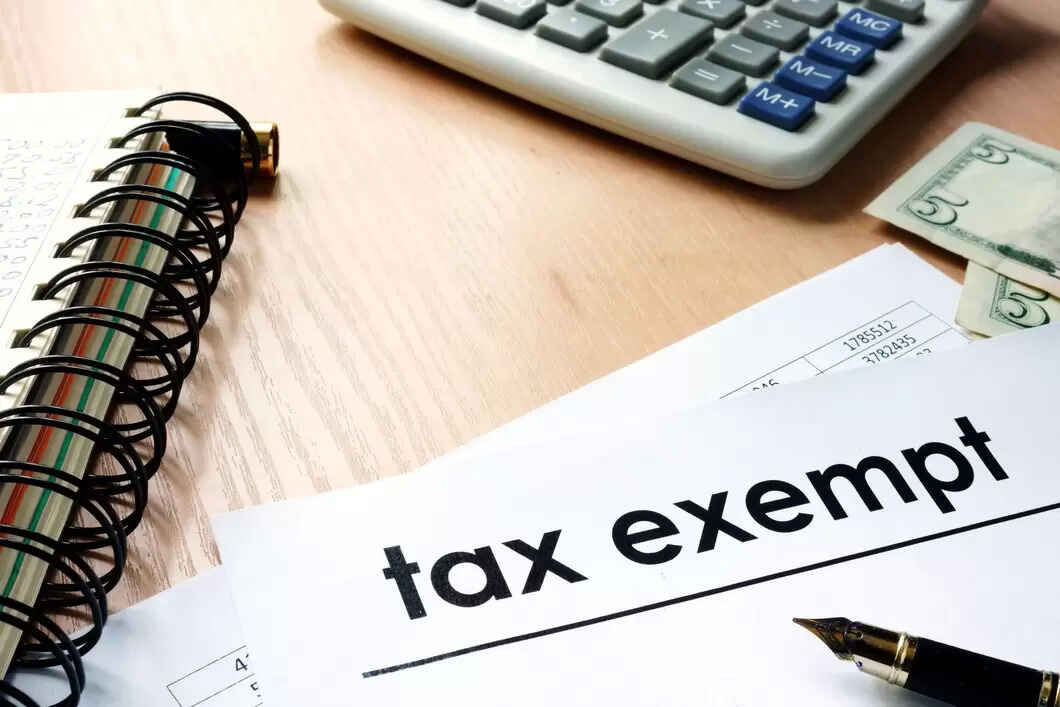
Besides knowing how to calculate capital gains from the sale of property, go through the following list carefully to know about the tax exemption under each Section of the ITA and other ways to reduce tax liabilities on such profits:
Section 54 of the ITA allows you to claim tax exemption on the capital gains obtained from selling a housing property if the latter is entirely utilised for purchasing or constructing another house property. You can purchase a new house within 2 years after or before 1 year of selling. You have to construct a new home within 3 years of selling the old housing property. [Source]
This Section applies to capital gains generated from selling a long-term capital asset except for residential housing property. The entire amount needs to be invested in purchasing a new residential property before 1 year or after 1 year of the sale of the old property. Besides, the construction needs to be completed within 3 years of selling the old property. [Source]
This Section of the ITA allows you to enjoy tax exemption when the entire profit arising from selling the first property is utilised to purchase specific bonds. The maximum investment limit into bonds issued by Rural Electrification Corporation (REC) and National Highway Authority of India (NHAI) is ₹50,00,000.
Individual taxpayers and Hindu Undivided Families can claim tax exemption on capital gains made from selling agricultural land. An assessee or his or her parents must use this land for agricultural purposes for 2 years before the sale of the land takes place. Moreover, the assessee must purchase agricultural land within 2 years of selling previous agricultural property. If the capital gain is higher than the cost of new land purchased, the difference will be taxable. [Source]
If you cannot invest the capital gains till the date of filing income tax returns in a financial year in which you sold your previous property, you can deposit that profit in a public sector bank according to the Capital Gains Account Scheme 1988. However, if you do not comply with the conditions related to the exemption section, then the deposit will be taxed. [Source]
You can calculate short-term capital gains made from shares by deducting equity share's transfer cost and purchasing cost from its sale value. In the case of long-term capital gains, deduct transfer cost and purchasing cost of an equity share from its total sale value.
[Source]
Full value consideration is receivable in cash or kind for received by a seller for selling or transferring a capital asset.
[Source]