General
Life
Accessibility Options


General

General Products
Simple & Transparent! Policies that match all your insurance needs.
 Car Insurance
 Two Wheeler Insurance
 Commercial Vehicle Insurance
 Health Insurance
 Home Insurance
 Travel Insurance
 Business Insurance
Car Insurance
Two Wheeler Insurance
Commercial Vehicle Insurance
Health Insurance
Travel Insurance
Business Insurance
Car Insurance
Two Wheeler Insurance
Commercial Vehicle Insurance
Health Insurance
Travel Insurance



Scan to download

Life

Life Products
Digit Life is here! To help you save & secure your loved ones' future in the most simplified way.
 Term Life
 Savings Plan
 Retirement and Pension Plans
 Group Life Products
 Product Documents
Term Life
Savings Plan
Retirement and Pension Plans
Group Life Products
Product Documents
Term Life
Savings Plan
Retirement and Pension Plans
Group Life Products

Scan to download

Claims

Claims
We'll be there! Whenever and however you'll need us.
 Customer Support
 Motor Claims
Health Claims
Motor Claims
Health Claims
 Marine Insurance
 Grievance Redressal
Customer Support
Motor Claims
Health Claims
Marine Insurance
Grievance Redressal
Grievance Redressal
Customer Support
Motor Claims
Health Claims
Marine Insurance
Grievance Redressal

Scan to download
 General
 Life
General
Life
Life
General
Life
Renewals
Resources

Resources
All the more reasons to feel the Digit simplicity in your life!
Exclusive Features
 Transparency Report
Others
Exclusive Features
Transparency Report
Transparency Report
Others
Exclusive Features
Transparency Report

Scan to download


Our WhatsApp number cannot be used for calls. This is a chat only number.

 Grey Scale
 Readable Text
 Reset
Reset



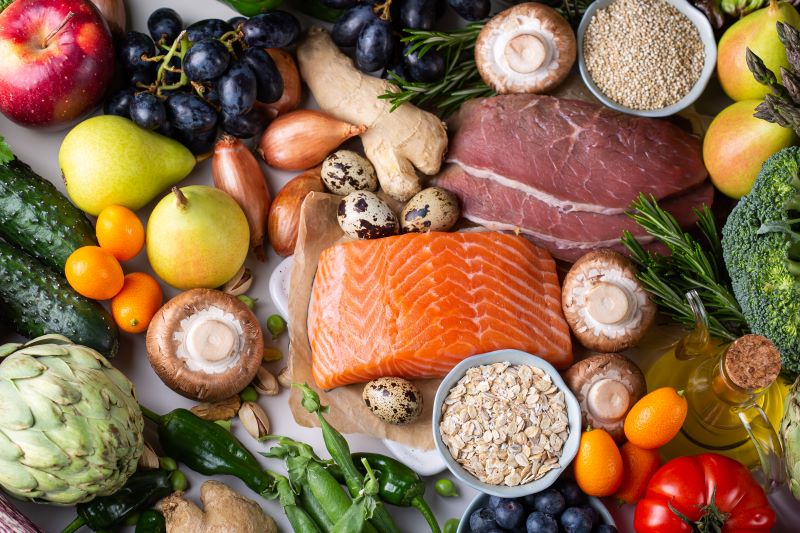
Macronutrients are very important for the body to function. They provide the energy needed for daily activities, help repair cells and promote growth. Carbohydrates are essential because they serve as a primary source of fuel, while proteins contribute greatly to building muscles and improving immunity.
On the other hand, fats facilitate the absorption of nutrients into the body and play a significant role in hormone synthesis. Therefore, one must eat all these nutrient-rich foods in the right proportions if he or she wants to be healthy throughout life.

Table of Contents

Macronutrients are the dietary elements that provide our bodies with energy and help them function properly. They are required in large quantities relative to micronutrients, which are needed in smaller amounts.
Carbohydrates, proteins, and fats comprise the three main macronutrient categories. Each has a different role in maintaining overall health.
There is a great variety of sources for macronutrients; they can be found in many different types of food products. Common sources include grain-based foods like bread or pasta; fruits such as apples or bananas; vegetables like potatoes or broccoli; beans including lentils or kidney beans; nuts such as almonds or walnuts; and sunflower seeds.
Meat (beef), poultry (chicken), fish (salmon) and dairy products (milk) are also rich sources depending on one’s dietary preference. Lastly, oils derived from avocados or olive oil are also considered healthy fats, providing necessary energy when consumed moderately.
Discover 59 food items dense in carbohydrates, proteins, and fats. These will power your body and ensure overall health and vibrancy. They create a balanced diet ranging from lean protein to complex carbs or healthy fat, which can be the foundation for everything else

Each vegetable provides different macronutrients like carbohydrates, proteins and fats, which are essential to keep you energised and healthy.
| SNo. | Vegetables | Macronutrients Content (Per 100 grams) |
| 1 | Spinach | Carbohydrates: 3.6 g Proteins: 2.9 g Fats: 0.4 g |
| 2 | Broccoli | Carbohydrates: 6.6 g Proteins: 2.8 g Fats: 0.4 g |
| 3 | Sweet potatoes | Carbohydrates: 20.1 g Proteins: 1.6 g Fats: 0.1 g |
| 4 | Kale | Carbohydrates: 8.8 g Proteins: 4.3 g Fats: 0.6 g |
| 5 | Brussels sprouts | Carbohydrates: 8.95 g Proteins: 3.38 g Fats: 0.3 g |
| 6 | Cauliflower | Carbohydrates: 4.97 g Proteins: 1.92 g Fats: 0.28 g |
| 7 | Bell peppers (red) | Carbohydrates: 6 g Proteins: 0.99 g Fats: 0.3 g |
| 8 | Carrots | Carbohydrates: 9.58 g Proteins: 0.93 g Fats: 0.24 g |
| 9 | Asparagus | Carbohydrates: 3.88 g Proteins: 2.2 g Fats: 0.14 g |
| 10 | Green peas | Carbohydrates: 14.45 g Proteins: 5.42 g Fats: 0.4 g |

Enjoy the sweetness and juiciness of fruits while getting all the nutrients that come with them. They contain carbs, proteins and good fats needed for energy and wellness.
SNo. |
Fruits | Macronutrients Content (Per 100 grams) |
| 11 | Avocado | Carbohydrates: 8.53 g Proteins: 2 g Fats: 14.66 g |
| 12 | Bananas | Carbohydrates: 22.84 g Proteins: 1.09 g Fats: 0.33 g |
| 13 | Apples | Carbohydrates: 13.81 g Proteins: 0.26 g Fats: 0.17 g |
| 14 | Oranges | Carbohydrates: 8.2 g Proteins: 1.3 g Fats: 0.2 g |
| 15 | Strawberries | Carbohydrates: 7.68 g Proteins: 0.67 g Fats: 0.3 g |
| 16 | Blueberries | Carbohydrates: 14.49 g Proteins: 0.74 g Fats: 0.33 g |
| 17 | Grapes | Carbohydrates: 18.1 g Proteins: 0.72 g Fats: 0.16 g |
| 18 | Pineapple | Carbohydrates: 13.12 g Proteins: 0.54 g Fats: 0.12 g |
| 19 | Mango | Carbohydrates: 14.98 g Proteins: 0.82 g Fats: 0.38 g |
| 20 | Papaya | Carbohydrates: 10.82 g Proteins: 0.47 g Fats: 0.26 g |
| 21 | Kiwi | Carbohydrates: 14.66 g Proteins: 1.14 g Fats: 0.52 g |
| 22 | Watermelon | Carbohydrates: 7.55 g Proteins: 0.61 g Fats: 0.15 g |
| 23 | Pears | Carbohydrates: 15.46 g Proteins: 0.36 g Fats: 0.14 g |
| 24 | Cherries | Carbohydrates: 12.18 g Proteins: 1.06 g Fats: 0.2 g |
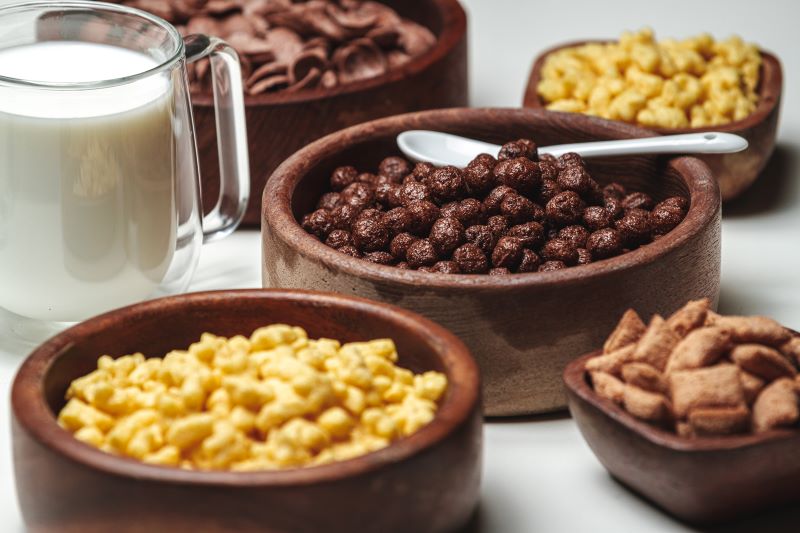
There is a wide range of grain foods as well as milk-based products such as cheese or yoghurt, where we can find carbohydrates (energy), proteins (building blocks) and fats (for body functions).
SNo. |
Cereals and Dairy Products | Macronutrients Content (Per 100 grams) |
| 25 | Oats | Carbohydrates: 60.4 g Proteins: 16.9 g Fats: 6.9 g |
| 26 | Greek Yoghurt | Carbohydrates: 3.6 g Proteins: 10 g Fats: 10 g |
| 27 | Milk | Carbohydrates: 4.8 g Proteins: 3.3 g Fats: 3.6 g |
| 28 | Cheese | Carbohydrates: 1.3 g Proteins: 25 g Fats: 33 g |
| 29 | Cottage Cheese | Carbohydrates: 3.4 g Proteins: 11 g Fats: 4.3 g |
| 30 | Whole Grain Bread | Carbohydrates: 45.1 g |
| 31 | Yoghurt | Carbohydrates: 4.7 g Proteins: 3.5 g Fats: 3.3 g |
| 32 | Cheddar Cheese | Carbohydrates: 1.3 g Proteins: 24.9 g Fats: 33.1 g |
| 33 | Almond Milk | Carbohydrates: 3.2 g Proteins: 0.4 g Fats: 1.1 g |
| 34 | Swiss Cheese | Carbohydrates: 2.2 g Proteins: 28.4 g Fats: 27.8 g |
| 35 | Yogurt (Low-fat) | Carbohydrates: 4.7 g Proteins: 3.5 g Fats: 1.8 g |
| 36 | Skim Milk | Carbohydrates: 4.8 g Proteins: 3.4 g Fats: 0.2 g |
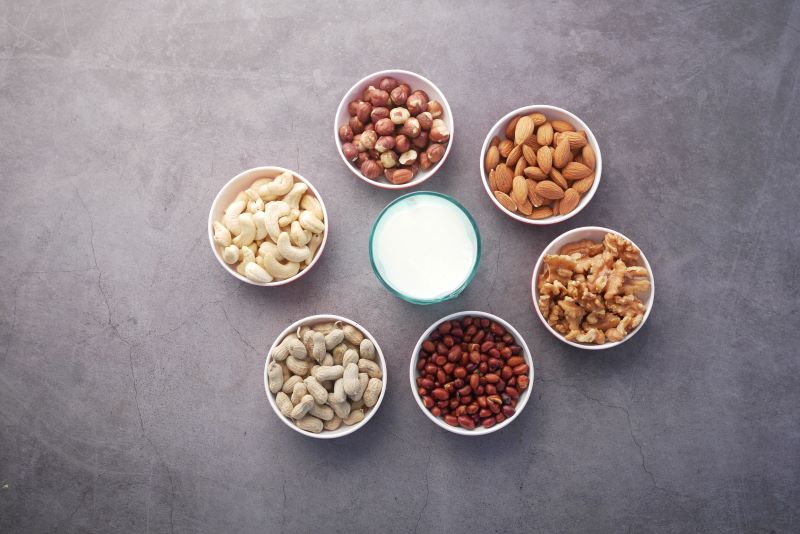
Find out how many carbs, proteins or fats are in sunflower or pumpkin seeds and nuts like almonds too. They can be great snacks when you need some quick fuel.
SNo. |
Seeds and Nuts | Macronutrients Content (Per 100 grams) |
| 37 | Almonds | Carbohydrates: 21.7 g Proteins: 21.2 g Fats: 49.9 g |
| 38 | Walnuts | Carbohydrates: 13.7 g Proteins: 15.2 g Fats: 65.2 g |
| 39 | Cashews | Carbohydrates: 30.2 g Proteins: 18.2 g Fats: 43.9 g |
| 40 | Sunflower Seeds | Carbohydrates: 20 g Proteins: 20.8 g Fats: 51.5 g |
| 41 | Pumpkin Seeds | Carbohydrates: 10.7 g Proteins: 30.2 g Fats: 49 g |
| 42 | Chia Seeds | Carbohydrates: 42.1 g |
| 43 | Flaxseeds | Carbohydrates: 28.9 g Proteins: 18.3 g Fats: 42.2 g |
| 44 | Pistachios | Carbohydrates: 27.2 g Proteins: 20.6 g Fats: 45.4 g |
| 45 | Hazelnuts | Carbohydrates: 16.7 g Proteins: 14.1 g Fats: 60.8 g |
| 46 | Sesame Seeds | Carbohydrates: 23.4 g Proteins: 17.7 g Fats: 49.7 g |
| 47 | Pecans | Carbohydrates: 13.9 g Proteins: 9.2 g Fats: 72 g |
| 48 | Brazil Nuts | Carbohydrates: 12.3 g Proteins: 14.3 g Fats: 66.4 g |
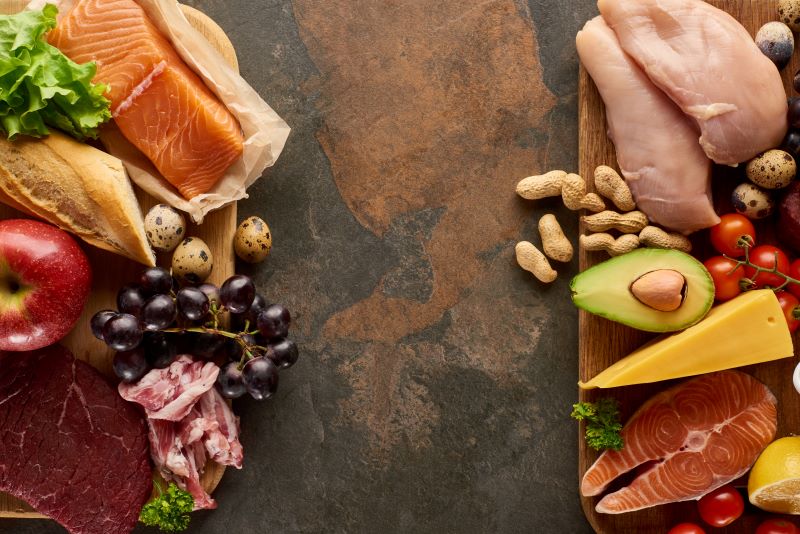
Lean meats have plenty of protein but also provide fats like fish, especially oily ones such as sardines. Shellfish are another option if muscles require repair after a workout.
SNo. |
Animal and Seafood | Macronutrients Content (Per 100 grams) |
| 49 | Chicken Breast | Carbohydrates: 0 g Proteins: 31 g Fats: 3.6 g |
| 50 | Turkey Breast | Carbohydrates: 0 g Proteins: 29 g Fats: 1 g |
| 51 | Beef | Carbohydrates: 0 g Proteins: 26 g Fats: 20 g |
| 52 | Salmon | Carbohydrates: 0 g Proteins: 20 g Fats: 13 g |
| 53 | Tuna | Carbohydrates: 0 g Proteins: 29 g Fats: 1 g |
| 54 | Shrimp | Carbohydrates: 1 g |
| 55 | Cod | Carbohydrates: 0 g Proteins: 18 g Fats: 0.7 g |
| 56 | Pork | Carbohydrates: 0 g Proteins: 27 g Fats: 3 g |
| 57 | Crab | Carbohydrates: 0 g Proteins: 19 g Fats: 2 g |
| 58 | Lobster | Carbohydrates: 1.2 g Proteins: 20 g Fats: 1 g |
| 59 | Eggs | Carbohydrates: 1.1 g Proteins: 13 g Fats: 11 g |
Here is the table of recommended daily intake for macronutrients differentiated by age, sex and life stages according to the National Institute of Health.
Age Group |
Recommended Macronutrient Intake (Milligrams Per Day) |
| Infants 0-6 months | Carbohydrates: 60 g, Proteins: 9.1 g, Fats: 31 g |
| Infants 7-12 months | Carbohydrates: 95 g, Proteins: 11 g, Fats: 30 g |
| Children 1-3 years | Carbohydrates: 130 g, Proteins: 13 g, Fats: 30 g |
| Children 4-8 years | Carbohydrates: 130 g, Proteins: 19 g, Fats: 25 g |
| Children 9-13 years | Carbohydrates: 130 g, Proteins: 34 g, Fats: 25 g |
| Male Teens 14-18 years | Carbohydrates: 130 g, Proteins: 52 g, Fats: 25 g |
| Female Teens 14-18 years | Carbohydrates: 130 g, Proteins: 46 g, Fats: 25 g |
| Male Adults 19+ years | Carbohydrates: 130 g, Proteins: 56 g, Fats: 25 g |
| Female Adults 19+ years | Carbohydrates: 130 g, Proteins: 46 g, Fats: 25 g |
| Pregnant Teens/ Adults | Carbohydrates: 175 g, Proteins: 71 g, Fats: 25 g |
| Lactating Teens/ Adults | Carbohydrates: 210 g, Proteins: 71 g, Fats: 25 g |
| Adults 50+ years | Carbohydrates: 130 g, Proteins: 56 g, Fats: 25 g |
Calculate Your Health Metrics Instantly
Including foods rich in macronutrients in your diet has many health benefits because they provide the necessary materials for optimal body function. They support energy levels, build muscles and promote good health generally by ensuring a balanced and nutritious meal plan.
There are many delicious and innovative methods for enjoying these foods while benefiting one’s health. Diversifying the types of carbs, proteins, and fats that you consume in your meals and snacks can ensure overall well-being.
Understanding signs of insufficient consumption of macronutrients (carbohydrates, proteins, and fats) is important when dealing with nutritional deficiencies and improving wellness generally.
Considering all essential nutrients for energy maintenance levels while supporting different bodily functions remains the most crucial thing people should do since it helps prevent these problems from occurring in the first place.
Even though they are necessary components our bodies need to live healthier, we must be careful when taking them because if done wrong, this could negatively impact us.
Whether or not someone should take a macronutrient supplement depends on their situation, dieting habits and health goals. Most people can get enough carbohydrates, proteins, and fats from their meals if they are well-balanced and include whole foods.
However, some groups, like athletes who need more energy or those with certain dietary restrictions, might find it helpful to take these supplements for their nutritional needs. Talk to your healthcare provider or registered dietitian to know what is best for your health objectives.
Macronutrient food sources are extremely important for maintaining good overall health. Carbohydrates, proteins and fats are all necessary components of a healthy, balanced diet because they provide energy, build muscles and regulate other bodily functions such as digestion, metabolism, etc.
Protect What Matters - Explore Other Insurance Options