General
Life
Accessibility Options


General

General Products
Simple & Transparent! Policies that match all your insurance needs.
 Car Insurance
 Two Wheeler Insurance
 Commercial Vehicle Insurance
 Health Insurance
 Home Insurance
 Travel Insurance
 Business Insurance
Car Insurance
Two Wheeler Insurance
Commercial Vehicle Insurance
Health Insurance
Travel Insurance
Business Insurance
Car Insurance
Two Wheeler Insurance
Commercial Vehicle Insurance
Health Insurance
Travel Insurance



Scan to download

Life

Life Products
Digit Life is here! To help you save & secure your loved ones' future in the most simplified way.
 Term Life
 Savings Plan
 Retirement and Pension Plans
 Group Life Products
 Product Documents
Term Life
Savings Plan
Group Life Products
Product Documents
Term Life
Savings Plan
Group Life Products
Scan to download

Claims

Claims
We'll be there! Whenever and however you'll need us.
 Customer Support
 Motor Claims
Health Claims
Motor Claims
Health Claims
 Marine Insurance
 Grievance Redressal
Customer Support
Motor Claims
Health Claims
Marine Insurance
Grievance Redressal
Grievance Redressal
Customer Support
Motor Claims
Health Claims
Marine Insurance
Grievance Redressal

Scan to download
 General
 Life
General
Life
Life
General
Life
Renewals
Resources

Resources
All the more reasons to feel the Digit simplicity in your life!
Exclusive Features
 Transparency Report
Others
Exclusive Features
Transparency Report
Transparency Report
Others
Exclusive Features
Transparency Report

Scan to download


Our WhatsApp number cannot be used for calls. This is a chat only number.

 Grey Scale
 Readable Text
 Reset
Reset



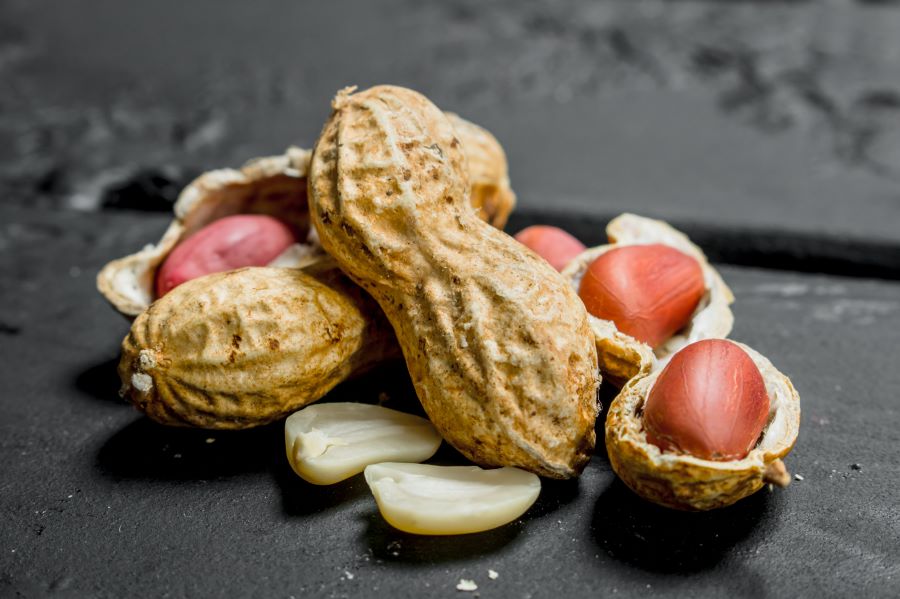
Peanuts are considered one of the healthiest foods, and surprisingly, it is not from the family of nuts. Rather, peanuts, like soybeans, green peas, and lentils, are classified as legumes. This legume originated in South America and is found in ample amounts in India.
However, if you are looking for health benefits, you might be surprised to know that the nutritional value of peanuts is equivalent to expensive nuts like walnuts, cashews or almonds.

Table of Contents

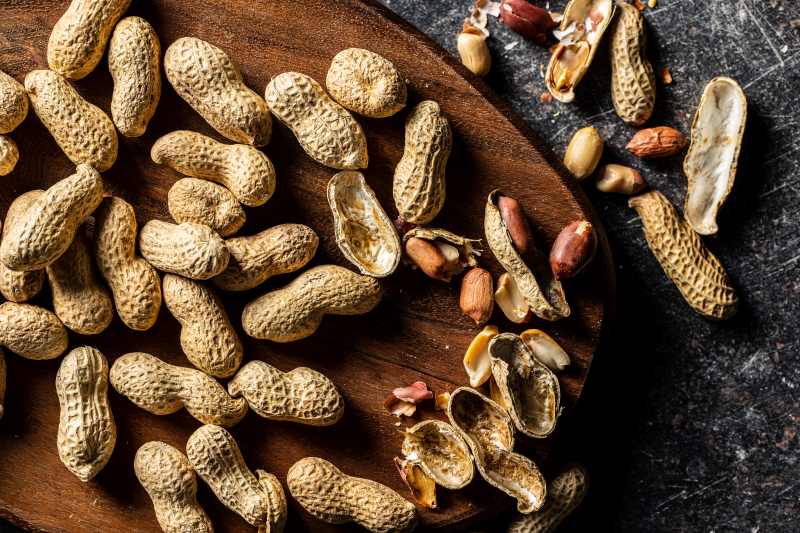
Most people believe that peanuts have lower nutritious value and often overlook them to include in their diet. But, here are the top reasons to include them in your diet.
Intake of peanuts in required has been linked with the benefit of reducing the risk of colorectal cancer. Peanuts contain an ample amount of resveratrol, phenolic acid, and isoflavones which are believed to have anti-cancer properties.
Besides this, as per a study, peanuts are found to reduce the risk of postmenopausal breast cancer. Also, peanuts can reduce the risk of gastric and oesophagal cancers. Finally, it is believed that one of the benefits of eating peanuts daily is that it reduces the risk of developing cancer.
According to a study by the Harvard School of Public Health, it was found that peanuts can lower bad cholesterol levels (LDL) levels. Also, peanuts might protect against fatal coronary heart disease (CHD) and non-fatal myocardial infarction.
Besides this, the antioxidant property of resveratrol in peanuts shields against heart diseases and might also have other cardioprotective effects. Furthermore, as stated by a study by Purdue University, consumption of peanuts regularly can lower triglycerides, boosting heart health. Finally, peanuts are believed to increase the level of good cholesterol and are supported by another study conducted by National Library of Medicine.
As a study by Harvard Medical School and Brigham and Women's Hospital (Boston), peanuts lower the risk of gallstones. In addition, men and women consuming five or more units of nuts (including peanuts) for 7 days are believed to lower the risk of gallstones and cholecystectomy, respectively.
One of the advantages of peanuts is that they can potentially cure erectile dysfunction. This is because these are rich in arginine, which contains amino acids, and arginine has been studied extensively as a possible cure for erectile dysfunction. However, a few studies have shown that oral consumption of amino acids with pycnogenol can also treat erectile dysfunction.
Peanuts are a rich source of niacin that can possibly provide protection against age-related cognitive decline and Alzheimer’s disease. Also, these are a great source of Vitamin E, which is also believed to protect against Alzheimer's disease.
Adding peanuts to your daily diet might help to reduce the risk of a spike in blood sugar levels. This is because peanuts have a GI (glycemic index) of 14, whereas the GL (glycemic load) is 1. Hence, it makes a diabetes superfood, and the fibre in it helps lower blood sugar levels. It also contains healthy oils and magnesium, which is also beneficial for the same.
Adding peanut butter to your Polycystic Ovarian Syndrome (PCOS) diet will provide more fibre and calories that reduce the inflammatory condition of this disorder. Peanuts are rich in monounsaturated fats, and some research has shown that a diet containing them improves the metabolic profile of females with PCOS.
Although the research in this regard is exiguous, peanuts are believed to promote hair health. This is because peanuts have plenty of proteins and amino acids which act as a good supplement for hair health.
Consuming peanuts regularly can provide sun protection against sunburn and damage. A few components of peanuts, such as zinc, magnesium and Vitamin E, can fight bacteria to promote skin glow. Additionally, beta-carotene found in peanuts is also believed to improve skin health.
Peanuts are a rich source of fibre and protein that helps in the generation of energy from carbohydrates. Also, the fibre and protein content of peanuts might allow the steady release of energy into the body.
The fibre content of peanuts reduces inflammation within the body and promotes good gut health. The compounds work by neutralising free radicals and reducing oxidative stress, major contributors to inflammation. Regular consumption of peanuts has been linked to lower levels of inflammatory markers.
Peanuts are densely packed with energy, and they can be consumed as a snack that provides a sense of fullness. So, consuming it regularly can promote weight loss and might also help in weight control.
Peanuts are an excellent source of essential vitamins, including vitamins E and B, like niacin, folate, and biotin. Vitamin E acts as a powerful antioxidant, protecting cells from damage. B vitamins support energy production and brain health, while folate is crucial for DNA synthesis and repair.
The nutrients in peanuts, such as vitamin E, biotin, and healthy fats, contribute to better skin health. Vitamin E protects the skin from oxidative damage and premature ageing. Biotin supports skin barrier function, helping to maintain hydration and elasticity.
Peanuts contain several nutrients that support mental health, including niacin, folate, and healthy fats. Niacin (vitamin B3) is vital for brain function and can help improve cognitive function and reduce the risk of neurodegenerative diseases. Folate plays a role in neurotransmitter synthesis, crucial for mood regulation.
The nutritional components provide multiple health benefits of peanuts, and per 100 gm of raw peanuts contains the following nutrition:
Check Other Important Health Metrics Now
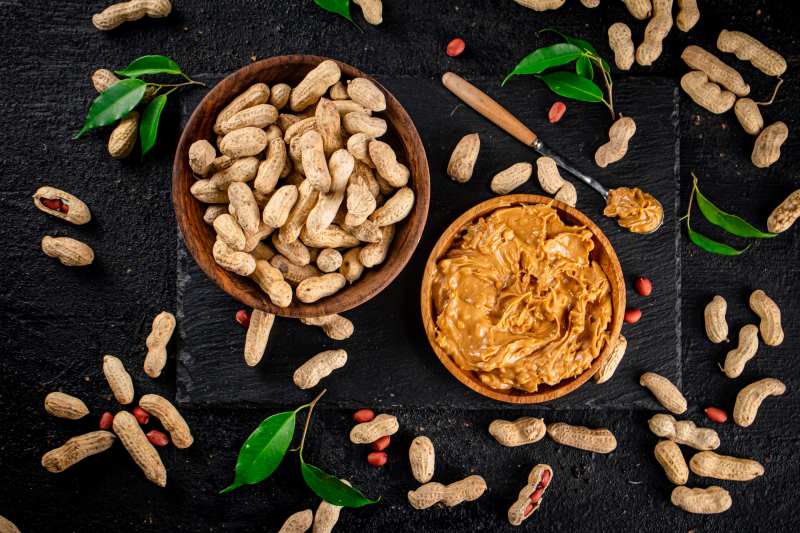
There are myriad ways to consume peanuts daily to get its nutritional benefits. To get the most nutrition, you can have it raw, and if you don't like its taste, you can sprinkle some salt on it. Besides this, other ways to consume peanuts are:
Adding peanuts to your salad can enhance its nutritional value and add a delightful crunch. Peanuts provide healthy fats, protein, and fibre, making your salad more satisfying. Simply sprinkle a handful of roasted or raw peanuts over your greens.
Peanuts make a perfect afternoon snack due to their high protein and healthy fat content. They can keep you full and energised until your next meal. A small serving of peanuts can curb cravings and provide essential nutrients.
Peanut butter is a versatile way to include peanuts in your diet. Spread it on whole-grain toast for a nutritious breakfast or snack. It can also be added to smoothies, oatmeal, or yoghurt for extra flavour and protein.
Peanuts can be used to create a variety of delicious desserts and sweets. Incorporate them into cookies, brownies, or homemade granola bars for added crunch and flavour. They can also be used in traditional dishes like peanut brittle or halva.
Blend a tablespoon of peanut butter or a handful of peanuts into your morning smoothie. This addition provides a creamy texture and boosts the protein content, making your smoothie more filling and nutritious.
Use peanuts to create flavorful sauces for your dishes, such as a peanut satay sauce or peanut dressing. These sauces can be drizzled over grilled meats, vegetables, or noodles to enhance the taste and nutritional value of your meals.
Although consuming peanuts is a great way to add comprehensive nutrition to your diet, eating too much of it can be harmful. Some of the most common risks associated with the overconsumption of peanuts are:
Besides the ample benefits of eating peanuts, individuals should be aware while consuming them.
Hence, it is evident that the nutritional value of peanuts is undeniably valuable for health. Also, the consumption of peanuts is especially beneficial for people with low weight as it helps maintain a good weight for overall well-being. Moreover, apart from raw groundnuts, you can also consume cold-pressed groundnut oil, which is rich in Vitamin E and Omega-6 fatty acids.
Protect What Matters - Explore Other Insurance Options
Peanuts provide essential nutrients, healthy fats, and protein, promoting overall health and energy and aiding in weight management. They also support heart health and help prevent nutrient deficiencies.
Peanuts contain vitamins E, B3 (niacin), B6, B9 (folate), and B1 (thiamine), which support energy production, skin health, brain function, and overall well-being.
Peanuts can be eaten at any time, but consuming them as a snack between meals or adding them to breakfast can help keep energy levels stable and control hunger.
Yes, it's safe to eat peanuts daily in moderate amounts as they provide essential nutrients and health benefits. However, excessive consumption can lead to weight gain and other health issues.
Yes, peanuts help lower bad cholesterol (LDL) levels and increase good cholesterol (HDL) levels, thanks to their monounsaturated fats, fibre, and antioxidant content.
Yes, peanuts benefit the skin due to their vitamin E content, which helps protect the skin from damage, and healthy fats that keep the skin moisturised and supple.
Peanuts can be safe to eat for several months if stored properly in a cool, dry place. Refrigeration can extend their shelf life to about a year.
Peanuts are used in various ways, including as a snack, in cooking and baking, for making peanut butter, in sauces and dressings, and for producing peanut oil and flour.