General
Life
Accessibility Options


General

General Products
Simple & Transparent! Policies that match all your insurance needs.
 Car Insurance
 Two Wheeler Insurance
 Commercial Vehicle Insurance
 Health Insurance
 Home Insurance
 Travel Insurance
 Business Insurance
Car Insurance
Two Wheeler Insurance
Commercial Vehicle Insurance
Health Insurance
Travel Insurance
Business Insurance
Car Insurance
Two Wheeler Insurance
Commercial Vehicle Insurance
Health Insurance
Travel Insurance



Scan to download

Life

Life Products
Digit Life is here! To help you save & secure your loved ones' future in the most simplified way.
 Term Life
 Savings Plan
 Retirement and Pension Plans
 Group Life Products
 Product Documents
Term Life
Savings Plan
Retirement and Pension Plans
Group Life Products
Product Documents
Term Life
Savings Plan
Retirement and Pension Plans
Group Life Products

Scan to download

Claims

Claims
We'll be there! Whenever and however you'll need us.
 Customer Support
 Motor Claims
Health Claims
Motor Claims
Health Claims
 Marine Insurance
 Grievance Redressal
Customer Support
Motor Claims
Health Claims
Marine Insurance
Grievance Redressal
Grievance Redressal
Customer Support
Motor Claims
Health Claims
Marine Insurance
Grievance Redressal

Scan to download
 General
 Life
General
Life
Life
General
Life
Renewals
Resources

Resources
All the more reasons to feel the Digit simplicity in your life!
Exclusive Features
 Transparency Report
Others
Exclusive Features
Transparency Report
Transparency Report
Others
Exclusive Features
Transparency Report

Scan to download


Our WhatsApp number cannot be used for calls. This is a chat only number.

 Grey Scale
 Readable Text
 Reset
Reset



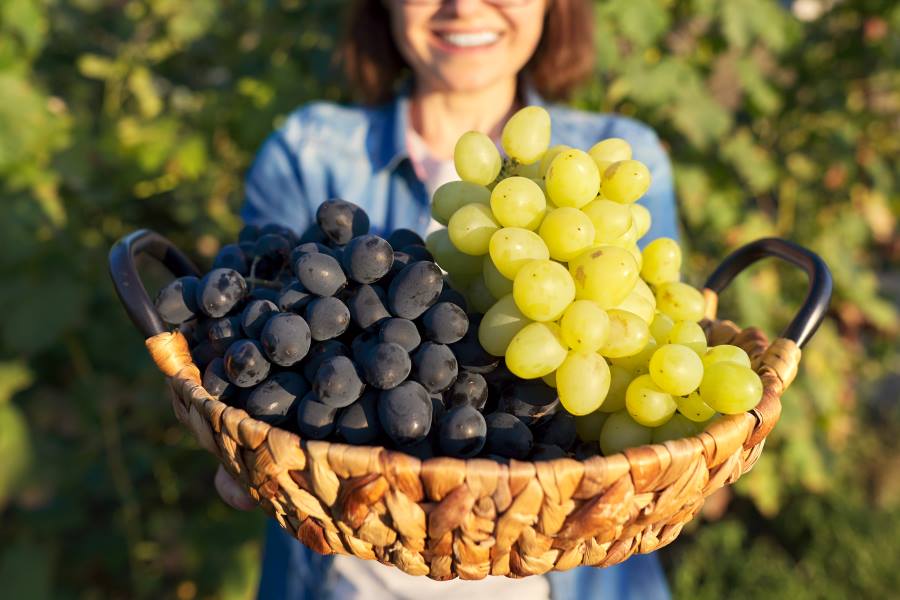
Some may be surprised to know that grapes are a great source of Vitamin C. Grapes are considered one of the oldest fruits that have been cultivated in India. However, its main purpose was to produce wine.
There are innumerable health benefits of grapes because of their higher nutrient and antioxidant content. This blog will touch on some of those nutritional values and other necessary information about the fruit.

Table of Contents

Maintaining the nutrients count in our daily busy routine is very difficult. This is why people look for superfoods to gain a lot of minerals in one serving.
One such fruit is the grapes, and here are some of the top health benefits of grapes.
One of the well-known benefits of eating grapes is that it helps boost the immune system. It is because grapes are a great source of Vitamin C, E, and K. These important nutrients fight harmful infections and prevent minor illnesses.
People on a low sodium diet can easily add grapes to their daily diet because it is very low in sodium content. In addition, grapes are rich in potassium, a vital ingredient for balancing blood pressure. Therefore, intaking grapes regularly can help balance blood pressure.
Another prominent health benefit of grapes is that it aids in reducing LDL level. Since grapes are high in fibre and polyphenols, physicians often prescribe these to maintain a good and healthy heart.
According to research conducted by a University in Miami, daily consumption of grapes can protect the retina from deteriorating. The results of this study showed that the retina gets thickened, and photoreceptive responses are enhanced.
One of the many advantages of eating grapes is that it prevents diabetes. Although some may inquire about the sugar content in them, the Glycaemic index scores grapes from low to medium. In addition, grapes have compounds that improve insulin response.
Grapes have resveratrol, a kind of antioxidant known for reducing oxidative stress by creating a positive impact on the brain. This can prevent chronic diseases like Alzheimer’s and Parkinson’s.
Along with keeping your brain healthy, resveratrol is also known to have anti-ageing properties. It stimulates the SirT1 gene, which affects cell structure and promotes longevity. So, if you want to stay youthful, add grapes to your daily diet.
A further health benefit of grapes is that it contains melatonin which regulates sleep. Fortunately, it is the only fruit to contain this hormone regulating compound. So, snacking on grapes before bed is not a bad habit. This is because it can maintain your regular sleep cycle and keeps you healthy.
The skin and seeds of grapes contain the highest amount of antioxidants. These compounds have properties that can repair cell damage and protect from serious diseases. Surprisingly, these antioxidants stay present even after grapes are fermented for wines.
Resveratrol in grapes is a magic compound since it has antimicrobial properties. Thus, it can restrict the growth of bacteria like Campylobacter jejuni and Candida albicans. Additionally, it also prevents food-borne ailments.
Grapes are very rich in antioxidants, particularly high in resveratrol, which protects your skin from UV damage and other forms of pollution. Consuming grapes will leave you with elastic skin and well-moisturised through their ability to enhance skin elasticity and hydration, hence leaving you healthy and youthful-looking.
One of the fruits quite rich in dietary fibre is the grape; thus, this makes digestion quite easy. At the same time, it acts as a laxative to cure constipation. Through its high content of fibre, the proper passage of stool is ensured, and the digestive system is kept clean.
With their low-calorie and high water content, grapes are a good, filling snack to take in for weight reduction. Moreover, the fibre found in the grapes keeps one full, thereby cutting down on calorie content.
Grapes are an abundant source of calcium, magnesium, and vitamin K, all very essential in this fight against weak bones and teeth. Therefore, regular consumption of grapes will help decrease the risk of osteoporosis and bone diseases.
Grapes have a high water content that enables them to flush out toxins from the body. This promotes healthier kidneys and may be able to prevent kidney stones and other renal problems.
Grapes are anti-inflammatory in nature and can be consumed to reduce inflammation in the body. This makes them especially beneficial to people who have diseases such as arthritis, as they might help reduce pain and swelling.
Grapes are a natural energy booster that can help keep a person up and about for the entire day. Natural sugars, along with some core elements, make way for sustained energy levels to be portrayed without spiking blood sugar levels.
The antioxidants present in grapes, namely resveratrol and quercetin, have anti-cancer properties. These antioxidants prevent cell damage and reduce the risk of developing numerous types of cancer.
Grapes are a sweet and refreshing treat with essential nutrients. These values are noted according to the studies of the US Agricultural Department for 1 cup or 151 grams of grapes.

To get the maximum advantages of grapes, you must find new and unique ways to include them in your diet.
These are some of the quick ideas for eating grapes.
Grapes itself is a great snack. You can also add lemon juice with it, mix them nicely and put them in the freezer. After a few hours, you can have your healthy sour candy ready.
If you love smoothies, add some grapes with your favourite ingredients, and have a nutritious breakfast. Grapes go really well with bananas along with Greek yoghurt. They add a burst of sweetness and nutrients.
You can use grape toppings on oats, muesli, smoothie bowl, Greek yoghurt or even ice creams. It instantly elevates its taste and adds some nutrients to your food. The juicy texture complements various dishes.
Make fruit salads with some apples, berries and grapes and make a delicious breakfast. You can also put some sliced grapes in your regular salad for a citrus taste. They add a refreshing crunch and flavour.
Ditch those packaged juices, and make some grape juice at your home. 100% pure grape juice is a healthier option if you have picky eaters in your family. It’s fresh, natural, and free from preservatives.
Combine diced grapes with tomatoes, onions, cilantro, and lime juice to create a refreshing grape salsa. Serve with grilled chicken and fish or as a dip with tortilla chips. 100% pure grape juice is a healthier option if your family has picky eaters.
Incorporate grapes into baked goods such as muffins, cakes, or breads. Grapes' natural sweetness adds a unique flavour and moisture to your baked creations. Serve with grilled chicken and fish or as a dip with tortilla chips.
Blend grapes with honey or agave syrup, freeze, and enjoy a refreshing grape sorbet—a healthy, cooling alternative to traditional ice cream. This easy-to-make treat is both delicious and packed with antioxidants, making it a guilt-free indulgence.
Cook grapes with sugar and lemon juice to make a compote, perfect as a topping for pancakes, waffles, or yoghurt, adding flavour and nutrients. The combination of tart and sweet flavours in the compote elevates simple dishes to gourmet status.
Roast grapes with vegetables like Brussels sprouts, carrots, or sweet potatoes to enhance their sweetness and add a unique flavour to the dish. This pairing enhances caramelisation, creating a harmonious and flavorful side dish.
Calculate Your Health Metrics Instantly
Grapes are a great source of several nutrients and promote health benefits. However, eating too many of them can be harmful. It can result in the following:

Despite their nutritional benefits, grapes may not be suitable for everyone. Even though there are tons of nutritional value in grapes, some people must avoid them.
Grapes contain salicylic acids, which is why if anyone suffers from gastrointestinal issues, they must refrain from consuming them. The acids can exacerbate existing conditions, leading to discomfort or worsened symptoms.
It has been studied that resveratrol can cause pancreatic problems in a growing foetus. Since grapes contain this compound, it is better to avoid them. Since grapes contain this compound, avoiding them during pregnancy is best to reduce potential risks.
Kids in the age group of 6-12 months do not develop the ability to chew properly. So, there is a risk of choking on grapes. It’s best to wait until they can chew solid foods safely.
Very rarely people can be allergic to a kind of lipid-protein in grapes. Therefore, those who have ever experienced this must avoid consuming grapes to prevent allergic reactions that could be severe.
There are numerous health benefits of grapes because of their rich plant compounds. Despite their sugar content, they do not negatively impact blood sugar levels. Moreover, these are so tasty that no one would deny including them in their diet. So, embrace the benefits of this superfruit and enjoy its delightful taste while reaping its numerous health rewards.
Protect What Matters - Explore Other Insurance Options