General
Life
Accessibility Options


General

General Products
Simple & Transparent! Policies that match all your insurance needs.
 Car Insurance
 Two Wheeler Insurance
 Commercial Vehicle Insurance
 Health Insurance
 Home Insurance
 Travel Insurance
 Business Insurance
Car Insurance
Two Wheeler Insurance
Commercial Vehicle Insurance
Health Insurance
Travel Insurance
Business Insurance
Car Insurance
Two Wheeler Insurance
Commercial Vehicle Insurance
Health Insurance
Travel Insurance



Scan to download

Life

Life Products
Digit Life is here! To help you save & secure your loved ones' future in the most simplified way.
 Term Life
 Savings Plan
 Retirement and Pension Plans
 Group Life Products
 Product Documents
Term Life
Savings Plan
Retirement and Pension Plans
Group Life Products
Product Documents
Term Life
Savings Plan
Retirement and Pension Plans
Group Life Products

Scan to download

Claims

Claims
We'll be there! Whenever and however you'll need us.
 Customer Support
 Motor Claims
Health Claims
Motor Claims
Health Claims
 Marine Insurance
 Grievance Redressal
Customer Support
Motor Claims
Health Claims
Marine Insurance
Grievance Redressal
Grievance Redressal
Customer Support
Motor Claims
Health Claims
Marine Insurance
Grievance Redressal

Scan to download
 General
 Life
General
Life
Life
General
Life
Renewals
Resources

Resources
All the more reasons to feel the Digit simplicity in your life!
Exclusive Features
 Transparency Report
Others
Exclusive Features
Transparency Report
Transparency Report
Others
Exclusive Features
Transparency Report

Scan to download


Our WhatsApp number cannot be used for calls. This is a chat only number.

 Grey Scale
 Readable Text
 Reset
Reset



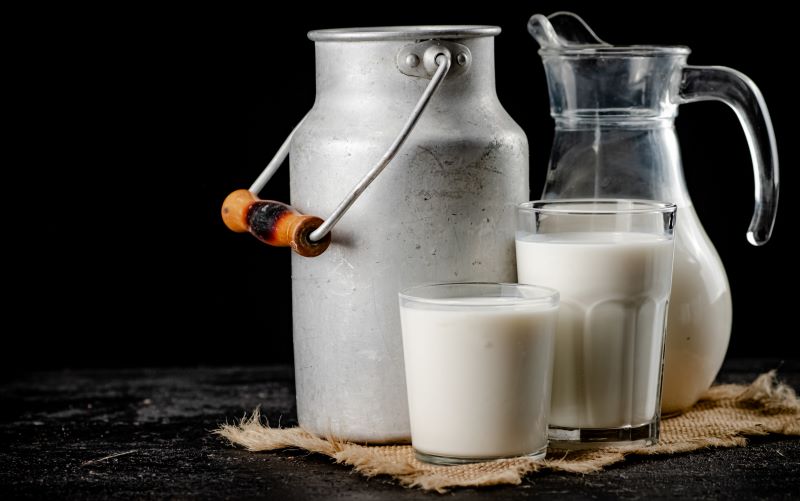
Milk, renowned for its nutritional richness and versatility, is a dietary staple for millions worldwide. However, the trustworthiness of this essential food source is frequently jeopardised by a practice known as adulteration.
This deceitful act involves adding substances to milk, often to increase its volume, alter its composition, or enhance certain characteristics. Adulteration of milk not only poses grave risks to consumer health and erodes confidence in the dairy industry.

Table of Content

Food Adulteration is the willful act of lowering the quality of offered food by mixing or substituting it with substandard substances or removing mandatory components. This statement also applies to milk.
Infection of foodstuffs happens during the period of harvest, growing up, preservation, transportation and distribution. However, these two words are not synonymous when it comes to milk. Milk adulteration is the process of adding substances like water, urea, or detergent to milk, compromising its quality and nutritional value, often for economic gain, posing health risks.
Milk is considered contaminated when mixed with substances not permitted or approved for use in milk products. Adulteration of milk can occur through various means.
If any of the following situations apply, milk is deemed contaminated.
Addition of compounds with potential health effects
Elimination of a necessary nutrient entirely or in part
Partial or complete substitution of inferior materials for nutrients
Additional factors that could cause the quality to fall short of expectations
Many people are very worried and puzzled by the increasing milk adulteration motivated by the love of money in India. Milk collection and testing practices across the nation have yet to comply with the guidelines of the Food Safety and Regulation Authority of India (FSSAI). This situation is far beyond what could be imagined.
Understanding the many compounds that dishonest people could add to milk to trick consumers or boost earnings is necessary to introduce the common contaminants in milk.
Milk adulteration is a major problem worldwide, and those who engage in it use various substances to dilute or change the content of milk. Here are 9 common adulterants in milk, of which everyone should be aware:
The most popular adulterant is water. Typically, water is added to milk to make it more volumetric, diminishing its nutritional value. Contaminated water can infect milk, posing a major health risk.
Urea is a nitrogen-containing compound sometimes used as an adulterant in milk. Its addition to milk constitutes adulteration and poses significant health risks when consumed excessively.
To increase the density of milk, sucrose is typically added. Sucrose, commonly known as table sugar, is one of the adulterants that unscrupulous individuals may add to milk to increase its sweetness or enhance its flavour.
Another typical adulteration in milk is starch. Starch is added to increase the density of milk, making it harder to find evidence of unnecessary water added to it. The human body may experience diarrhoea after consuming starch.
To raise the lactometer reading, glucose is added. It offers flavour as well. For those with diabetes, glucose of poor quality is detrimental.
To enhance the quality of milk, hydrogen peroxide is added. It keeps milk fresher for longer. The digestive tracts are adversely affected by hydrogen peroxide. It could result in inflammation and gastritis.
Maltodextrin is a common addition to milk, increasing the volume of milk and milk products. Drinking milk tainted with maltodextrin might result in allergies and diarrhoea.
To increase the density of milk and hide the presence of additional water, sodium chloride, or salt, is added. Drinking milk tainted with salt is not recommended for those with high blood pressure.
Neutralisers, such as carbonates and alkali bicarbonates, are added to milk to counteract the acquired acidity. However, neutralisers do not improve people's health; they can cause gastrointestinal problems.
Despite their many differences, adulterating and contaminating milk have detrimental health impacts. See the table below to gain a better understanding.
Milk Contamination |
Milk Adulteration |
| The term "milk contamination" describes the process of declining material quality. | "Milk adulteration" describes adding certain lawfully allowed compounds to milk. |
| This can occur organically or due to numerous environmental factors, including heat, humidity, etc. | Artificial factors are the reason behind this. This is a profitable technique carried out by merchants or businesspeople. |
| Detection methods include microbiological testing, chemical analysis, and sensory evaluation to identify harmful contaminants. | Requires specialised laboratory tests and analytical techniques to identify and quantify contaminants accurately. |
| It can lead to foodborne illnesses, infections, toxicity, or other adverse health effects. If consumed, depending on the type and concentration of contaminants present. | Depending on the nature of the adulterants, it may pose health risks due to the addition of harmful substances, such as toxins, allergens, or chemical residues. |
| It can occur due to unsanitary conditions during milk production, processing, or storage, leading to microbial growth or chemical contamination. | To increase volume, mask quality deficiencies, or enhance certain properties of milk. |
| Contaminants may include pathogenic bacteria (e.g., Salmonella, E. coli), antibiotics, pesticides, heavy metals, and toxins from environmental sources. | Adulterants such as water, urea, starch, sugars, and synthetic chemicals may be added to milk. |
| It is unintentional and often unavoidable, typically due to environmental contamination or improper handling. | Intentional and deceptive acts aimed at deceiving consumers and maximising profits. |
Consumers often need help in identifying contaminated or adulterated milk. Fortunately, several simple yet effective methods can be employed at home to detect potential adulterants and assess milk quality.
Adulterants |
Ways to Detect |
| Water | Participants in this test must aim for a milk drop at any slanted surface. Pure milk will flow slowly and leave a trace; thus, if it flows quickly, it must contain water. There will undoubtedly be no trace of tainted milk. |
| Starch | Boli 2 to 3 millilitres of milk with 5 millilitres of water. Once it cools, add 2 to 3 drops of iodine tincture. If the mixture turns blue, it has starch in it. |
| Urea | The taste of milk remains unchanged, and it is difficult to identify the presence of urea. As a result, people must combine a tablespoon of milk with soybean powder and shake thoroughly to determine whether the milk they drink daily contains urea. |
| They must then dip a litmus paper for a brief period. The sample contains urea if the colour shifts from red to blue. | |
| Detergent | Many detergents are used to degrade milk. To determine whether detergent is present in milk, people must shake 5–10 millilitres of milk well with equal water at home. |
| If they observe that mixing milk and water creates a thick foam, it indicates possible adulteration in milk. Pure milk forms a thin film of foam. | |
| Synthetic Milk | Synthetic milk may taste a bit more bitter than pure milk. When you rub the synthetic milk between your fingers, the texture of the liquid becomes soapy, and when you heat the synthetic milk, it starts turning yellow. |
Calculate Your Health Metrics Instantly
These sophisticated analytical techniques, conducted in accredited laboratories by trained professionals, provide reliable milk quality and authenticity assessments.
Adulterants |
Laboratory Test |
| Vanaspati | Lab workers must add three millilitres of milk, ten drops of hydrochloric acid, and one tablespoon of sugar to a test tube. After five minutes of resting the mixture, they must check for colour changes. If the combination becomes red, vanaspati is present in the milk. |
| Formalin | Lab personnel must add 10 millilitres of milk to a test tube. Next, they must carefully pour 5 millilitres of concentrated formalin out the side of the test tube wall. The acid must be properly poured without being shaken. A reddish-purple ring formed at the interface between two layers indicates the presence of formalin in the mixture. |
| Hydrogen Peroxide | To specifically detect hydrogen peroxide during a milk adulteration lab test, lab personnel will fill a test tube with three drops of para phenylene diamine and five millilitres of silver nitrate reagent. They will then thoroughly shake the mixture. The milk includes hydrogen peroxide if the hue turns blue. |
| Salt | To find salt in milk, laboratory professionals place 5 millilitres of silver nitrate reagent in a test tube and add two to three drops of the potassium dichromate reagent. They will then add one millilitre of milk and thoroughly mix it. There is salt present if the mixture becomes yellow. |
| Boric Acid | Lab workers will take 3 millilitres of milk and put 20 drops of hydrochloric acid in a test tube to determine whether or not the milk contains boric acid. They will then give the mixture a good shake. They will dip a yellow paper strip in the mixture and let it sit for a minute. After adding one drop of ammonia solution, milk contains boric acid if the combination changes from red to yellow and then back to green. |
| Ammonium Sulphate | Lab workers must fill a test tube with heated milk (5 millilitres) and citric acid to finish the lab testing of tainted milk. The generated whey will then be separated and filtered. Subsequently, they must transfer the whey to an additional test tube and incorporate 0.5 millilitres of 5% barium chloride. Precipitate in the test tube is a sign that ammonium sulphate is present. |
Indians cannot live without milk, especially during festivals, because it is used to make sweets. However, when they can't get pure milk from retailers due to such high demand, this gap is bridged by adding other things to pure milk, adversely affecting its quality.
The negative effects of tainted and adulterated milk are listed below.
Milk adulteration poses significant risks to consumer health and undermines trust in the dairy industry. Strict regulatory measures, quality control standards, and public awareness campaigns are essential to detect and prevent milk adulteration, ensuring the safety and integrity of dairy products.
Consumers play a vital role in safeguarding their health by purchasing milk from reputable sources, being vigilant for signs of impurity, and advocating for transparent and ethical practices in the dairy industry.
Protect What Matters - Explore Other Insurance Options