General
Life
Accessibility Options


General

General Products
Simple & Transparent! Policies that match all your insurance needs.
 Car Insurance
 Two Wheeler Insurance
 Commercial Vehicle Insurance
 Health Insurance
 Home Insurance
 Travel Insurance
 Business Insurance
Car Insurance
Two Wheeler Insurance
Commercial Vehicle Insurance
Health Insurance
Travel Insurance
Business Insurance
Car Insurance
Two Wheeler Insurance
Commercial Vehicle Insurance
Health Insurance
Travel Insurance



Scan to download

Life

Life Products
Digit Life is here! To help you save & secure your loved ones' future in the most simplified way.
 Term Life
 Savings Plan
 Retirement and Pension Plans
 Group Life Products
 Product Documents
Term Life
Savings Plan
Retirement and Pension Plans
Group Life Products
Product Documents
Term Life
Savings Plan
Retirement and Pension Plans
Group Life Products
Scan to download

Claims

Claims
We'll be there! Whenever and however you'll need us.
 Customer Support
 Motor Claims
Health Claims
Motor Claims
Health Claims
 Marine Insurance
 Grievance Redressal
Customer Support
Motor Claims
Health Claims
Marine Insurance
Grievance Redressal
Grievance Redressal
Customer Support
Motor Claims
Health Claims
Marine Insurance
Grievance Redressal

Scan to download
 General
 Life
General
Life
Life
General
Life
Renewals
Resources

Resources
All the more reasons to feel the Digit simplicity in your life!
Exclusive Features
 Transparency Report
Others
Exclusive Features
Transparency Report
Transparency Report
Others
Exclusive Features
Transparency Report
Scan to download


Our WhatsApp number cannot be used for calls. This is a chat only number.

 Grey Scale
 Readable Text
 Reset
Reset



Calculate Health Insurance Premium Online

9000+
Cashless Hospitals

3.8 Crore+
Lives Insured

8 Lacs+
Claims Settled
I agree to the Terms & Conditions

Get Exclusive Porting Benefits
Check Prices

Buy Health Insurance, Up to 20% Discount
Port Existing Policy
9000+
Cashless Hospitals
3.8 Crore+
Lives Insured
8 Lacs+
Claims Settled
A health insurance premium calculator is an online tool that helps you know how much you need to pay as a premium for a health insurance policy. It is mainly used to check affordability, compare different plans, and understand how factors like coverage amount or location impact your premium. However, the final premium may change slightly after underwriting or medical evaluation.
In simple terms, a premium calculator makes it easier for you to plan your health insurance purchase, avoid surprises, and choose a policy that fits both your healthcare needs and budget.
The cost of health insurance in India varies widely depending on your age, city, coverage amount, and plan type. On average, health insurance premiums can range from ₹5,000 to ₹25,000 per year for an individual, while family floater plans may cost anywhere between ₹10,000 and ₹40,000 or more annually for basic coverage.
Here is a simple table to help you understand different premium amounts for Bangalore (Tier 1 city) for Double Wallet Plan and Infinity Plan at Digit, depending on family and age. This is an example and approximate pricing. Connect with Digit, to get exact pricing as per your plan.
Disclaimer: The premium figures shown above are approximate estimates for general representation purposes only. Actual premiums may vary based on factors such as insurer pricing, detailed medical underwriting, city, lifestyle habits, add-ons selected, and age. Final premiums will be confirmed by the insurer at the time of policy purchase.
Calculating your health insurance premium online helps you make a well-informed decision before you buy a policy. Here’s why calculating health insurance premium is important:

Know the Actual Cost of Health Policy
Health plan premiums vary widely based on your profile. A calculator shows your personalised cost, not a generic starting price, so you know what you are actually going to pay for your desired policy.

Identify Factors that Affect Your Premium
When you change inputs like age, city, or sum insured in the calculator, you’ll notice how your premium amount changes. Example: Your premiums rise faster when you move from ₹5L to ₹10L+ coverage in metro cities due to higher hospital costs.

Prevents Underinsurance
Choosing a lower sum insured to save premiums can lead to high out-of-pocket expenses during claims. A premium calculator helps you evaluate whether higher coverage is feasible for you.

Helps Compare Multiple Plans
Instead of checking plans one by one, a premium calculator allows you to compare different policies instantly based on your inputs. This makes it easier to find the best value for the coverage you need.

Aligning Coverage with Your Life Stage
Insurance needs to evolve over time. A calculator allows you to adjust coverage based on your current life stage whether individual, married, or with dependents.

Saves Time and Effort
Manual calculations or agent discussions can take time. With an online calculator, you get instant results in seconds, making the process faster and more convenient.
A health insurance premium calculator works by using your personal and coverage details to give the premium cost of your policy. It follows a simple step-by-step working process:
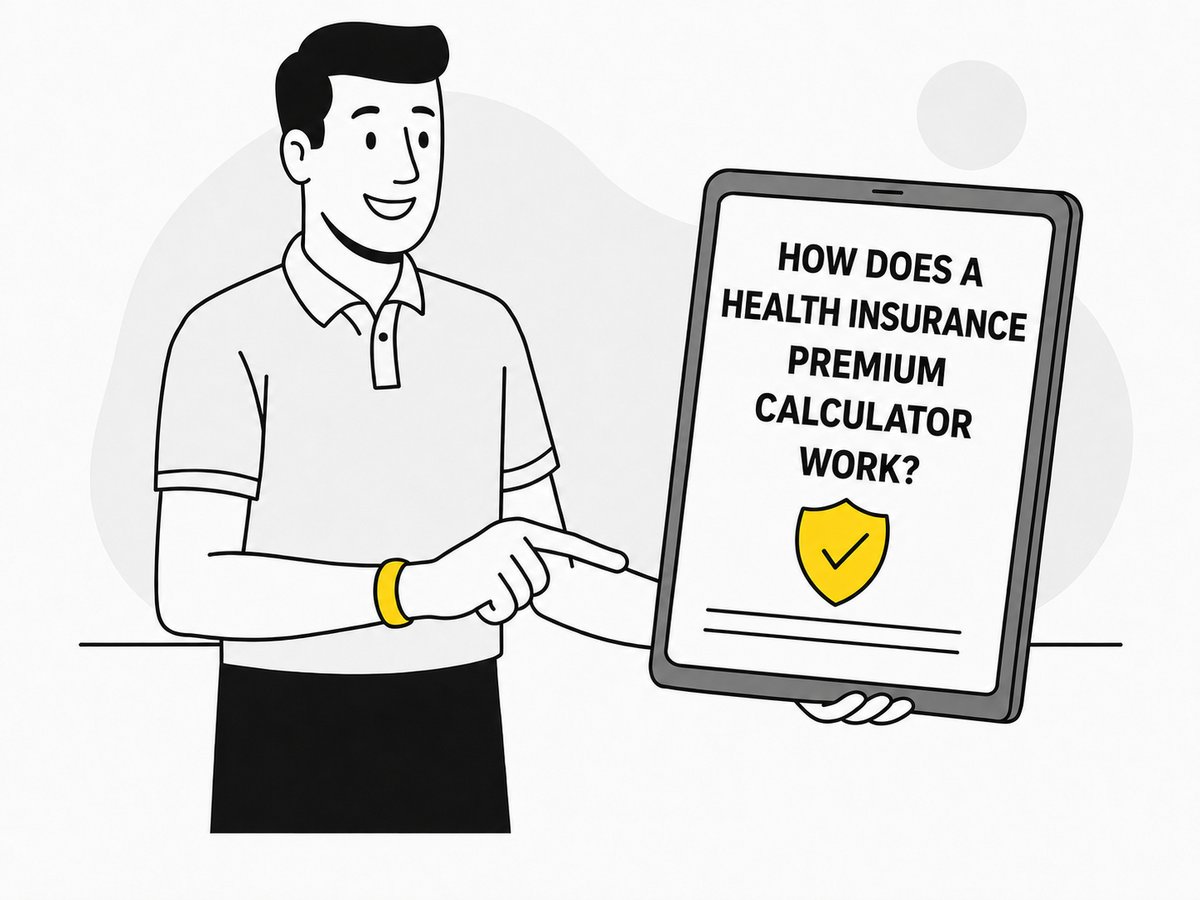
1. Enter Your Details
You start by filling in basic information like your age, city PIN code, gender, pre-existing disease, and number of people to be insured.
2. Select Your Coverage
Next, you choose the sum insured (coverage amount) and any add-ons or riders you want to include in your policy.
3. Provide Health and Lifestyle Information (if applicable)
Provide pre-existing diseases, smoking habits, or medical history, if any. These factors help insurers assess your health risk levels.
4. Get the Premium Amount
The calculator uses pricing logic to evaluate factors like age, location, coverage amount, and medical risk to determine your premium. Finally, it will show you an estimated premium instantly.
5. Adjust and Compare
You can change your inputs, like increasing coverage or adding benefits, to see how your premium changes and find the right balance.

To calculate your health insurance premium online, you need to provide a few basic personal and coverage-related details. Here are the basic requirements you must fill in for premium calculation:
Using a health insurance premium calculator is simple and takes just a few minutes. Follow these steps to get an instant cost of your premium:

Step 1: Enter Basic Details
Visit the Digit app or website. Enter your PIN code and mobile number, select your preferred health insurance plan and provide age details, family members covered, etc.
Step 2: Choose Plan & Add-ons
Compare & select the plan, sum insured, add-on covers and apply any available discounts to get the final premium amount.
Step 3: Get Your Premium
Once all details are entered, the calculator will show your premium for different plan options within seconds. You can also modify inputs, like increasing coverage, removing add-ons, or changing members, to see how your premium changes and choose the best fit.

Personal Factors

Factors Related to the Plans That Affect Premiums in Health Insurance

Additional Factors That Affect Premiums in Health Insurance

Premiums increase most significantly with age and higher sum insured selection. Pre-existing conditions, adding more members to the policy, and choosing additional riders also contribute to higher premiums.
Premium Illustration representing how the prices would vary for different family composition according to different age groups and policy types is mentioned below:
Note: Premium figures are for Digit Health Insurance Plus Policy (UIN: GODHLIP23073V012223) containing features which are typically opted for by our website customers. Premium rates specified in the below illustration shall be standard premium rates without considering any loading. Also, the premium rates shall be exclusive of taxes applicable.
| Plan Name | Double Wallet Plan | |||
| Family Composition | 2A+1C | |||
| Sum Insured | 3,00,00,000 | |||
| Policy Type | Floater | Individual | Ratio | |
| Age of the members insured | Consolidated Premium for all members of the family | Premium | Consolidated Premium for all members of the family | |
| 18 |
34,789 |
15,472 |
54,560 |
64% |
| 38 | 19,544 | |||
| 43 | 19,544 | |||
Premium Illustration representing how the prices would vary for different family composition according to different age groups and policy types is mentioned below.
Note: Premium figures are for Digit Health Care Plus Policy (UIN: GODHLIP21486V022021) containing features which are typically opted for by our website customers. Premium rates specified in the below illustration shall be standard premium rates without considering any loading. Also, the premium rates shall be exclusive of taxes applicable.
| Plan Name | Double Wallet Plan | ||||
| Family Composition | 2A+2C | ||||
| Age of the members insured | 51 | 48 | 22 | 18 | Remarks |
| Coverage opted on Individual basis covering each member of the family separately (at a single point in time) | |||||
| Premium (separate policies for each member) |
8,162 |
7,014 |
3,268 |
3,268 |
Total premium for all members of the familyi s Rs. 21,713, when each member is covered separately. Sum Insured available for each individual is Rs. 5,00,000 |
| Coverage opted on Individual basis covering multiple members of the family under a single policy (Sum Insured is available for each member of the family) | |||||
| Premium (after 10% discount - 1 family policy with seprate sum insured) |
7,346 |
6,313 |
2,941 |
2,941 |
Total premium for all members of the family is Rs. 19,541, when they are covered under a single policy. Sum Insured available for each family member is Rs. 5,00,000. |
| Coverage opted on family floater basis with overall Sum Insured (Only one sum insured is available for the entire family) | |||||
| Consolidated Premium (Family floater plan with shared sum insured) |
14,568 |
Total premium when policy is opted on floater basis is Rs. 14,568. Sum Insured of Rs.5,00,000 is available for the entire family |
|||
| Plan Name | Double Wallet Plan | ||
| Family Composition | 2A | ||
| Age of the members insured | 62 | 66 | Remarks |
| Coverage opted on Individual basis covering each member of the family separately (at a single point in time) | |||
| Premium (separate policies for each member) |
11,048 |
13,403 |
Total premium for all members of the familyi s Rs. 24,451, when each member is covered separately. Sum Insured available for each individual is Rs. 3,00,000 |
| Coverage opted on Individual basis covering multiple members of the family under a single policy (Sum Insured is available for each member of the family) | |||
| Premium (after 5% discount - 1 family policy with seprate sum insured) |
10,496 |
12,733 |
Total premium for all members of the family is Rs. 23,228, when they are covered under a single policy. Sum Insured available for each family member is Rs. 3,00,000. |
| Coverage opted on family floater basis with overall Sum Insured (Only one sum insured is available for the entire family) | |||
| Consolidated Premium (Family floater plan with shared sum insured) |
20,104 |
Total premium when policy is opted on floater basis is Rs. 20,104. Sum Insured of Rs.3,00,000 is available for the entire family |
|
Reducing your health insurance premium is about optimising some key factors, so you pay only for what you truly need. Here are the most effective ways to lower your premium without compromising protection:

Buy a Policy at a Young Age
One of the most effective ways to save on health insurance premiums is to opt for coverage at a younger age. Also, if you are purchasing the policy for your parents, make sure you do so before they turn 60, as the premium for health insurance for senior citizens is higher.

Choose Sum insured & Add-on Covers Wisely
Be careful while choosing your sum insured and add-on covers to ensure you are not paying more for your health insurance policy. Select a sum insured based on your city and medical costs. And choose only relevant add-ons based on your needs.

Prefer Family Floater Plans
Opting for a family floater plan instead of individual plans, where two or more people are covered under one plan, allows you to reduce its premium cost.

Opt for Deductibles/Co-payment
Opting for deductibles and co-payment allows you to reduce the premium on your insurance policy. Select this only if you can comfortably handle smaller medical expenses out of pocket.

Choose Top-up Plans
Instead of buying a very high base cover, a top-up plan offers extra coverage at a lower cost. Opt for a top-up on your insurance plan, which will come into effect when the base-sum insured is exhausted.

Purchase Directly from your Insurance Provider
Purchasing your insurance policy through a broker will make your insurance policy more expensive. This is because you will be liable to pay the charges for their service, as well. You can purchase the insurance policy directly from your insurance provider to avoid this.

Compare Plans Across Insurers
Premiums for the same profile can vary significantly across insurers due to different pricing models. Always compare multiple plans before buying to find the best value, not just the lowest price.

Choose Long-Term Policies
Insurers offer discounts for 2–3-year of policies compared to annual renewals. You must choose a longer tenure to reduce overall premium outflow.
The right premium is not the lowest cost, but the one that offers sufficient coverage for your expected healthcare expenses. As a practical approach, choose a plan where the premium remains affordable long-term while ensuring enough sum insured to cover treatment costs in your city.
Choosing a health insurance premium based only on price can lead to poor coverage and higher costs later. Here are the most common mistakes to avoid and what you should do instead:
One of the most common mistakes is selecting a plan just because it has the lowest premium. While it may seem like a smart way to save money, such plans often come with limited coverage, higher restrictions, or lower sum insured.
What to do: Focus on high coverage and benefits, not just price.
To reduce premium costs, many people choose a lower sum insured. However, rising healthcare costs can lead to significant out-of-pocket expenses during claims.
What to do: Choose coverage based on real hospital costs, not just affordability.
Plans with lower premiums often include higher deductibles or co-payment clauses, which means you will have to bear a portion of the treatment cost yourself. Many buyers overlook this and only realise it during a claim.
What to do: Always check how much you’ll need to pay during a claim, not just the premium.
While add-ons enhance your policy coverage, choosing all available riders can significantly increase your premium without adding proportional value.
What to do: Pick only relevant add-ons that match your health needs.
Many people finalise a plan without comparing options from different insurers. However, premiums for similar coverage can vary widely due to differences in pricing models and underwriting practices.
What to do: Compare multiple plans to find the best balance between cost and benefits.
A plan that fits your needs today may not be adequate in the future as your responsibilities grow (e.g., marriage, children, ageing parents).
What to do: Choose a plan that fits your current and future needs, not just present affordability.
Focusing only on premium without checking waiting periods, exclusions, and claim conditions can create issues during claims.
What to do: Review policy details carefully, not just the price.
Under Section 80D of the Income Tax Act, you can claim deductions on health insurance premiums for yourself and your family, but this benefit is available only if you opt for the Old Tax Regime. Here is how much tax you can save:
Calculating your health insurance premium online helps you understand the cost of coverage before you buy, so you can make informed decisions with clarity. Instead of relying on generic prices, a premium calculator gives you a personalised estimate based on your age, city, coverage, and health profile.
By understanding the factors that affect premiums, the details required, and the common mistakes to avoid, you can choose a plan that balances affordability and adequate protection.



Senior Marketing Associate
Srishti is a skilled content writer with 4+ years of experience in the insurance world. She simplifies tricky terms, explains policies clearly, and writes content that instantly connects with customers. Her skills make insurance easy to understand and truly helpful for everyone.


Chief Marketing Officer
Vivek comes with over 15 years of experience across different industries like FMCG, e-commerce and insurance. His expertise in the online space and consumer behaviour understanding is bringing new insights to Digit in making insurance simple.