General
Life
Accessibility Options


General

General Products
Simple & Transparent! Policies that match all your insurance needs.
 Car Insurance
 Two Wheeler Insurance
 Commercial Vehicle Insurance
 Health Insurance
 Home Insurance
 Travel Insurance
 Business Insurance
Car Insurance
Two Wheeler Insurance
Commercial Vehicle Insurance
Health Insurance
Travel Insurance
Business Insurance
Car Insurance
Two Wheeler Insurance
Commercial Vehicle Insurance
Health Insurance
Travel Insurance



Scan to download

Life

Life Products
Digit Life is here! To help you save & secure your loved ones' future in the most simplified way.
 Term Life
 Savings Plan
 Retirement and Pension Plans
 Group Life Products
 Product Documents
Term Life
Savings Plan
Retirement and Pension Plans
Group Life Products
Product Documents
Term Life
Savings Plan
Retirement and Pension Plans
Group Life Products

Scan to download

Claims

Claims
We'll be there! Whenever and however you'll need us.
 Customer Support
 Motor Claims
Health Claims
Motor Claims
Health Claims
 Marine Insurance
 Grievance Redressal
Customer Support
Motor Claims
Health Claims
Marine Insurance
Grievance Redressal
Grievance Redressal
Customer Support
Motor Claims
Health Claims
Marine Insurance
Grievance Redressal

Scan to download
 General
 Life
General
Life
Life
General
Life
Renewals
Resources

Resources
All the more reasons to feel the Digit simplicity in your life!
Exclusive Features
 Transparency Report
Others
Exclusive Features
Transparency Report
Transparency Report
Others
Exclusive Features
Transparency Report

Scan to download


Our WhatsApp number cannot be used for calls. This is a chat only number.

 Grey Scale
 Readable Text
 Reset
Reset




Vertigo is not a rare condition; many people go through this condition regularly. Nevertheless, the intensity of this condition can vary. People with this disorder experience dizziness and being off-balance.
Since vertigo is not a disease but a symptom of varying conditions, it can be treated with specific exercises alongside medical treatment.
Want to know the best exercises for vertigo? This blog will provide all necessary guidance and additional information regarding this disorder.

Table of Contents

Vertigo is a sensation that feels like you or your surroundings are spinning or moving when there is no actual movement. It can make you feel dizzy, unbalanced, and nauseous.
This condition is usually caused by problems in the inner ear or brain, where balance is controlled. There are different types of vertigo, including peripheral vertigo, which is related to the inner ear, and central vertigo, which is linked to the brain.
Several reasons cause vertigo. Those who suffer from this disease feel off balance and always tend to sense their head spinning.
Vertigo can be of two types: central and peripheral. The former occurs if there is an issue with the brain. In contrast, the latter is related to any problem with the inner ear. The most common cause of vertigo is some deep-rooted problem with the former. Since ears control the balance of our body, any disturbance in its function can lead to situations like this.
These are the specific conditions that can trigger vertigo.
This is the most common condition observed in people with this disorder. It normally gets triggered with the change of the head’s position. For example, if you have this condition, you will experience vertigo when lying down, getting up or even turning to another side of the bed.
People with this disease suffer from fluid build-up in the ear, causing vertigo attacks. This condition often gets connected with other conditions like tinnitus. It is when people hear a ringing sound, fluctuate in loss of hearing, or sense fullness in the ears.
Cholesteatoma is a syndrome in which people suffering from a repetitive ear infection experience non-cancerous skin growth in the middle ear. It can also lead to dizziness, hearing loss, and vertigo.
When the labyrinth in the inner ear becomes infected or inflamed, it is called labyrinthitis. The labyrinth consists of vestibulocochlear nerves that transfer information to the brain, particularly about sound, head motion, and position. Those suffering from this condition often experience problems like ear pain, vision changes, headaches, or hearing loss.
This refers to any inflammation in the vestibular nerves. Unlike labyrinthitis, in vestibular neuritis, people do not face hearing loss. However, with this issue, one can experience nausea, blurred vision, and vertigo.
Other than these medical conditions, there are other causes of vertigo as well, this includes:
Migraine headaches
Prolonged bed rest
Head injuries
Ear surgery
Certain medications
Arrhythmia
Brain disease
Diabetes
Stroke
Low blood pressure (orthostatic hypotension) – a condition in which your blood pressure decreases when you stand up
Shingles in or near the ear
Acoustic neuroma
Perilymphatic fistula (when inner ear fluid leaks into the middle ear)
Hyperventilation
Ataxia, or muscle weakness
Syphilis
Otosclerosis (a bone growth problem affecting the middle ear)
Multiple sclerosis (MS)
You can know whether you have this condition if you experience a few symptoms. Most of these signs are easily recognisable; they can last a few minutes or continue for hours. It can also keep coming back at smaller intervals. However, if you observe a combination of all these symptoms, you must consult a physician.
Experts suggest that exercises for vertigo are an effective method of treating this condition. However, most of these are designed for peripheral vertigo conditions.
Here is a list of some exercises that can be performed at home with guidance from a healthcare supervisor.
This exercise aims to help dislodge or break the crystals from the semi-circular canal. For this exercise, you must sit on your bed with your feet touching the ground. Then, gradually turn your head to one side and try to lie on the other side. Wait for 30 seconds or till the dizziness is gone. Sit upright, rest for another 30 seconds, and then repeat the same on the other side.
This is one of those exercises for treating vertigo requiring a healthcare provider's help. You must sit on the bed with straight legs and keep a pillow behind your head. Turn your head 45 degrees to one side, and lie back until your shoulders are on the pillow. Then, you need to wait for the dizziness to pass and count up to 30 seconds to get stable. Repeat the same on the other side, then sit back on the bed.
It is better to perform this exercise with a healthcare provider’s guidance. You need to start by sitting upright on the edge of the bed and turning your 45 degrees to either side. Drop to the opposite side until you reach the bed; stay in this position for a minute. Swiftly move your body to the other side without changing the angle of your head. Again, hold this position for a minute and then return to the starting position.
This is commonly known as half-somersault. You need to kneel and keep your hands on the floor. Then, tilt your head backwards and wait until the dizziness fades away. Then, place your forehead on the ground, tucking your chin in your knees. Turn around 45 degrees to face your left elbow, and hold at this position. Keep looking in that direction, and raise your head until it is on the same level as your back and shoulders. Again, hold the position and raise your head completely upright.
Cawthorne exercises help vertigo patients become accustomed to dizziness sensations and improve their balance. These exercises include head movements (up and down, side to side), eye movements (shifting gaze between objects), and body movements (standing, sitting, bending, and rotating).

The head tilt exercise, particularly beneficial for those with benign paroxysmal positional vertigo (BPPV), involves repositioning displaced crystals in the inner ear. Sit on a bed, turn your head 45 degrees to one side, and quickly lie down with your head slightly off the edge of the bed. Hold for 30 seconds or until dizziness subsides, then repeat on the other side.
Gaze stabilisation exercises focus on improving eye movement control and reducing dizziness. Start by holding a target at arm's length, like a letter or small object. Move your head side to side while keeping your eyes fixed on the target, gradually increasing speed. Progress by moving your head up and down while maintaining your gaze on the target.
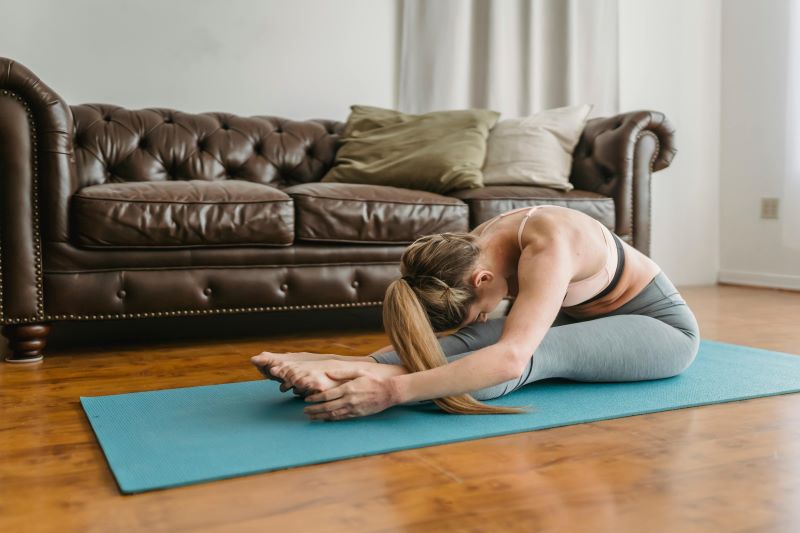
This yoga is effective for releasing stress, anxiety, and fatigue. Sit with straight legs, take a deep breath, and slowly raise your hands. While exhaling, lean forward to touch your feet. While stretching, keep your knees on the ground and try touching them with your head. Hold on for a few seconds, then return to the starting position.
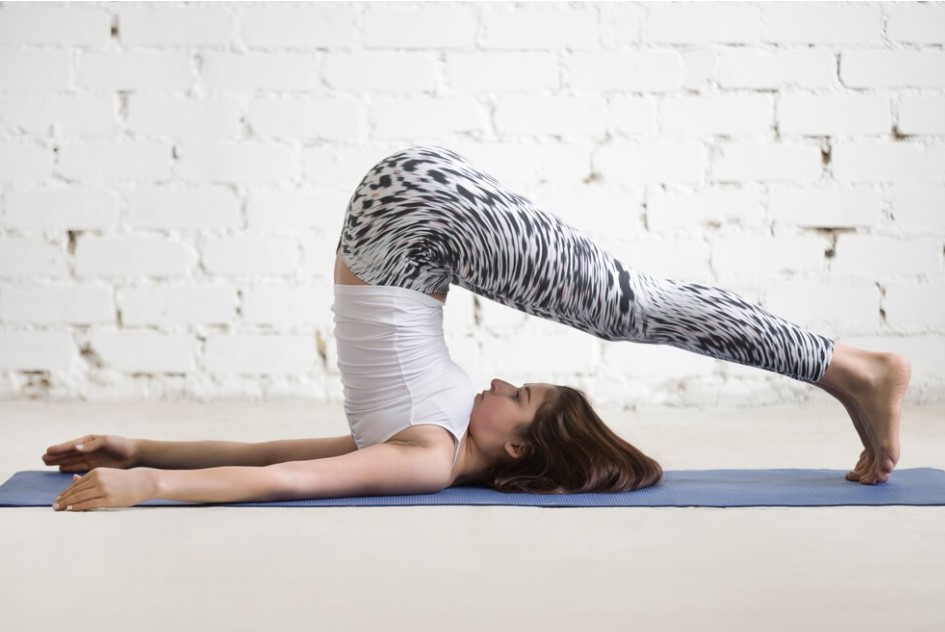
Halasana is known for strengthening your back, shoulders, and nervous system. To do this, lie on your mat with arms on your side and palms facing downwards. Breathe in and lift your legs at 90 degrees, then gradually stretch over your head and try to touch down. While doing this, your back must be straight at 90 degrees. Stay in this pose for some time, then return to your relaxing position.
This mudra helps calm your nervous system. To do this, sit with your back straight and shoulders pulled backwards. Slowly raise your elbows at shoulder level, then close your ears with your thumbs. Then, place your index fingers on the eyelids and middle fingers on your nose. Cover your lip area with your ring and tiny fingers, and ensure all the joints are closed. Concentrate on breathing through your nose. After a while, return to a resting position.
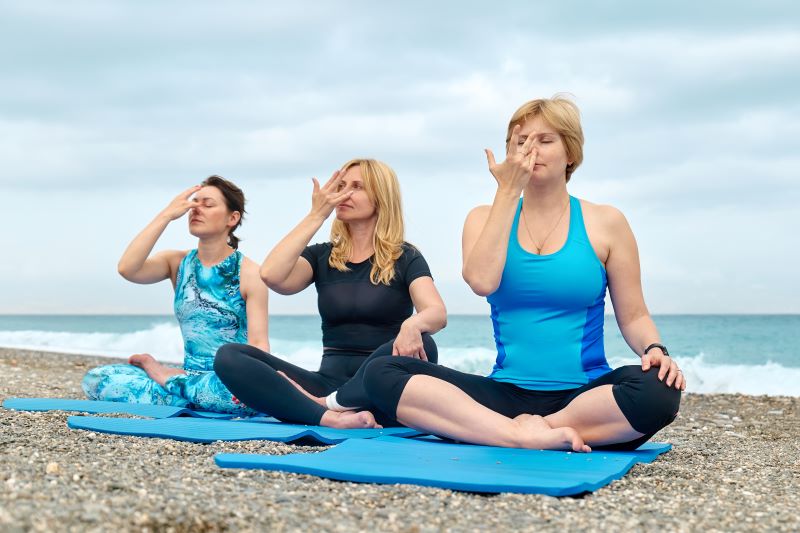
This is a meditative asana where you sit upright with crossed legs. Close your right nostril with your right thumb and inhale from the left nostril. Then, change the thumb position, close the left nostril with your correct ring finger, and exhale from the right nostril. Continue inhaling and exhaling in this position for some minutes.

It is recommended that this asana be done at the end. Lie on your back, with your feet slightly kept apart. Similarly, keep your arms away from your body with the palms facing upwards. Keep your eyes closed and concentrate on breathing.
Anyone with vertigo must consult a doctor first and perform these exercises at home. By doing these physical movements, no one can claim to cure the disorder completely, but it can surely relieve the symptoms.
Certain exercises for vertigo require specific equipment to enhance their effectiveness and ensure safety. Below is a table listing various vertigo exercises along with the equipment needed for each:
Exercise |
Required Equipment |
| Yoga Poses | Yoga Mat |
| Epley Maneuver | Pillow (Optional) |
Since one type of vertigo is related to brain issues, it is difficult to cure with physical exercise. On the other hand, for the peripheral kind, experts suggest the above-mentioned exercise as an alternative treatment for vertigo patients.
Therefore, most of them are designed in a particular way to displace calcium-carbonate crystals in the inner ear. The build-up of these crystals is the main reason for the disruption in hearing.
Most of these exercises relieve stress and anxiety and relax the nervous system, helping people reduce vertigo symptoms. They will also help you stay fit and avoid claiming health insurance, increasing the benefits and perks of your insurance.
Since vertigo can occur due to sudden head movements, one must be careful when choosing helpful exercises.
There are some exercises to avoid with vertigo condition, including movements like:
Exercising with vertigo can be challenging, but staying active and healthy is possible with the right precautions. The following are the essential precautions vertigo patients should take while exercising to ensure safety and maximise the benefits of physical activity:
Vertigo is a medical condition that can occur from numerous sources and has many symptoms. Sometimes, it becomes difficult to figure out this condition by yourself. So, if you ever notice multiple vertigo symptoms, immediately visit a doctor.
The treatment will also differ since the condition can vary from one person to another. Still, if you feel like opting for an alternative method of treatment, try doing exercises for vertigo.